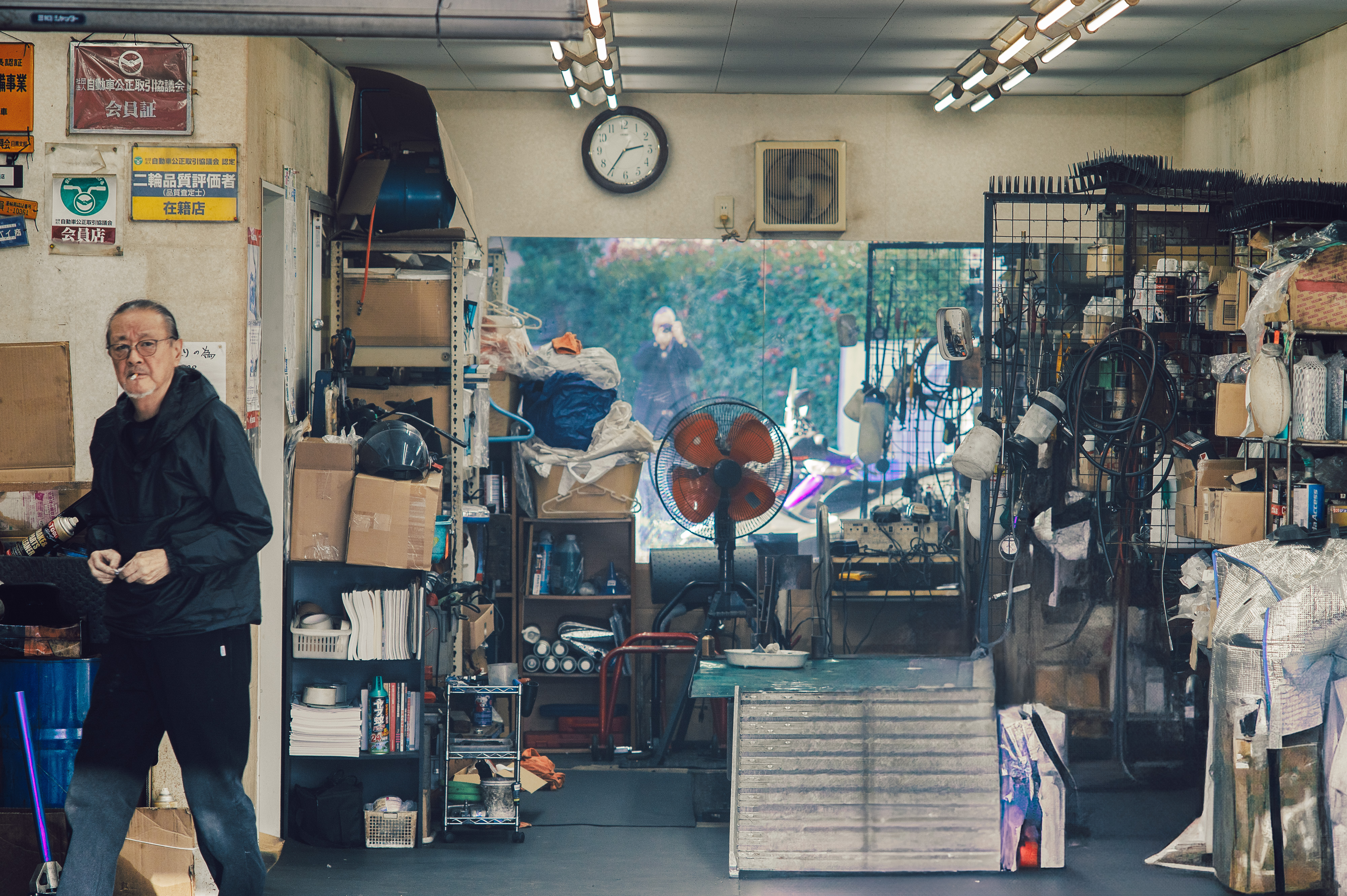
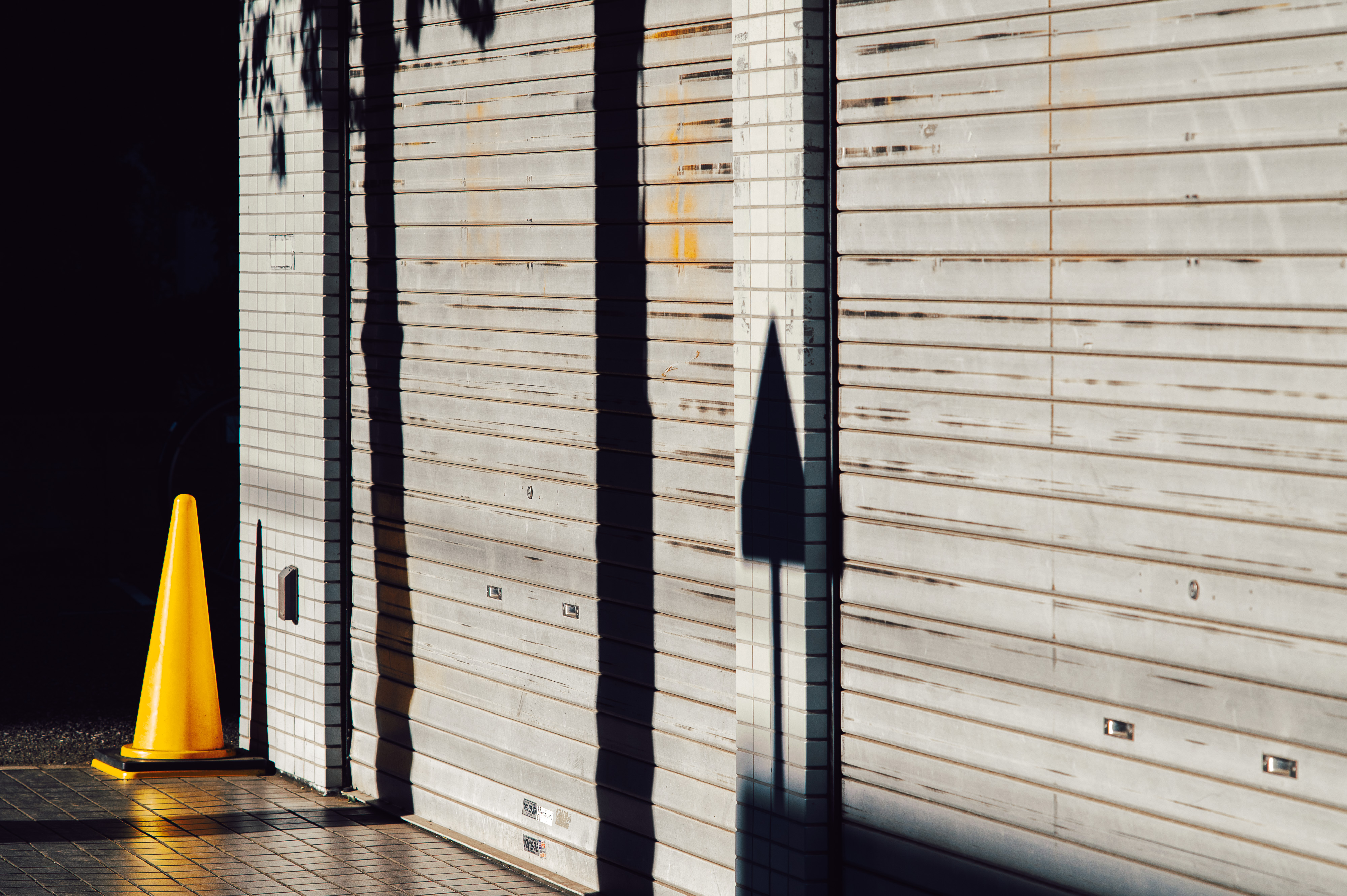
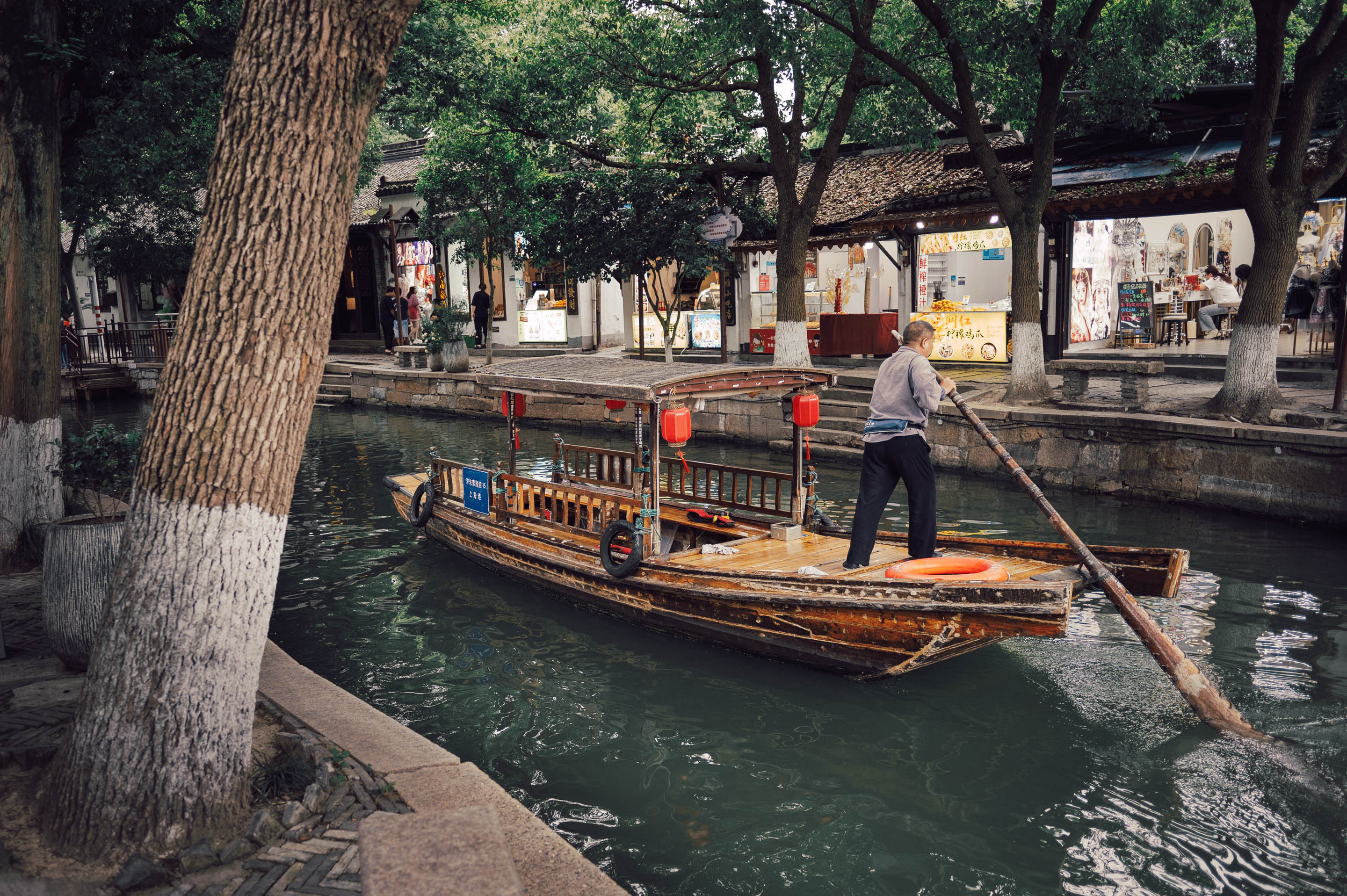
Initial Review of the Zenit TTL and Helios 44-2 at Wedge Island Western Australia

Yes, I have bought into the Helios hype. Unless you’ve been living in a cave you will probably have heard of the Helios 44, a lens famous for its distinctive swirly bokeh, colourful lens flare and general refusal to behave like a modern optical instrument. It even appeared in The Batman and Dune: Part Two, so its cinematic credentials are now considerably more impressive than mine.

The Helios 44 actually began life as a Soviet version of the Carl Zeiss Biotar 58mm f/2, a lens originally introduced in 1936. The Helios 44 first appeared in 1958 and went through numerous versions before production finally ended in 1999, with millions made along the way. So this isn’t some obscure vintage curiosity that three people on a forum have decided is brilliant; it is a genuinely historic lens with an enormous following.

My particular example came attached to something considerably less celebrated: a Zenit TTL from 1980. The camera has a reputation for being less than delightful, and I initially bought it largely because it was an inexpensive way of acquiring the Helios. Still, there was something irresistible about putting the two together and seeing whether this famously characterful lens could overcome what is widely regarded as a fairly agricultural camera.

Taking the Zenit TTL to Wedge

The Zenit TTL is heavy, weighing around 684 grams, which isn’t outrageous in isolation but feels substantial compared with contemporary cameras such as the 510-gram Fujica STX-1n. Calling it a tank is tempting, although I think it is more like a Lada Niva: robust, agricultural and apparently designed without anyone becoming overly distracted by things like optimisation or elegance.

The camera does have TTL metering, which sounds promising until you actually try to use it. The meter isn’t coupled to the aperture, so you have to stop the lens down to take a reading. Unfortunately, stopping the lens down also makes the viewfinder considerably darker, making the whole process rather more fiddly than it needs to be. With my Helios 44-2, things became even more complicated because the lens isn’t coupled to the camera either.
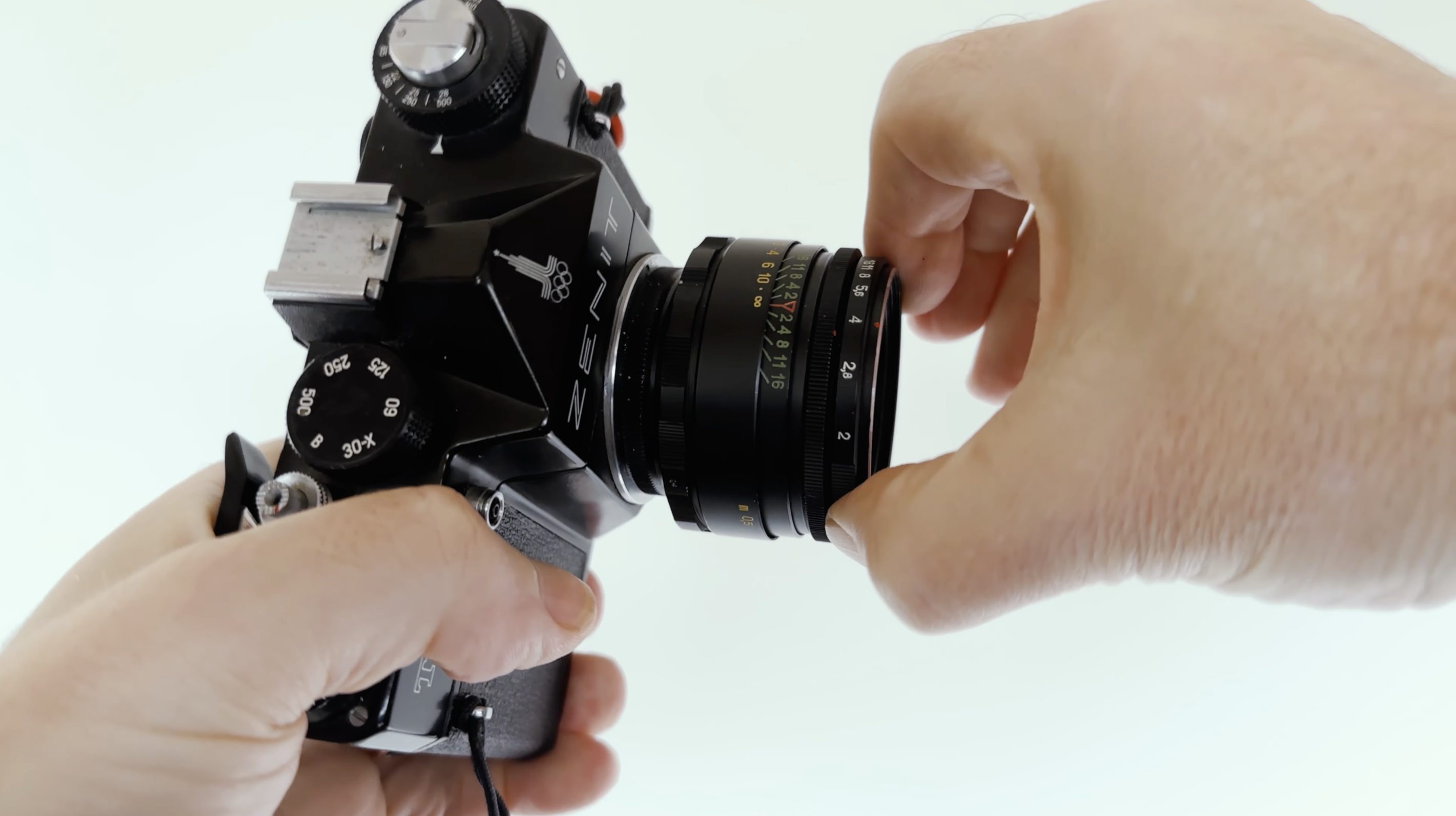
The aperture system itself seems almost deliberately designed to confuse. You set an aperture range using one ring and then use another stepless control to select the actual aperture, with the control working in the opposite direction to what your brain expects. By the time I had finished trying to understand what was happening, I had largely abandoned the camera’s meter and decided that my own brain would be a better exposure system.

That might have worked if I hadn’t also managed to leave the diffuser covering my external light meter. Consequently, I was getting readings that were a stop or two too slow, while simultaneously dealing with the Zenit’s eccentric aperture controls. The inevitable result was a number of overexposed frames, some by several stops.

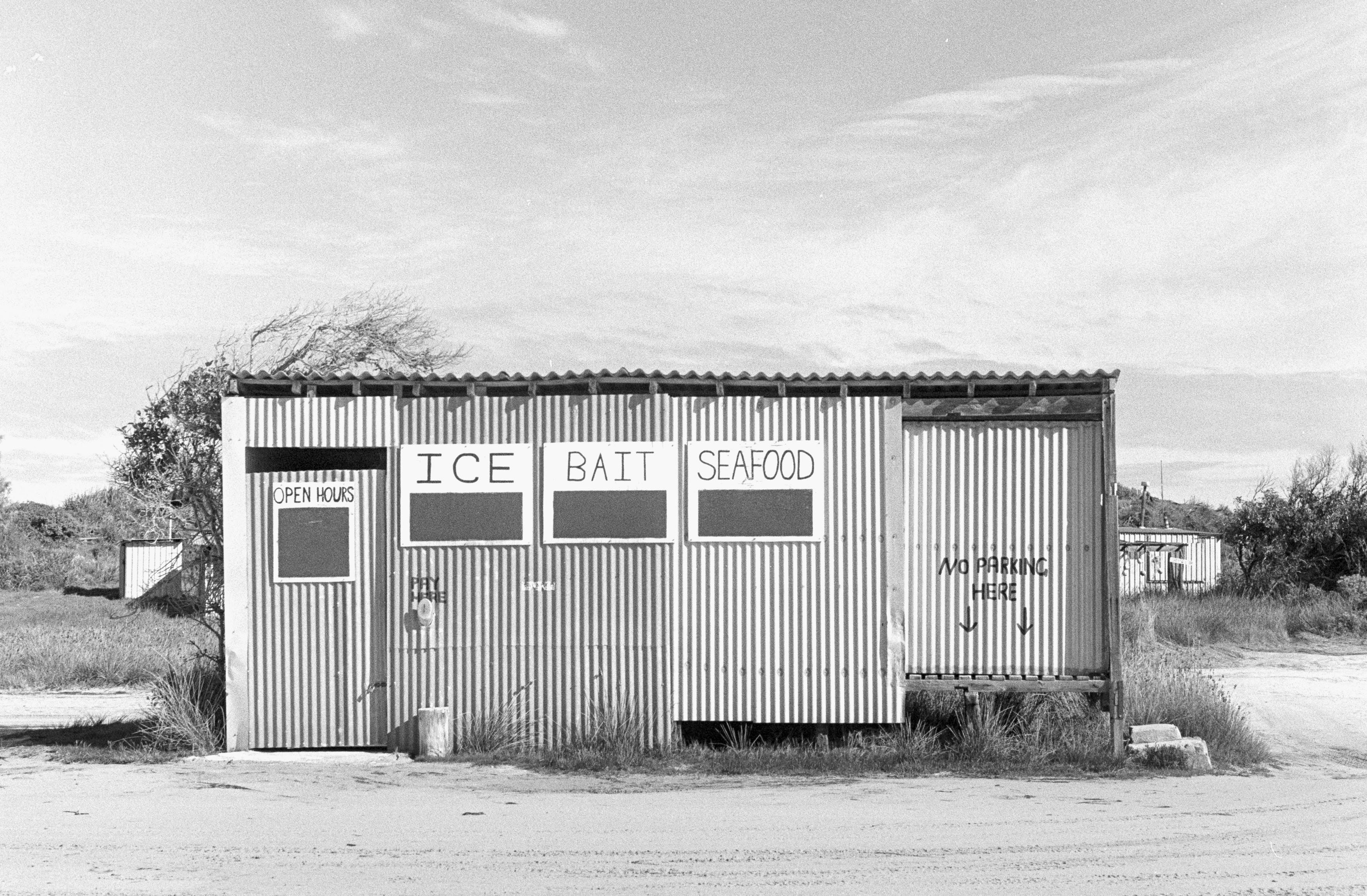
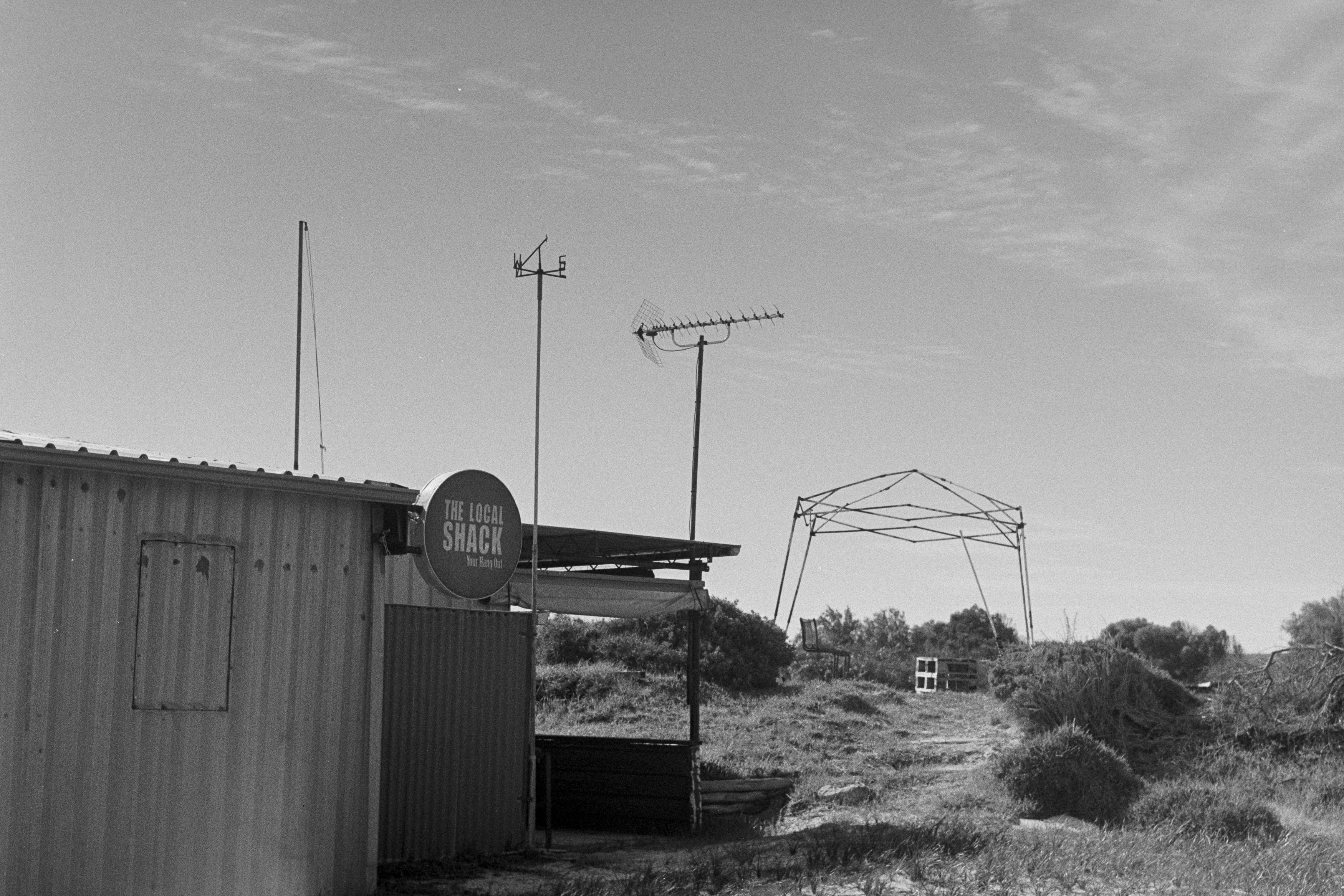
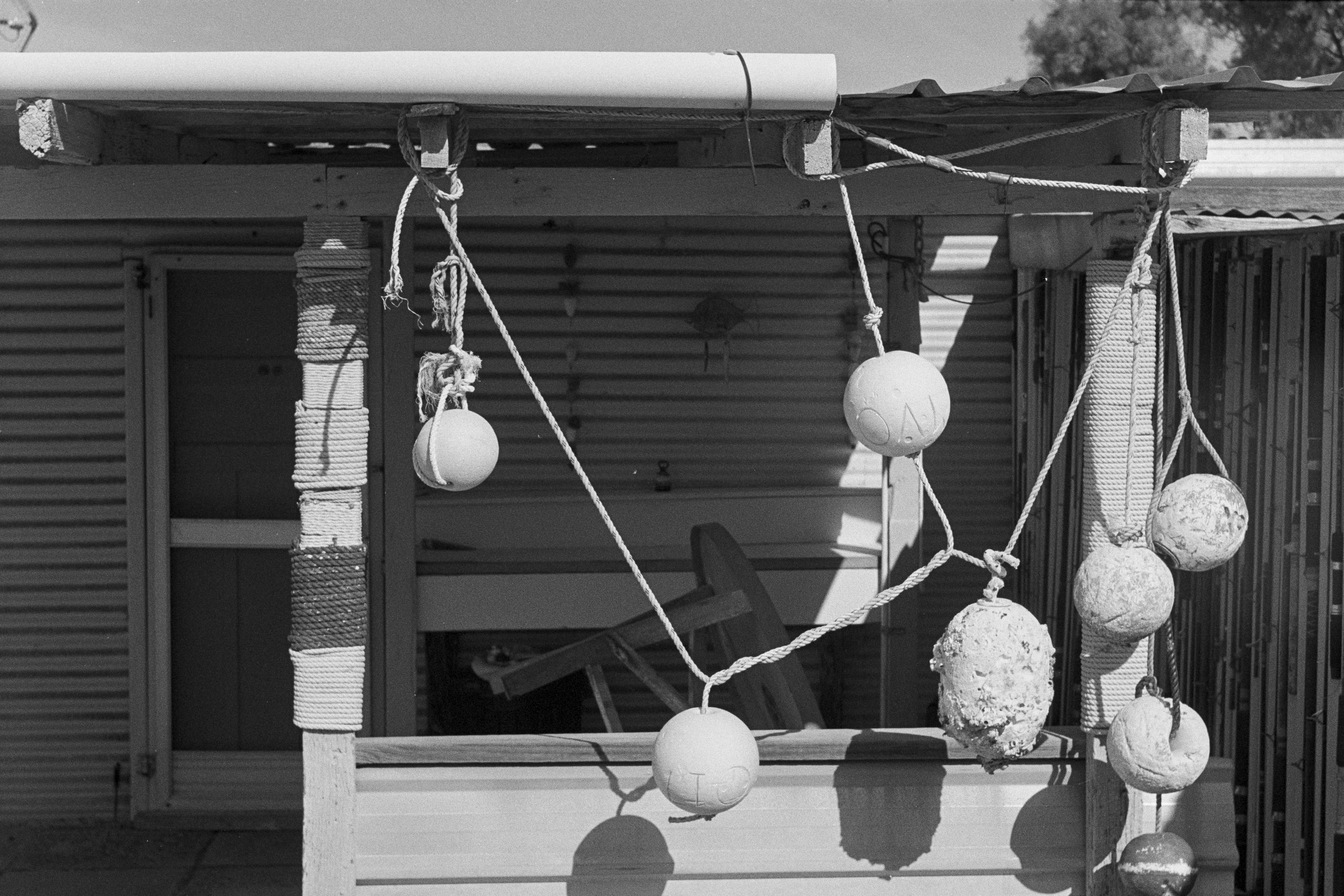
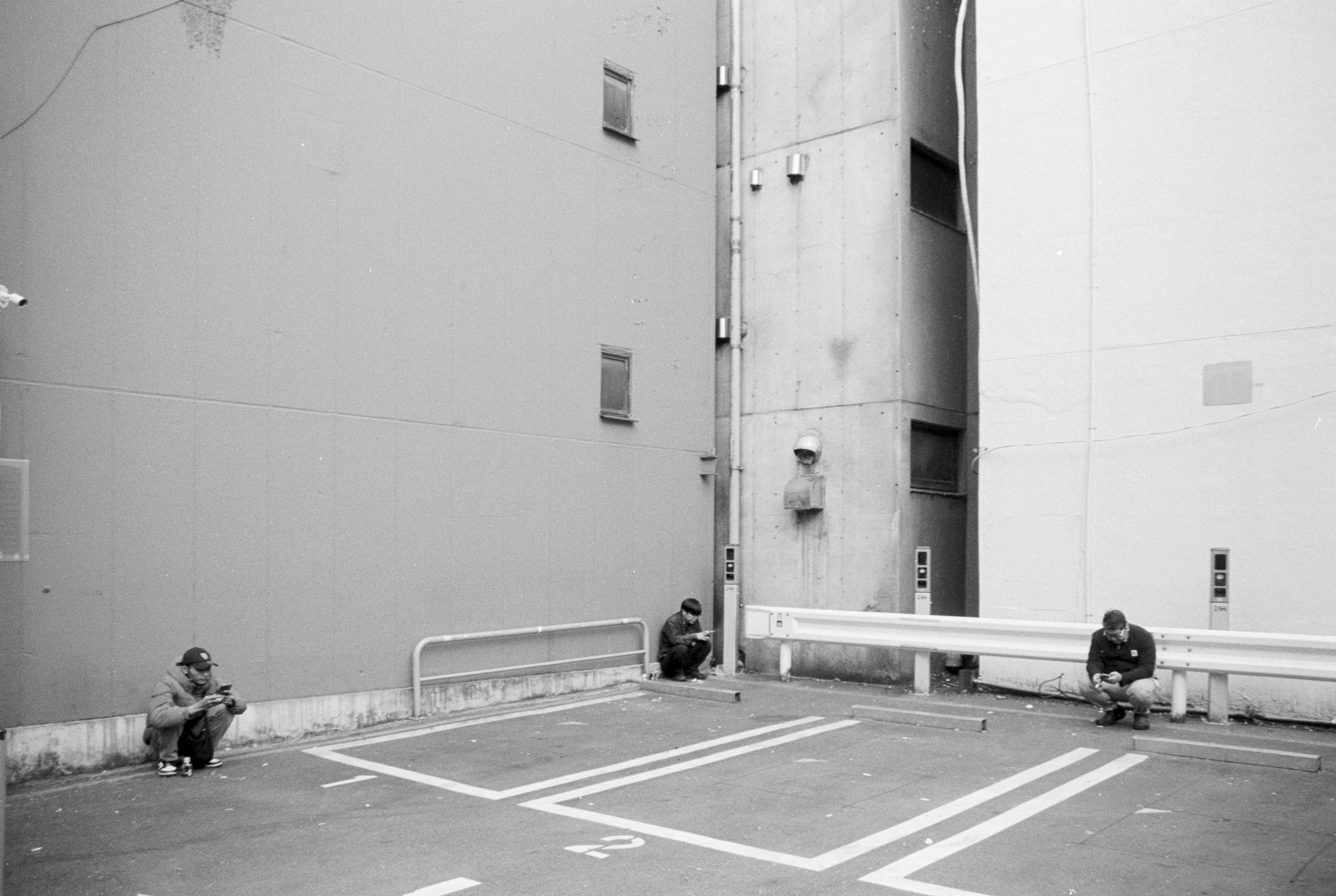
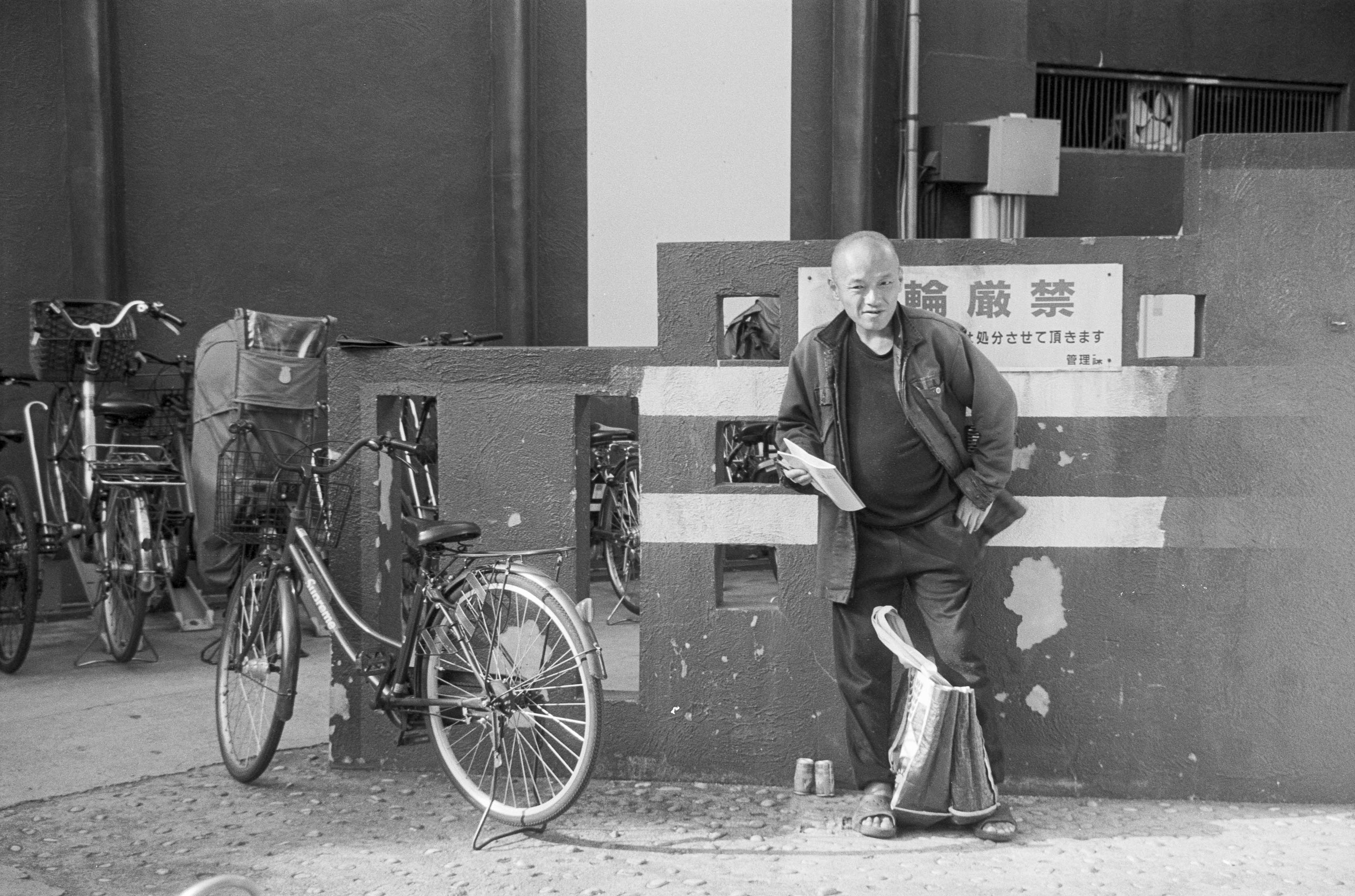
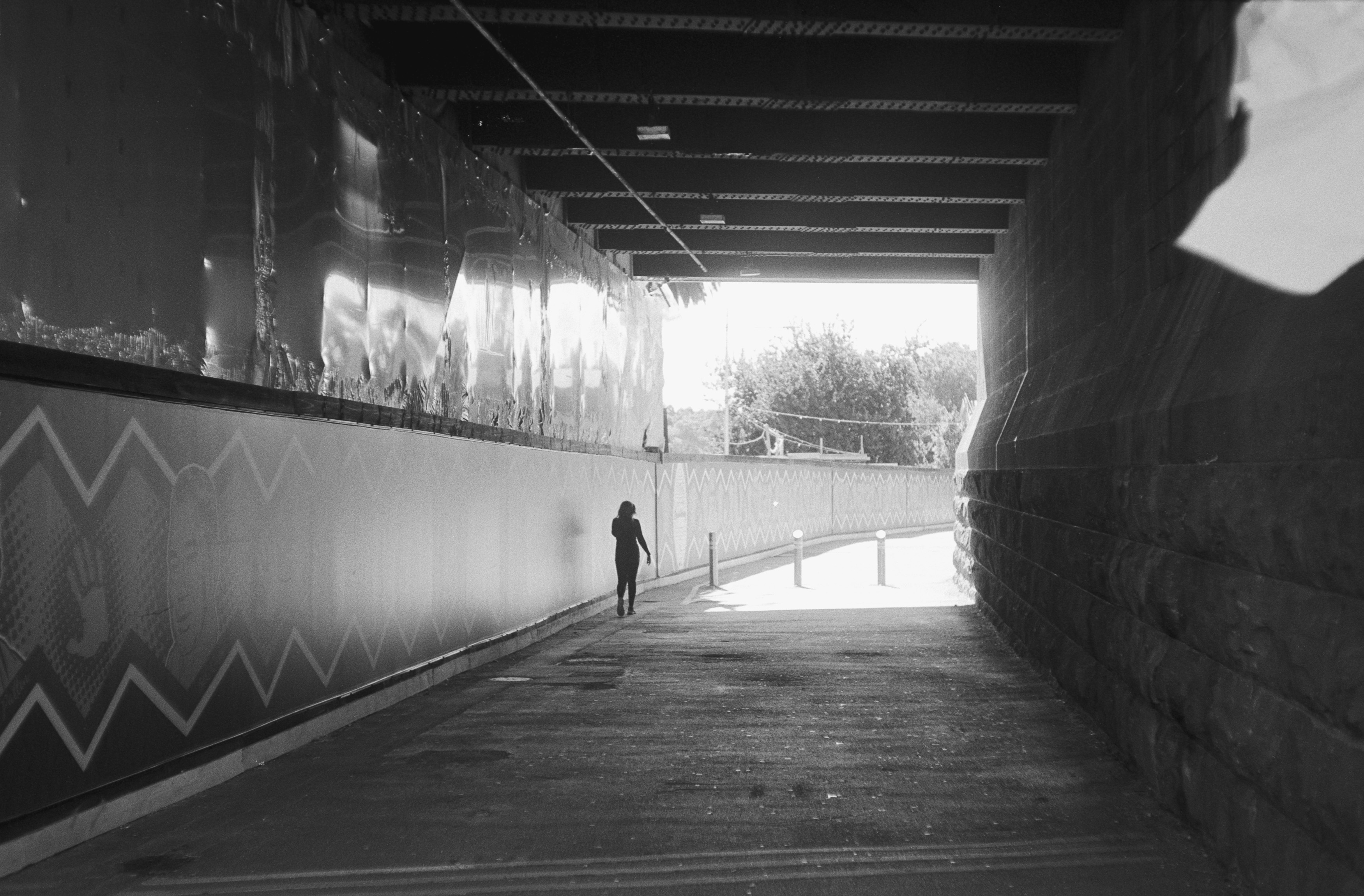
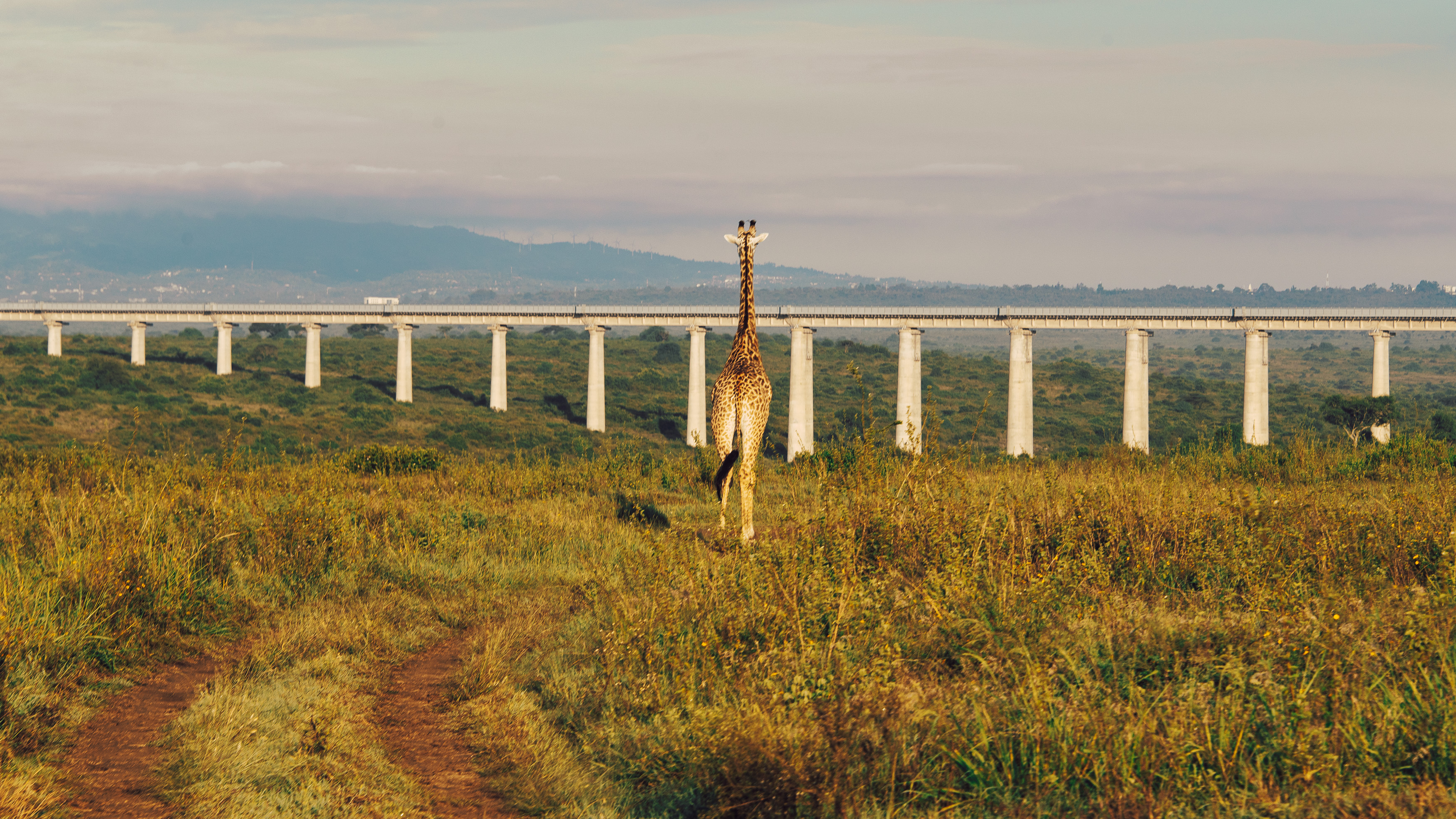
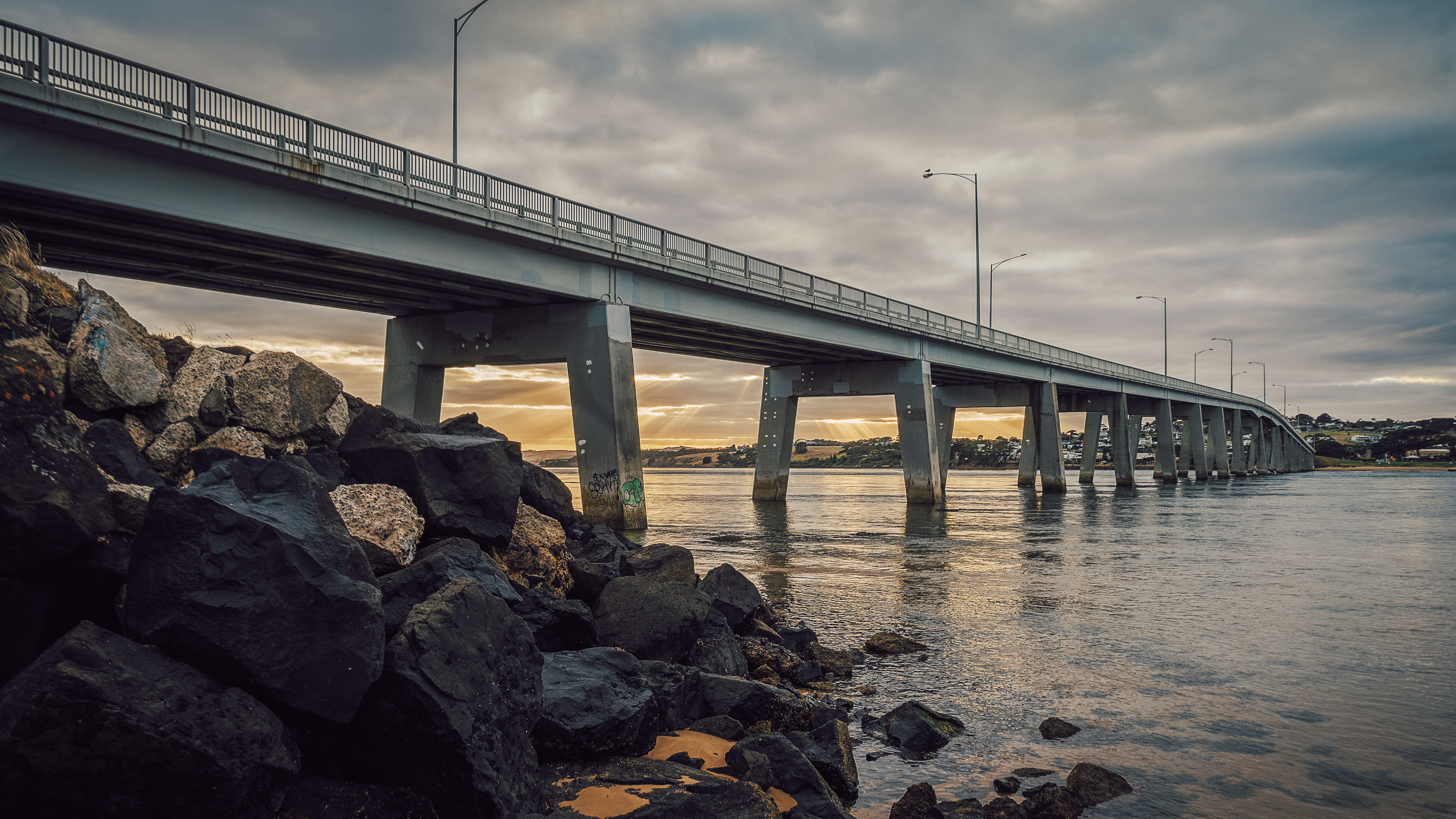
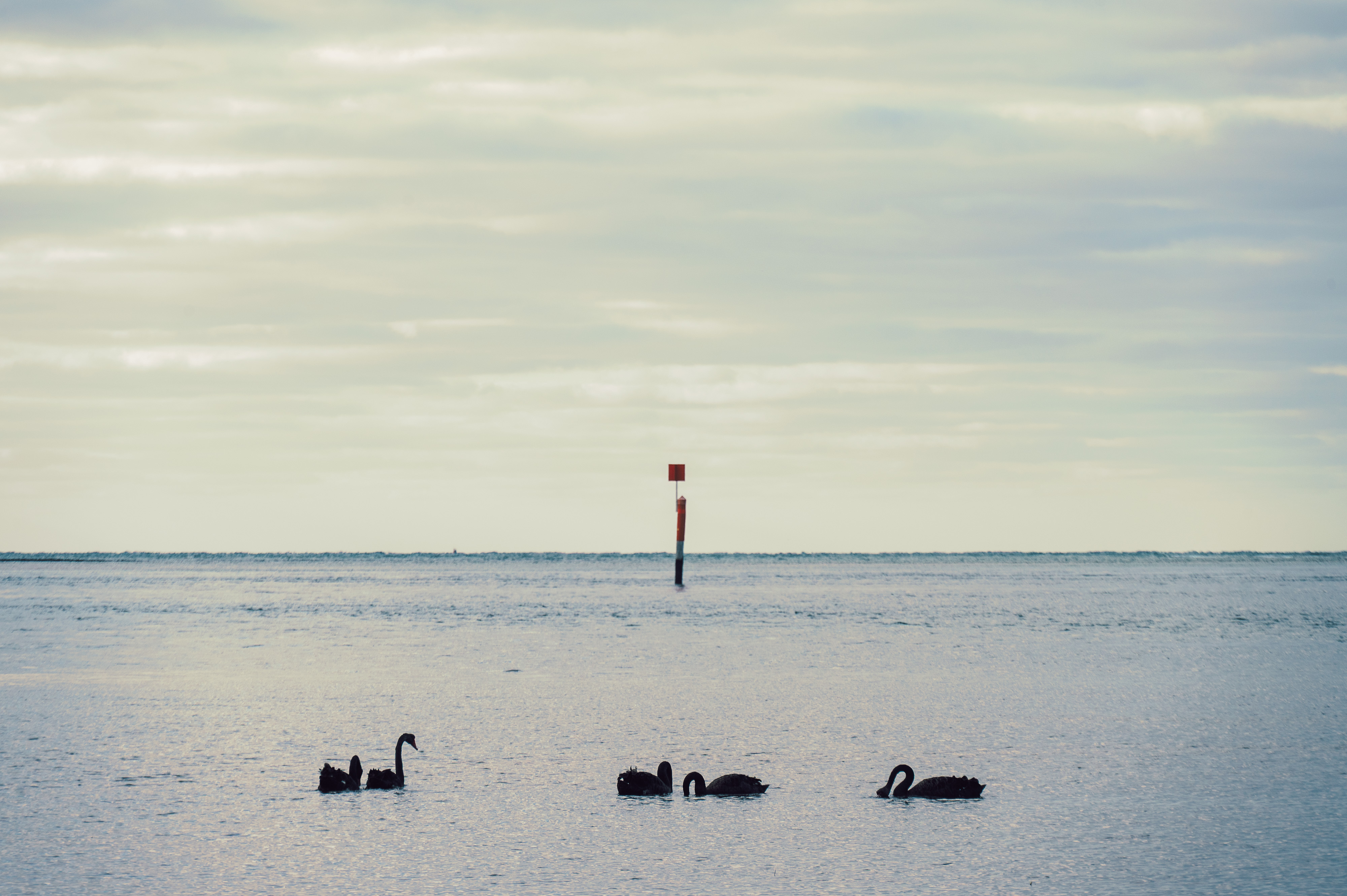
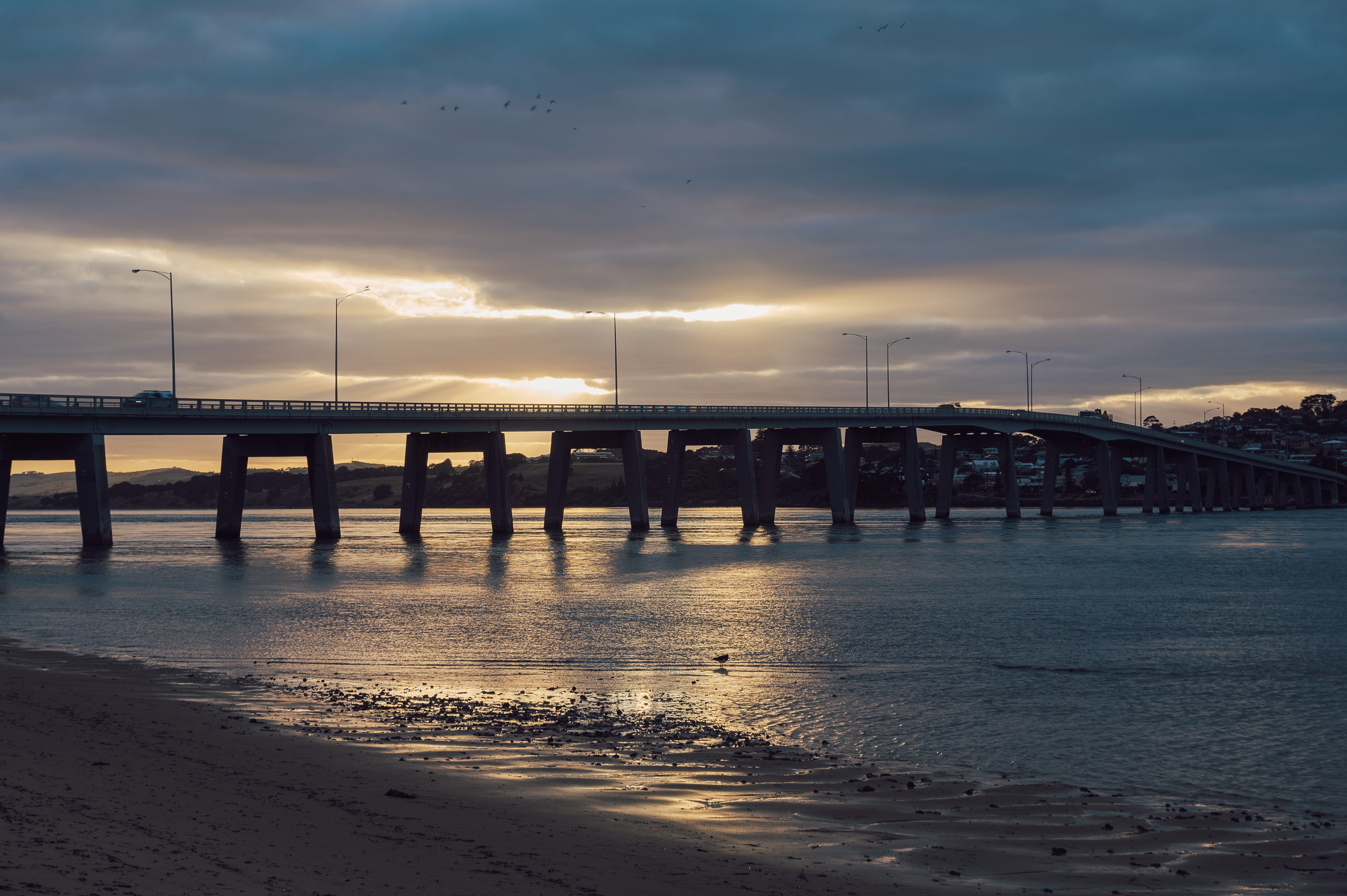
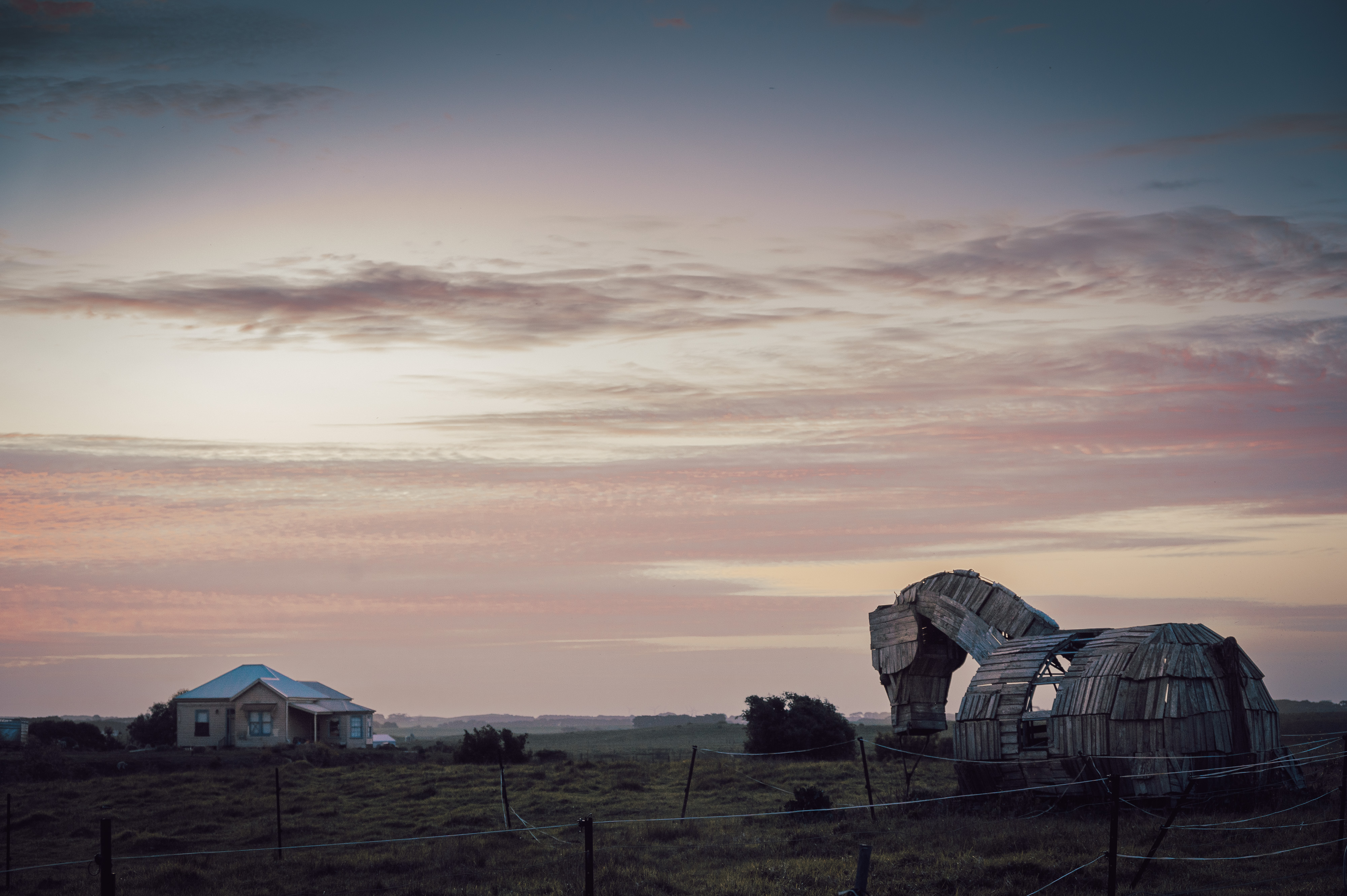
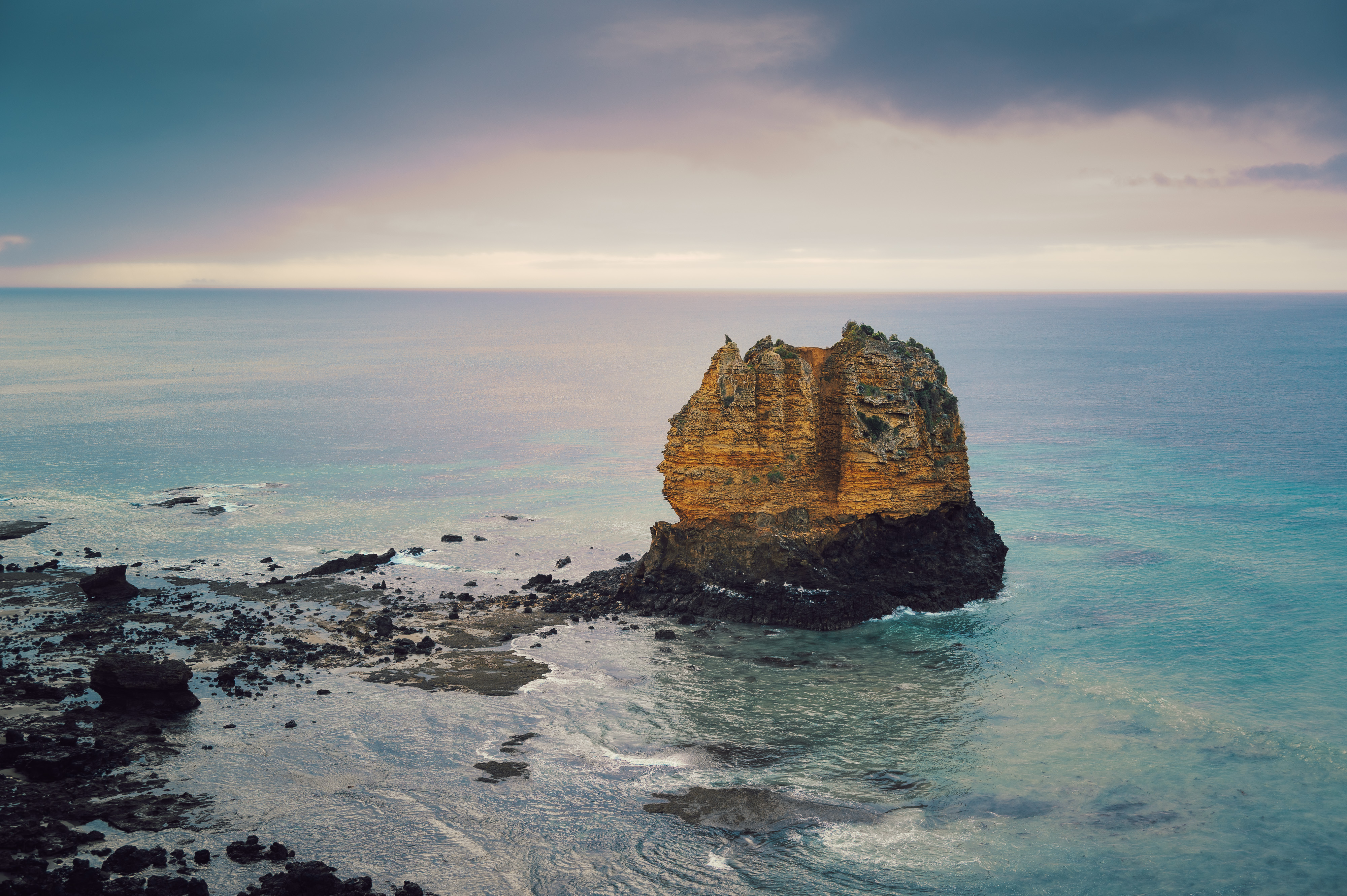
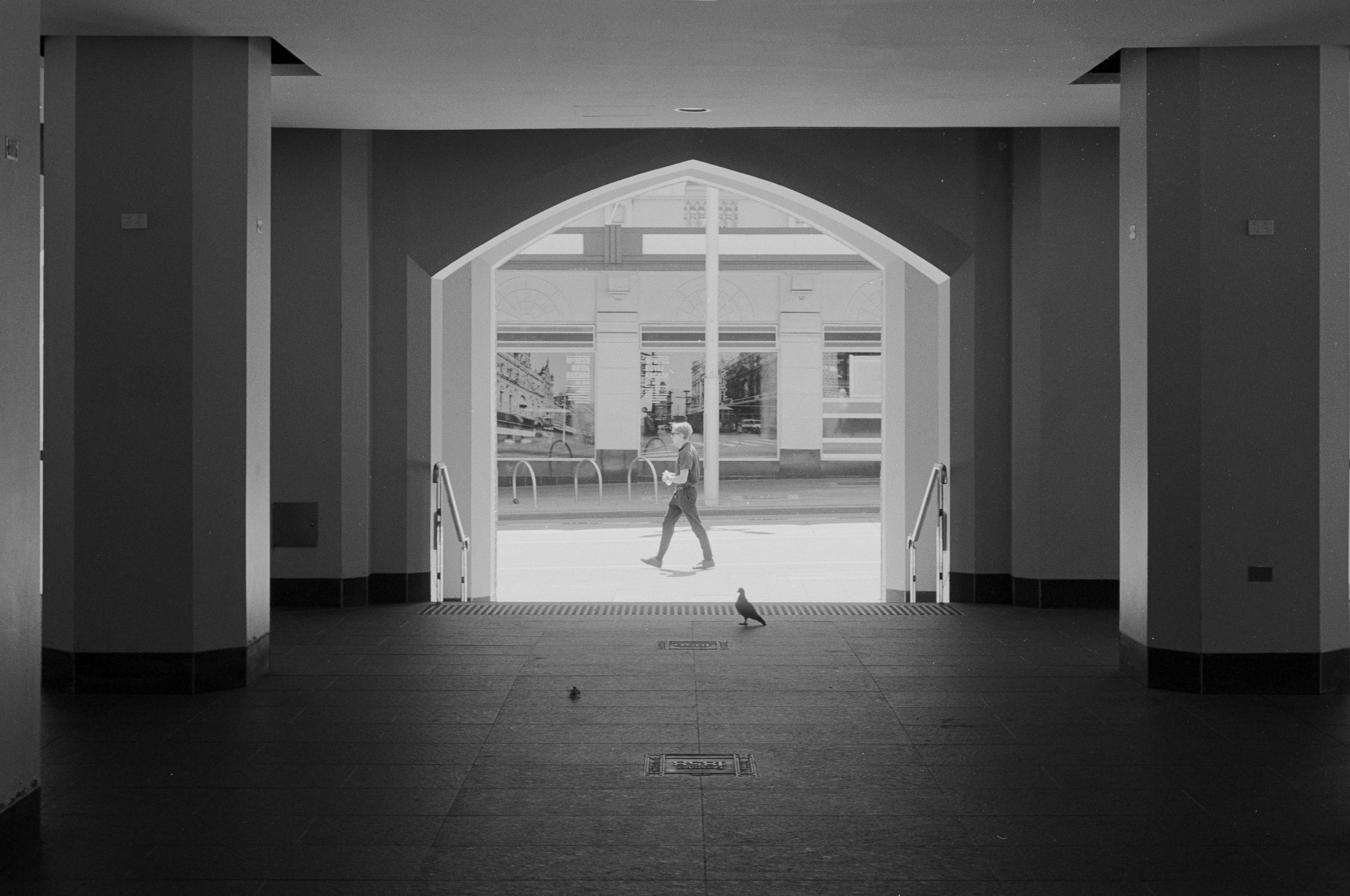
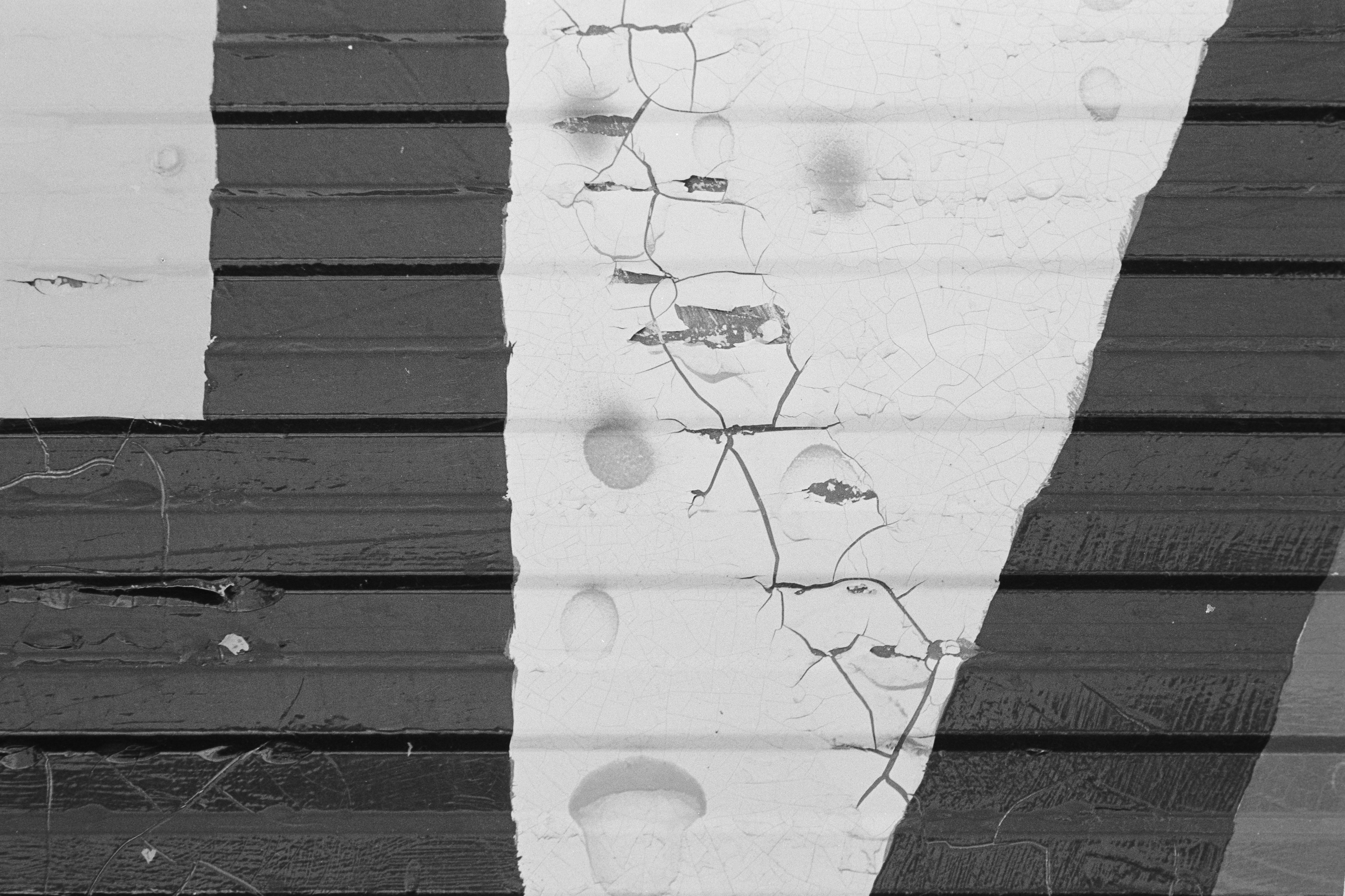
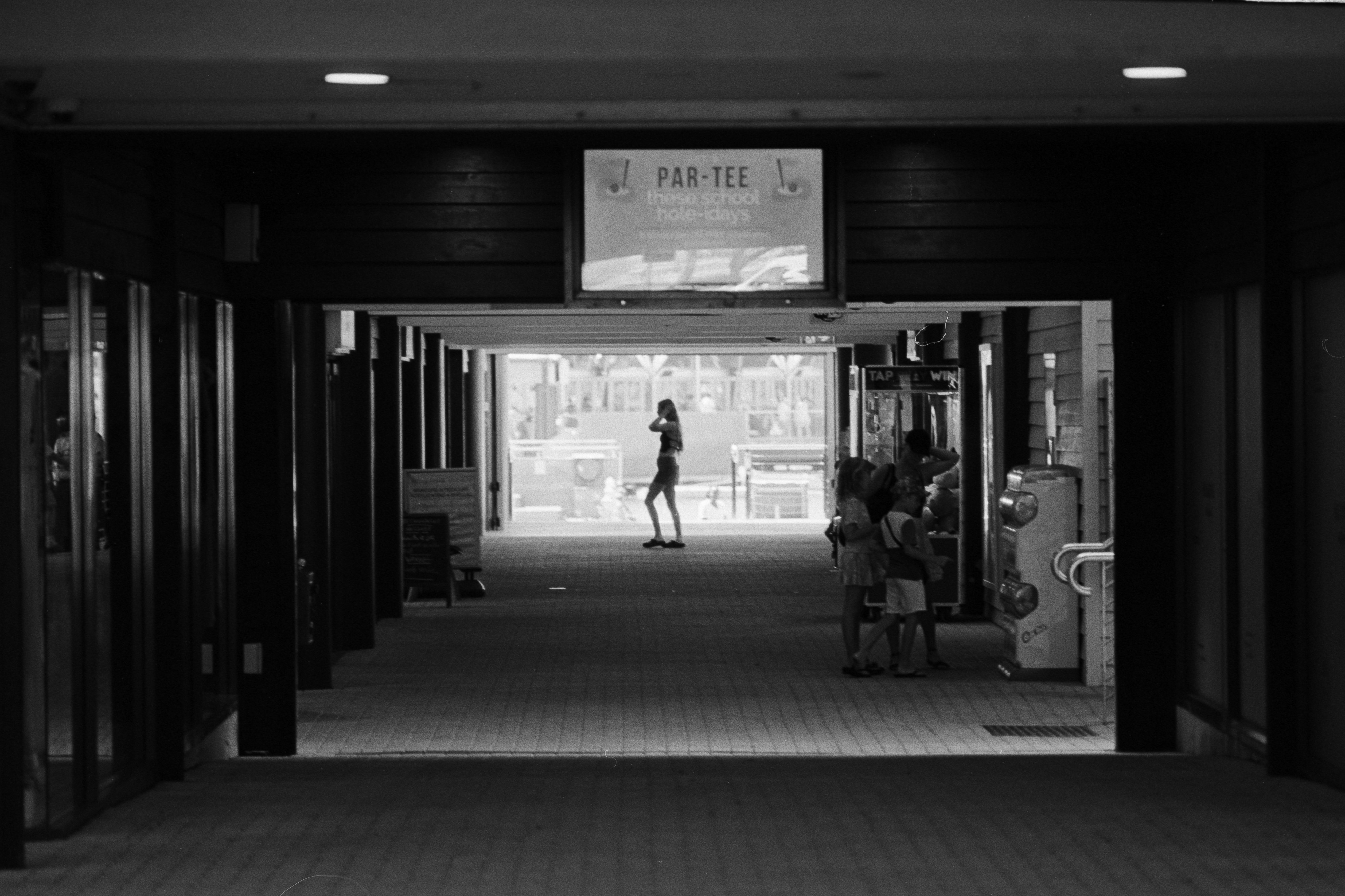
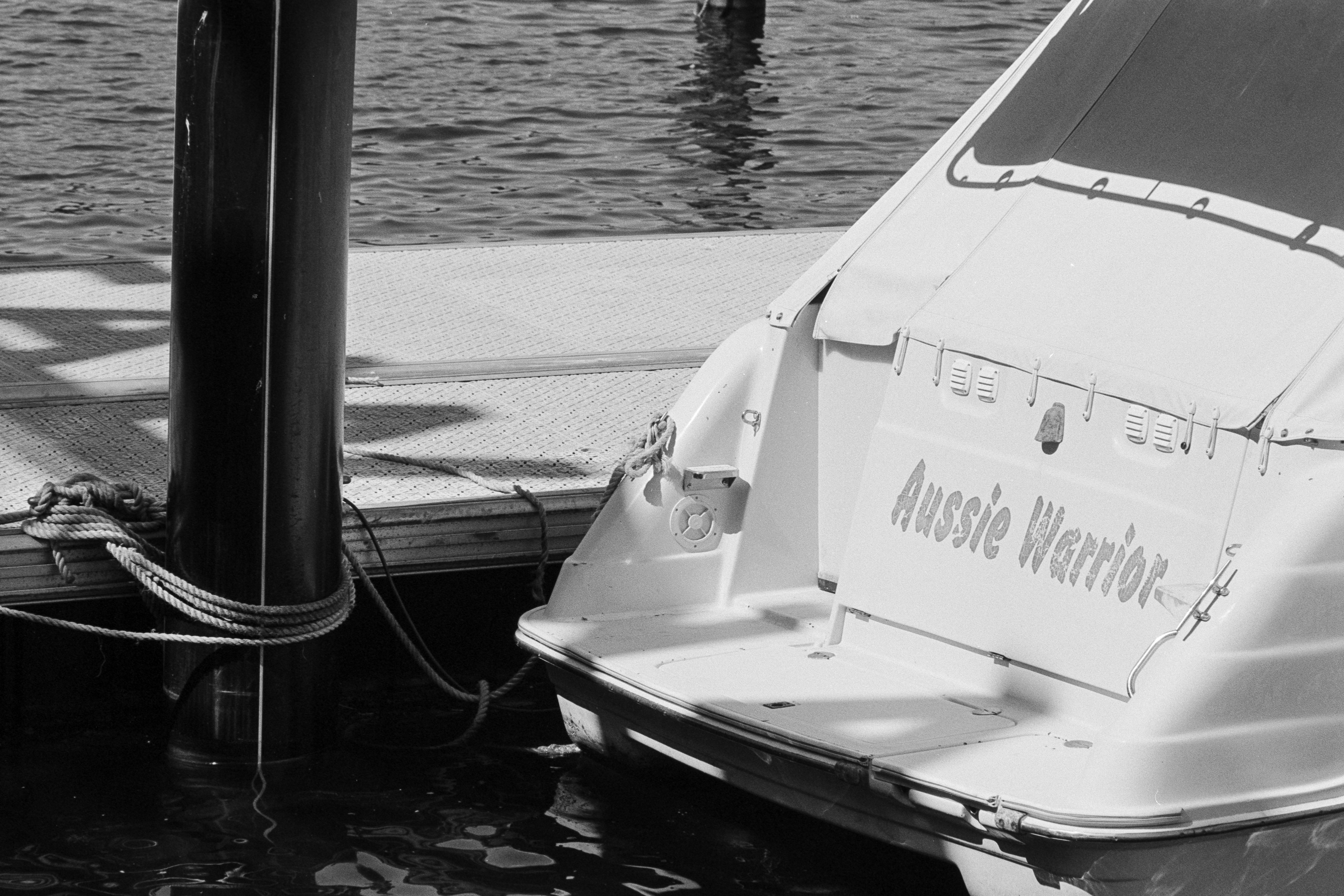
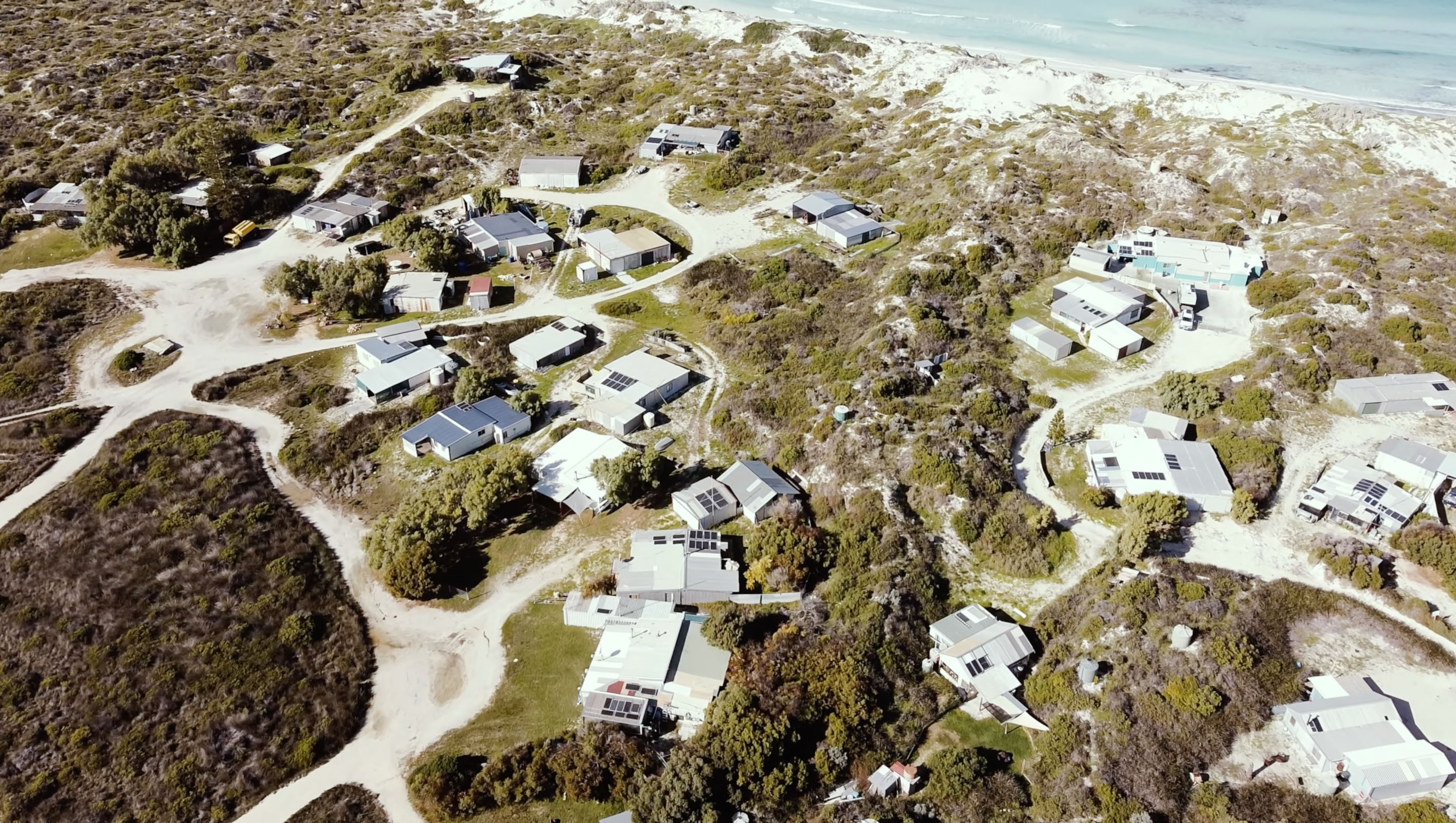
I took this combination to Wedge, one of those remarkable coastal shack communities north of Perth. Wedge has historically been remote, basic and difficult to access, with no electricity, running water or sanitation. Today it is much easier to visit, but it still retains that ramshackle character that makes it such an interesting photographic environment. I loaded up a roll of Ilford HP5 and set out to see what the Zenit and Helios could actually do.
The Challenges of Stop Down Metering and Clumsy Development

I developed the film in 510 Pyro, partly because I knew by then that my exposures had been all over the place. The developer did a good job of helping preserve some of the highlights, but the combination of overexposure, development and my questionable handling of the camera certainly affected some of the results.

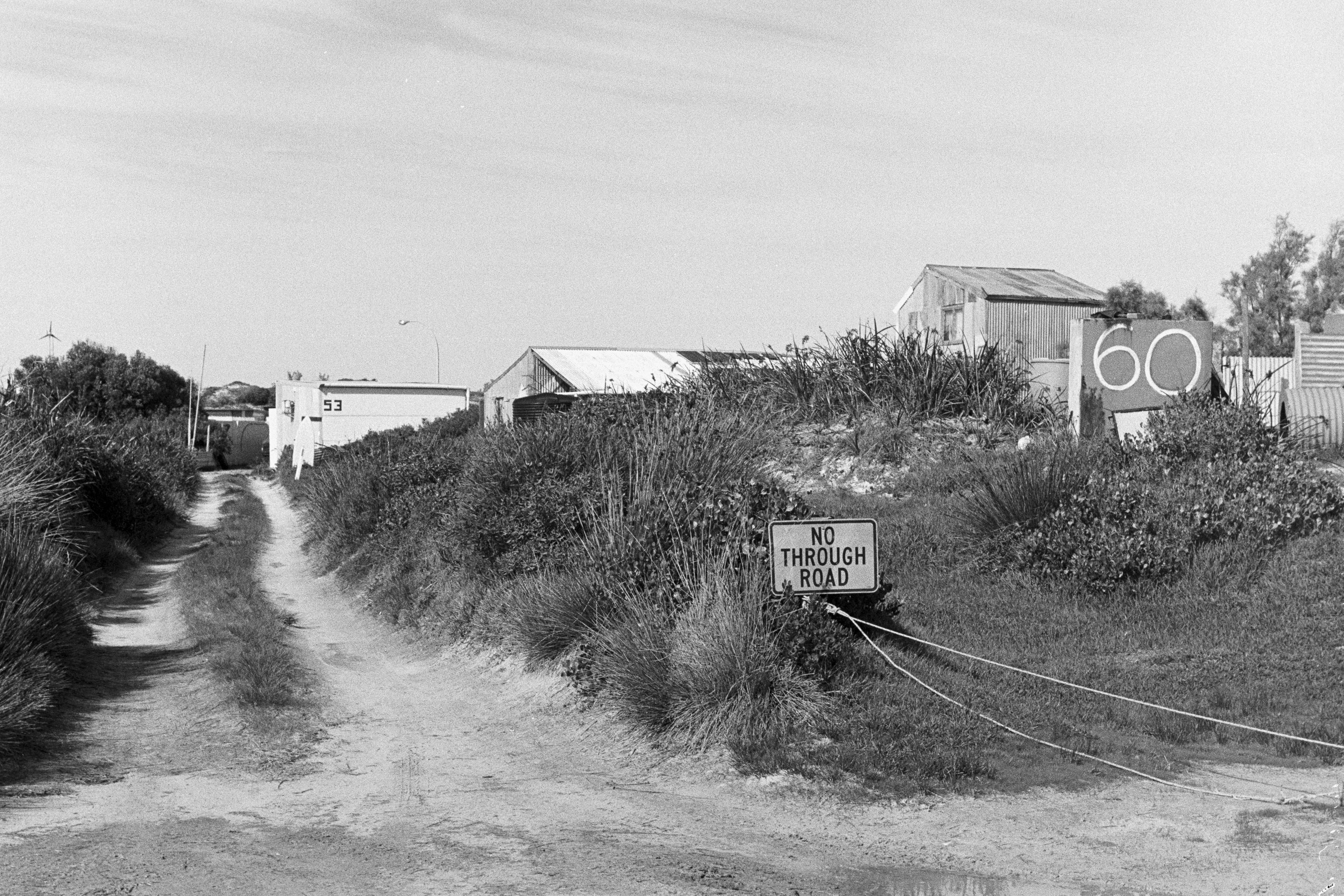
Despite all of that, the pictures actually came out surprisingly well. In ordinary circumstances, the Helios can produce results that aren’t dramatically different from those of a much more modern lens. It is certainly capable of being sharp enough, particularly for portraiture where extreme corner sharpness isn’t especially important. In bright daylight, however, the distinctive character of the lens is harder to see because you simply aren’t going to spend much time shooting wide open.
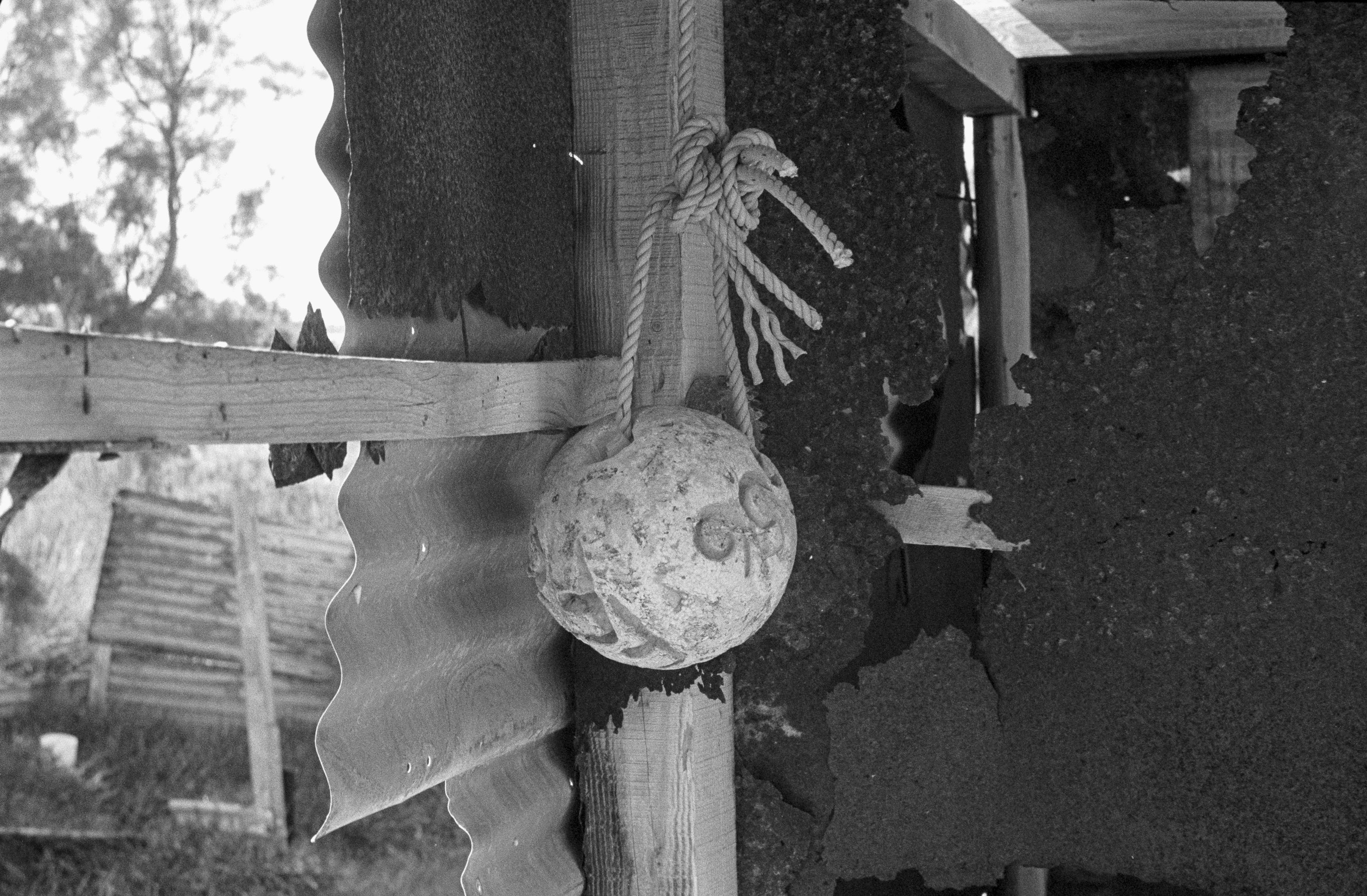
It was later in the day, as the sun began to disappear, that the Helios really started to reveal its personality. Wide open, it becomes an unruly and slightly belligerent lens, producing a frenzy of out-of-focus artefacts that can sometimes compete with the actual subject for attention. If you’re looking for clean, technically perfect images, this isn’t necessarily an advantage. If you’re looking for something with character, however, it is exactly the point.

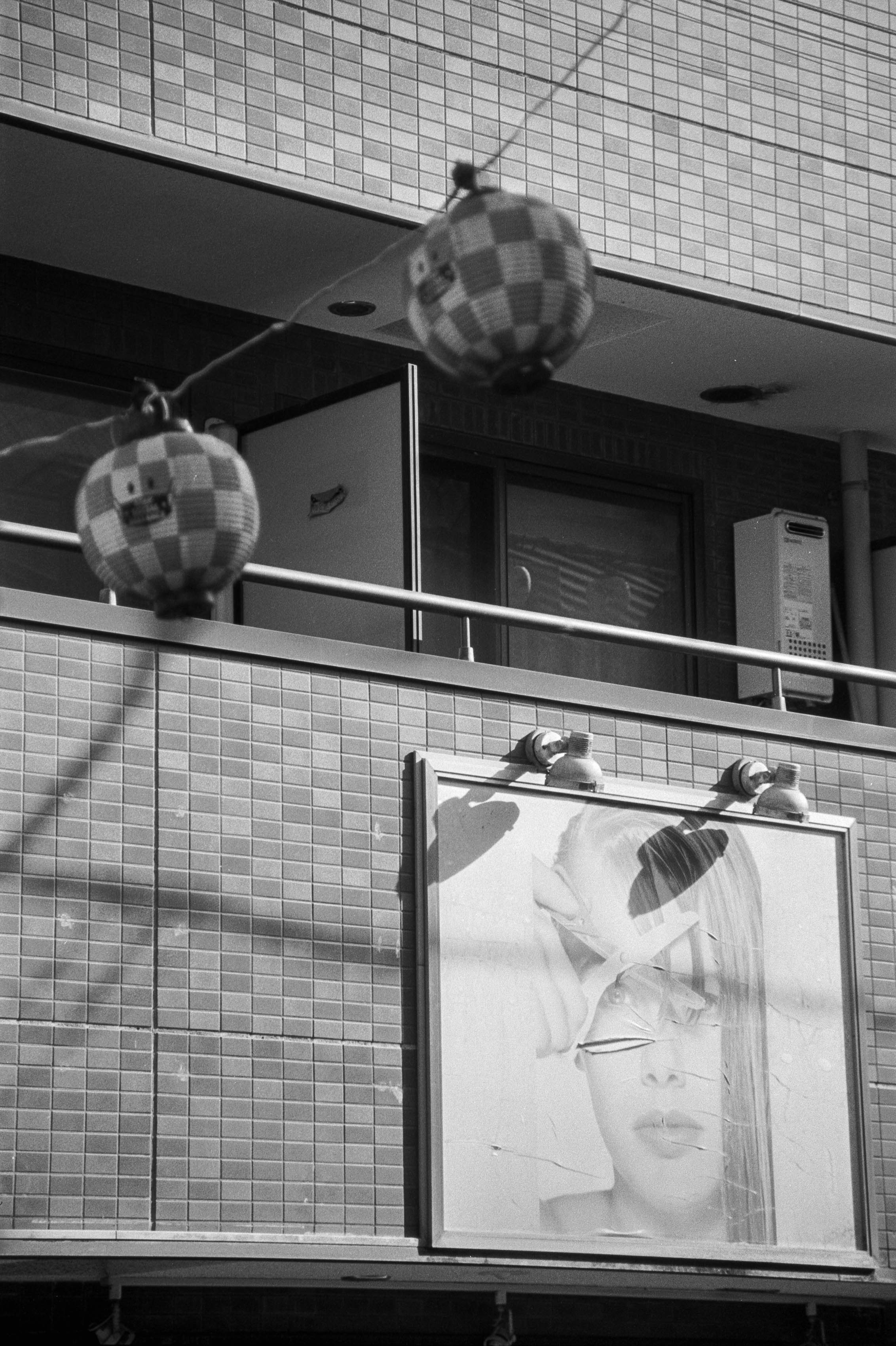
And then there is the famous swirl. It doesn’t appear in every photograph, but when you get the right combination of subject distance, background and aperture, the bokeh takes on that distinctive elliptical shape and seems to rotate around the subject. Suddenly an ordinary photograph can look as though you’re tunnelling through time and space. It is undoubtedly a gimmick, but it is a remarkably entertaining one.

Lens flare is another part of the package. Point the Helios towards a bright light source and it can fill the frame with streaks and artefacts that would make a modern lens designer reach for the nearest emergency brake. Whether that is beautiful or hideous is entirely subjective, but the important thing is that you have the choice.

Character Over Perfection

The irony is that the Helios 44 is probably best appreciated away from the Zenit TTL. Put it on a modern mirrorless camera such as my Nikon Z6 and you can dispense with the Zenit’s eccentric metering system while still enjoying the lens’s optical quirks. You get focus peaking, straightforward exposure control and none of the Soviet-era gymnastics required to take a photograph.

But there is something appealing about using the complete Zenit and Helios combination, even if the experience is considerably less convenient. Both are imperfect, both have plenty of personality and neither is particularly interested in making photography easy. In that respect, they actually fit together rather well.

That is also why I think the combination worked at Wedge. The place itself is rough, rustic and imperfect, with its collection of old shacks and weathered structures scattered through the coastal landscape. It isn’t polished or pristine, but it has character, and that is exactly what the Helios brings to a photograph.

So would I take the Zenit TTL and Helios 44 on a serious photoshoot? Probably not. The camera makes the process unnecessarily difficult, and the lens has such a strong personality that it can easily become the dominant feature of the image. But if the objective is to introduce a little chaos into an otherwise predictable photograph, the Helios is difficult to beat.

It may be old, rough around the edges and about as refined as a Soviet tractor, but that is precisely why I like it. Modern lenses are astonishingly good at removing imperfections from the photographic process. The Helios 44 does the opposite. It gives those imperfections a starring role, and sometimes that’s exactly what a photograph needs.
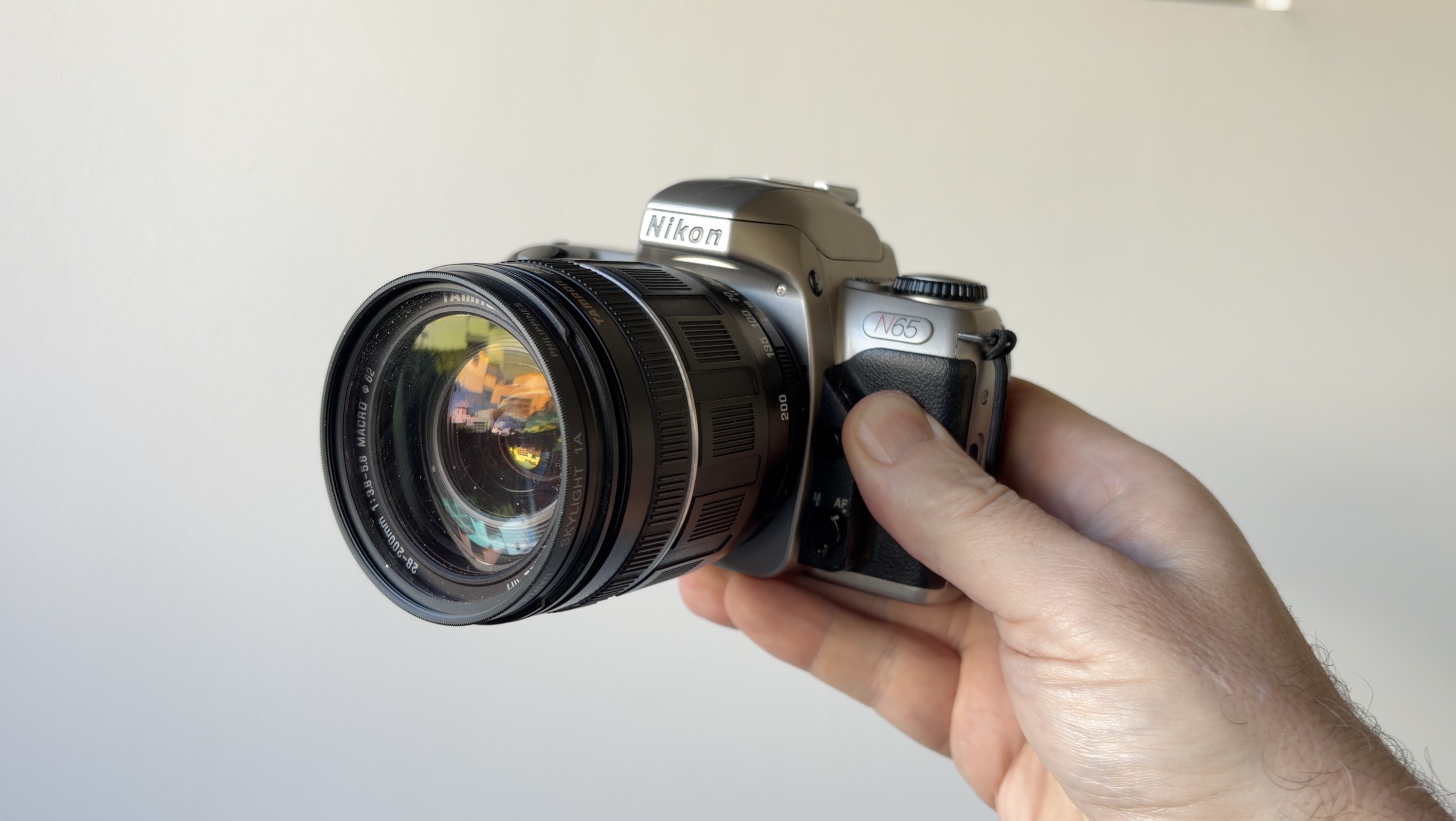

The BEST Cheap Film Camera for Travel? Nikon N65 and Tamron 28-200mm f/3.8-5.6

Are the Nikon N65 and Tamron 28-200mm the peaches-and-cream pairing of budget film photography, or do they clash like toothpaste and orange juice? After taking this decidedly unfashionable combination with me to Tokyo, I think I have a pretty good idea of where it sits in the hierarchy of cheap film cameras.

I travel quite a bit for work, and one of the recurring problems is that my camera collection stubbornly refuses to fit into a suitcase. Eventually, there comes a point where you have to accept that I’m taking one camera and one lens, once you have packed essentials such as a toothbrush, passport and your pet iguana. That makes size, weight, versatility and price rather important considerations.

The Nikon N65, also known as the F65 or Nikon U depending on where you live, is hardly the sort of camera that gets the heart racing. It is a late-era film SLR, made from plastic, finished in a rather unfortunate silver colour and generally ignored by photographers in favour of more glamorous cameras. It is, in other words, absolutely perfect for me.

The camera weighs less than 400 grams, yet manages to pack in an impressive collection of features. You get Program, Shutter Priority, Aperture Priority and Manual modes, along with 3D Matrix metering, exposure compensation, shutter speeds up to 1/2000 second, TTL flash and even deliberate double exposures. It is very much a product of the period when manufacturers had essentially perfected the SLR and were busy figuring out how many features they could squeeze into something ordinary people could afford.

Its biggest problem may simply be that it isn’t cool. The silver plastic body looks more like something you’d find in a child’s dressing-up box than around the neck of a serious photographer. There is a black version if you’re particularly concerned about your sartorial reputation, but the N65 isn’t going to impress anybody at a photography exhibition. Fortunately, I have no reputation to protect.

The Tamron Superzoom Problem

The other half of the equation is the Tamron 28-200mm f/3.8-5.6 Macro AF Aspherical XR (IF), a lens whose name contains approximately as many acronyms as some entire camera systems. Tamron was one of the pioneers of the all-in-one zoom, producing a 28-200mm as early as 1992 at a time when achieving that kind of focal range without producing complete optical rubbish was a genuine challenge.

This particular version comes from the later generations of the design and includes aspherical and high-refractive-index elements. It isn’t going to produce the sort of three-dimensional pop that inspires lengthy forum arguments, but it is generally sharp, well corrected and has enough contrast to produce a pleasingly modern-looking image on film.

That’s important because this isn’t really a test of ultimate optical performance. I’m not trying to determine whether the Tamron can defeat a modern professional zoom in a forensic pixel-peeping contest. The whole point is finding the sweet spot between price, size, quality and versatility. A 28-200mm gives me the ability to photograph a cathedral, a street scene or something considerably further away without changing lenses, and that’s enormously useful when travelling.

There are limitations, of course. The relatively slow maximum aperture means this isn’t the lens I’d choose for exploring the darkest corners of Tokyo with ISO 100 film. In those circumstances, a fast 35mm or 50mm prime would be a much better choice. At 200mm, you also need to be careful with camera shake, particularly when shooting slow film such as Kentmere 100.

But when the light is good and I hold the camera properly, the results are more than good enough for my purposes. Some photographs were soft, but that wasn’t necessarily the fault of the lens. At 200mm, a little movement is enough to turn a potentially sharp photograph into something resembling a vague memory of having taken a photograph.

And when everything comes together, the results are surprisingly convincing. Some of the photographs I took in Tokyo was easily sharp enough to have been produced by a much more expensive camera and lens combination, while costing a fraction of the price and weighing considerably less.

The Budget Travel Sweet Spot

Taking the N65 and Tamron together, the entire combination weighs less than about 750 grams. That makes it a remarkably portable package considering the enormous focal-length range it provides. A 28mm isn’t ultra-wide, but it’s wide enough for most street photography without introducing excessive distortion, while 200mm gives you enough reach to isolate details and compress layers in a busy urban environment.

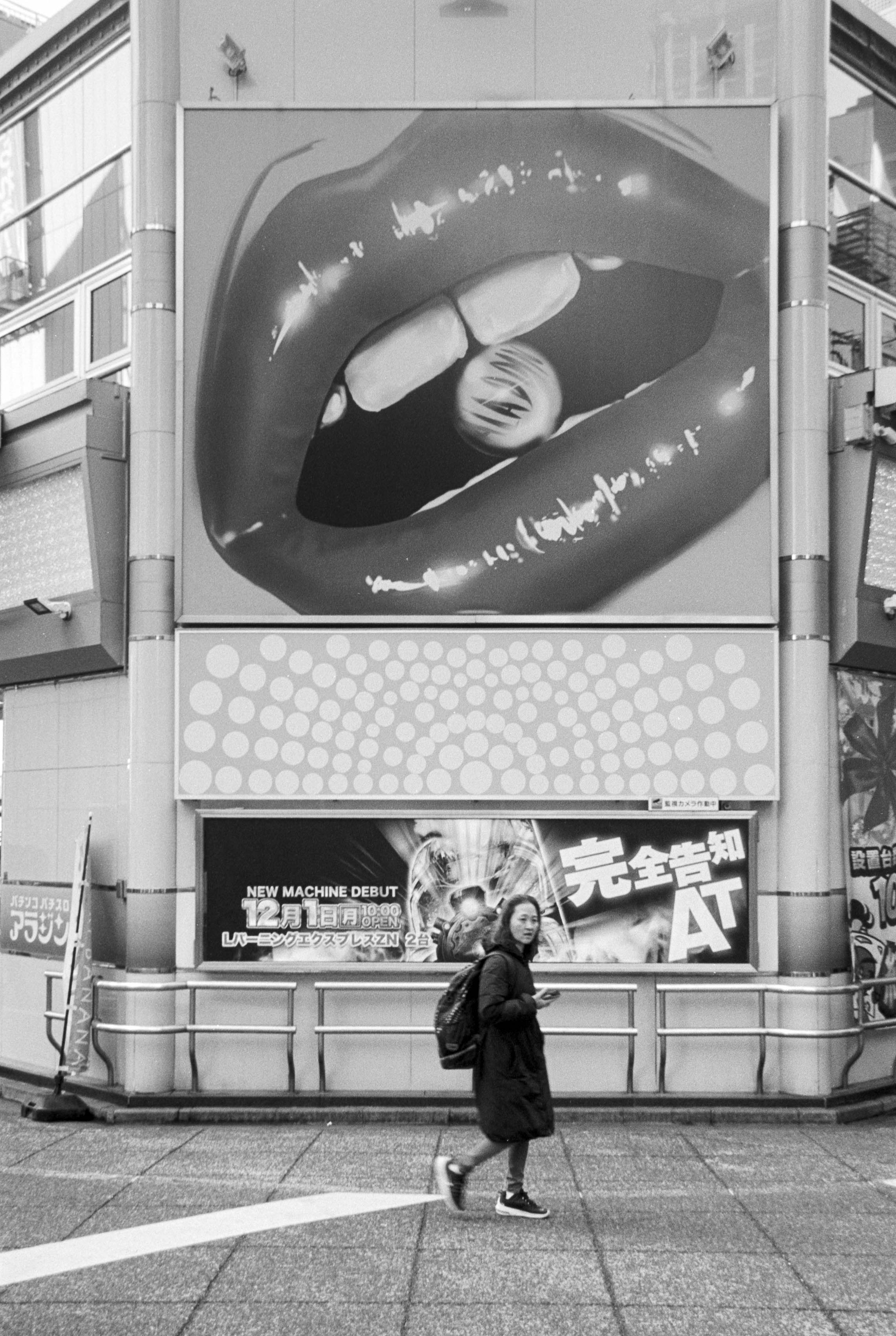
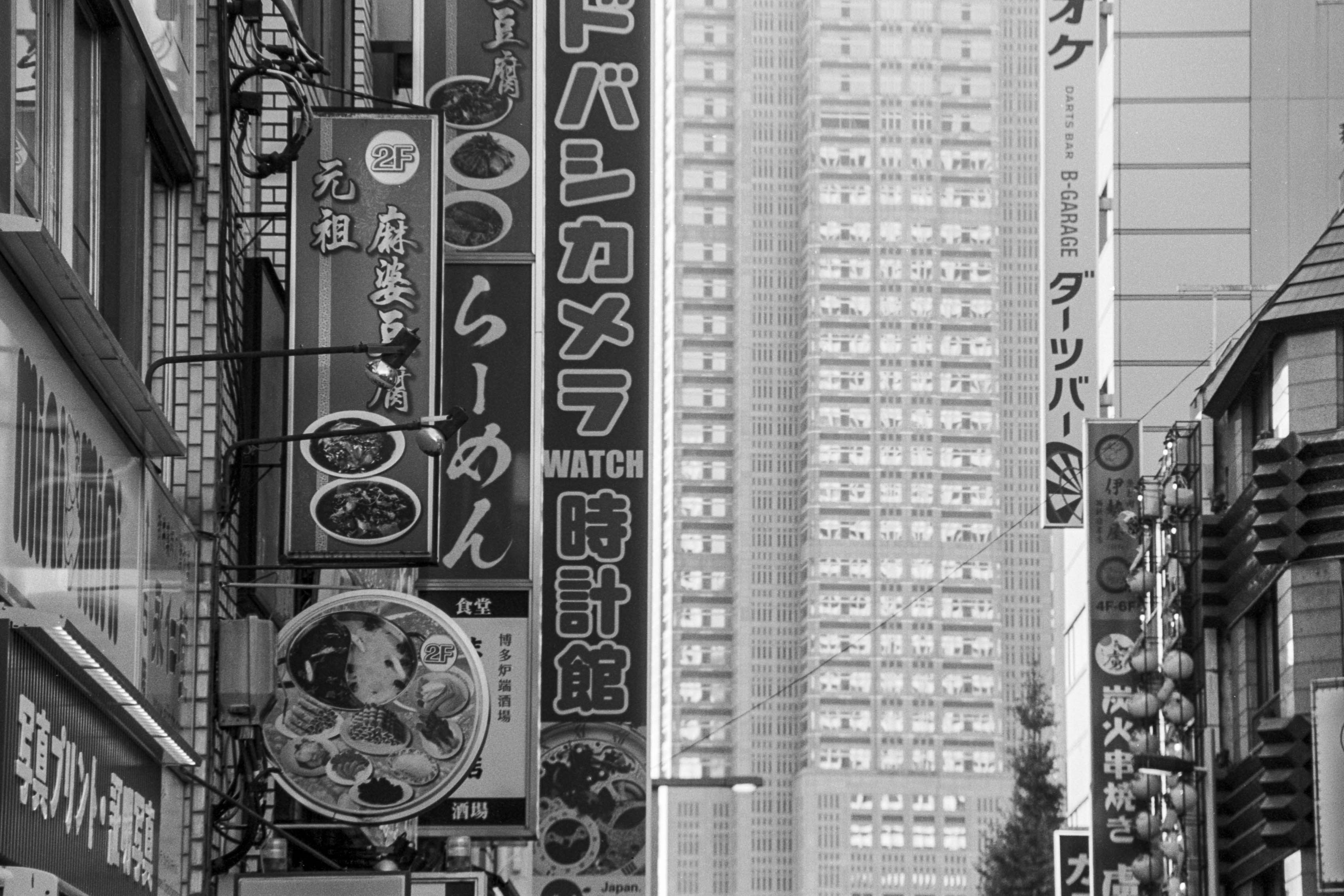
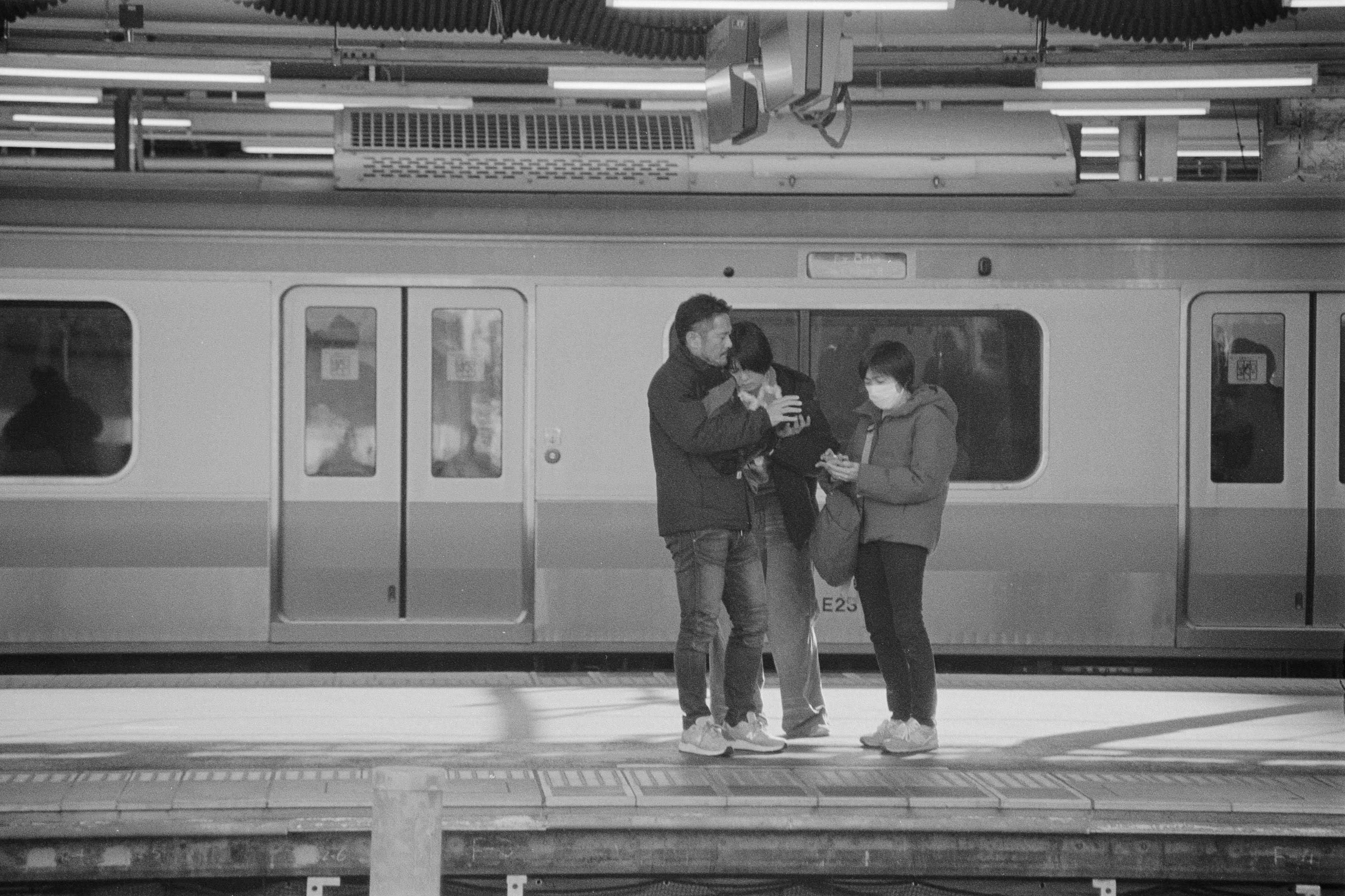
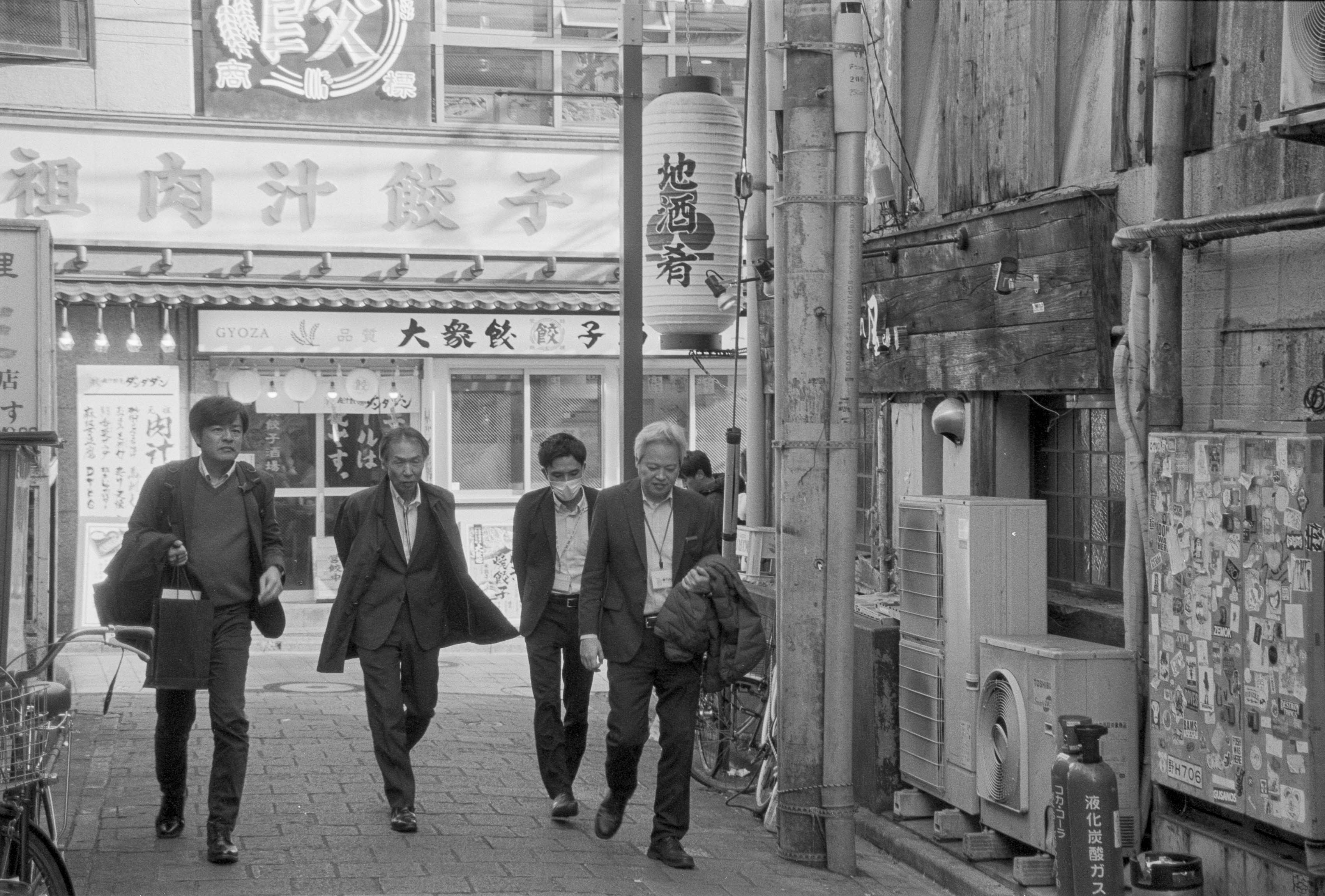
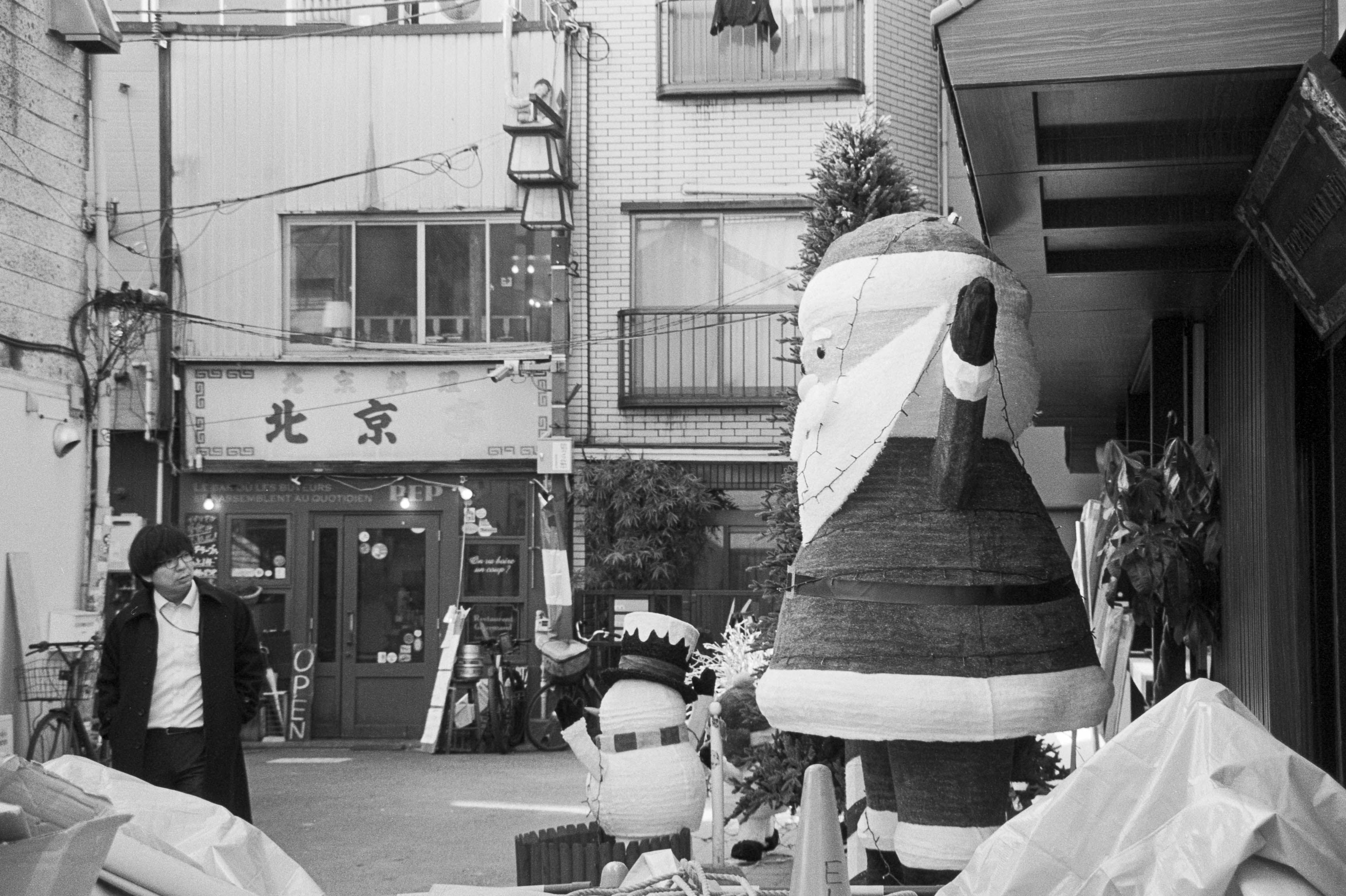
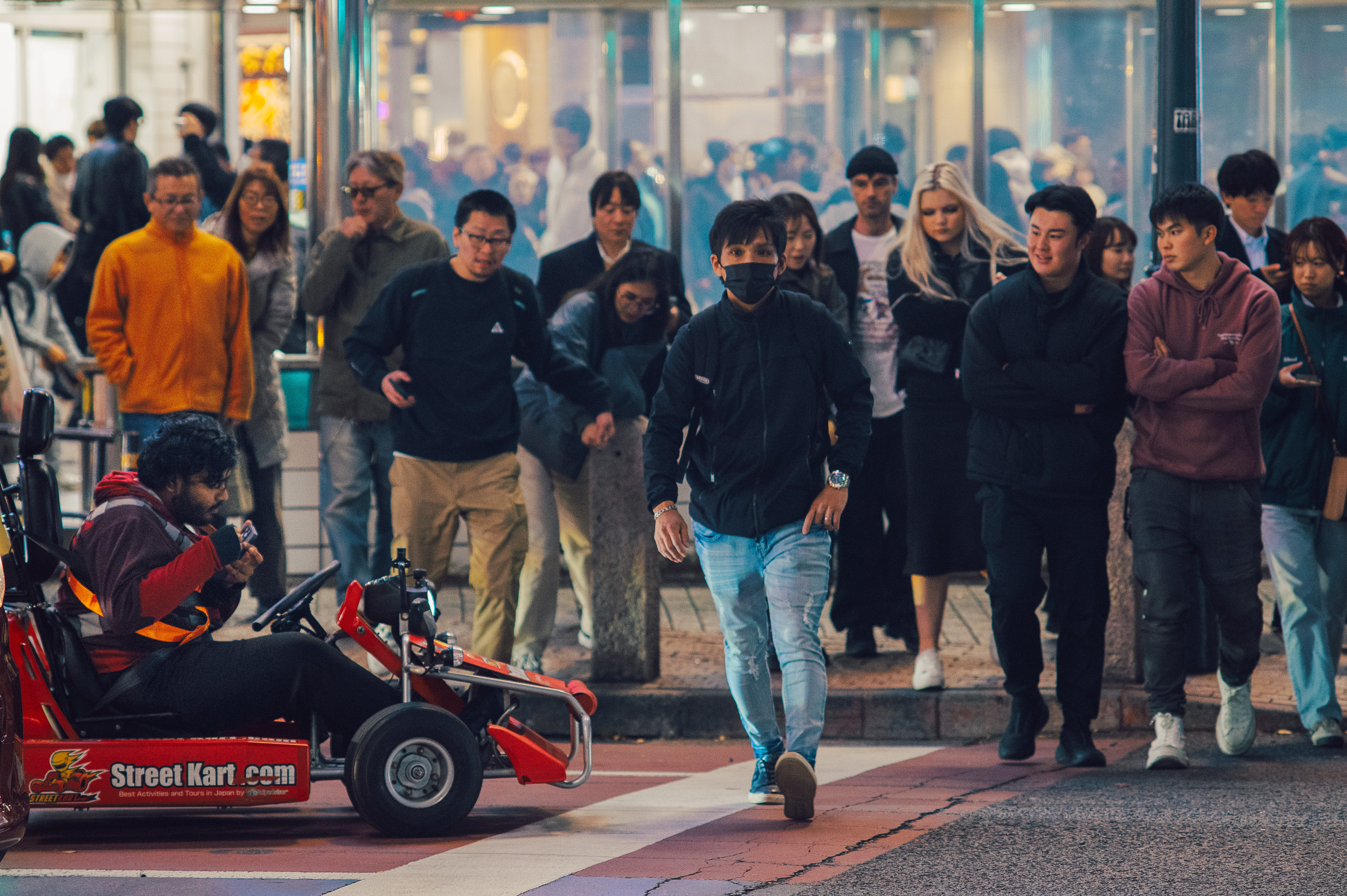
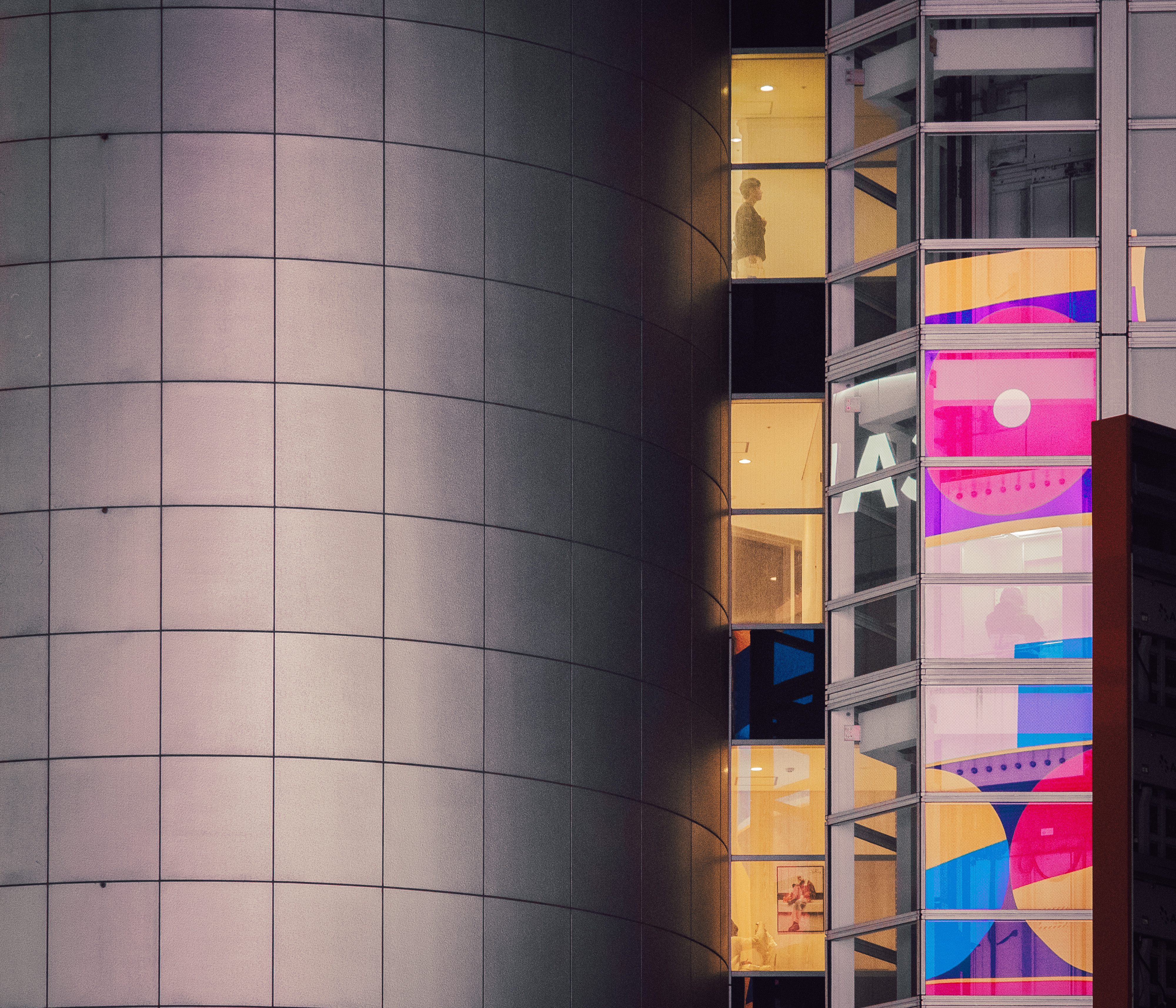
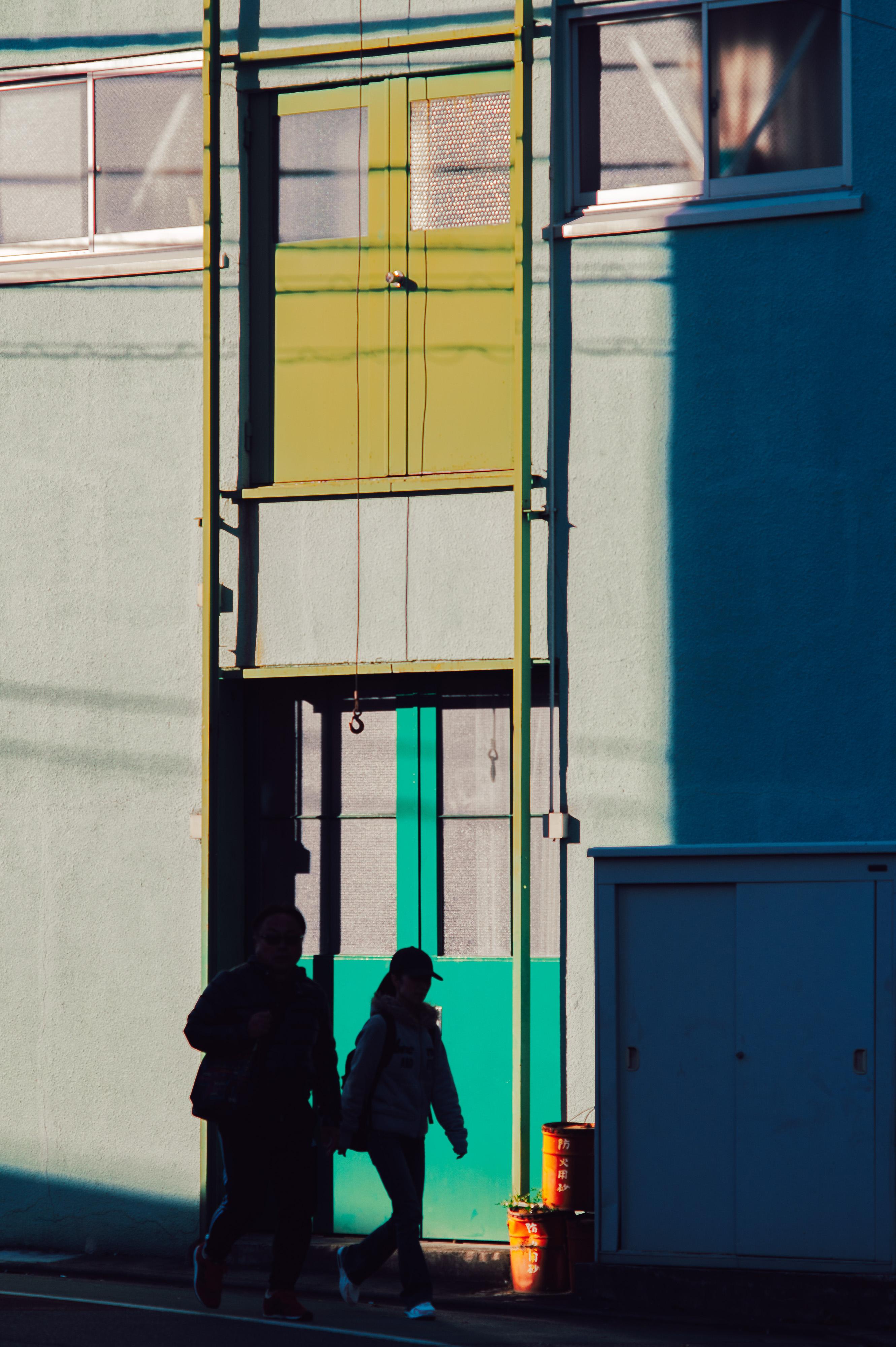
That’s exactly what I found useful in West Shinjuku and Nakano. I wasn’t simply trying to photograph the spectacular parts of Tokyo; I wanted to capture the mixture of business, social life, signage, buildings and random human moments that gives these places their character. The 200mm end of the zoom was particularly useful for compressing layers of windows and billboards, while also allowing me to pick out small moments happening within the chaos.

There are alternatives. Nikon’s F75 and F80 are better cameras and solve some of the N65’s irritating quirks, although they are correspondingly more expensive and, in the case of the F80, heavier. The N65’s Dynamic AF can decide to change focusing behaviour when it detects movement, which isn’t particularly helpful when you’re carefully composing something near the edge of the frame. I also find the inability to override DX film coding frustrating.

There are plenty of alternative lenses, too. Nikon’s 28-105mm and 28-85mm are excellent inexpensive choices if you don’t need the 200mm reach, while the humble 28-80mm can provide a remarkably cheap and lightweight solution. There are equivalent combinations from Canon, Pentax, Minolta and others, so this isn’t necessarily a recommendation that everyone should rush out and buy an N65.

For me, though, this combination hits that elusive golden triangle of heft, price and quality remarkably well. It isn’t perfect, and it certainly isn’t glamorous, but that’s not really the point. If I wanted perfection, I wouldn’t be shooting 25-year-old plastic cameras and cheap black-and-white film in the first place.

The N65 and Tamron 28-200mm are cheap, light, versatile and capable of producing photographs that are more than good enough. More importantly, they let me travel with one camera and one lens without feeling as though I’ve sacrificed the ability to photograph whatever happens to come along. In the end, that’s probably a much more useful quality than being cool.

So, will I be taking this combination on my next holiday? Quite possibly. And if that means leaving the expensive digital camera at home while carrying around a silver plastic Nikon that looks like it escaped from a 2000s department store, so be it. Sometimes the cheap seats have a surprisingly good view.

The Voigtlander 15mm Super Wide-Heliar f/4.5 for M39 in Vienna: A Great Lens, just not for Digital

There are lenses you use every day, and then there are lenses that completely change the way you see the world. The Voigtländer 15mm Super Wide-Heliar f/4.5 LTM definitely falls into the second category.

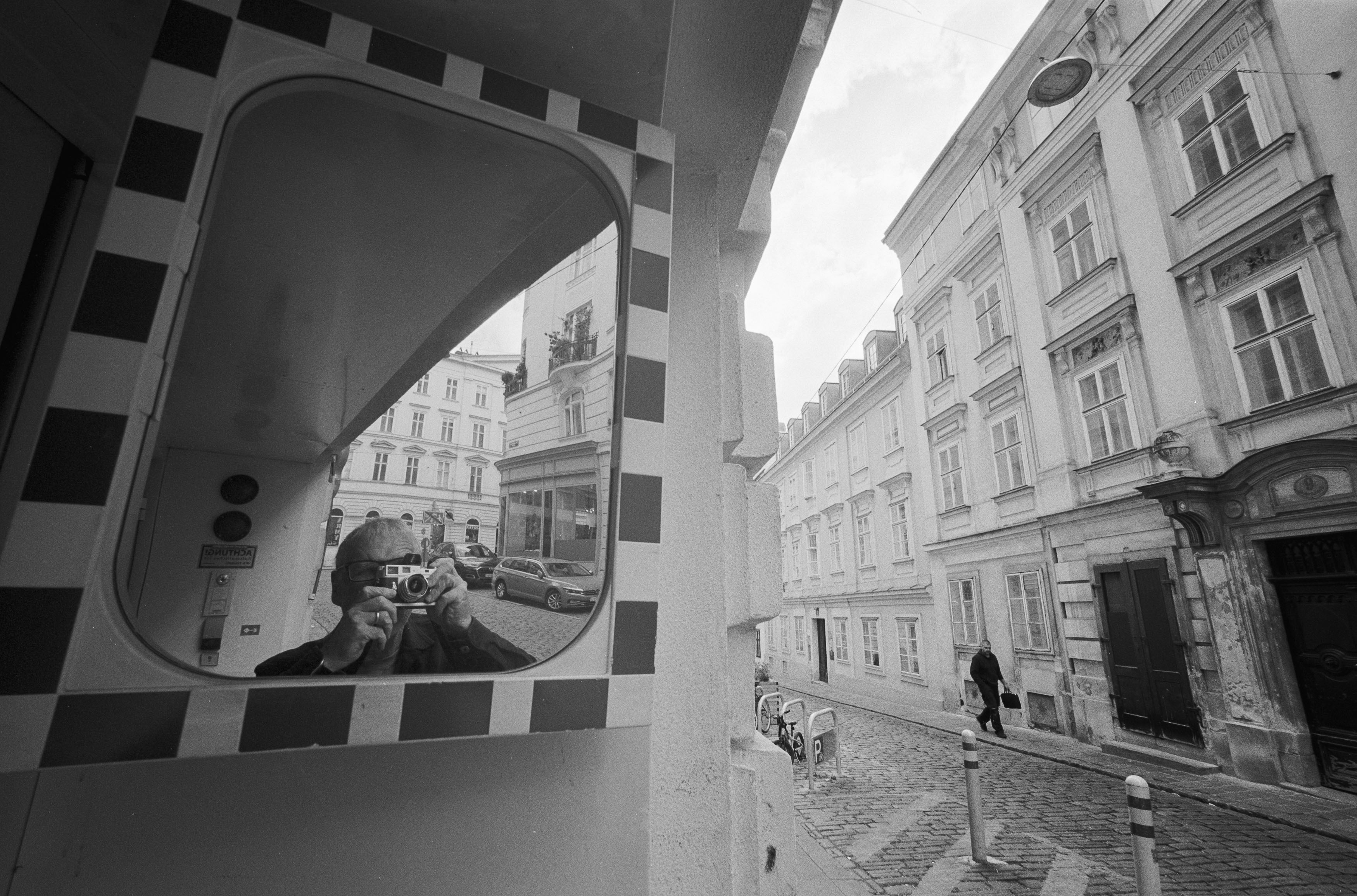
I recently packed it for a trip to Vienna, partly because the city’s grand architecture seemed like the perfect playground for an ultra-wide lens, and partly because I wanted to see whether this quirky little optic still deserved its reputation. After spending time with it on both my Leica M2 and Nikon Z6, I came away impressed—but also reminded that a 15mm lens demands far more from the photographer than most people realise.

This isn’t the sort of lens you casually leave on your camera. It’s more like a special occasion lens that rewards patience, careful composition and a willingness to embrace the strange.

Learning to See at 15mm

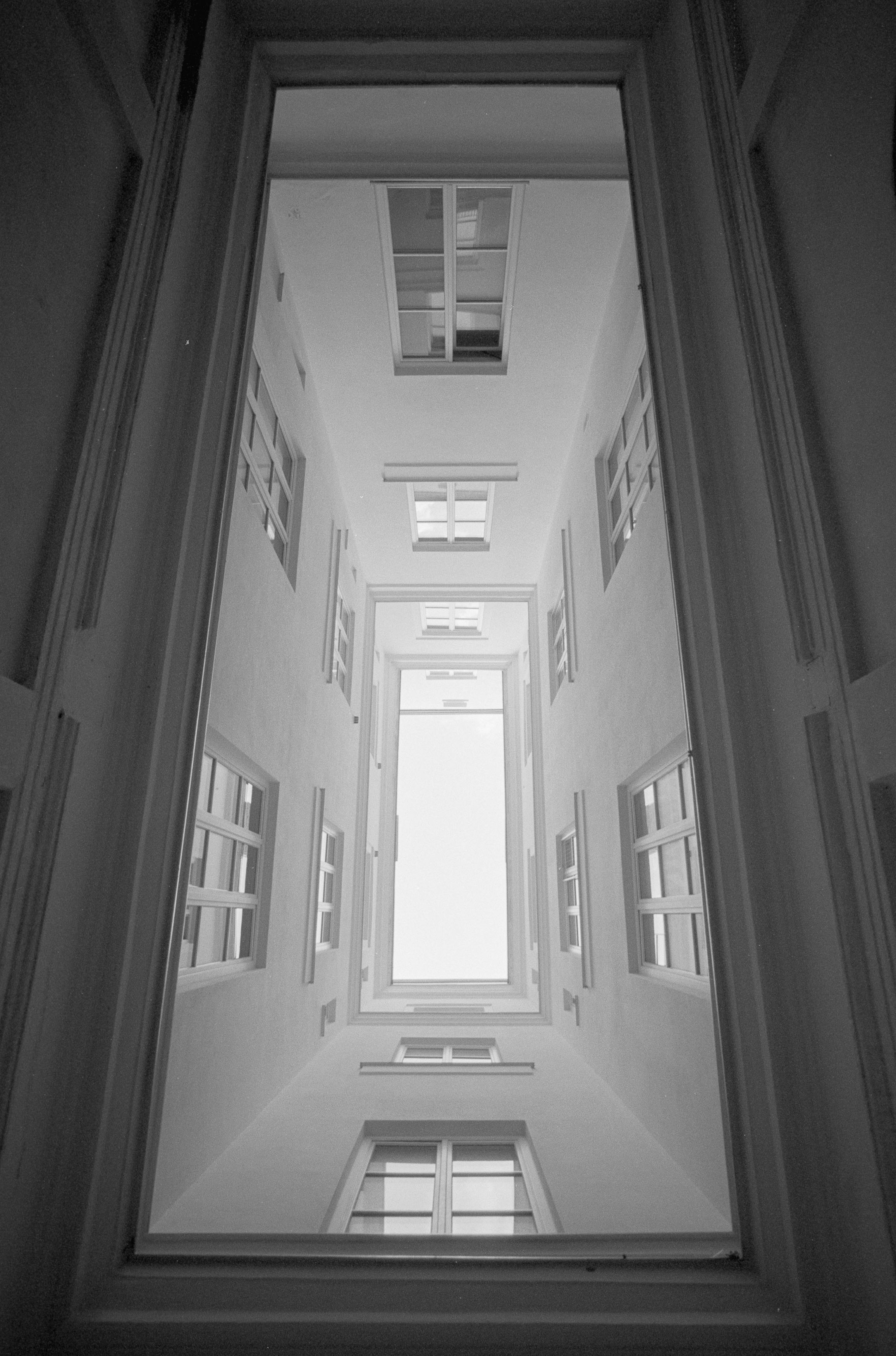
Fifteen millimetres is unbelievably wide. Point it at a scene and it doesn’t simply capture what’s in front of you—it seems to swallow everything around it as well.

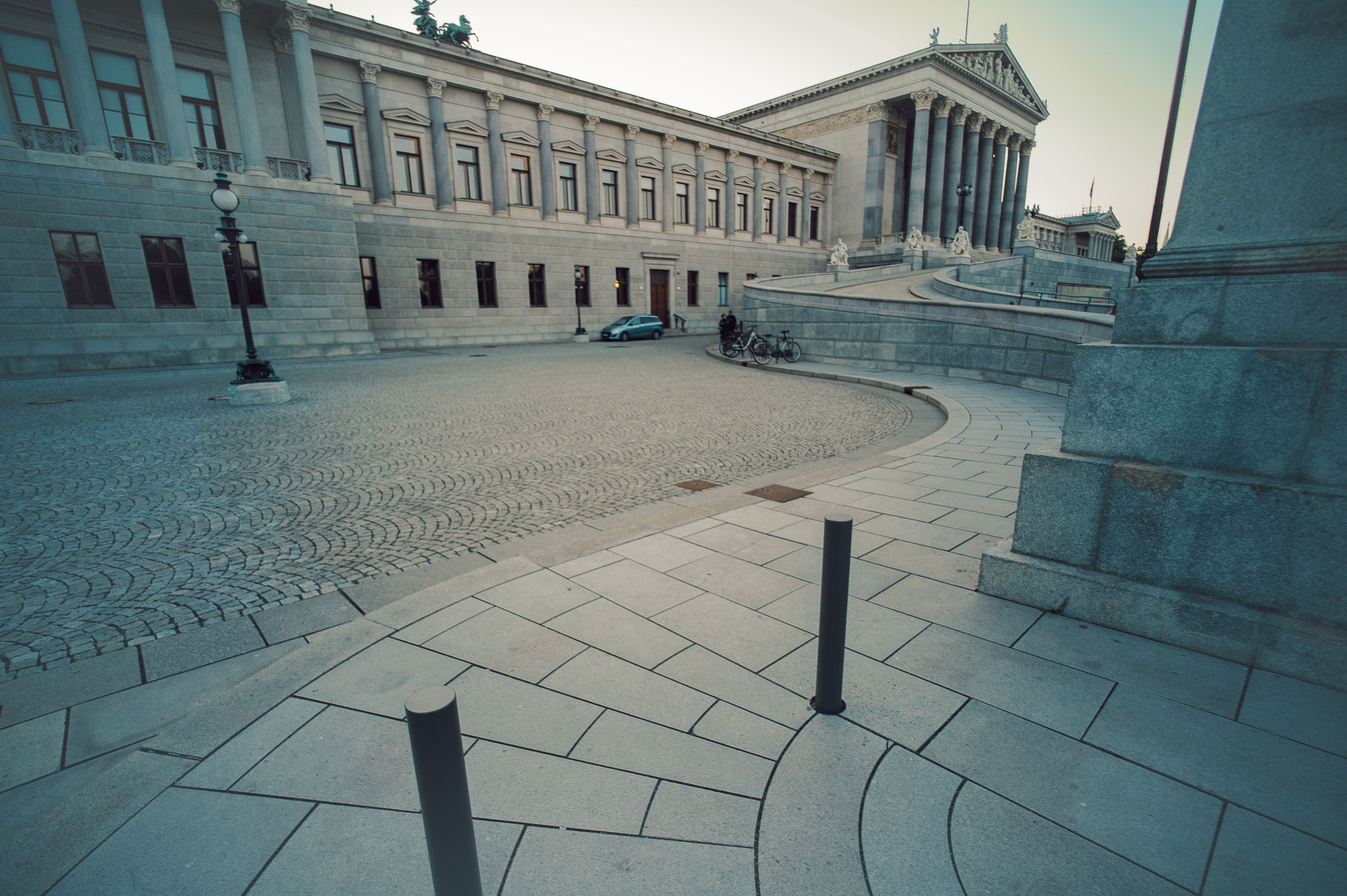
The first thing you notice is how dramatically it changes perspective. Objects close to the camera become enormous, while anything further away quickly shrinks into the distance. Straightforward compositions suddenly become much more complicated because every corner of the frame starts demanding your attention. If there isn’t something interesting happening throughout the image, you’ll often end up with a photograph that contains an awful lot of… well… not very much.

That’s why using this lens feels like learning photography all over again. You can’t rely on the habits you’ve built shooting 35mm or 50mm lenses. Instead, you have to train yourself to notice foreground subjects, converging lines and the relationships between objects across the entire frame.

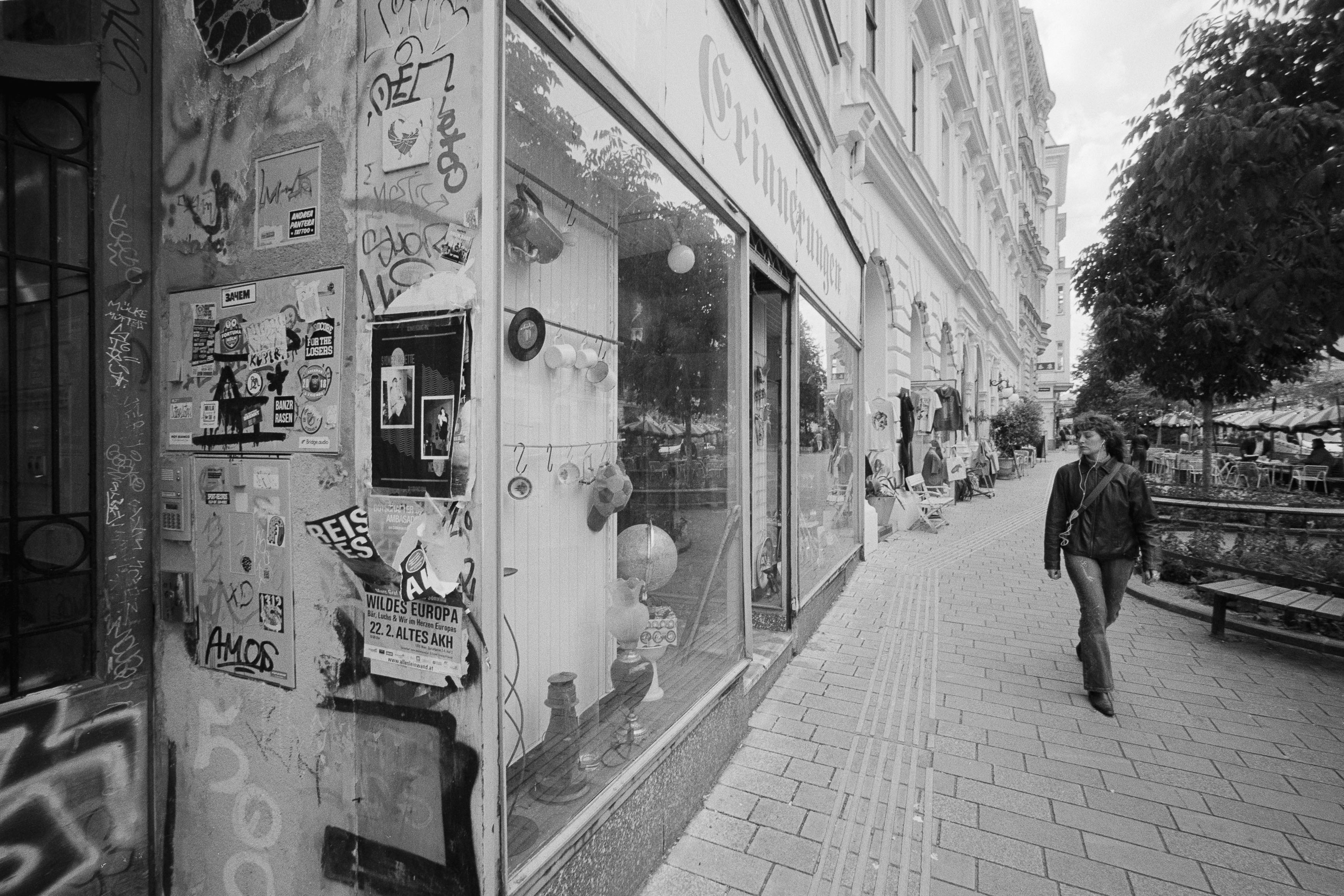
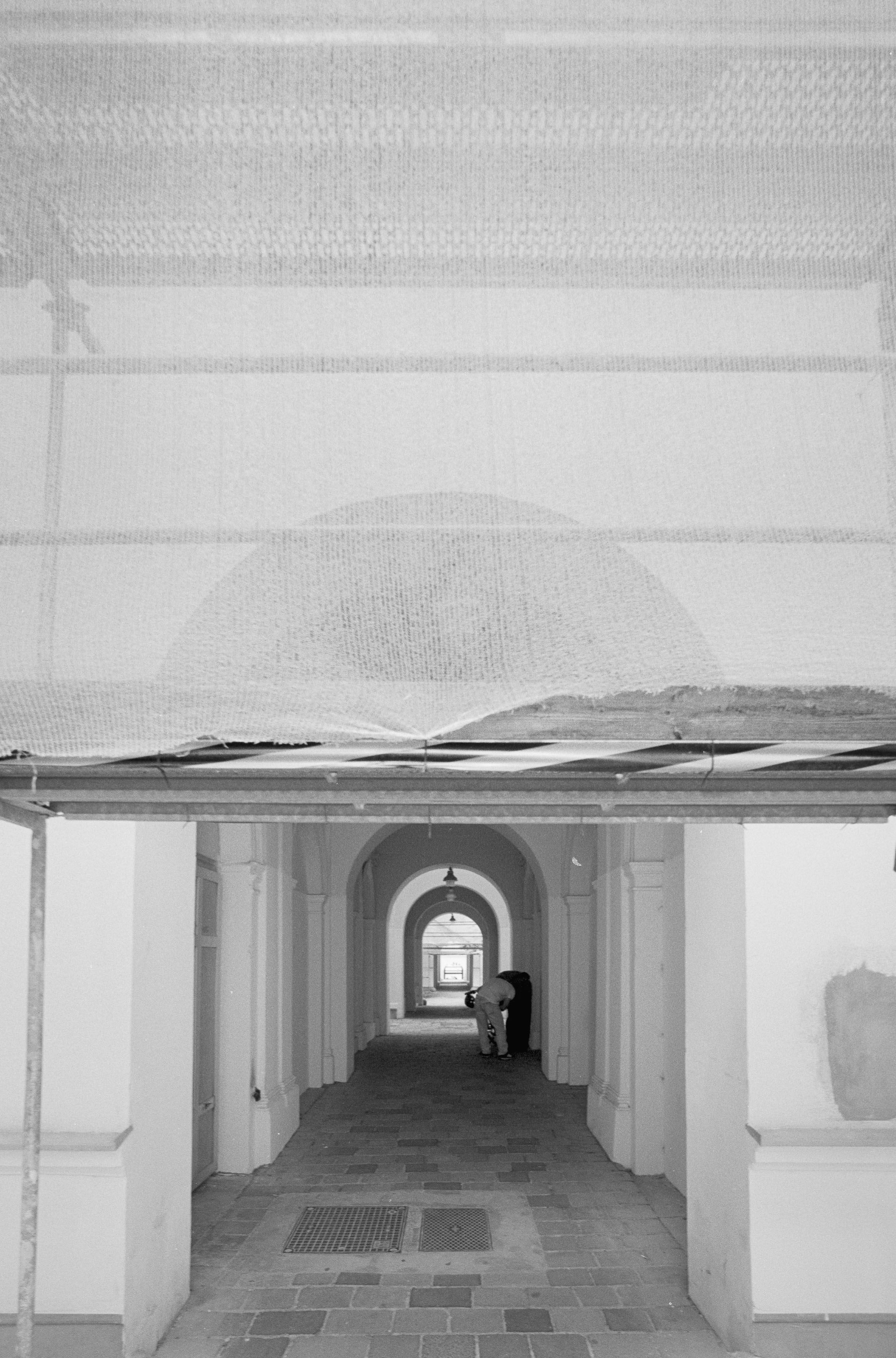
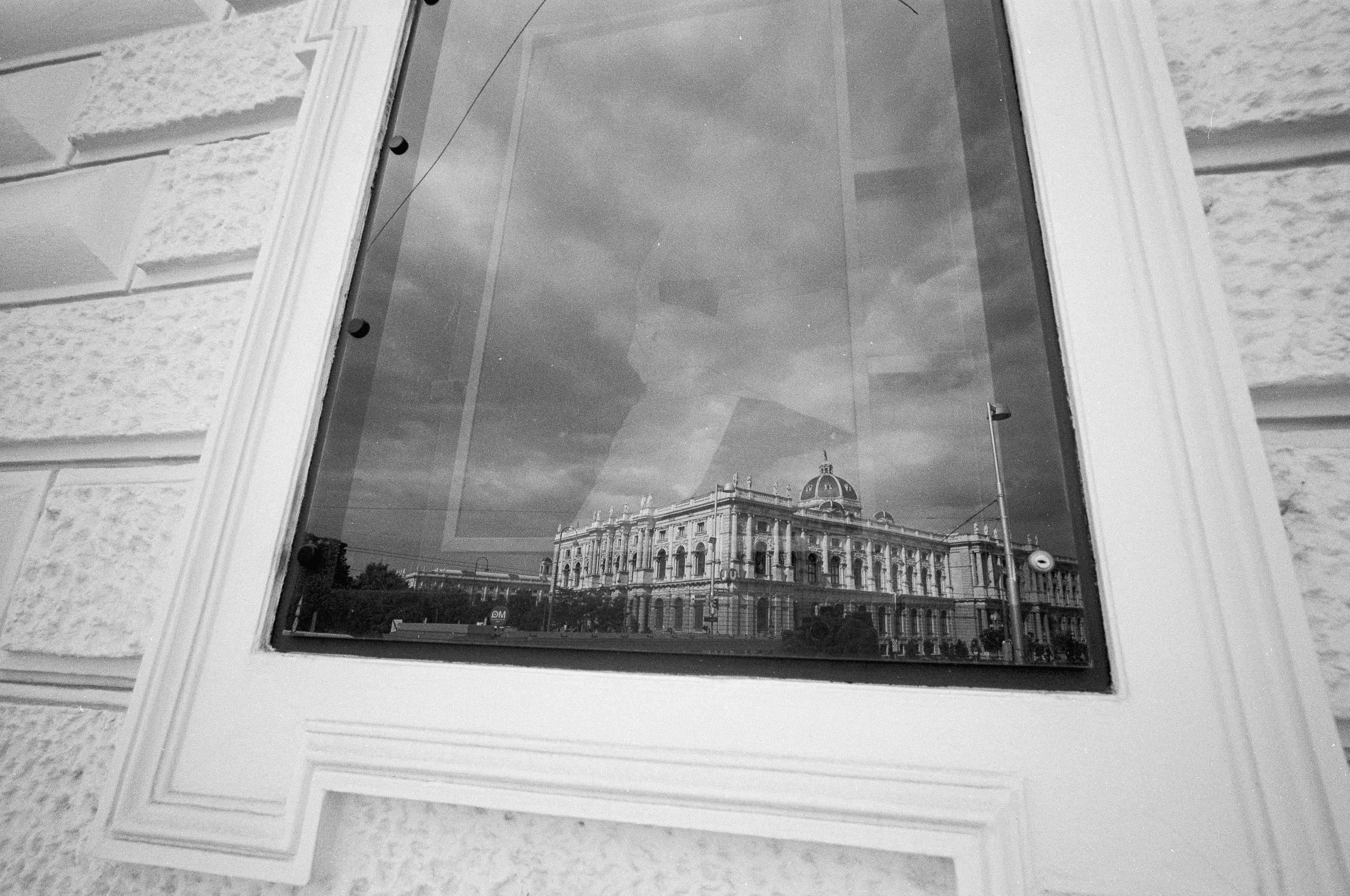
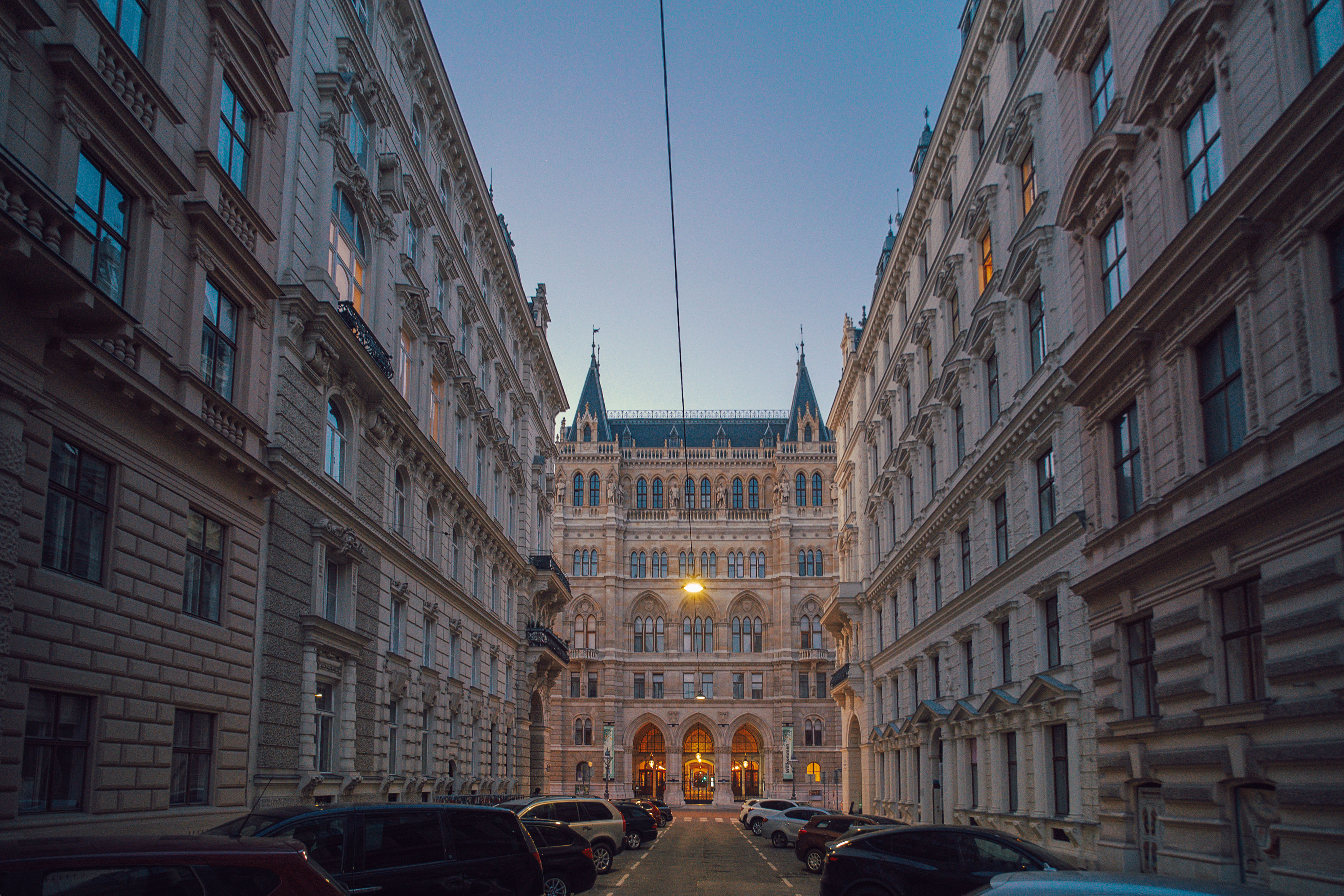
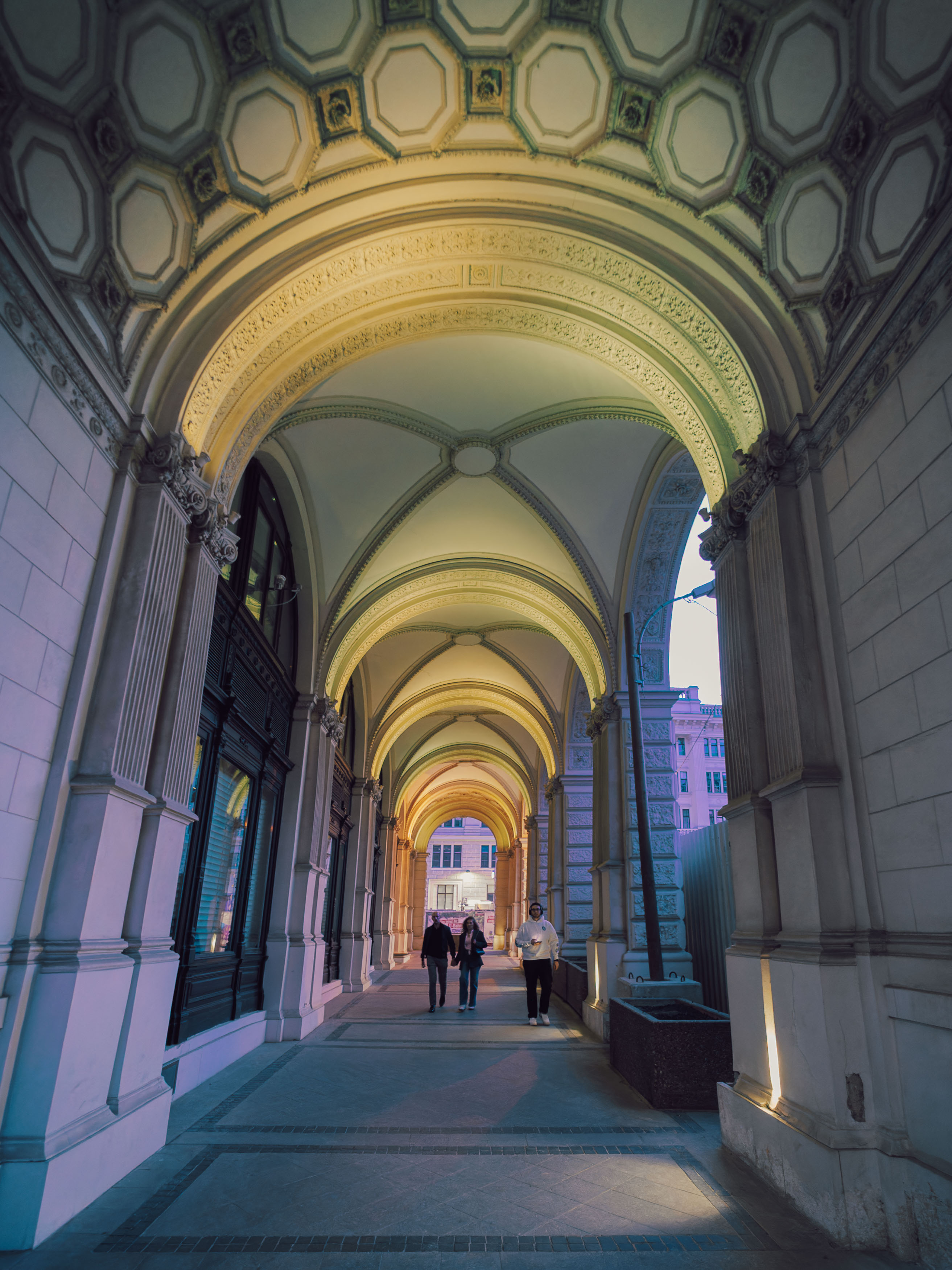
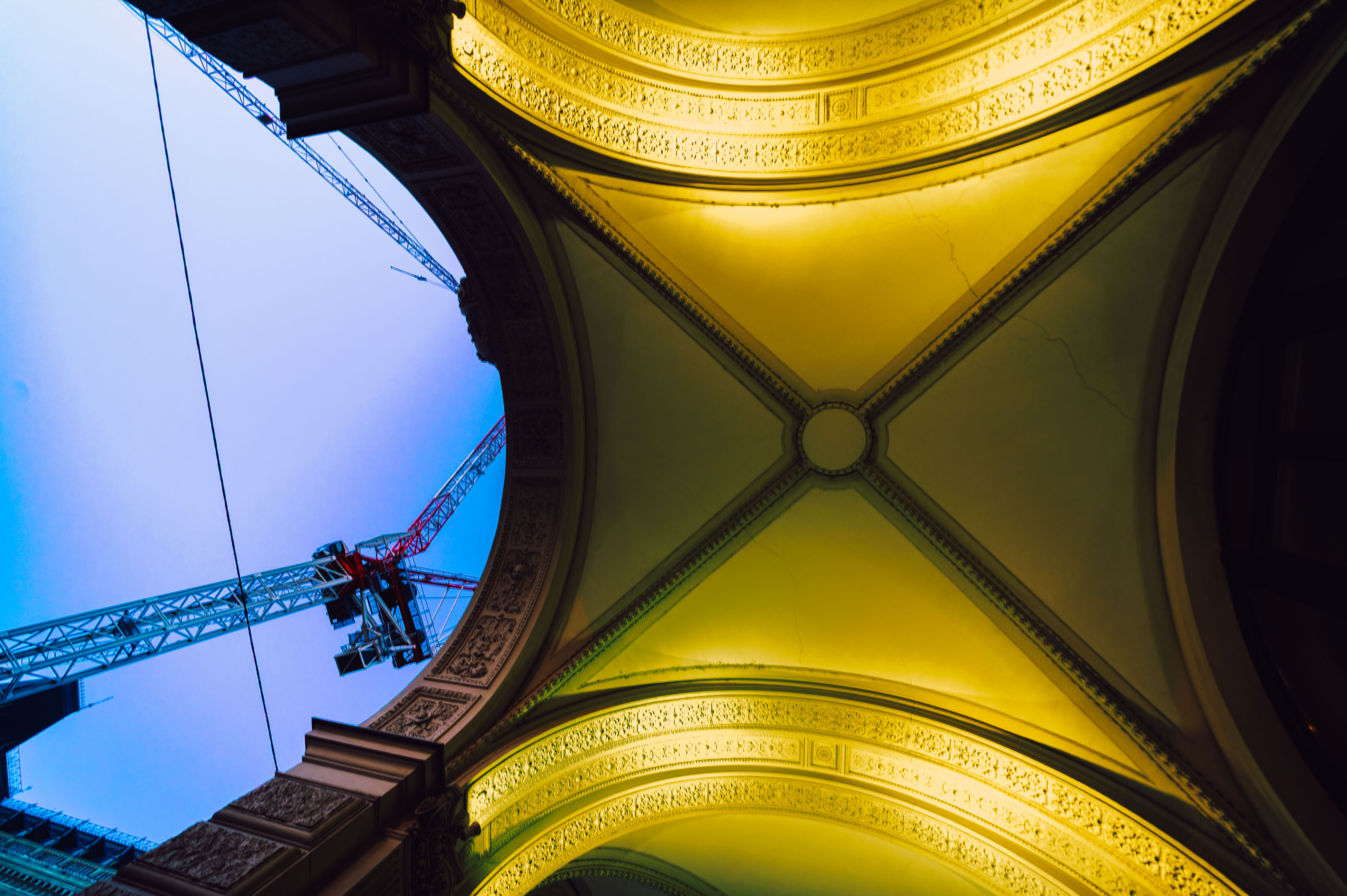
Vienna turned out to be the ideal place to practise. The city is packed with grand Baroque and Neoclassical buildings, wide boulevards and impressive public spaces that suit this kind of exaggerated perspective beautifully. Even ordinary streets can suddenly feel dramatic when viewed through such an expansive field of view.

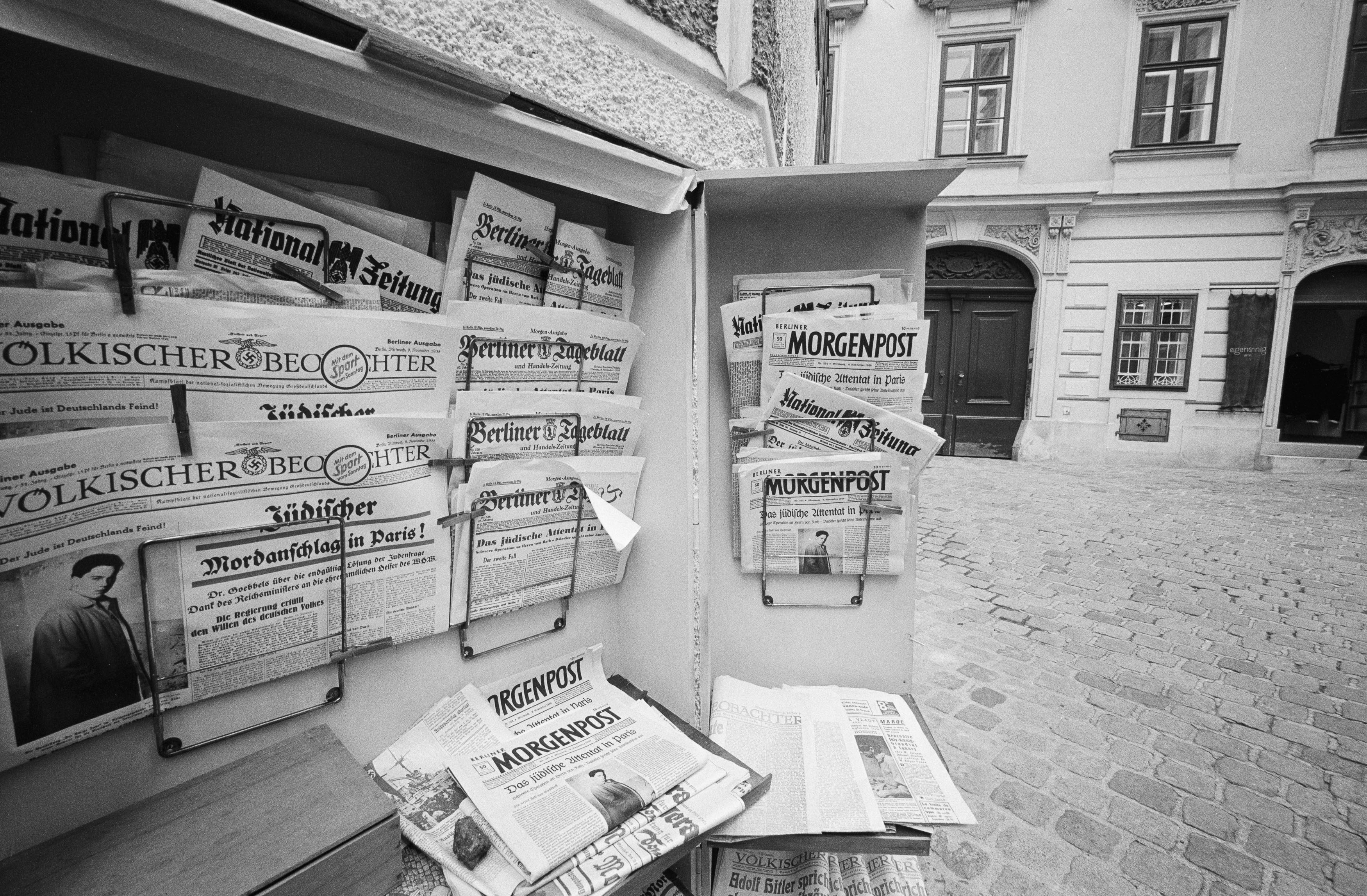
Not every outing went entirely to plan, though. During one photo walk I accidentally wandered into what appeared to be the filming of a historical production and quickly realised I wasn’t quite as welcome as I thought. I made a fairly discreet exit, although not before managing to expose a few frames that will probably confuse future historians if anyone ever discovers the negatives.

Small Lens, Serious Engineering

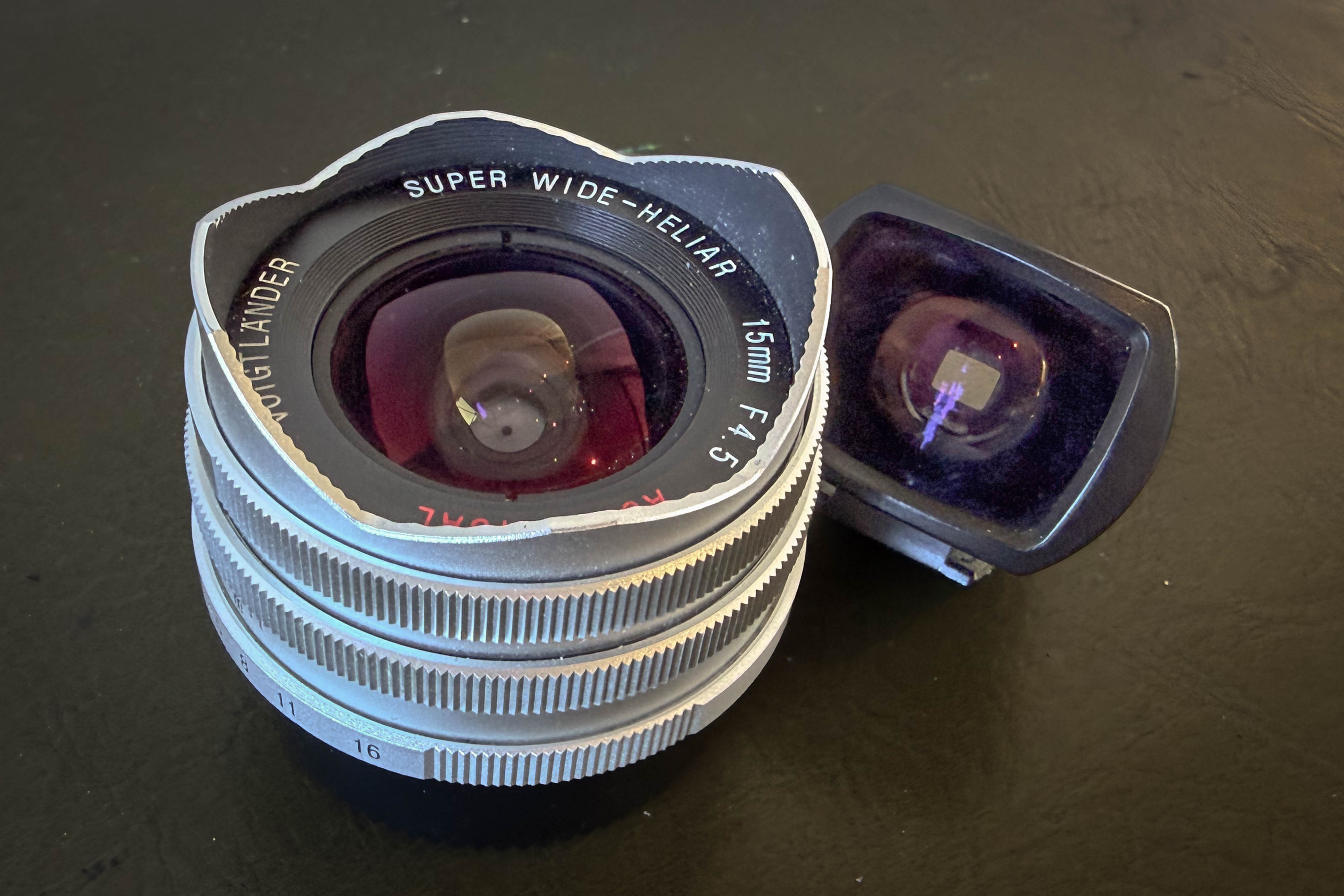
One of the most surprising things about the Voigtländer is just how tiny it is. Despite its compact dimensions, it feels reassuringly solid rather than toy-like. At around 190 grams it’s light enough to carry all day without thinking about it, yet substantial enough to inspire confidence.

Mine is the original Leica Thread Mount version, first released in 1999 alongside Voigtländer’s Bessa cameras. It’s actually relatively modern by Leica screw mount standards, although prices have climbed dramatically since I bought mine back in 2017.

The design is remarkably clever. The aperture ring sits at the front of the lens, which initially feels unusual, but makes perfect sense given how compact everything is. With such a wide focal length, depth of field is enormous anyway, so you’re rarely making huge focus adjustments.

There are a few compromises. The fixed lens hood means you can’t easily use filters, and it requires a slip-on lens cap that looks lovely but costs a frightening amount to replace if it disappears somewhere on your travels.

What continues to impress me, though, is how well the optics behave. Considering just how absurdly wide this lens is, it does an excellent job of keeping straight lines straight. That’s a genuine engineering achievement and makes it much more useful for architectural photography than many people might expect.

Film Still Has the Advantage

Using the lens on my Leica M2 produced exactly the sort of images I’d hoped for. The negatives showed plenty of character, dramatic perspective and surprisingly clean rendering across the frame. Things became a little more complicated once I mounted it on my Nikon Z6.

This isn’t really the lens’s fault. Older ultra-wide lenses were designed for film, not modern digital sensors, and the way light reaches a sensor is quite different. On digital cameras you can end up with colour casts, heavier vignetting and smeared corners, particularly towards the edges of the frame.

Some of my digital images definitely showed those characteristics. In certain photographs the cooler colour shifts actually added atmosphere, especially during Vienna’s blue hour, but after a while they became distracting enough that I enabled lens corrections in Lightroom. That’s something I rarely do because I generally prefer working with a lens’s quirks rather than correcting them away, but in this case the adjustments helped produce more natural-looking files while still preserving plenty of the lens’s personality.

Interestingly, those same issues simply weren’t present on film. Looking at the Leica negatives afterwards reinforced my feeling that this first-generation version of the 15mm still feels most at home on analogue cameras.

A Lens Worth Owning… Just Not Every Day

The biggest challenge with the Voigtländer isn’t sharpness or build quality. It’s simply the focal length. Fifteen millimetres can produce wonderfully dramatic photographs, but only when you have a composition that deserves it. Without a strong foreground subject or carefully arranged scene, everything risks becoming small and insignificant. It’s surprisingly easy to fill a frame with lots of space and very little interest.

There’s also the occasional occupational hazard of photographing your own fingers. When the lens is this wide, it’s alarmingly easy to discover afterwards that part of your hand has made an unexpected guest appearance in the corner of the frame.

Even so, I can’t help liking this peculiar little lens. It encourages experimentation, rewards careful observation and produces photographs that don’t look quite like those from anything else in my collection.

Would I recommend it? Absolutely, but only if you understand what you’re getting into. This isn’t an everyday walk-around lens, and it isn’t designed to make photography easier. What it does offer is a genuinely different way of seeing the world, and sometimes that’s exactly the creative challenge you need.

If you’re prepared to work with its quirks rather than against them, the Voigtländer 15mm Super Wide-Heliar remains one of the most entertaining ultra-wide lenses you can mount on a film camera.

Introducing the Canon 28mm f/2.8 LTM to Shenzhen and Vienna

I’ve complained before that 28mm is probably the most boring focal length in photography. It’s the optical equivalent of plain toast: perfectly serviceable but rarely exciting. It sits somewhere between the intimacy of a 35mm and the drama of something genuinely wide, making it feel suspiciously similar to the field of view on your phone. If nothing else, it’s useful for photographing your lunch.

Despite my lack of enthusiasm, there was one obvious gap in my rangefinder kit. Finding a good 28mm lens for the Leica Thread Mount isn’t exactly easy because wide-angle lens design in the 1950s involved plenty of optical compromises. The obvious budget option is the Soviet Orion-15, but its relatively slow f/5.6 aperture and steadily rising second-hand prices meant it wasn’t quite what I was looking for. At the other end of the spectrum sat Leica’s own Elmarit, but buying one of those would probably have required selling one of my children, and they’re now old enough to understand employment law.

Instead, while wandering around Shinjuku in search of something completely different, I stumbled across the Canon 28mm f/2.8. It struck a happy compromise between affordability and quality, and although it lacks the red dot that causes photographers to lose all sense of financial responsibility, it still feels wonderfully substantial. Built from brass and glass, it’s compact, beautifully made and just heavy enough to remind you that cameras used to be engineered rather than assembled.

Its pedigree isn’t exactly shabby either. This was one of the lenses favoured by Garry Winogrand as he documented post-war America, producing one of the most influential bodies of street photography ever assembled. Winogrand died at just fifty-six, leaving behind thousands of undeveloped rolls of film. I’ve somehow managed to outlive him already, although my own contribution to photographic history currently consists of a steadily growing archive of YouTube videos that algorithmically disappear into the digital abyss.

Still, one or two people are watching, so I thought it was finally time to give this little Canon the outing it deserved.

A Vintage Lens in Shenzhen and Vienna

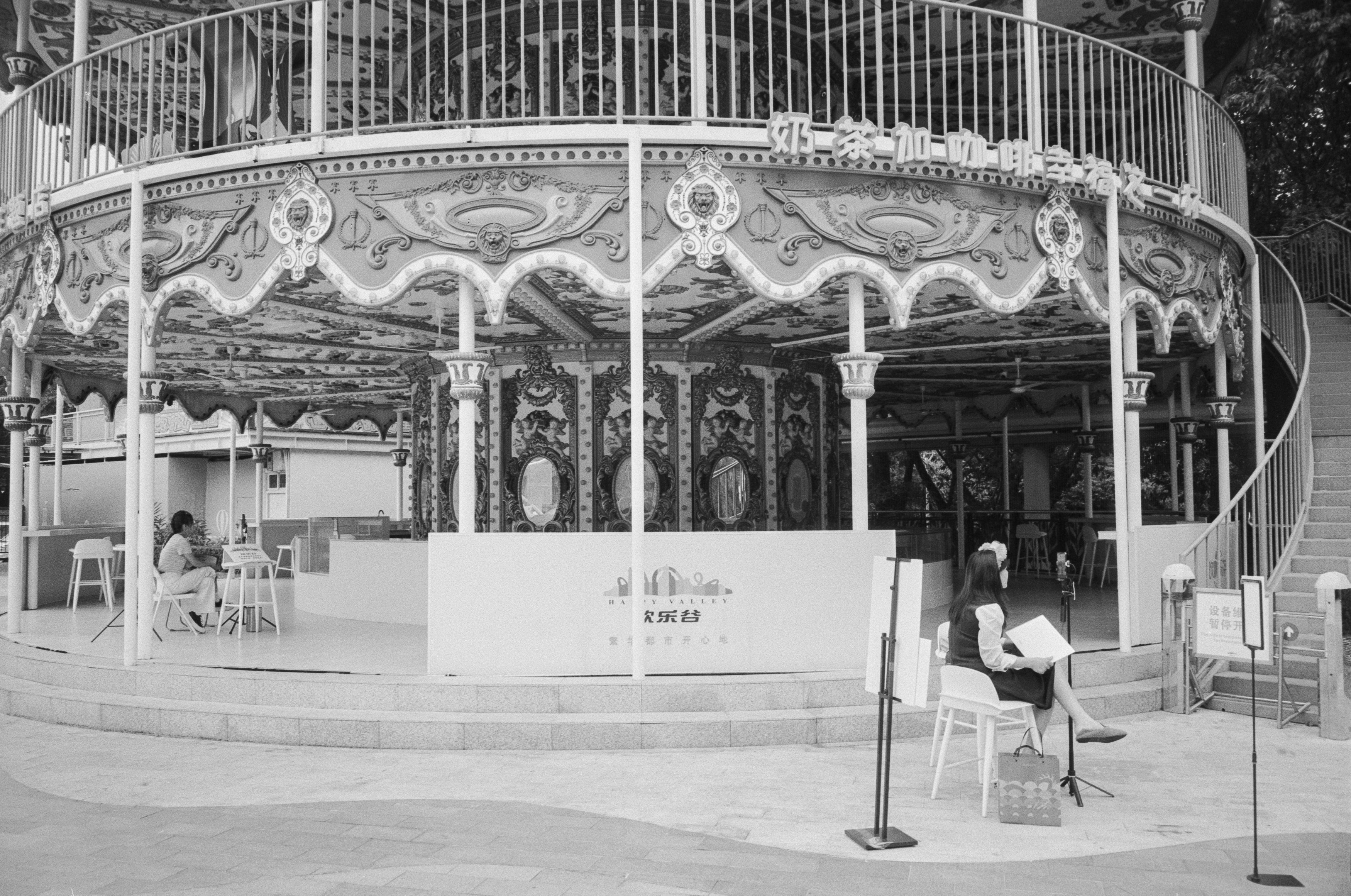
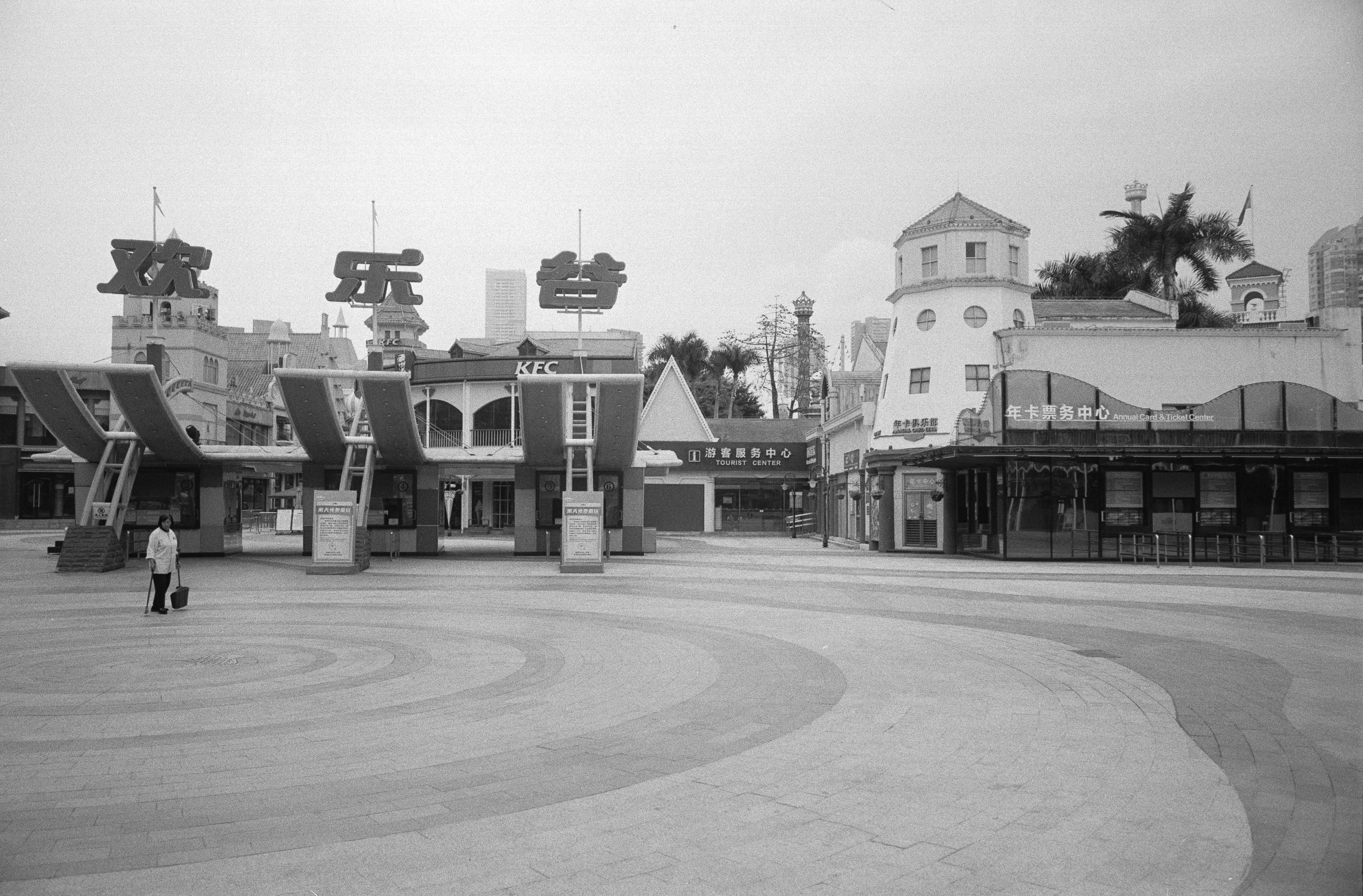
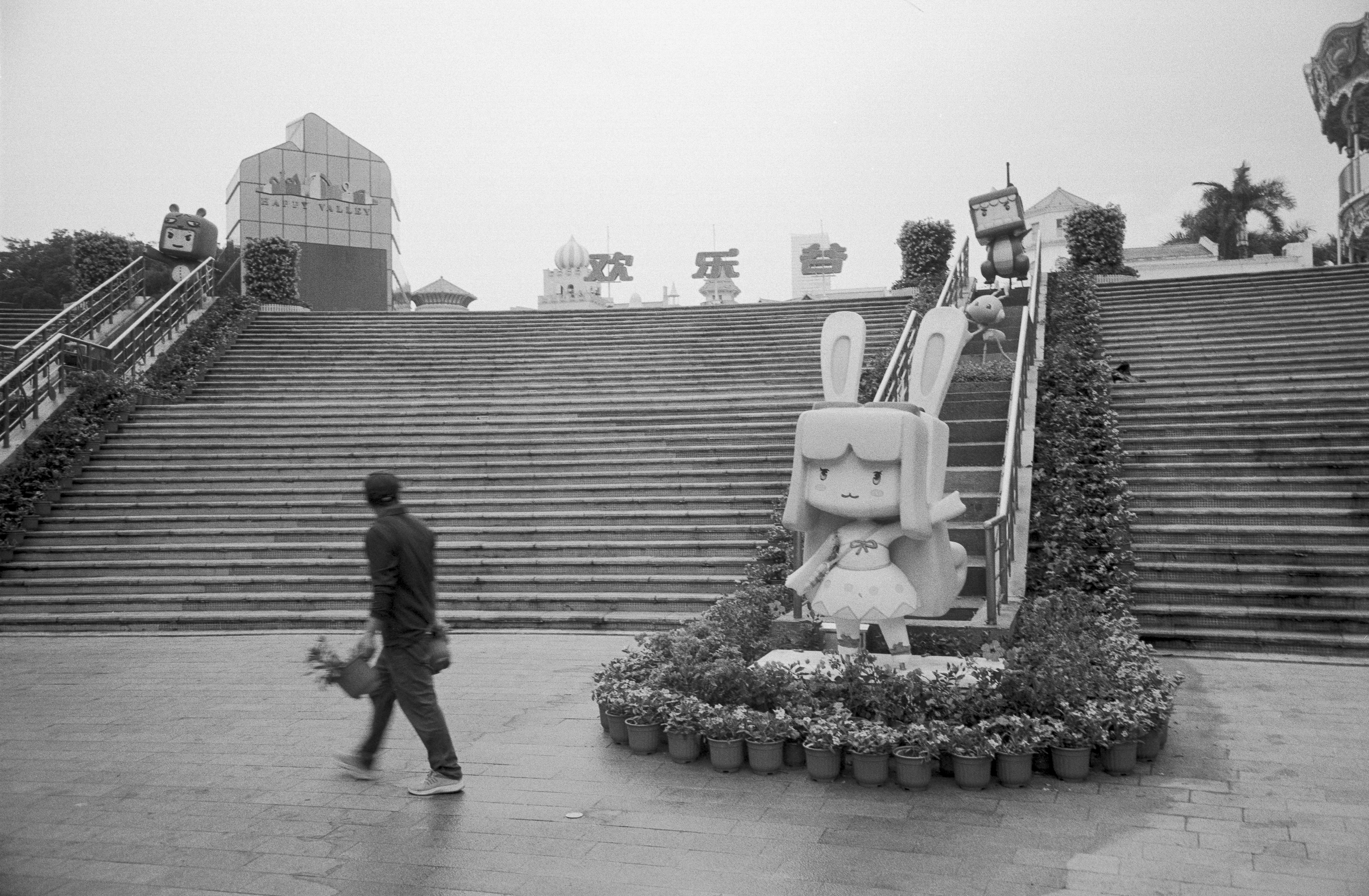
Like many of my photography trips, this one began with work rather than art. An overnight business trip to Shenzhen left just enough time for an hour wandering through Happy Valley, which, despite its cheerful name, possessed the slightly unsettling atmosphere of an abandoned theme park. It felt strangely appropriate to photograph it on black-and-white Kentmere 100 using my Leica M2, allowing the stark architecture and empty spaces to become the real subject rather than the colours themselves.

The Canon immediately makes a good first impression. It’s tiny enough to disappear onto the front of the Leica, yet the focus ring remains easy to grip. It features Canon’s familiar infinity lock, which has a reputation for annoying photographers but quickly becomes second nature once you’ve spent some time with it. Likewise, the front-mounted aperture ring works surprisingly well because the clicks are lighter than the focus action, allowing exposure adjustments without accidentally throwing focus out.

Internally, though, this is unmistakably a product of the 1950s. The six-element design lacks the sophisticated corrections of modern optics, and nobody is going to mistake it for a clinically perfect contemporary lens. Instead, it embraces the sort of imperfections that vintage lens enthusiasts spend their lives romanticising. This lens wasn’t designed to chase laboratory sharpness charts; it was designed to make photographs.

Its age also makes it feel perfectly at home on film. Introduced in 1957, it predates many of the modern photographic conventions we now take for granted, and pairing it with a mechanical Leica feels entirely natural. Ironically, my first experiences with it weren’t on the Leica at all but on my Canon P, until that camera developed a dragging shutter caused by loose stitching on the shutter curtain. The repair proved rather more delicate than these sausage fingers were prepared to attempt, and the whole episode ultimately nudged me towards buying the Leica M2 instead.

One pleasant surprise is how well the M2 accommodates the lens despite lacking dedicated 28mm framelines. By simply using almost the entire viewfinder, the framing becomes remarkably accurate, even if it occasionally requires removing my glasses and pressing my face uncomfortably close to the camera.

Of course, adapting the lens to a modern mirrorless body removes all of those compromises. Mounted on my Nikon Z6 with a simple adapter during a walk through Vienna’s Museum Quarter and Naschmarkt, the Canon suddenly had focus peaking, magnification and a high-resolution sensor revealing every one of its strengths and weaknesses in glorious detail.

Character Over Perfection

If you’re looking for objective perfection, this isn’t the lens for you. In fact, judged purely by modern standards, it’s difficult to argue that it’s particularly good at all.

Let’s begin with the flare. Despite the deeply recessed front element, point this lens anywhere near the sun and it erupts into a psychedelic display of hexagonal ghosts, coloured blobs, veiling flare and collapsing contrast. Some photographers deliberately seek out that behaviour, but I generally prefer keeping the sun somewhere over my shoulder, so most of my examples avoid the full disco light show.

More problematic is the vignetting. Wide open at f/2.8, the corners darken dramatically, as though the world is being viewed through a cardboard tube while driving through an alpine tunnel. Even stopping down doesn’t entirely eliminate it, and if you’re allergic to heavy corner shading, this lens probably isn’t going to become your new favourite.

Sharpness is equally complicated. At maximum aperture, the centre remains respectable, but detail falls away rapidly towards the edges where the image becomes noticeably smeared. Yet somehow, those flaws work together to produce something unexpectedly appealing. The rendering has a painterly quality that modern lenses often sacrifice in pursuit of perfection, and photographs seem to possess a depth and atmosphere that’s difficult to quantify on a test chart.

Stopping the lens down transforms its behaviour. By f/16 the dreamy softness gives way to surprisingly rich detail, while still retaining the gentle microcontrast and subtle rendering that make older optics so enjoyable to use. Tree bark gains texture, colours become vibrant and every corner of the frame rewards closer inspection, even if absolute edge sharpness never quite catches up with contemporary designs.

Looking back through photographs from both Shenzhen and Vienna, the Canon feels remarkably consistent despite the very different subjects. The quiet, almost surreal emptiness of Happy Valley contrasts beautifully with the bustle of Vienna’s flea markets, yet the lens gives both places a cohesive visual identity. Digital files from the Nikon certainly reveal more of the lens’s colour shifts and optical fall-off than film ever does, but they also confirm that the central sharpness is more than adequate while the imperfections remain part of its charm rather than distractions.

Ultimately, that’s what makes the Canon 28mm f/2.8 such an enjoyable lens. It doesn’t pretend to be perfect, nor does it try to compete with modern optics on technical grounds. Instead, it delivers photographs with personality, accepting softness, flare and vignetting as part of the creative process rather than problems to eliminate. Wide open it behaves like an unruly opera singer, full of excess and theatrical flourish. Stop it down and it settles into something far more disciplined, pairing beautifully with the Leica M2 to produce images that feel timeless rather than merely old.

Sometimes character really is worth more than perfection, and this little Canon has plenty of both flaws and personality to keep earning a place in my camera bag.

Hello, Leica M2: First Impression Review of a Classic Rangefinder Camera

Is owning a Leica guaranteed to make you a better photographer? For years, Leica cameras occupied a strange place in my imagination. On one hand, they represented craftsmanship, history, and photographic excellence. On the other, I often lumped them in with luxury handbags and prestige cars—objects that seemed as much about status as function. Yet despite my cynicism, there was always a small part of me that wondered whether a Leica really was something special.

So, naturally, I bought one.

Not a modern digital Leica costing the equivalent of a small family car, but a 1963 Leica M2. In Leica terms, it’s practically the budget option, which still means spending considerably more than most sensible people would on a sixty-year-old film camera.

Why the Leica M2?

The purchase wasn’t entirely motivated by photographic lust. My faithful Canon P rangefinder had started showing its age, suffering from a dragging shutter and becoming increasingly difficult to get repaired. Time and again I’d heard the same promise from Leica owners: if you want a camera for life, buy a Leica.

The M2 appealed because it sits in a sweet spot between affordability and classic Leica design. It’s wonderfully simple. Load film, set the shutter speed, focus, and press the shutter. There’s no light meter, no electronics, and very little to go wrong. It’s essentially a precision-engineered box designed to let light hit film.

One of the biggest advantages for me was compatibility with my collection of Leica Thread Mount lenses. While I don’t own a single Leica lens, I do have lenses from Canon, Nikon, Voigtländer and even a few Soviet-made curiosities. With the right adapters, they all work happily on the M2.

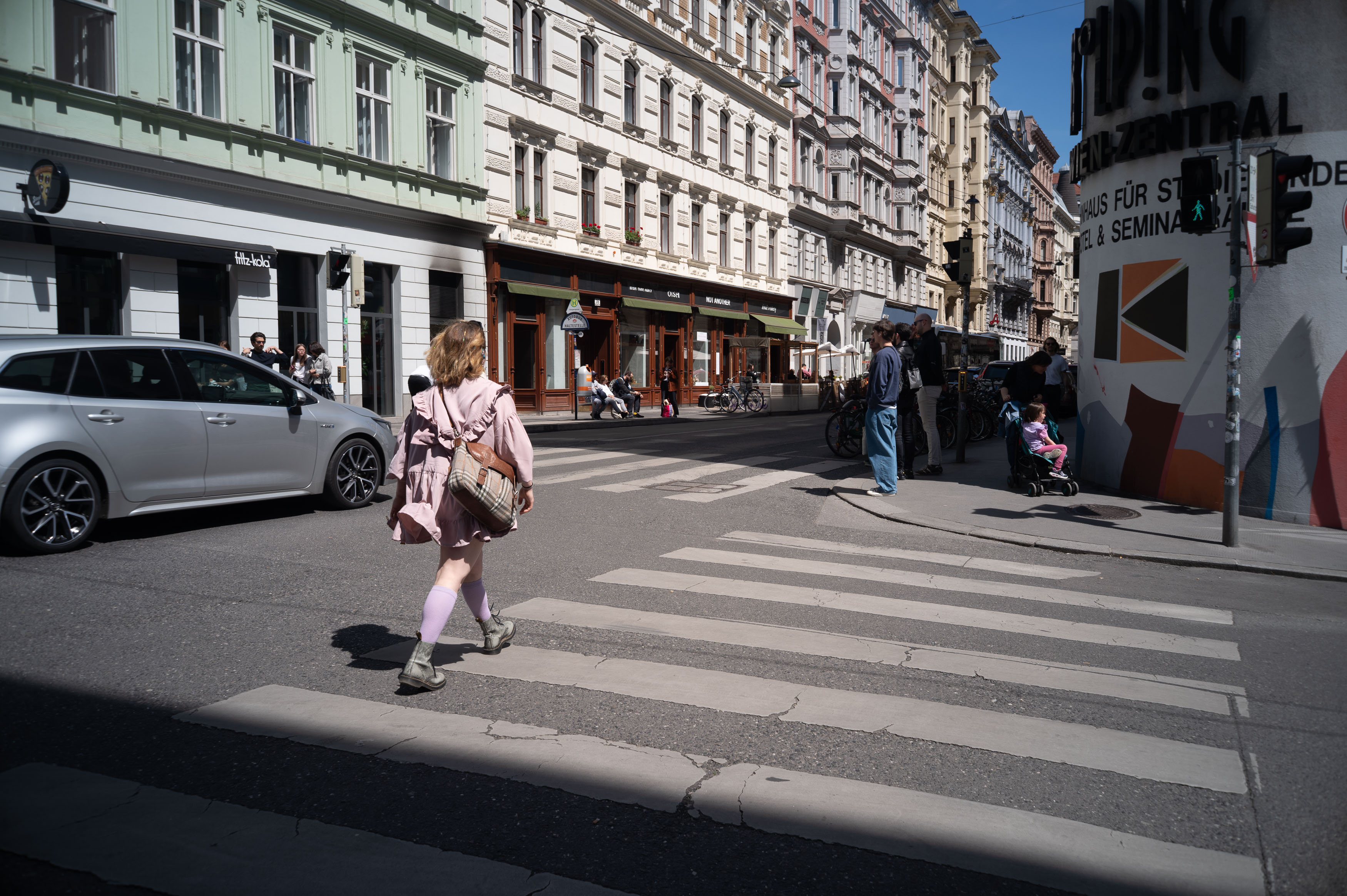
As luck would have it, the camera arrived just before a trip to Melbourne, giving me the perfect opportunity to see whether Leica magic was real or merely expensive mythology.

Melbourne: A Perfect Testing Ground

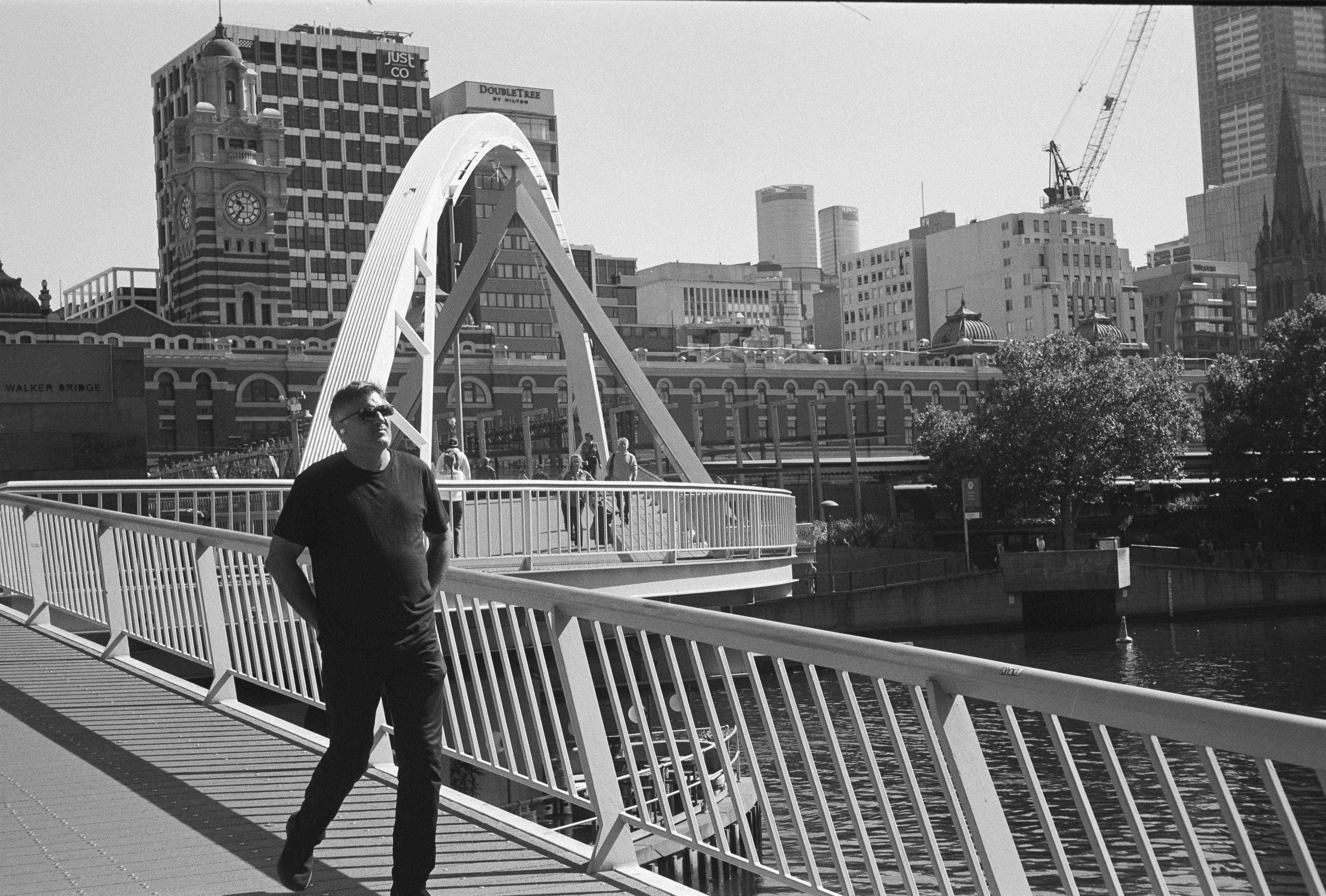
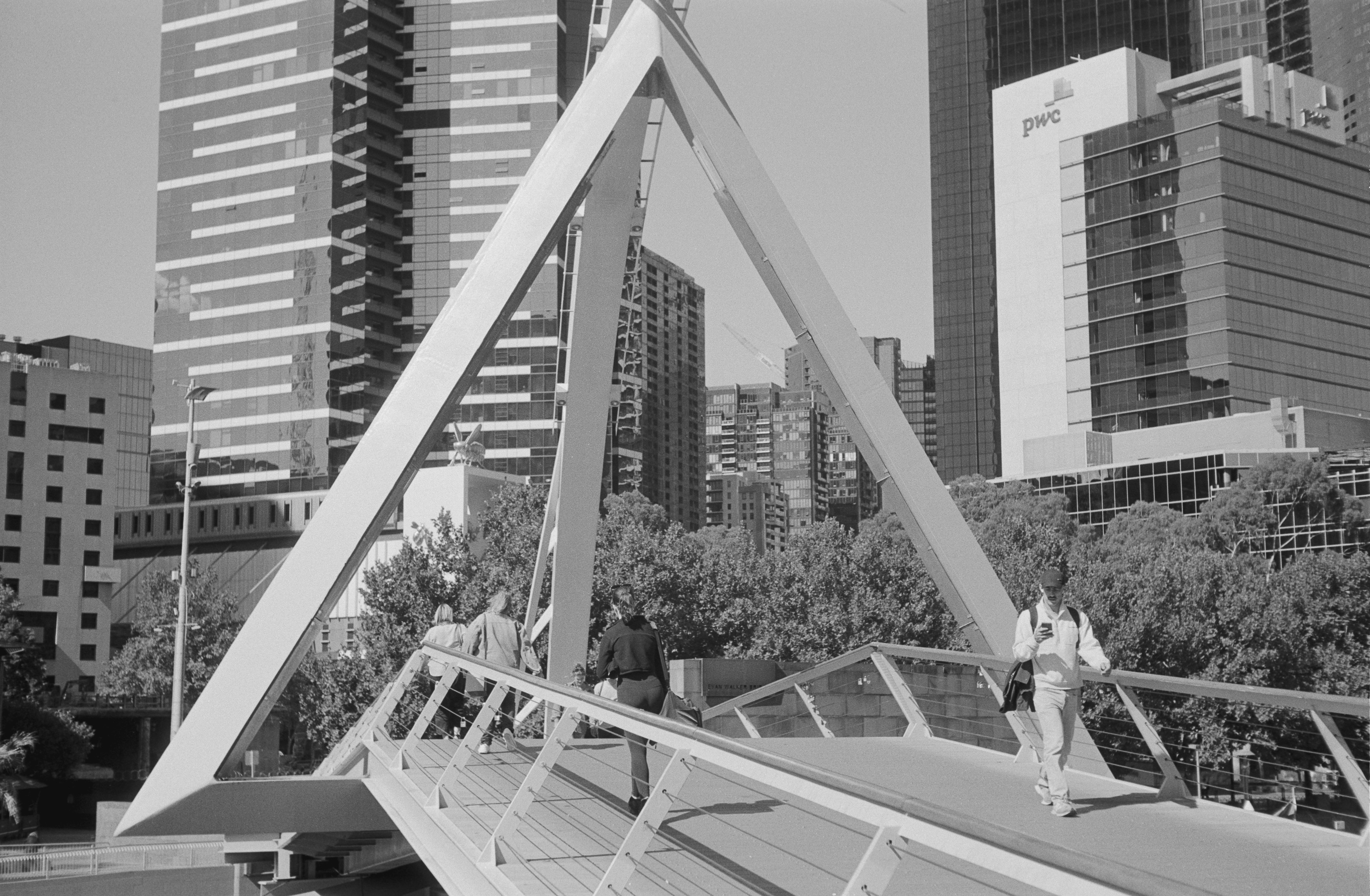
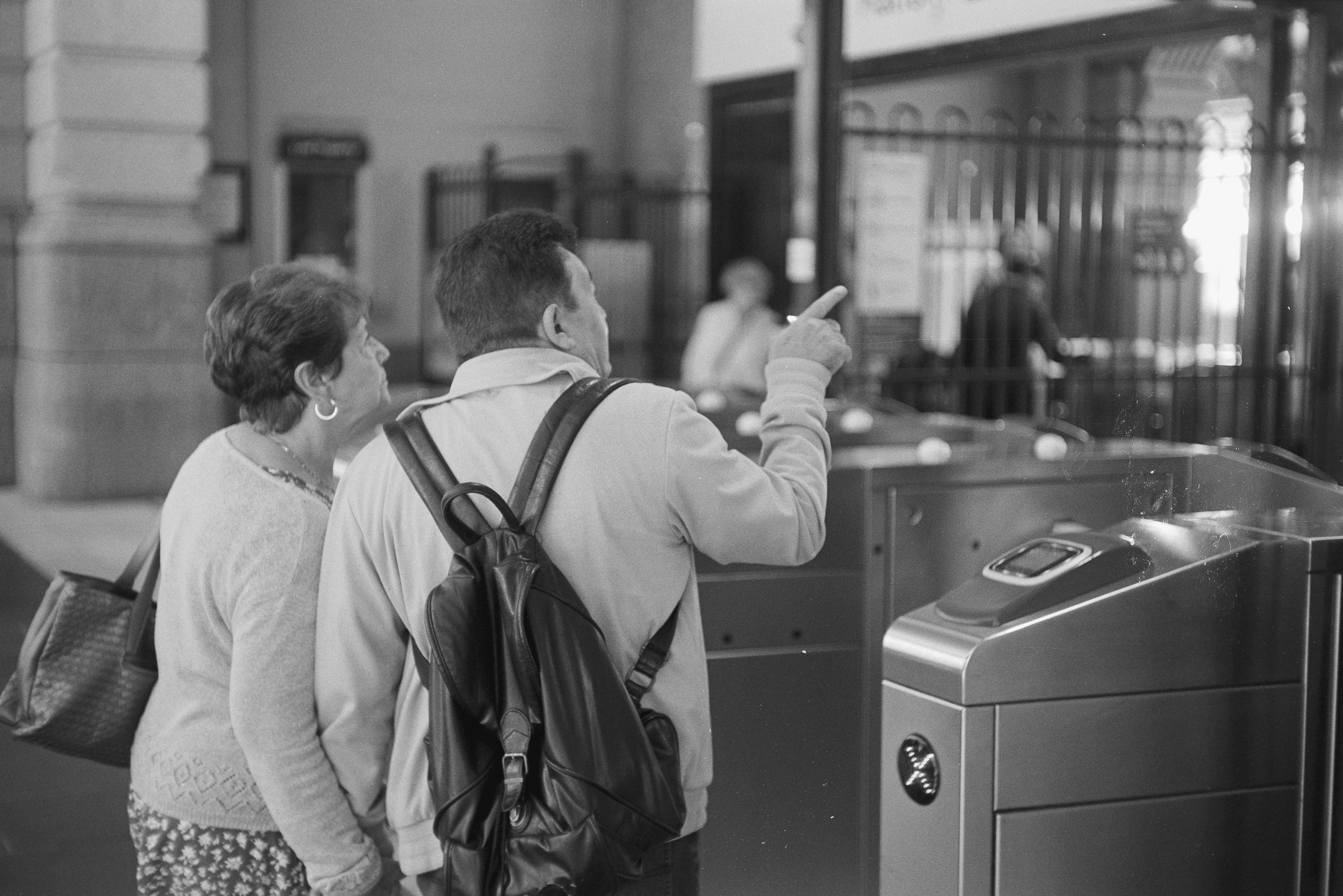
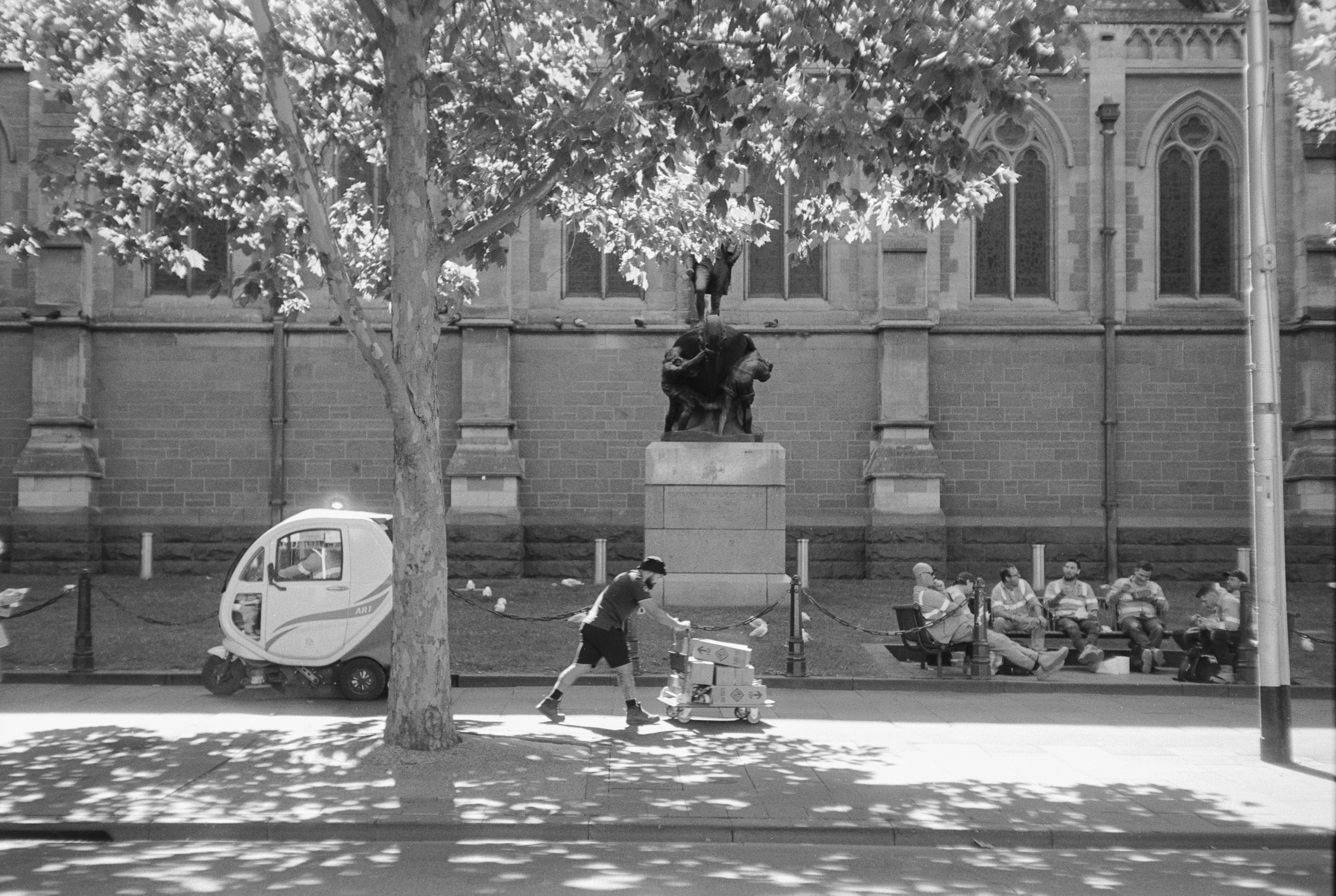
Melbourne has long been my favourite city for street photography. Its blend of Victorian architecture, modern skyscrapers, laneways, riverside walks and bustling public spaces provides endless opportunities for wandering with a camera. For this first outing, I paired the Leica M2 with a Nikon S.C. 5cm f/1.4 lens and a roll of Kentmere 100 black-and-white film.

The Nikon lens proved an interesting companion. Stopped down in good light, it’s exceptionally sharp. Wide open, however, “soft” might be putting it politely. Let’s call it dreamy. If your dreams happen to be smeared with Vaseline.

Since the M2 lacks a built-in light meter, I relied on a light meter app on my phone to occasionally check my instincts. For the most part, the trusty Sunny 16 rule did the job. The negatives, developed later in 510 Pyro, came out surprisingly well exposed despite the occasional uncertainty.

Living with a Leica

In practical terms, the Leica M2 isn’t dramatically different from other classic rangefinders. It offers shutter speeds from one second to 1/1000th of a second and an almost comically slow flash sync speed of 1/50th.

What separates it from other cameras is the experience, though, is that M2 feels beautifully made. The chrome finish, textured vulcanite covering, engraved markings and silky mechanical controls all contribute to a sense of quality that is difficult to describe until you hold one. Every action feels deliberate. The shutter has a subtle, refined click rather than a harsh snap.

Among Leica enthusiasts, endless debates rage about which M model is best. The M3 is often regarded as the classic choice, but its higher viewfinder magnification favours 50mm lenses. I preferred the M2 because its viewfinder comfortably accommodates wider lenses like 35mm without requiring awkward accessories.

The M2 lacks a few conveniences found on later models. The frame counter must be manually reset when loading film, something I repeatedly forgot to do. Yet these small inconveniences somehow feel appropriate. This is a camera that asks you to slow down and engage with the process.

Walking along the Yarra River and through Melbourne’s city streets, I found myself enjoying the camera simply as an object. It felt natural in the hand, compact, lightweight and unobtrusive.

The Photos and the Reality

After developing the roll, I was faced with an unavoidable question: did the Leica make my photographs better?

The answer is both disappointing and reassuring. Not really.

The images looked very much like my photographs. The Leica hadn’t transformed me into a photographic genius. It hadn’t sprinkled magical German fairy dust onto the negatives. The strongest images succeeded because of composition, timing and subject matter rather than the logo engraved on the camera.

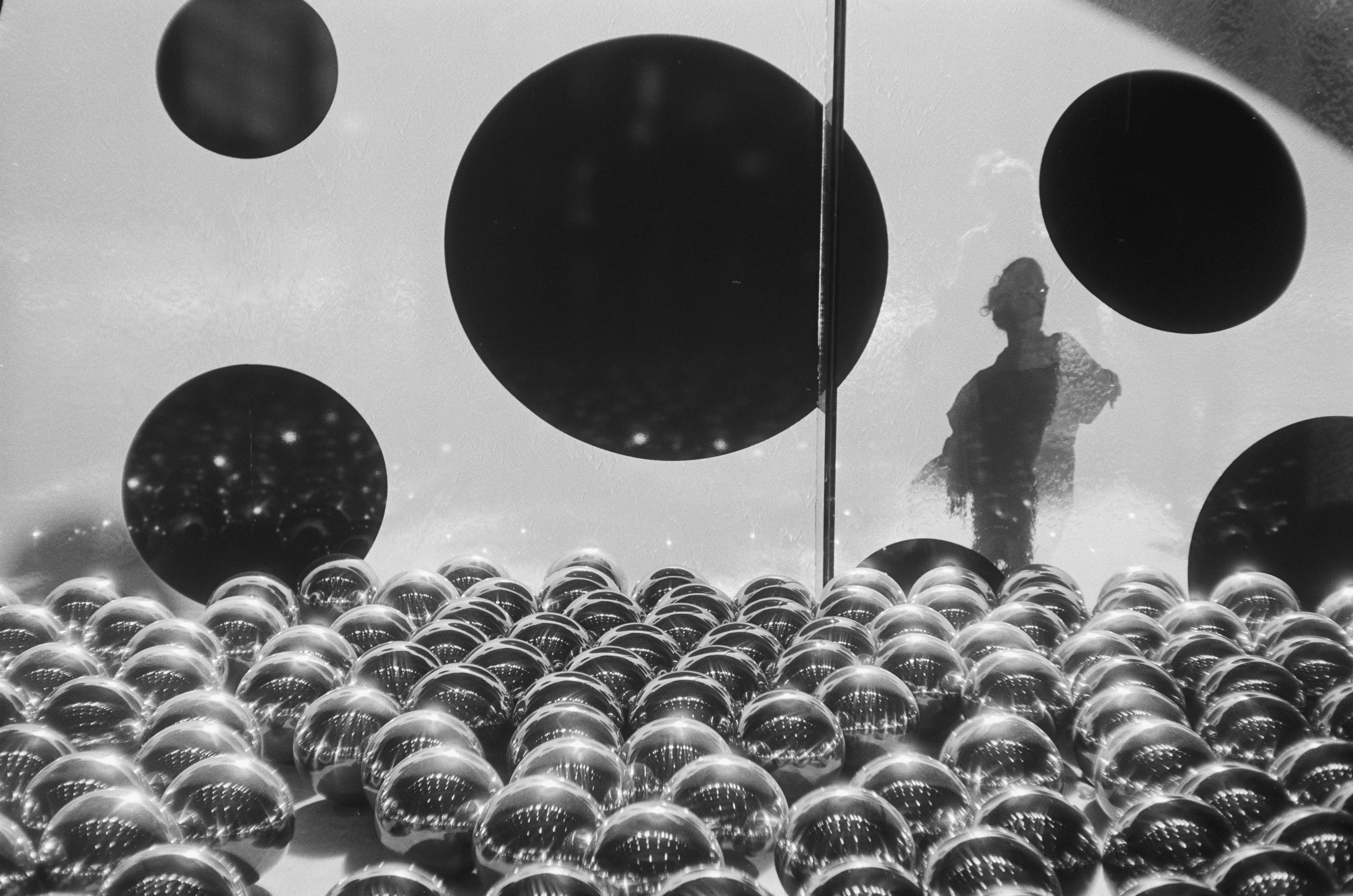
A few photographs stood out. Images from the National Gallery of Victoria’s Yayoi Kusama exhibition captured an intriguing blend of art and human interaction. Other frames documented everyday moments around the city—couples holding hands, workers transforming the urban landscape and quiet scenes that revealed small fragments of Melbourne life.

These weren’t grand artistic statements. Many were simple snapshots made while learning the camera. Yet they served as reminders that street photography doesn’t always need to communicate profound truths. Sometimes it’s enough to document a fleeting moment in a city’s ongoing story.

And perhaps that’s where the Leica’s true appeal lies. It’s not that the camera creates better photographs. Rather, it encourages a different relationship with photography itself. The simplicity, craftsmanship and tactile experience make the process enjoyable. They make you want to pick the camera up and go for a walk. For a first roll, that’s more than enough.

The Leica M2 hasn’t turned me into a master photographer. It hasn’t elevated my work beyond what I was already capable of producing. What it has done is make photography feel a little more special, a little more deliberate, and a little more fun.

Whether that’s worth the price of admission is something every Leica owner has to decide for themselves.

Nikon AF-S NIKKOR 28-300mm f/3.5-5.6G ED VR: A Visit to Kenya and Yet Another Superzoom Review

Superzoom lenses have always promised photographic freedom. One lens, an enormous focal range, and no frantic lens swapping while the perfect shot disappears into the distance. The Nikon AF-S Nikkor 28-300mm f/3.5-5.6G ED VR is one of Nikon’s most ambitious attempts at delivering that promise, offering everything from wide-angle landscapes to substantial telephoto reach in a single package.

But as every photographer knows, versatility usually comes with compromises. The question is whether those compromises matter when you’re actually out using the lens.

Released in 2010 and remaining in Nikon’s lineup for over a decade, the 28-300mm sits somewhere between consumer convenience and professional aspirations. It feels solidly built, with a reassuring mix of metal, glass, and polycarbonate. While it lacks the refinement of Nikon’s professional zooms, it certainly doesn’t feel cheap. The extending zoom barrel is perhaps the biggest reminder that this isn’t a premium workhorse, stretching outward dramatically as you zoom in.

At around 800 grams, it’s not exactly lightweight either. This isn’t the lens you casually slip into a jacket pocket. Instead, it’s designed for photographers who want one lens capable of handling almost any situation they encounter while travelling.

Putting the Lens to the Test in Kenya

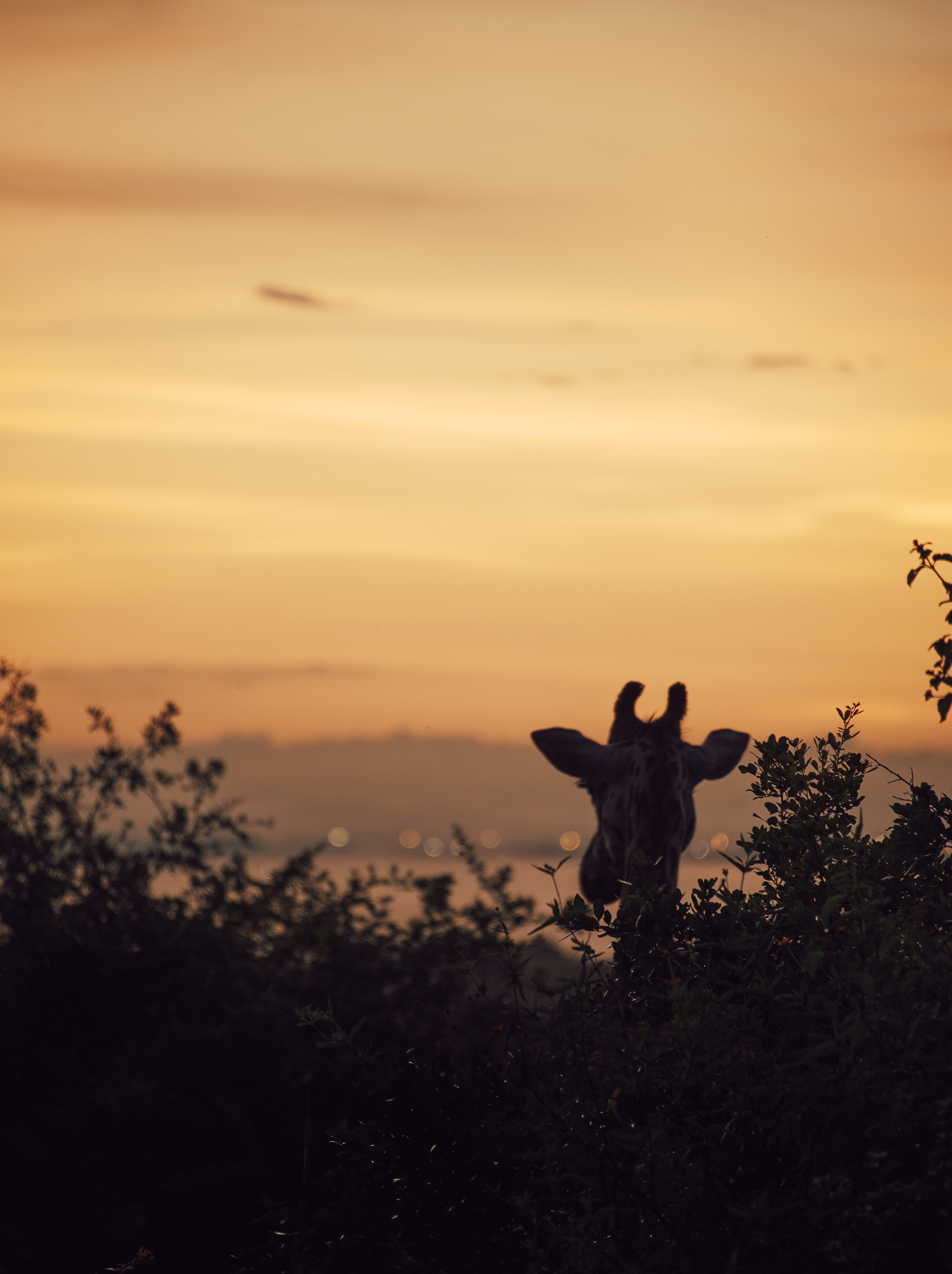
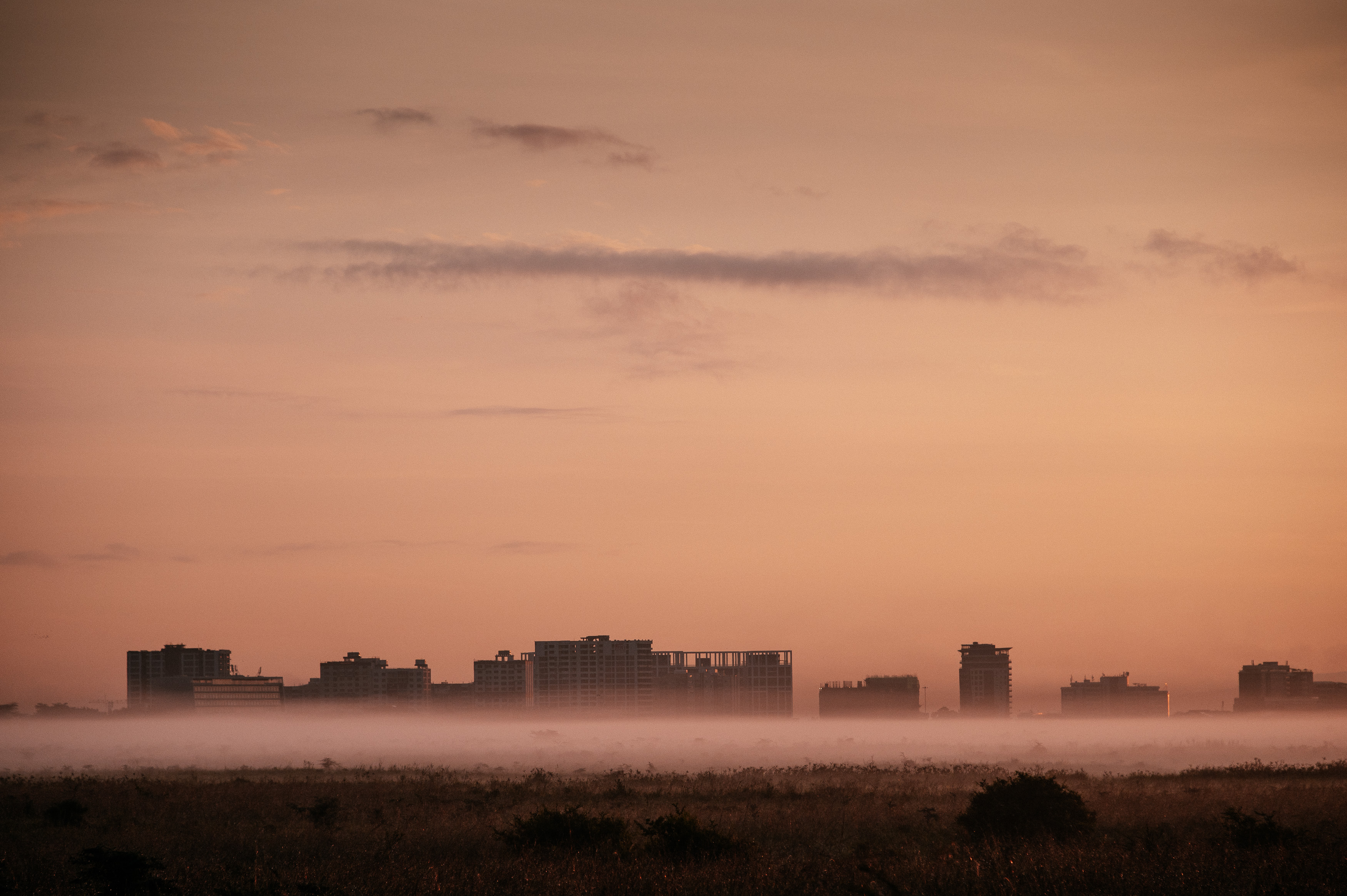
The perfect opportunity to test that versatility arrived during a work trip to Kenya. With time split between Nairobi and the coastal region of Diani near Mombasa, the lens would need to handle everything from wildlife photography to beach landscapes.

Mounted on a Nikon Z6 via the FTZ adapter, the 28-300mm accompanied an early morning visit to Nairobi National Park. The appeal of a superzoom becomes immediately obvious in situations like this. Wildlife doesn’t wait while you change lenses, and having focal lengths ranging from moderately wide to substantial telephoto coverage allows you to react quickly to whatever appears in front of you.

The lens performed exactly as intended. While it couldn’t match the image quality of specialised prime lenses, many of the photographs simply wouldn’t have been possible with a fixed focal length. The ability to zoom from environmental shots to tighter wildlife compositions without changing equipment proved invaluable.

Autofocus performance, however, revealed some of the lens’s age. It’s not painfully slow, but it isn’t particularly quick either, especially at the 300mm end of the zoom range. When focusing from close subjects to distant ones, the lens can take its time finding focus. For relaxed wildlife subjects this wasn’t a major issue, but fast-moving birds or unpredictable animals might expose its limitations.

Video shooters may also find themselves frustrated. Autofocus noise is considerably louder than on modern Nikon Z lenses, and continuous autofocus can occasionally hunt or pulse in a distracting manner. Focus breathing is also quite noticeable, causing the field of view to change significantly as focus shifts.

A Lens That Does Almost Everything

If the Nikon 28-300mm has a defining characteristic, it’s practicality. This is a lens that can tackle almost any photographic situation reasonably well.

One particularly useful feature is its relatively close focusing ability. While it isn’t a true macro lens, the 1:3 reproduction ratio allows for surprisingly detailed close-up shots. Flowers, textures, food, and small objects are all well within its capabilities, adding another layer of versatility to an already flexible design.

Image stabilisation is another major strength. Nikon’s VR system works remarkably well, especially when paired with the excellent high-ISO performance of cameras like the Z6. Handholding at surprisingly slow shutter speeds becomes possible, reducing the need to carry a tripod and reinforcing the lens’s travel-friendly philosophy.

Sharpness is also better than some critics might expect. No, it won’t rival Nikon’s best prime lenses, and pixel peepers using high-resolution cameras will certainly spot differences. Yet for travel photography, social media, prints, and general use, the lens delivers consistently respectable results throughout much of its zoom range.

Perhaps most importantly, it encourages photographers to capture more images simply because the right focal length is always available.

The Trade-Offs Behind the Convenience

Of course, no superzoom escapes the laws of optical compromise.

The Nikon 28-300mm produces images that are competent but often lack a distinctive character. The photographs are accurate and faithful, yet they rarely possess the subject separation, creamy bokeh, or three-dimensional rendering that photographers often associate with premium primes or specialised zooms.

Optical flaws are also present. Vignetting can be quite pronounced, especially at wider apertures and at either end of the zoom range. Distortion is another reality, with barrel distortion at the wide end transitioning into pincushion distortion through much of the telephoto range. Modern software corrections make these issues easy to fix, but they’re impossible to ignore when evaluating the lens on its own merits.

The 28mm wide end can also feel slightly restrictive by modern standards. Many photographers have become accustomed to 24mm as a standard starting point for travel zooms, making 28mm seem just a little too narrow for dramatic landscapes and architecture.
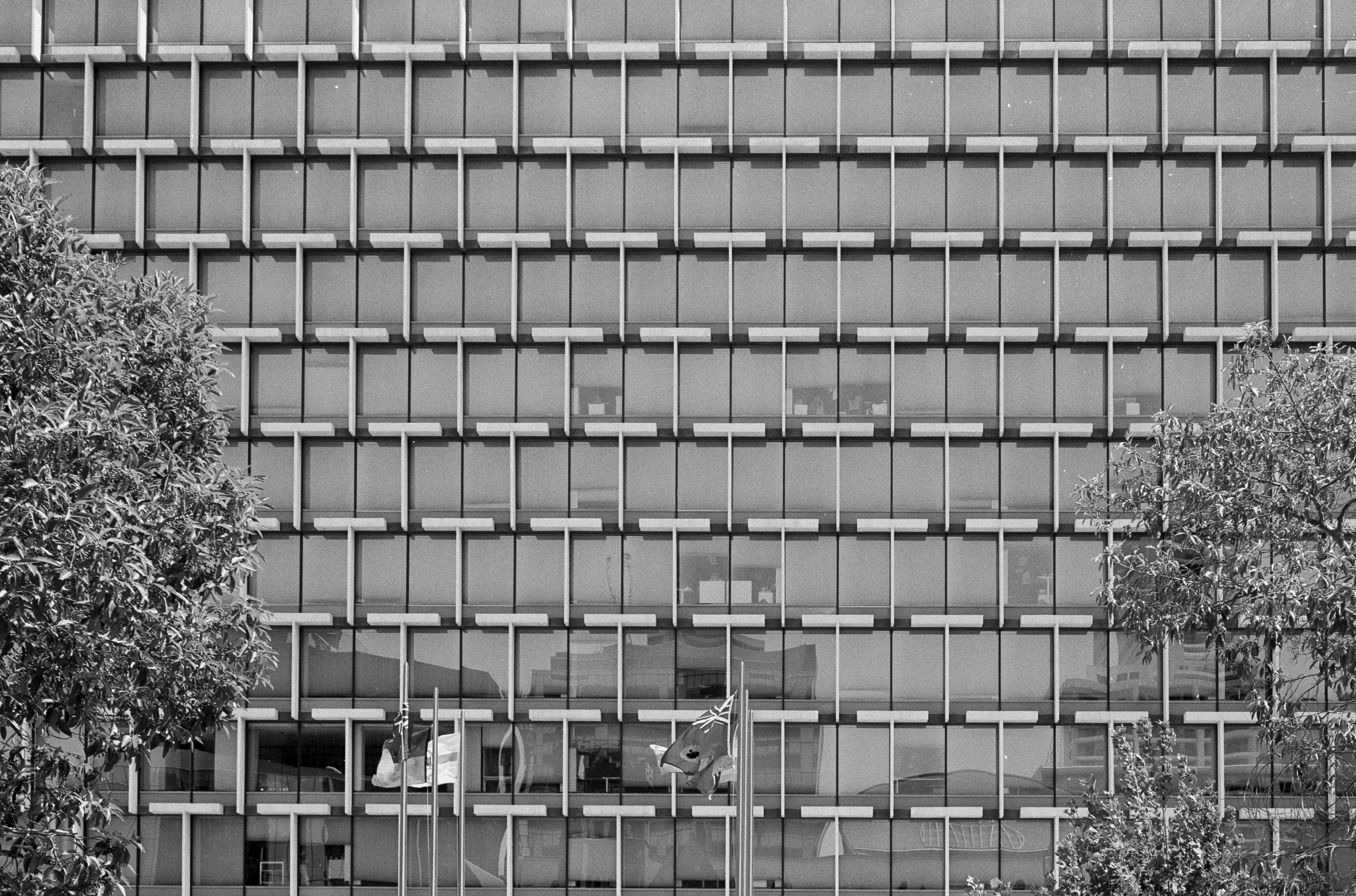
Then there’s the weight. While significantly smaller than carrying multiple lenses, it remains a noticeable burden around the neck during long days of shooting.

Final Thoughts

The Nikon AF-S Nikkor 28-300mm f/3.5-5.6G ED VR is a lens defined by practicality rather than perfection. It isn’t particularly glamorous, and it won’t produce the most beautiful images in your collection. What it does offer is the freedom to capture an enormous range of subjects without constantly swapping lenses.
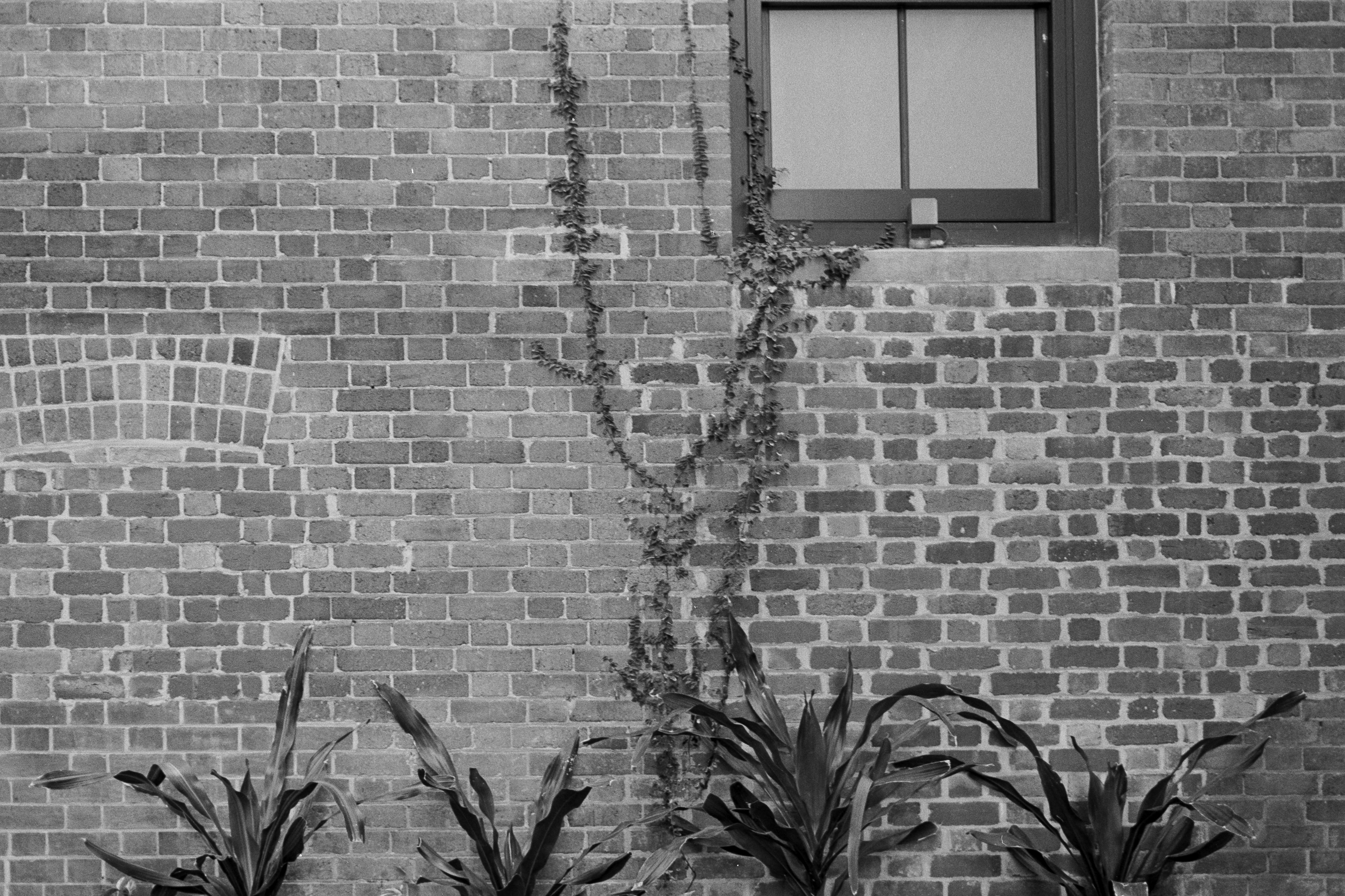
In Kenya, that flexibility translated into more successful photographs and fewer missed opportunities. While a collection of specialised lenses might have produced technically superior results, they probably wouldn’t have produced as many keepers.
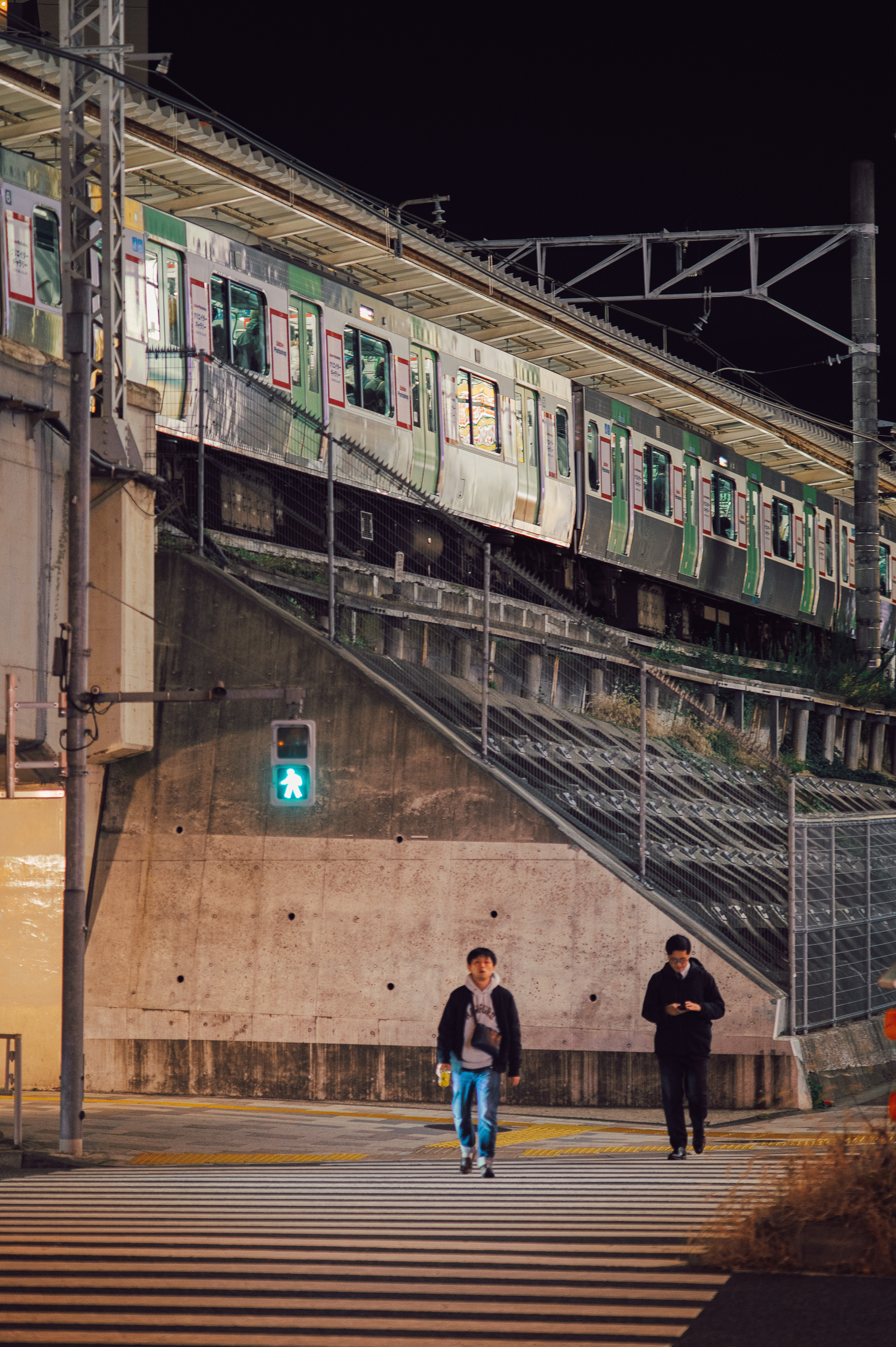
That’s ultimately the appeal of the 28-300mm. It’s not the sharpest lens, the fastest lens, or the most characterful lens. It’s simply the lens that’s already on your camera when the moment happens. For many travel photographers, that may be the most important quality of all.

Nikon’s Nikkor Z 24-200mm f/4-6.3 VR and Comparing the Compromises of Superzooms

When you’re standing in a place as spectacular as Phillip Island or Wilsons Promontory in Victoria, Australia, you want a camera setup that can capture everything. Vast coastal landscapes, wildlife on distant horizons, dramatic rock formations, and fleeting travel moments all demand flexibility. At the same time, nobody wants to haul a backpack full of lenses while exploring. That’s where the superzoom comes in.

For decades, superzoom lenses have been marketed as the ultimate travel companion: one lens that can do everything from wide-angle landscapes to long telephoto shots. Traditionally, however, that convenience came with a reputation for soft images, slow apertures, and compromised image quality. Modern mirrorless systems promised to change that. When Nikon released the 24-200mm f/4-6.3 for the Z mount system, it seemed like the ideal travel lens. Compact, lightweight, and covering an enormous focal range, it quickly became my most-used lens. Over the past few years it has travelled with me through South Korea, Singapore, Mauritius, and China. For a photographer who values convenience, it appeared to be the perfect solution.

At first glance, the lens performs well. Images are contrasty, flare resistance is respectable, and distortion is largely controlled. Combined with the excellent sensor in the Nikon Z6 and effective image stabilization, it produces photographs that look great when viewed normally. The problem only appeared when I started looking closer.

Cracks in the Superzoom Dream

During a trip through Victoria’s southeast coast, using the Nikon Z6 paired with the 24-200mm, I began noticing something strange. Images taken at the longer end of the zoom range, particularly around 200mm and focused at distant subjects, seemed softer than expected. Viewed on a phone or social media feed, the photos looked perfectly acceptable. Zooming in, however, revealed a lack of crisp detail. Rocks, distant landscapes, and fine textures often appeared mushy, even after additional sharpening in post-processing.

At first I questioned my own technique. Was I introducing camera shake? Was image stabilization failing? Was autofocus missing the mark? Travel photography often involves shooting handheld, and user error is always a possibility. To investigate, I decided to conduct a simple comparison.

Rather than relying on subjective impressions from travel photos, I compared the Nikon Z 24-200mm against a lens I already trusted: the Nikon AF Nikkor 180mm f/2.8D. Despite being an older DSLR-era prime lens, the 180mm has a strong reputation for sharpness. Mounted on the Nikon Z6 via an adapter, it provided a useful benchmark. The test was straightforward. I photographed distant subjects, trees, buildings, chimneys, rooftops, and antennas, comparing equivalent focal lengths while examining the resulting RAW files at high magnification.

A Prime Lens Delivers an Uncomfortable Truth

The results were difficult to ignore. Across multiple images, the older 180mm prime consistently delivered sharper detail and better edge definition. Bark textures, brickwork, foliage, and architectural details all appeared noticeably crisper. The superzoom often showed softness, ghosting, and a lack of fine detail that became increasingly obvious at 300% magnification. Autofocus did occasionally appear slightly inconsistent, but that alone couldn’t explain the difference. Even when focus seemed accurate, the 24-200mm simply wasn’t resolving detail at the same level as the prime.

The real surprise came when I introduced a third lens into the comparison. The Nikon 35-200mm f/3.5-5.6 AI-S dates back to 1985—a period when superzoom lenses were notorious for optical compromises. Today it can often be found on the second-hand market for very little money. Logic suggested that a modern mirrorless zoom should easily outperform a decades-old manual-focus superzoom. Instead, the results were unexpectedly close.

Check out the video above for the examples.

At certain apertures, particularly around f/8, the vintage lens appeared sharper than the modern Nikon Z 24-200mm. Fine details such as tree branches and antennas often showed better definition. Wide open, the differences became smaller and the older lens revealed more chromatic aberration and vignetting, but it remained surprisingly competitive. That raised an uncomfortable question: if a modern mirrorless superzoom can be outperformed by both an older telephoto prime and, in some situations, a forty-year-old superzoom, what exactly are you paying for?

The Real Value of the Nikon 24-200mm

The answer is convenience. The Nikon Z 24-200mm is dramatically smaller and lighter than either of the older lenses. It autofocuses quickly and silently, includes image stabilization, and covers an enormous focal range in a package small enough to carry all day. For travel photography, those advantages matter. When wandering beaches, coastal lookouts, or city streets, there’s enormous value in having a single lens that can capture almost anything without changing gear. The ability to move from a sweeping landscape to a distant wildlife shot in seconds is liberating. The lens may not deliver the ultimate image quality, but it delivers versatility.

Final Thoughts

After all the testing, I still haven’t completely answered my own question. The evidence suggests that my Nikon Z 24-200mm is not especially sharp at longer focal lengths and distances. Whether that’s a characteristic of the design, sample variation, autofocus inconsistencies, or a combination of all three remains unclear. What is clear is that newer technology doesn’t automatically guarantee better optical performance. Older lenses, particularly quality primes, can still outperform modern zooms when absolute sharpness is the goal.

Yet despite its flaws, I’m not getting rid of the 24-200mm. The reality is that most viewers will never notice these issues when images are viewed on social media, phones, or standard screens. For travel photography, the convenience of carrying one lightweight lens often outweighs the pursuit of pixel-perfect sharpness. The Nikon Z 24-200mm may not be the miracle travel lens I once believed it was, but it’s still the lens I reach for most often. And perhaps that’s the ultimate compliment. Even when it falls short of perfection, it’s still the lens that gets taken on the journey.

Nikon AF Nikkor 50mm f/1.8D: The Best Budget Lens Nikon Ever Made?

The Nikon AF Nikkor 50mm f/1.8D is about as unassuming as a camera lens can be. It’s small, lightweight, mostly plastic, and possesses all the visual excitement of a household appliance. Pick it up and you might wonder how something that feels so ordinary has earned such a loyal following among photographers. Yet despite its humble appearance, this little lens has developed a reputation as one of Nikon’s greatest bargains—and after years of using it, I’m inclined to agree.

In a previous review, I described the Nikon 135mm f/2.8 AI-S as perhaps Nikon’s best-value budget lens. The only reason I hesitated was because of this lens. The 50mm f/1.8D has been sitting quietly in the back of my mind, constantly reminding me that true photographic value isn’t always found in rare vintage glass or expensive modern optics.

Like most camera manufacturers, Nikon has produced numerous 50mm lenses over the decades. The AF-D version, introduced in 2002, is essentially an evolution of Nikon’s earlier autofocus designs. Even today, long after the heyday of film photography, it remains available and continues to serve photographers who appreciate its simplicity.

Simplicity is Best

There’s no built-in autofocus motor. Instead, autofocus is driven by the camera body via Nikon’s traditional screw-drive system. This means compatibility is limited on some Nikon cameras, but the lens does include a manual aperture ring and remains easy to use manually. It feels almost refreshingly straightforward in an era of increasingly complex lens designs.

Despite its budget construction, there are some pleasant surprises. The lens uses a metal mount rather than plastic, and its uncomplicated design contributes to its durability. I’ve owned two copies over the years. One was purchased new, while the other arrived attached to a second-hand camera body. Neither has ever given me trouble, and one even survived an accidental drop onto concrete with nothing more than a cosmetic scar.

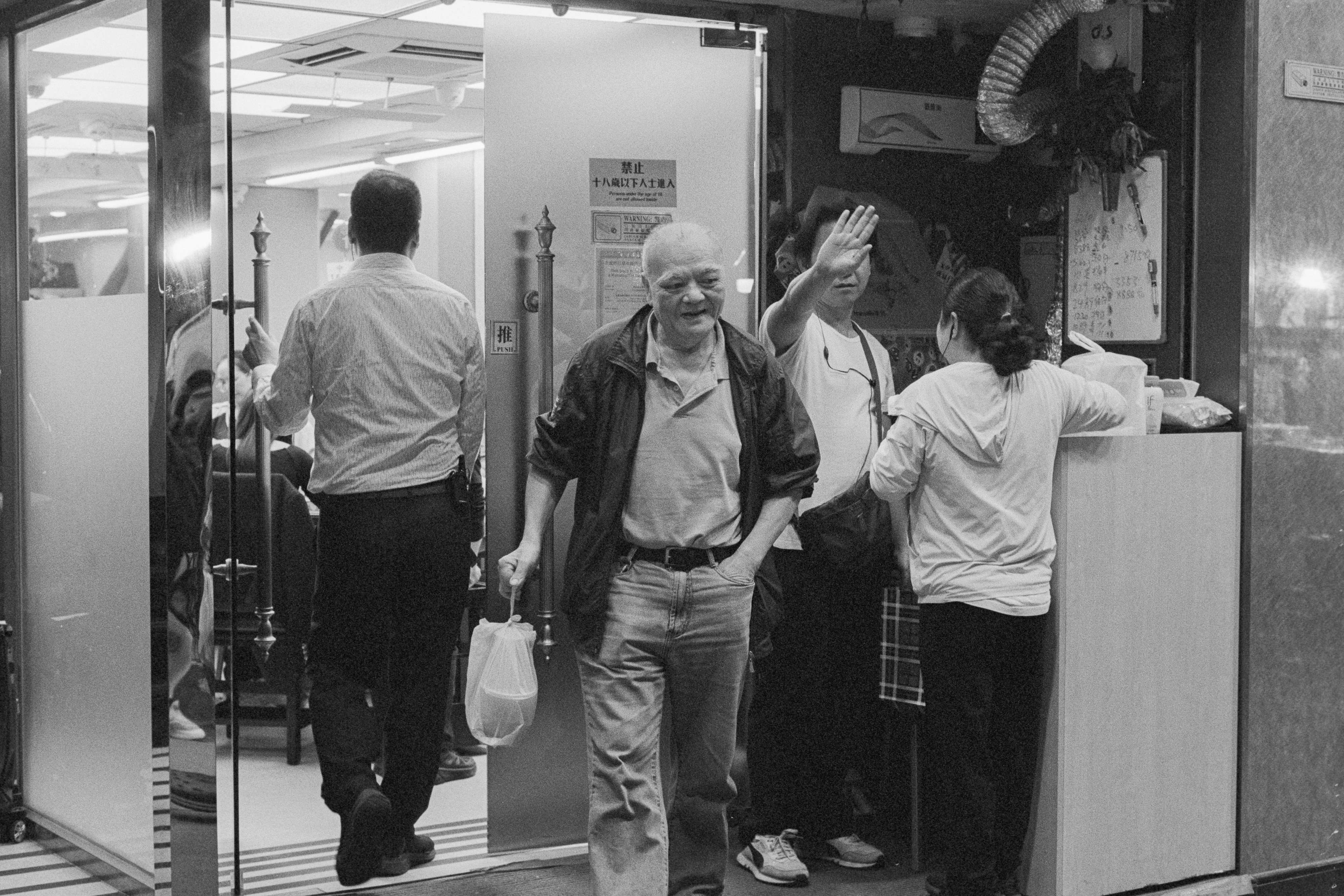
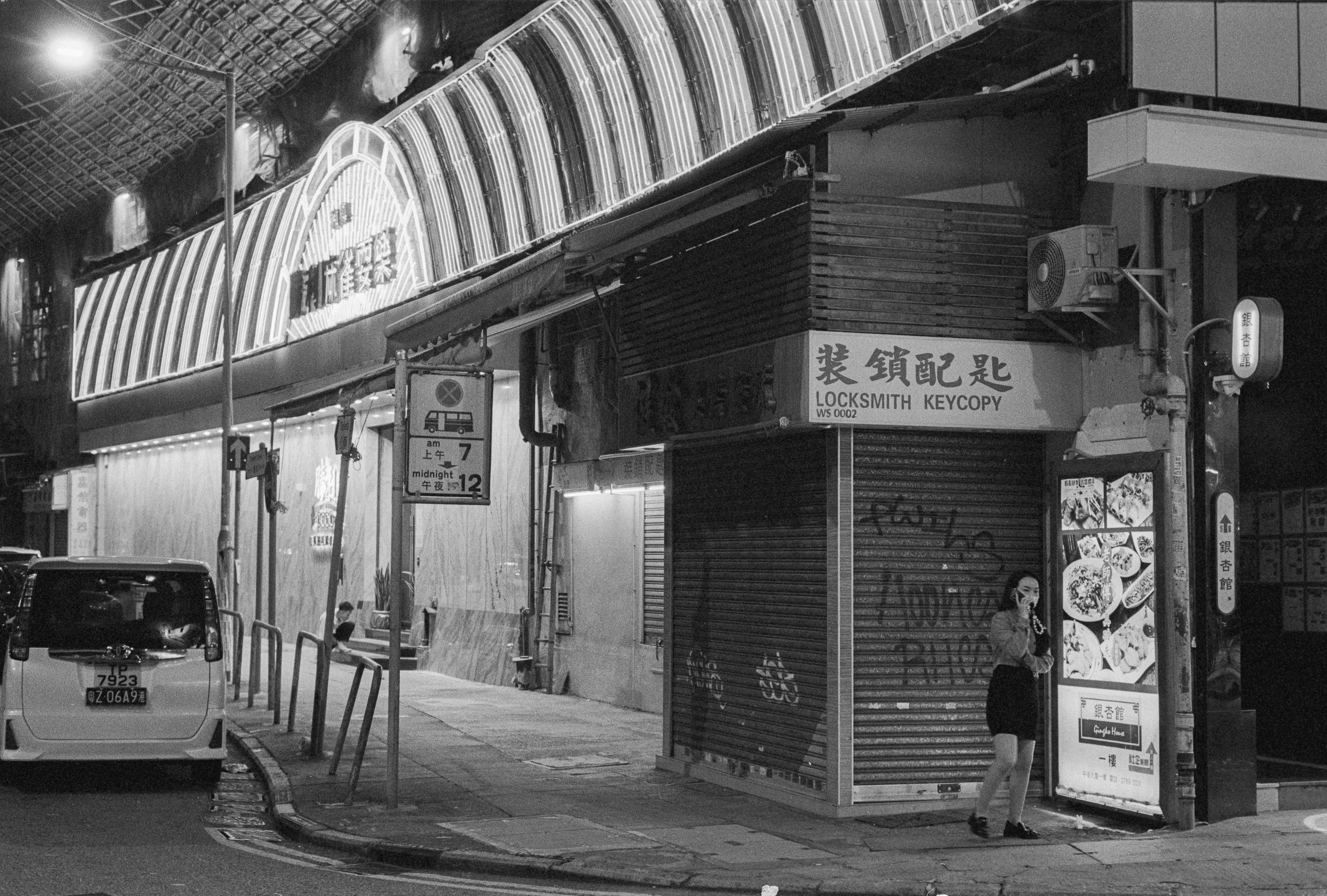
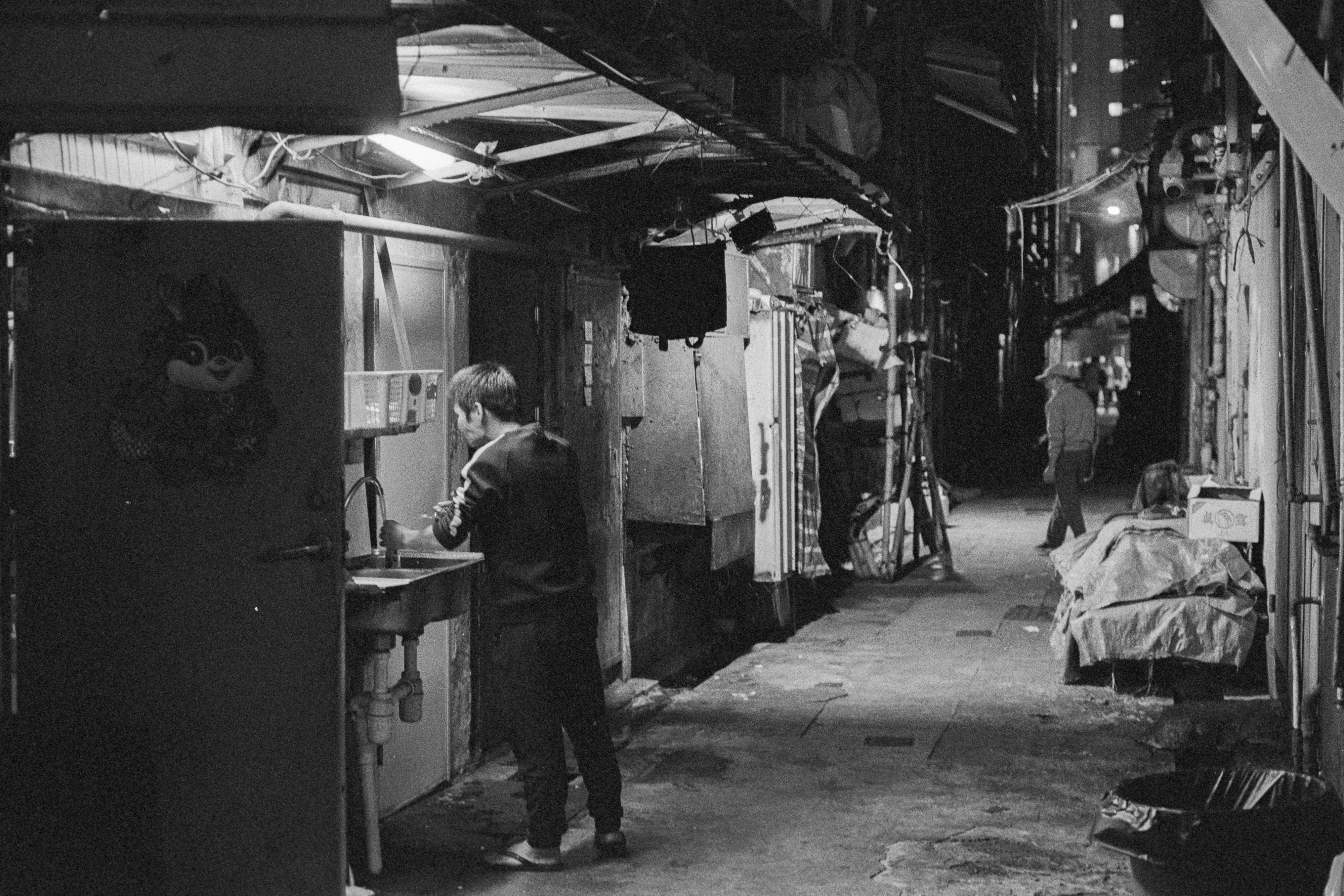
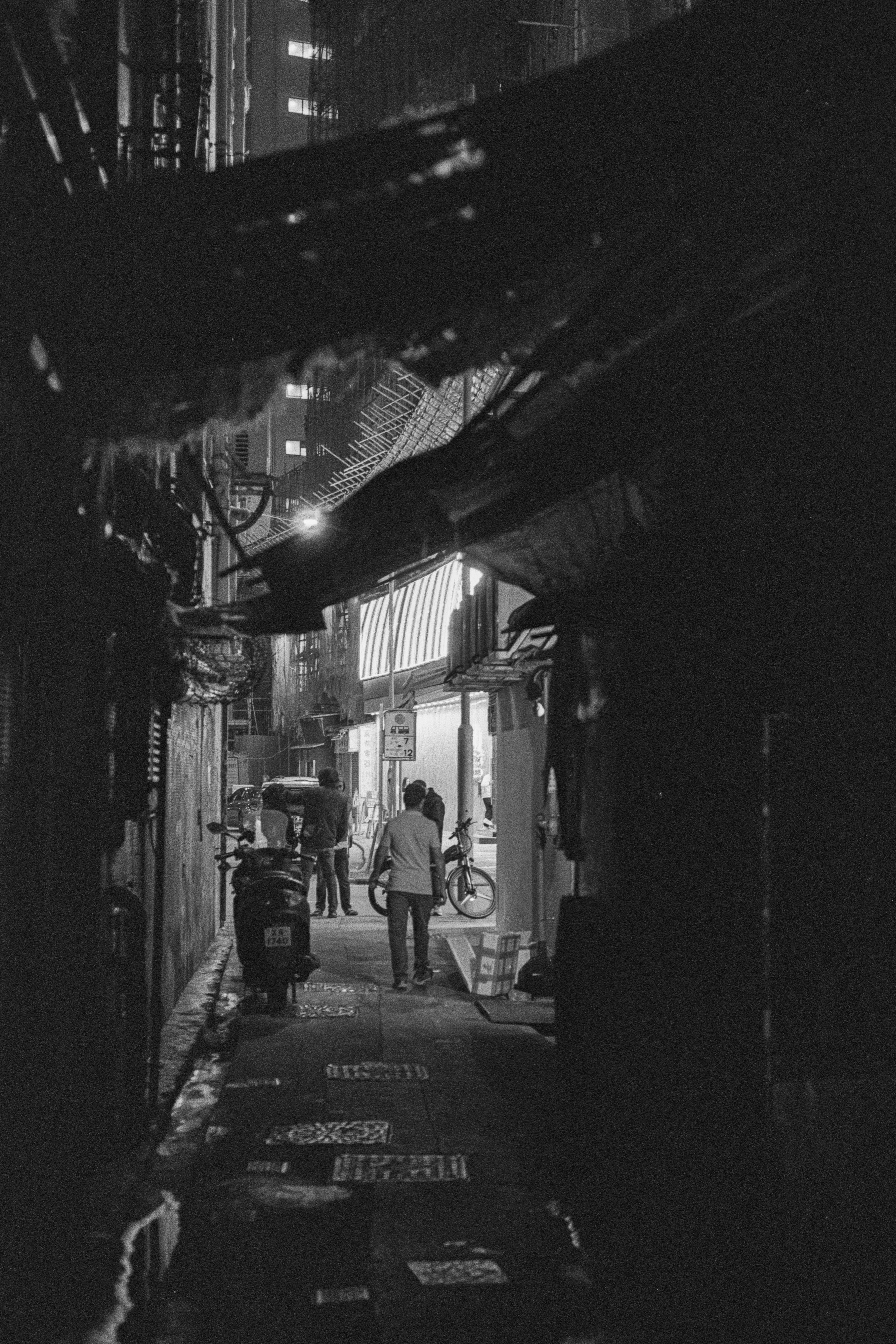
But durability alone doesn’t make a lens special. The real question is how it performs. To find out, I took the lens on a night-time walk through Hong Kong’s Temple Street Markets, mounted on a Nikon N80 loaded with Ilford HP5 Plus pushed to ISO 1600. It proved to be an excellent travel companion. Small and light enough to disappear into a camera bag, it complements a zoom lens perfectly when light levels drop and a wider aperture becomes useful.

The 50mm focal length itself remains one of photography’s classics. Offering a natural perspective that closely resembles human vision, it allows photographers to isolate subjects without introducing the compressed, voyeuristic feel often associated with longer telephoto lenses. It’s easy to see why masters such as Henri Cartier-Bresson favoured this focal length for so much of their work.

It’s Sharp

Even without conducting laboratory tests, images consistently appear crisp and detailed. Scanned film photographs reveal excellent central sharpness, with textures and fine details rendered more clearly than the lens’s modest price would suggest. There’s a certain incisiveness to the images that repeatedly catches me by surprise.

That sharpness continued to impress back home in Perth, this time using slower, finer-grained film under bright Australian sunshine. Stopped down, the lens produces remarkably detailed images. Even wide open at f/1.8, performance remains highly respectable. While it may not compete with the latest premium optics in objective testing, real-world results are consistently satisfying.

A Few Imperfections

Of course, the lens isn’t perfect. Corner performance lags behind the centre, particularly when shot wide open. Some mild vignetting is present, and modern photographers accustomed to flawless edge-to-edge sharpness may notice these shortcomings. Yet these imperfections rarely detract from photographs and can sometimes enhance them by naturally drawing attention toward the subject.

The bokeh is perhaps the lens’s most divisive characteristic. If you’re searching for creamy, dreamlike backgrounds that melt effortlessly into abstraction, this isn’t the lens for you. Out-of-focus highlights can appear somewhat harsh and nervous, particularly in high-contrast situations. Background blur remains perfectly usable, but it lacks the smooth rendering that has become fashionable in modern lens design.

Interestingly, these flaws contribute to the lens’s character. Many contemporary lenses are engineered to eliminate optical imperfections entirely. The result is often technically stunning but emotionally sterile. Corner-to-corner sharpness, perfect correction, and flawless rendering can sometimes come at the expense of personality.

The 50mm f/1.8D feels different. Its images retain a sense of individuality. They’re sharp but not clinical. Imperfect but engaging. The lens seems more interested in helping you create photographs than impressing you with engineering specifications. Its coatings also deserve praise. Contrast remains strong, and flare resistance is surprisingly good. Thanks in part to the deeply recessed front element, I struggled to provoke any serious flare issues during testing.

Ultimately, the Nikon AF Nikkor 50mm f/1.8D isn’t a miracle lens. It won’t leave photographers gasping in amazement, and it certainly won’t challenge the legendary status of Leica’s most celebrated optics. What it does offer is something arguably more valuable: honesty.

It’s a modest lens that quietly gets on with the job. It has flaws, limitations, and quirks, but it also possesses charm, reliability, and surprisingly strong optical performance. In an industry increasingly obsessed with perfection, there’s something refreshing about a lens that embraces being merely very good.

Perhaps that’s why it remains one of Nikon’s finest bargains. Not because it’s perfect, but because it delivers so much photographic enjoyment for so little money.

Whether it’s Nikon’s best-value budget lens or merely the second-best is still open for debate. But one thing is certain: the Nikon AF Nikkor 50mm f/1.8D has earned its place among the great affordable lenses of the film era; and it’s still capable of creating beautiful photographs today.

Trying out the Nikon 135mm f/2.8 Ai-S Manual Focus Lens on Digital and Film

Let’s talk about 135mm lenses.

Not the legendary, collector-grade optics that command eye-watering prices on the second-hand market. I’m talking about the humble, often-overlooked 135mm lenses gathering dust in the lower reaches of eBay listings, sitting somewhere between “well used” and “please check photos carefully.”

For reasons I don’t entirely understand, old 135mm lenses seem to have fallen out of fashion. Perhaps they’re caught in an awkward middle ground. They’re a little too long for everyday portrait work, a little too short for serious wildlife photography, and in an era dominated by versatile zooms, they can seem somewhat impractical.

After all, modern zoom lenses offer tremendous convenience. When you can’t physically move closer or further away—or simply don’t want to—being able to adjust your framing with a twist of the zoom ring is undeniably useful. For sports or action photography, a zoom lens is usually the obvious choice.

But there’s still something appealing about a dedicated telephoto prime.

The Nikon 135mm f/2.8 AI-S, introduced in 1981, represents the culmination of Nikon’s long-running line of manual-focus 135mm lenses. While it shares its optical formula with the earlier AI version, Nikon improved the lens coatings, giving it excellent contrast and resistance to flare. The fact that it remained in production for over two decades speaks volumes about its popularity and capability.

Back in the 1980s, serious photographers often preferred primes over zooms because zoom technology simply hadn’t reached the quality levels we take for granted today. Prime lenses were typically faster, lighter, and optically superior.

Even now, those advantages remain relevant. At 425 grams, the 135mm f/2.8 AI-S is compact enough to carry comfortably while still feeling reassuringly solid. It embodies the best of Nikon’s manual-focus era: metal construction, smooth mechanical operation, and a tactile quality that’s increasingly rare in modern lenses.

One particularly thoughtful feature is the built-in retractable lens hood. As someone who regularly forgets to pack lens hoods, having one permanently attached is a welcome convenience.

Taking a 135mm to Tokyo

When I picked up my copy in Japan, I wasn’t entirely sure what role it would play in my photography. I had purchased it from a used camera store in Tokyo for around 17,000 yen—a reasonable price for a lens that, despite its “B” grade condition, turned out to be mechanically excellent and optically clean.

Naturally, I decided to test it in one of the busiest places imaginable: Shibuya.

Using a 135mm lens on crowded city streets presents challenges. There were certainly moments when I wished I had a 35mm lens attached instead. Yet the longer focal length offered a completely different way of seeing the city.

Rather than photographing the whole scene, I found myself isolating details, extracting individual moments from the chaos, and capturing candid portraits from a comfortable distance. The lens allowed me to pick out visual fragments that might otherwise have been lost amid the noise and activity.

Its relatively fast f/2.8 aperture also proved valuable after dark. Tokyo’s neon-lit streets became a playground for selective focus, with subjects emerging from backgrounds rendered into soft, creamy blur.

Of course, that shallow depth of field can be both a blessing and a curse. At 135mm, maintaining critical focus becomes more demanding, especially when photographing moving subjects. There were plenty of occasions where I had to accept that only part of a scene would be perfectly sharp. But when everything came together, the results had a distinctive look that justified the effort.

Digital and Film Performance

While most of my initial testing took place on a Nikon Z6 via an adapter, I wanted to see how the lens performed in its natural habitat: on film. Back in Perth, I loaded a roll of Kentmere 100 into my Nikon FE and spent a sunny summer day photographing Hillarys Boat Harbour.

The results confirmed my impressions from Tokyo. The lens is sharp—more than sharp enough for real-world photography. I’m not interested in pixel-peeping competitions or laboratory measurements, but the images displayed excellent detail and clarity. The bright Australian sunlight allowed me to work at comfortable shutter speeds, while the improved coatings and built-in hood kept flare well under control.

Optically, the lens performs admirably across the board. Vignetting is visible at wider apertures but largely disappears by around f/5.6. Distortion is virtually nonexistent, chromatic aberration is minimal, and highlight blooming is remarkably well controlled for a lens of this vintage.

Most importantly, the out-of-focus rendering is beautiful. The combination of focal length and aperture produces smooth, pleasing background blur that helps subjects stand apart from their surroundings.

The Value Proposition

When discussions turn to Nikon’s classic medium telephoto lenses, the 105mm f/2.5 usually receives the lion’s share of attention. It has earned a near-mythical reputation among photographers, and deservedly so. But the 135mm f/2.8 offers something compelling: exceptional value.

It’s often available for significantly less money than the famous 105mm while delivering excellent image quality, slightly greater subject compression, and equally attractive bokeh. The longer focal length creates a distinct look that many photographers may actually prefer. In fact, here’s the secret that doesn’t get mentioned often enough: most manual-focus 135mm lenses from major manufacturers are excellent.

Whether you’re looking at Nikon, Canon, Pentax, Minolta, or Olympus, these moderate telephoto lenses benefited from relatively straightforward optical designs that manufacturers had refined for decades. As a result, even affordable examples tend to perform surprisingly well.

Final Thoughts

The Nikon 135mm f/2.8 AI-S has quickly become one of my favourite lenses. Part of that comes down to image quality. Part of it comes down to the beautifully engineered manual-focus experience. But perhaps the biggest factor is simply the value it offers.

It’s a lens that reminds me why vintage photography gear remains so appealing. For a relatively modest investment, you get a beautifully made optic capable of producing images with character, sharpness, and personality.

In a world obsessed with the latest and greatest equipment, the humble 135mm remains one of photography’s best-kept secrets. And for that reason alone, it’s worth another look.

Is the Nikkor Z 28mm f/2.8 Nikon’s most Boring Lens?

Whenever I visit a new country, I like to check out the second-hand camera scene for potential bargains as souvenirs. On a trip to Shanghai, I went to Xingguang Photographic Equipment City, a sprawling, multi-story mall full of small camera shops selling used gear. Armed with 1000 Renminbi in my WeChat wallet, I hoped to find a unique lens within my budget. I was drawn to the idea of a 135mm, but it was too expensive, so I set my sights on something more modest.

I eventually found Nikon’s 28mm Z f/2.8 SE lens, a lens with a retro design that fits Nikon’s ZF digital camera. It’s affordable but not particularly exciting in quality, as it has a plastic mount and feels more like a cheap throwback than anything premium. However, it was within my budget and looked decent enough. The shopkeepers were friendly and humored my attempts at speaking Chinese, making the experience enjoyable.

Reflecting on the 28mm focal length, I find it somewhat mundane. Back in the film era, 28mm was considered wide, but these days, it’s essentially the default view on smartphone cameras. The world is now saturated with 28mm photos—thanks to the trillions of smartphone shots shared online—creating a visual monotony that’s almost tiresome.

To test the lens, I decided to take it to Zhujiajiao, a historic water town near Shanghai, to see if I could capture something interesting with this “boring uncle” of a focal length.

Serviceable, yes but… Exciting?

When I downloaded the photos from my 28mm lens, I felt a bit disappointed. They felt overfamiliar, like the endless shots of water taxis or gondolas in Venice that we’ve all seen. I started questioning if it was the lens itself or simply my inability to break away from typical tourist shots. Maybe the 28mm field of view kept me stuck in that mode.

The 28mm lens is easy to use, with smooth and quiet focusing, and it focuses closer than my zoom lens at 28mm, which is a nice feature. When focusing close, it handles out-of-focus areas beautifully with soft, creamy bokeh. While it won’t completely blur the background like other lenses, it subtly draws attention to the subject without being overpowering.

That said, the Nikon 28mm Z f/2.8 isn’t perfect—28mm does feel a bit dull. At least, to me. I got some decent shots, but reviewing them feels like scrolling through my phone gallery. My 24-200mm offers more versatility, letting me capture close-ups and control framing better by using its longer focal length to keep distractions out of the frame. With the 28mm, I have to be more mindful of composition, especially on the streets, compared to a 35 or 50mm lens.

After sorting through, I picked a few shots that captured the feel of the place without looking too postcard-like. The dim light drained some color from the scene, and a few images actually worked better in black and white.

I do think this lens is a good lens, maybe even a great one if you consider the price and can get over the plastic mount. I can’t fault it that I find the 28mm field of view a bit dull and perhaps, actually, with more use, I might to appreciate that focal length a little more.