
Are the Nikon N65 and Tamron 28-200mm the peaches-and-cream pairing of budget film photography, or do they clash like toothpaste and orange juice? After taking this decidedly unfashionable combination with me to Tokyo, I think I have a pretty good idea of where it sits in the hierarchy of cheap film cameras.
I travel quite a bit for work, and one of the recurring problems is that my camera collection stubbornly refuses to fit into a suitcase. Eventually, there comes a point where you have to accept that I’m taking one camera and one lens, once you have packed essentials such as a toothbrush, passport and your pet iguana. That makes size, weight, versatility and price rather important considerations.
The Nikon N65, also known as the F65 or Nikon U depending on where you live, is hardly the sort of camera that gets the heart racing. It is a late-era film SLR, made from plastic, finished in a rather unfortunate silver colour and generally ignored by photographers in favour of more glamorous cameras. It is, in other words, absolutely perfect for me.
The camera weighs less than 400 grams, yet manages to pack in an impressive collection of features. You get Program, Shutter Priority, Aperture Priority and Manual modes, along with 3D Matrix metering, exposure compensation, shutter speeds up to 1/2000 second, TTL flash and even deliberate double exposures. It is very much a product of the period when manufacturers had essentially perfected the SLR and were busy figuring out how many features they could squeeze into something ordinary people could afford.
Its biggest problem may simply be that it isn’t cool. The silver plastic body looks more like something you’d find in a child’s dressing-up box than around the neck of a serious photographer. There is a black version if you’re particularly concerned about your sartorial reputation, but the N65 isn’t going to impress anybody at a photography exhibition. Fortunately, I have no reputation to protect.
The Tamron Superzoom Problem
The other half of the equation is the Tamron 28-200mm f/3.8-5.6 Macro AF Aspherical XR (IF), a lens whose name contains approximately as many acronyms as some entire camera systems. Tamron was one of the pioneers of the all-in-one zoom, producing a 28-200mm as early as 1992 at a time when achieving that kind of focal range without producing complete optical rubbish was a genuine challenge.
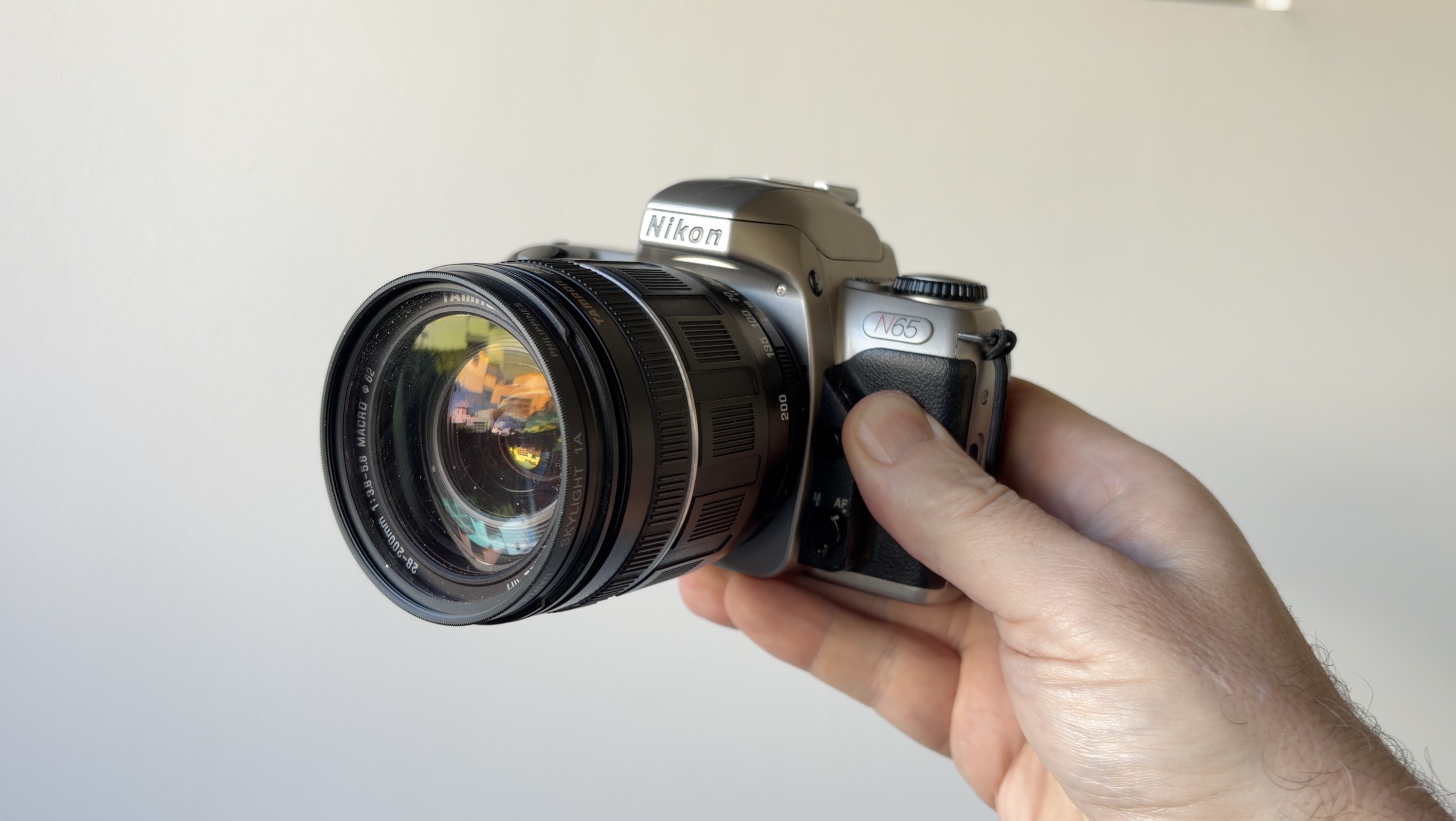
This particular version comes from the later generations of the design and includes aspherical and high-refractive-index elements. It isn’t going to produce the sort of three-dimensional pop that inspires lengthy forum arguments, but it is generally sharp, well corrected and has enough contrast to produce a pleasingly modern-looking image on film.
That’s important because this isn’t really a test of ultimate optical performance. I’m not trying to determine whether the Tamron can defeat a modern professional zoom in a forensic pixel-peeping contest. The whole point is finding the sweet spot between price, size, quality and versatility. A 28-200mm gives me the ability to photograph a cathedral, a street scene or something considerably further away without changing lenses, and that’s enormously useful when travelling.
There are limitations, of course. The relatively slow maximum aperture means this isn’t the lens I’d choose for exploring the darkest corners of Tokyo with ISO 100 film. In those circumstances, a fast 35mm or 50mm prime would be a much better choice. At 200mm, you also need to be careful with camera shake, particularly when shooting slow film such as Kentmere 100.
But when the light is good and I hold the camera properly, the results are more than good enough for my purposes. Some photographs were soft, but that wasn’t necessarily the fault of the lens. At 200mm, a little movement is enough to turn a potentially sharp photograph into something resembling a vague memory of having taken a photograph.

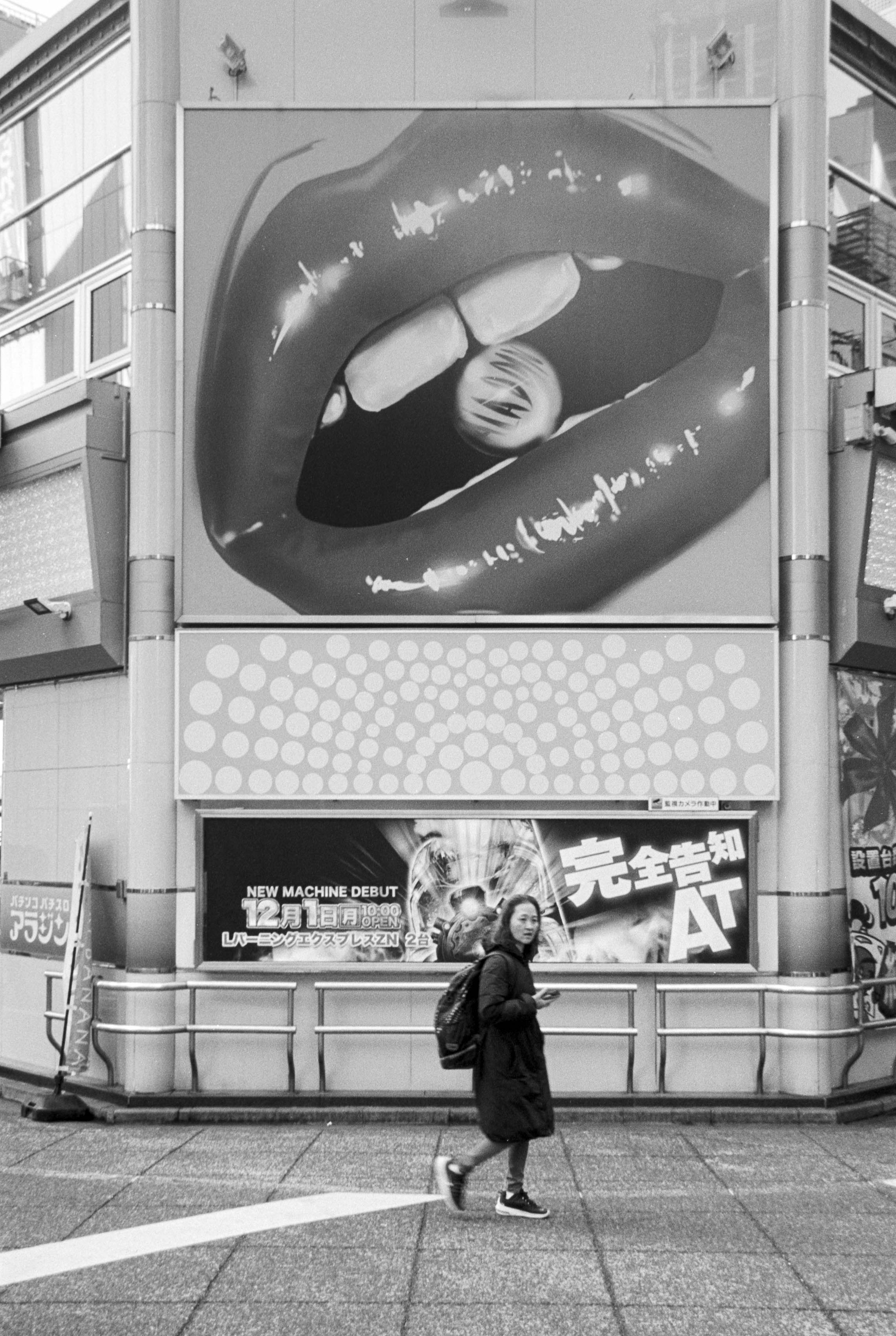
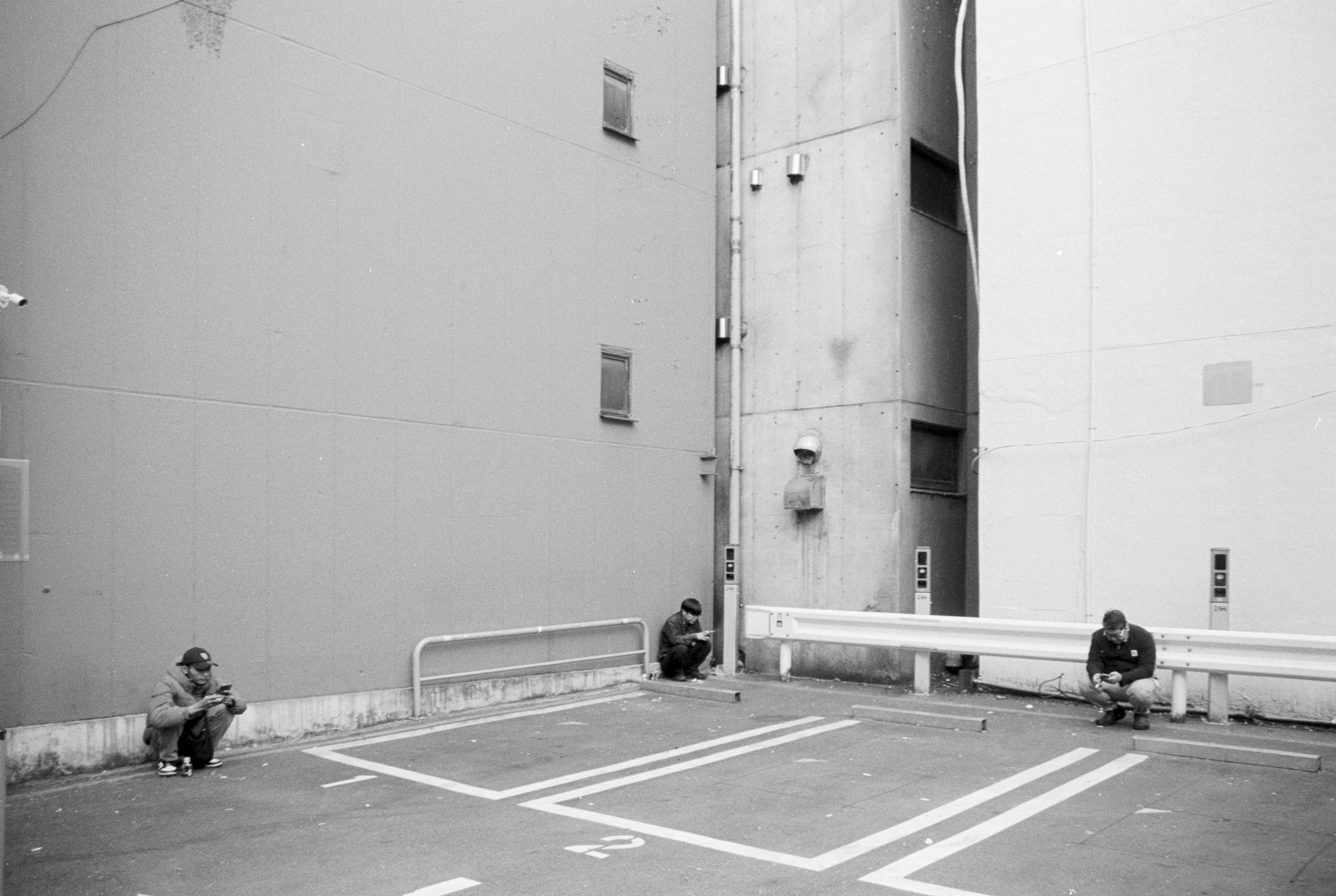

And when everything comes together, the results are surprisingly convincing. Some of the photographs I took in Tokyo was easily sharp enough to have been produced by a much more expensive camera and lens combination, while costing a fraction of the price and weighing considerably less.
The Budget Travel Sweet Spot
Taking the N65 and Tamron together, the entire combination weighs less than about 750 grams. That makes it a remarkably portable package considering the enormous focal-length range it provides. A 28mm isn’t ultra-wide, but it’s wide enough for most street photography without introducing excessive distortion, while 200mm gives you enough reach to isolate details and compress layers in a busy urban environment.
That’s exactly what I found useful in West Shinjuku and Nakano. I wasn’t simply trying to photograph the spectacular parts of Tokyo; I wanted to capture the mixture of business, social life, signage, buildings and random human moments that gives these places their character. The 200mm end of the zoom was particularly useful for compressing layers of windows and billboards, while also allowing me to pick out small moments happening within the chaos.




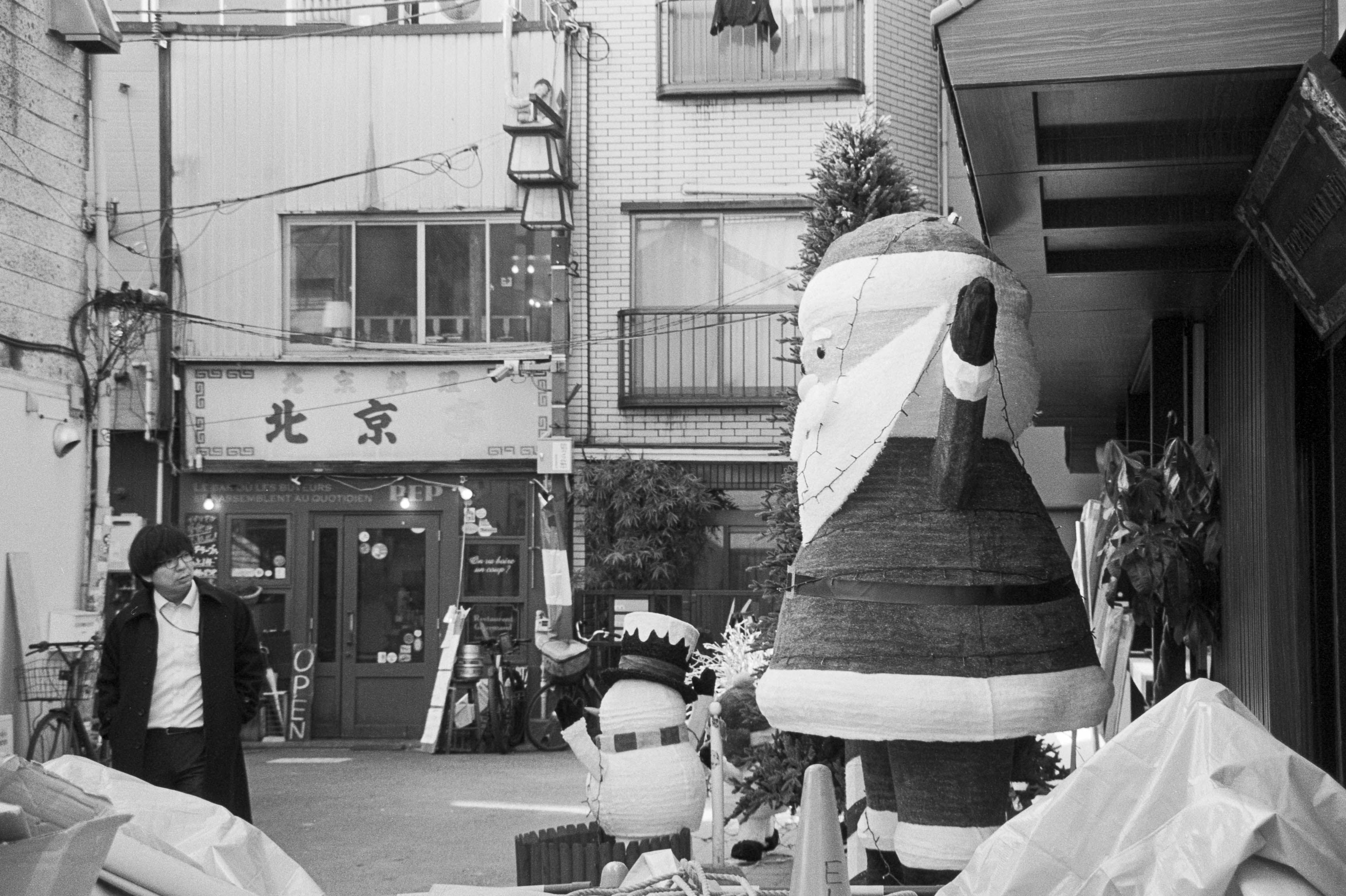
There are alternatives. Nikon’s F75 and F80 are better cameras and solve some of the N65’s irritating quirks, although they are correspondingly more expensive and, in the case of the F80, heavier. The N65’s Dynamic AF can decide to change focusing behaviour when it detects movement, which isn’t particularly helpful when you’re carefully composing something near the edge of the frame. I also find the inability to override DX film coding frustrating.
There are plenty of alternative lenses, too. Nikon’s 28-105mm and 28-85mm are excellent inexpensive choices if you don’t need the 200mm reach, while the humble 28-80mm can provide a remarkably cheap and lightweight solution. There are equivalent combinations from Canon, Pentax, Minolta and others, so this isn’t necessarily a recommendation that everyone should rush out and buy an N65.
For me, though, this combination hits that elusive golden triangle of heft, price and quality remarkably well. It isn’t perfect, and it certainly isn’t glamorous, but that’s not really the point. If I wanted perfection, I wouldn’t be shooting 25-year-old plastic cameras and cheap black-and-white film in the first place.
The N65 and Tamron 28-200mm are cheap, light, versatile and capable of producing photographs that are more than good enough. More importantly, they let me travel with one camera and one lens without feeling as though I’ve sacrificed the ability to photograph whatever happens to come along. In the end, that’s probably a much more useful quality than being cool.
So, will I be taking this combination on my next holiday? Quite possibly. And if that means leaving the expensive digital camera at home while carrying around a silver plastic Nikon that looks like it escaped from a 2000s department store, so be it. Sometimes the cheap seats have a surprisingly good view.

