Whenever I visit a new country, I like to check out the second-hand camera scene for potential bargains as souvenirs. On a trip to Shanghai, I went to Xingguang Photographic Equipment City, a sprawling, multi-story mall full of small camera shops selling used gear. Armed with 1000 Renminbi in my WeChat wallet, I hoped to find a unique lens within my budget. I was drawn to the idea of a 135mm, but it was too expensive, so I set my sights on something more modest.
I eventually found Nikon’s 28mm Z f/2.8 SE lens, a lens with a retro design that fits Nikon’s ZF digital camera. It’s affordable but not particularly exciting in quality, as it has a plastic mount and feels more like a cheap throwback than anything premium. However, it was within my budget and looked decent enough. The shopkeepers were friendly and humored my attempts at speaking Chinese, making the experience enjoyable.
Reflecting on the 28mm focal length, I find it somewhat mundane. Back in the film era, 28mm was considered wide, but these days, it’s essentially the default view on smartphone cameras. The world is now saturated with 28mm photos—thanks to the trillions of smartphone shots shared online—creating a visual monotony that’s almost tiresome.
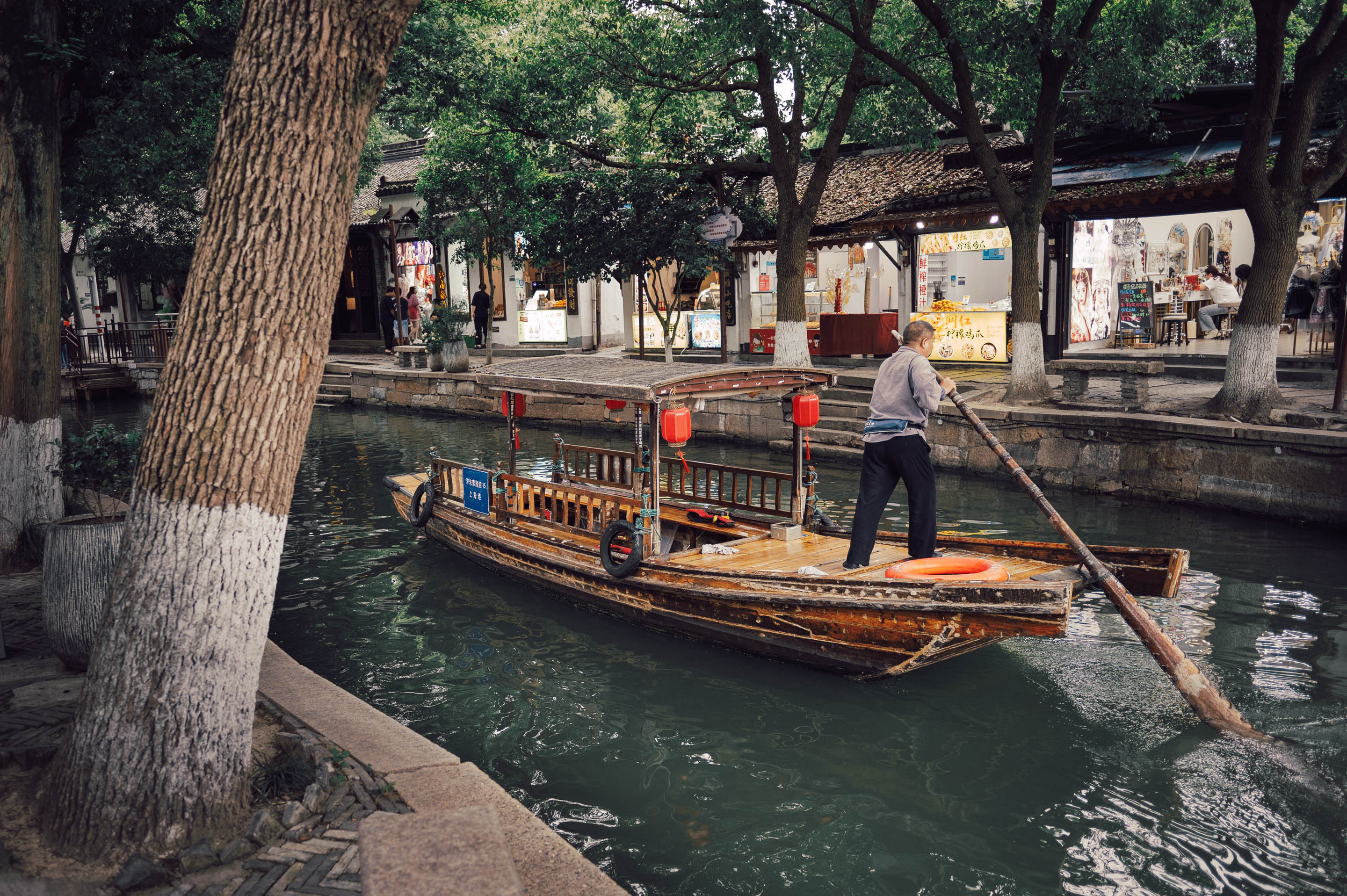
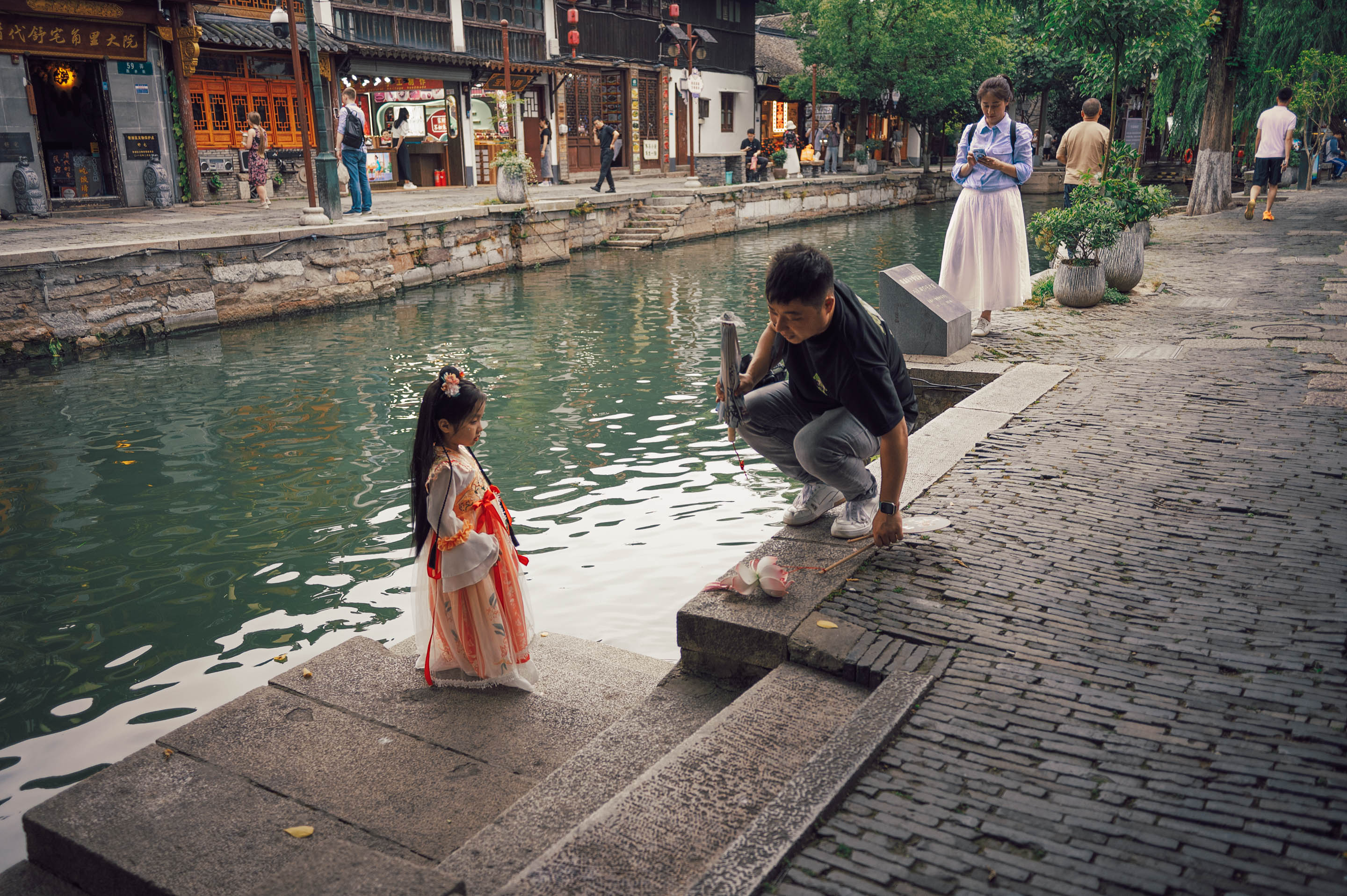
To test the lens, I decided to take it to Zhujiajiao, a historic water town near Shanghai, to see if I could capture something interesting with this “boring uncle” of a focal length.
Serviceable, yes but… Exciting?
When I downloaded the photos from my 28mm lens, I felt a bit disappointed. They felt overfamiliar, like the endless shots of water taxis or gondolas in Venice that we’ve all seen. I started questioning if it was the lens itself or simply my inability to break away from typical tourist shots. Maybe the 28mm field of view kept me stuck in that mode.
The 28mm lens is easy to use, with smooth and quiet focusing, and it focuses closer than my zoom lens at 28mm, which is a nice feature. When focusing close, it handles out-of-focus areas beautifully with soft, creamy bokeh. While it won’t completely blur the background like other lenses, it subtly draws attention to the subject without being overpowering.
That said, the Nikon 28mm Z f/2.8 isn’t perfect—28mm does feel a bit dull. At least, to me. I got some decent shots, but reviewing them feels like scrolling through my phone gallery. My 24-200mm offers more versatility, letting me capture close-ups and control framing better by using its longer focal length to keep distractions out of the frame. With the 28mm, I have to be more mindful of composition, especially on the streets, compared to a 35 or 50mm lens.
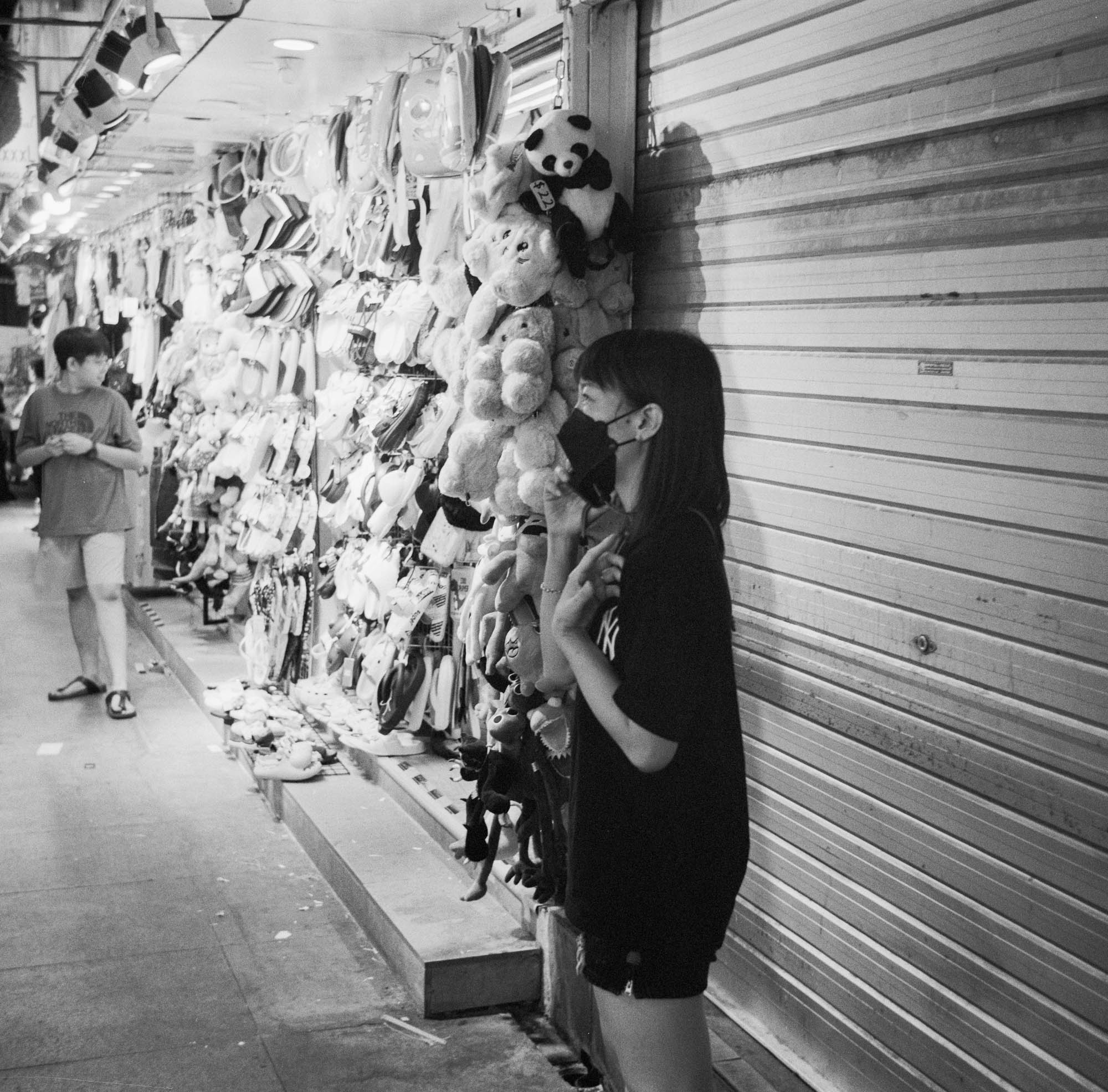
After sorting through, I picked a few shots that captured the feel of the place without looking too postcard-like. The dim light drained some color from the scene, and a few images actually worked better in black and white.
I do think this lens is a good lens, maybe even a great one if you consider the price and can get over the plastic mount. I can’t fault it that I find the 28mm field of view a bit dull and perhaps, actually, with more use, I might to appreciate that focal length a little more.
You know how it is when you get a new family member and want to capture all those special moments? First day of school, first soccer goal, and so on. Well, it’s the same with puppies. Sure, their moments might be a bit different—I’m pretty sure I never licked myself as a kid, though who knows, maybe I would have if I could. Kids grow up fast, and those moments slip away quickly. And if dogs are truly our best friends, don’t they deserve more photo attention than your last Instagram post of spaghetti bolognese?
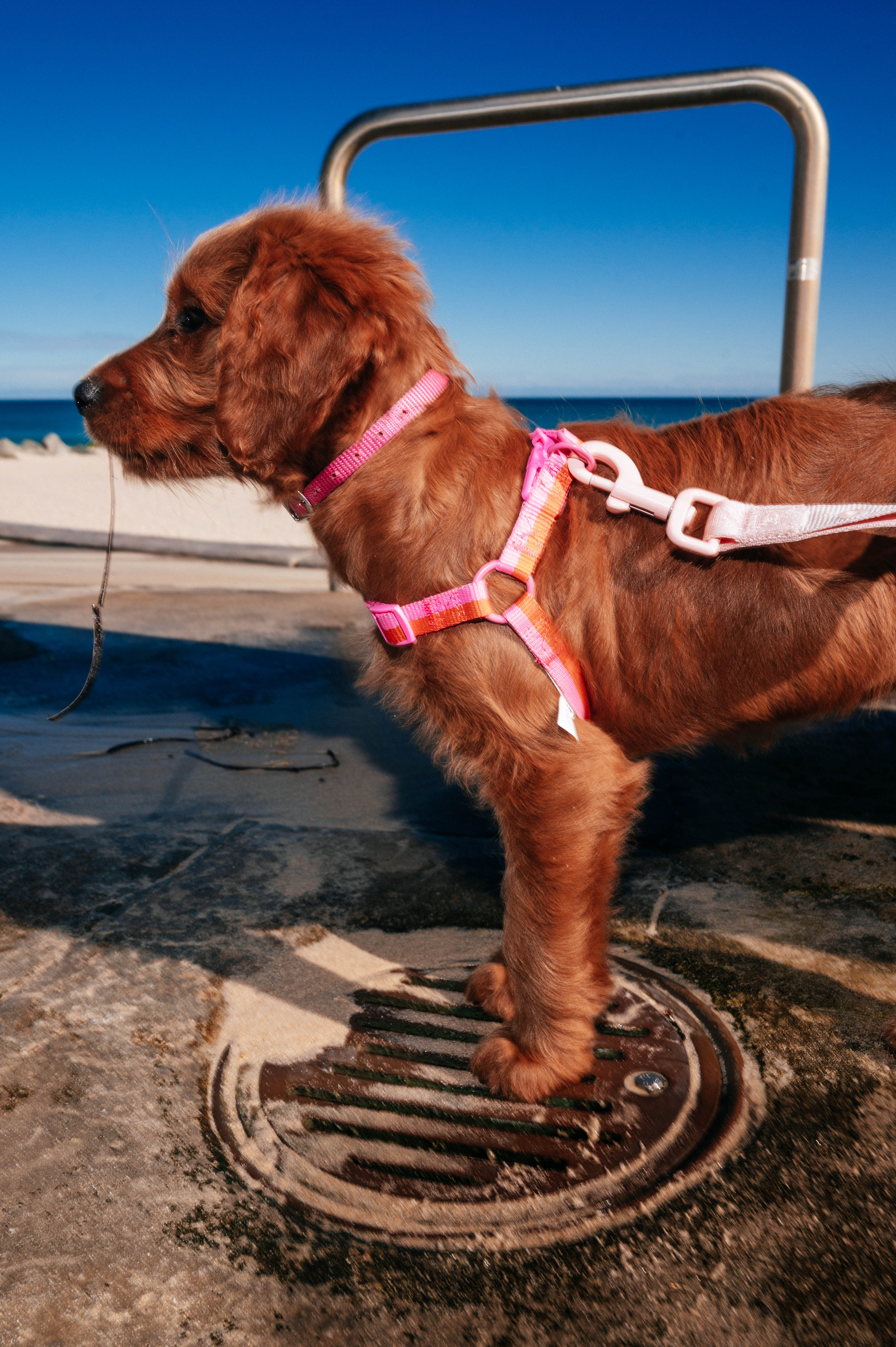
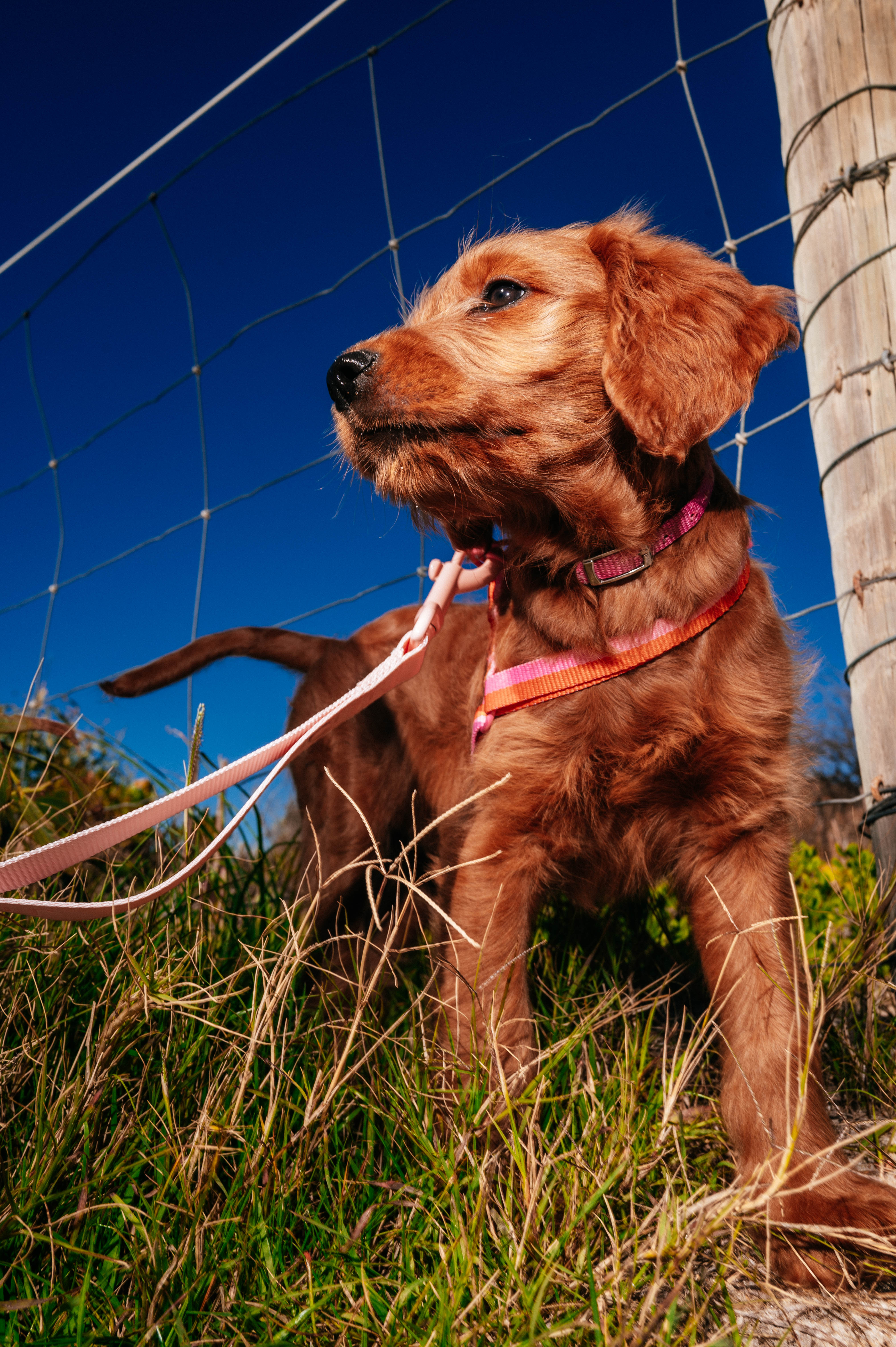
Meet the latest member of our family, Juniper the Groodle. Fresh faced and furry at 14 weeks, it was time to immortalize this little lady. I checked out some pet photography and found it uninspiring. How many photos of dogs in lavender fields do you need? Cute, cuddly, charming—these aren’t the words that inspire me. Instead, I think of artists like Terry Richardson and Bruce Gilden.
Richardson is known for his raw, uncompromising fashion and celebrity photos, stripping away the glamour for a more stark and sometimes harsh look. Gilden, on the other hand, captures New Yorkers in their most unguarded moments, creating shocking, brutal, and even ugly photos. While I don’t want to emulate their exact styles, I do appreciate their approach to challenging traditional aesthetics.
Juniper Meets Terry Richardson
For Juniper the Groodle, I aimed to channel a bit of their spirit. I set up with a flat white wall and used a Zhiyun Molus 60 with a small softbox for lighting. I even enlisted Slothy, a stunt double, to help with the setup while Juniper relaxed. After getting the settings right, I swapped in Juniper and was pleasantly surprised. She could easily outshine supermodels with her lustrous ginger hair and prehensile tongue.
Juniper Meets Bruce Gilden
For the Gilden-style shoot, I needed to recreate his gritty look digitally. Using my Nikon Z6 with a 24-50mm lens, I adjusted the aperture to f/8 to capture as much detail as possible while keeping the background dark. I added a neutral density filter to manage the ambient light and used a powerful flash to highlight Juniper against the darkness.
In the end, instead of capturing a marginalized character with my uncompromising lens, it was more like me running backward while Juniper pounced and tugged at the lead, trying to chase the camera like it was some high-tech chew toy.
Juniper isn’t exactly tall, and Gilden’s method involves crouching and shooting from below, holding the flash higher to model the subject. With Juniper’s head just a foot off the ground, the whole process taxed my back and patience, and completely embarrassed my daughter as I backed down the path like a hunched paparazzi at the beach on a Sunday morning. Needless to say, I didn’t get many great shots. In that sense, I guess it was an authentic shoot – Gilden is known for being selective in curating his own work. Usually, I show the whole roll, but in this case, it’s better to showcase only a few that worked.
More Experiments
I tried to recreate the look at home. Gilden loves an eye patch and and a munted-mouthed look. I thought including a prop and providing some peanut butter could promote the masticated gurning that could typify that Gilden Crack Whore Aesthetic. Again, with limited success. Our model, Juniper, wasn’t cooperating, and it seems all the attention has gone to her head. She scampered, jumped, rolled, and did everything except stay put. I was too tired to work with such a privileged, unprofessional model. In the end, I was left with some subpar frames, and the eye patch I’d added for effect was discarded in 15 seconds.
It occurred to me that maybe the best way to get Juniper to behave was to be in the picture myself. So, I did a quick setup early one morning, trying to capture both of us. This approach was more successful, though trying to hold a dog and operate the camera remotely was tricky. I think I managed to capture some of that gritty style I was aiming for, channeling a bit of that “Hoboken Hobo” energy.
Check out the video for how I created a Dragan-style edit that upped the grit and contrast of the image of Juni to reflect the grimy urban streets of New York.
Perhaps I could revisit this scenario when a life time of pain and deprivation has left its indelible mark on her pretty face. In any case, I think I will keep at this because… even if I can’t channel the genius of Richardson and Gilden, I can at the very least end up with some slightly different and somewhat distinctive photos. And who knows? Maybe there is some more photographic magic to be mined from this process.
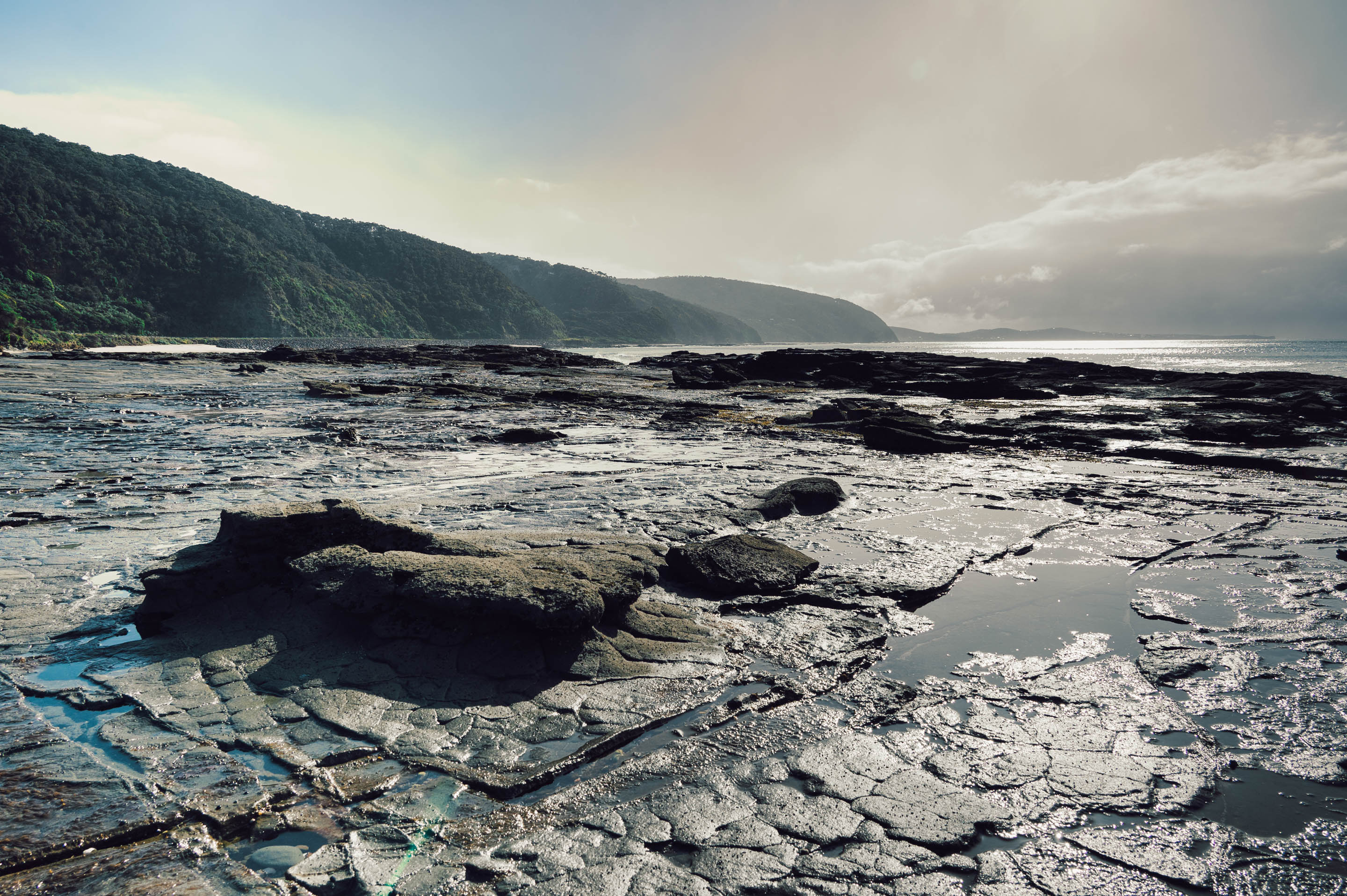
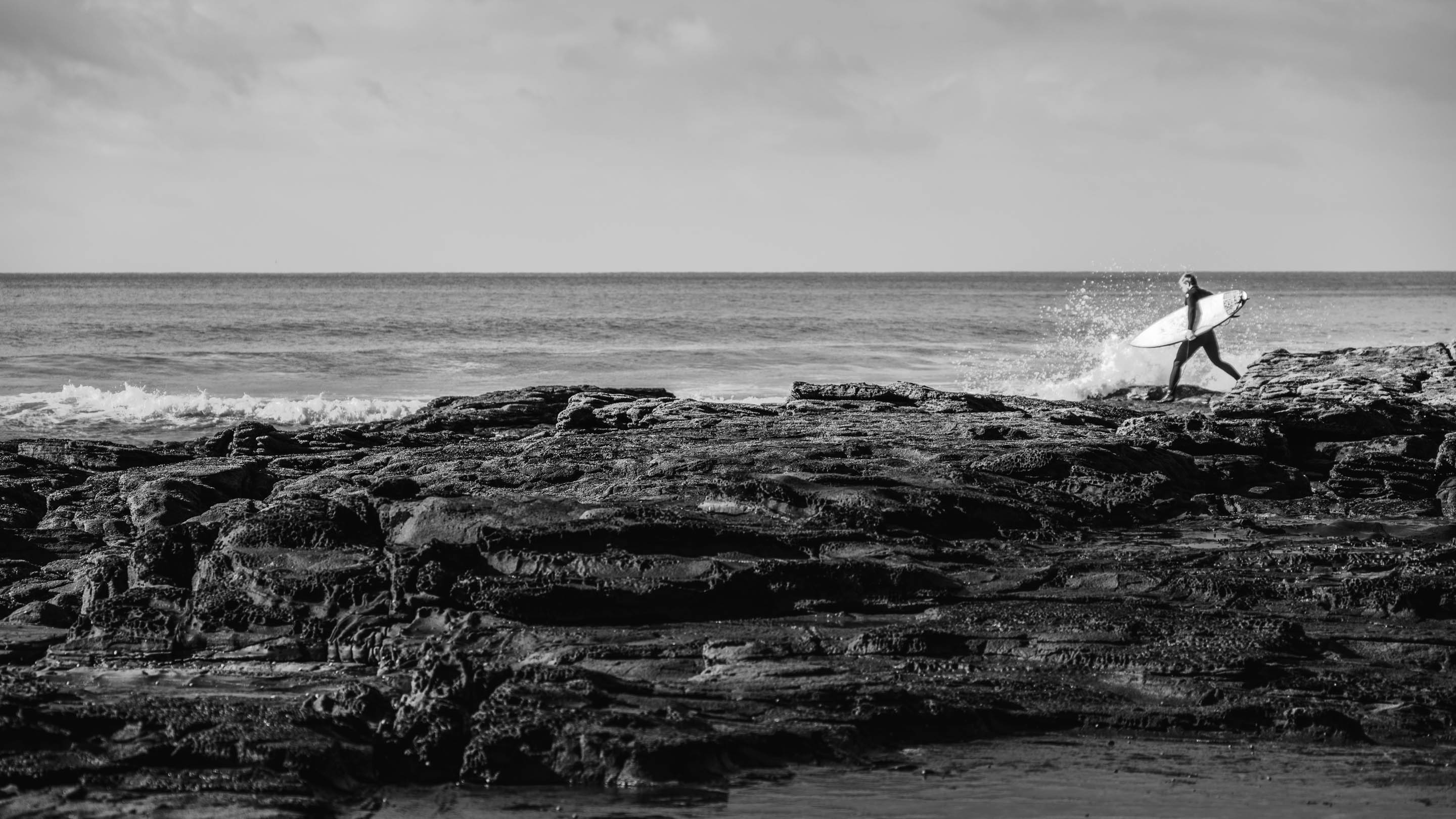
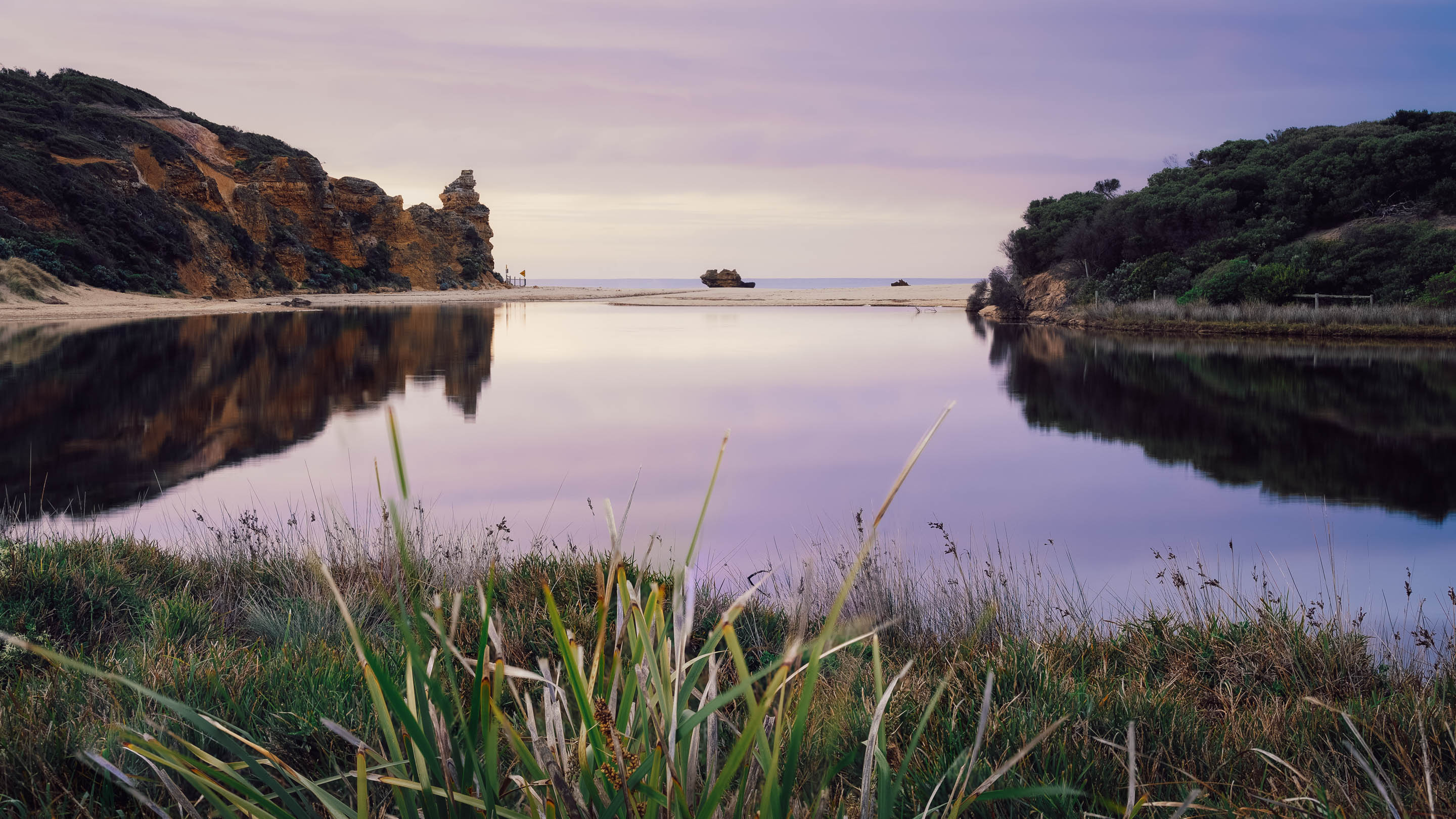
Day Two of my exploration of Victoria, not the royal lady but the rugged Australian shores. Winding along the Great Ocean Road between Aireys Inlet and Port Fairy, I found myself greeted by a sky painted with rainbows and ever-changing conditions. Each stop along the way presented a chance to scan the coastline for unique features, though initially, I felt out of place in the natural world.
However, as I ventured on, I stumbled upon a lunar-like landscape of rutted rocks and alien vistas that captured my imagination. Shooting into the light yielded some of my favorite photos of the day, showcasing glistening reflections and odd shapes. Moving inland, I explored the lush greenery of Barham Paradise Scenic Reserve with my drone, capturing the undulating beauty of the Victorian countryside.
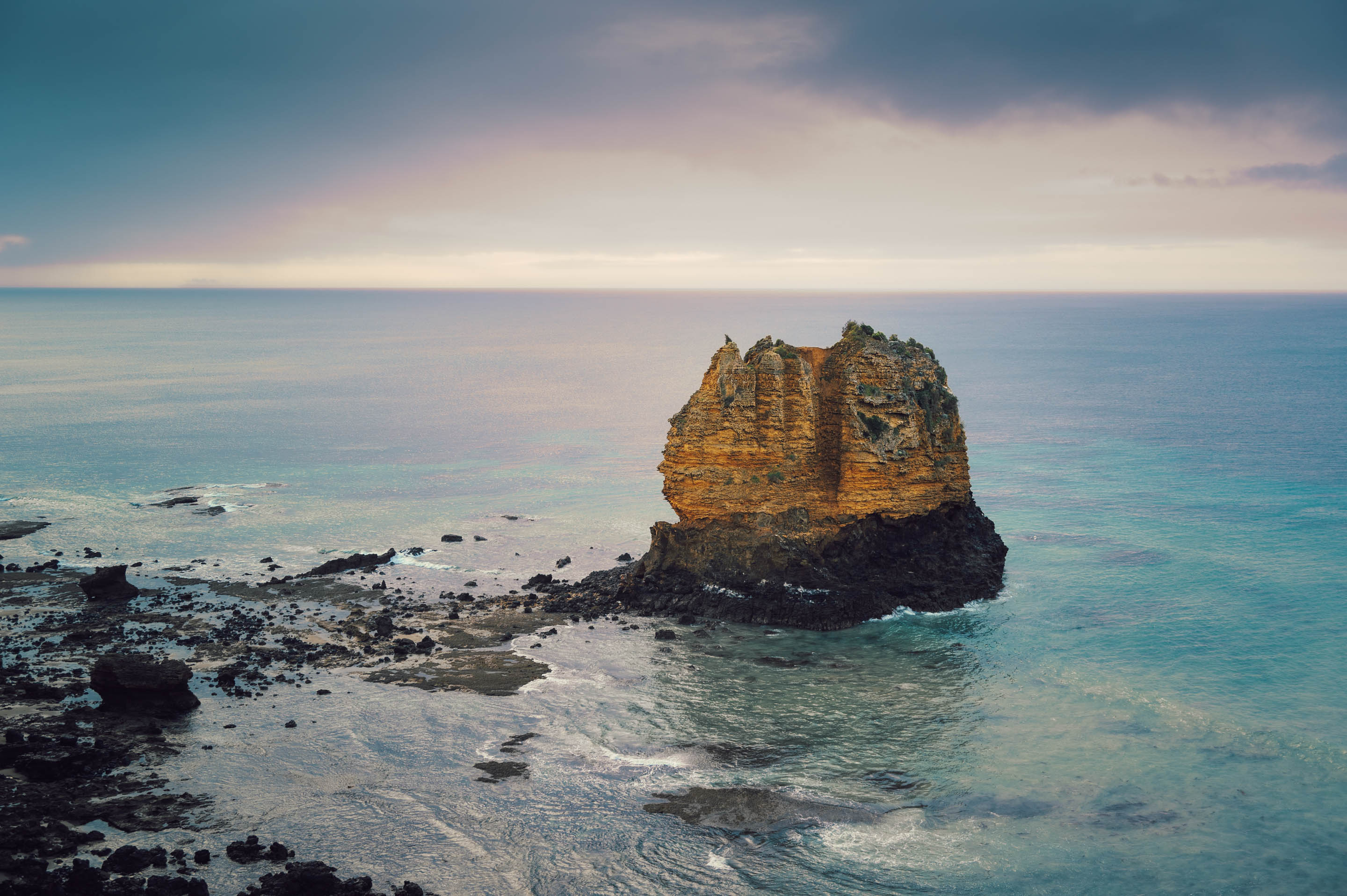
Returning to the coast, the Great Ocean Road revealed its promise and decay, with limestone cliffs battered by the southern ocean. Despite the cliché of photographing the Twelve Apostles, I aimed to bring a unique perspective to the iconic location, acknowledging its imminent erosion and the misnomer of its name.
Continuing along the coast, I sought to evoke a sense of the strange and fascinating, rather than merely document the landscape. From silhouetted birds against dreamy backdrops to timeless structures along the shore, each image told its own story.
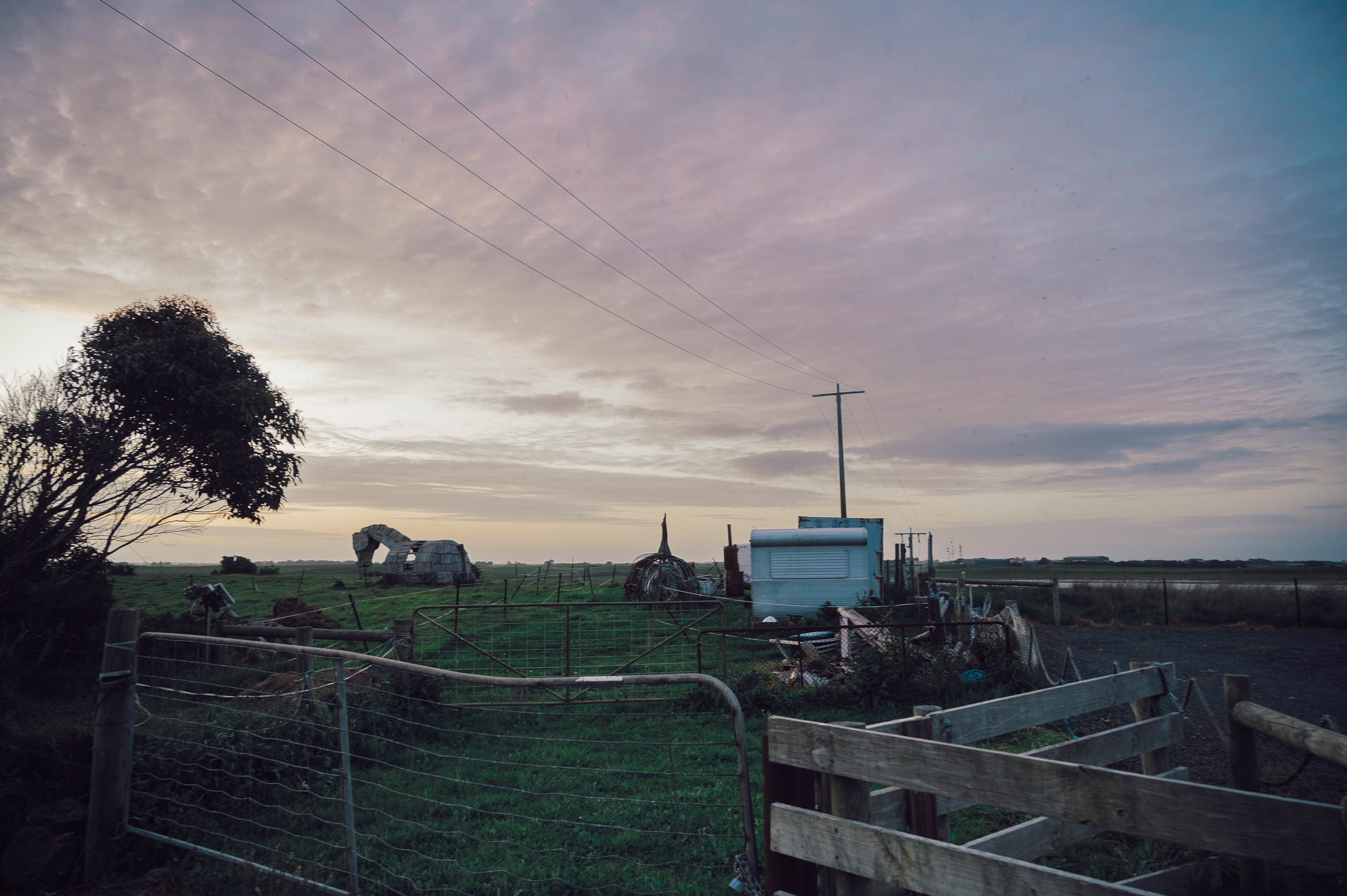
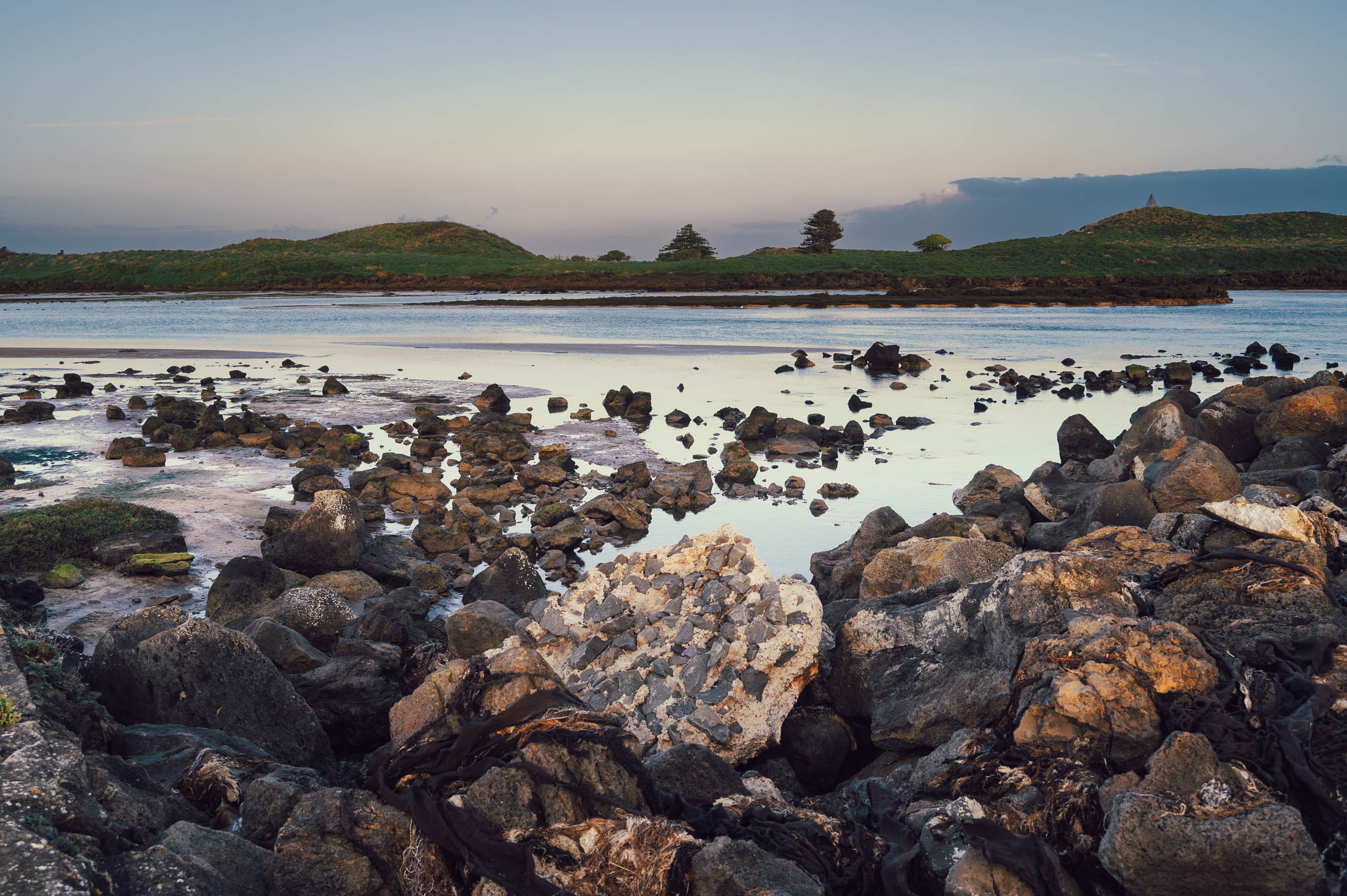
Arriving at Port Fairy, I found a tonal counterpoint to the fierceness of the coastline, with a serene sunset casting its glow over the landscape. Even mundane scenes by the roadside took on mythical proportions, like a Trojan horse abandoned in an Australian landscape.
In conclusion, I didn’t aim to capture the landscape’s majesty in the conventional sense, but rather to invite viewers into a world of ambiguity and intrigue. The best photos were those that sparked curiosity and imagination, leaving room for interpretation and storytelling.
It was finally time for me to escape the urban chaos and embrace the tranquility of rural life. Leaving behind the chilly winter of Perth, I embarked on a quest to capture the beauty of the Victorian countryside near Melbourne, Australia. The adventure began with a flight on Jetstar, the budget brand of Qantas, which was an experience in itself. Despite the discomforts, including watching Harrison Ford in the latest Indiana Jones movie, I landed safely in Melbourne.
From there, I journeyed through Regional Victoria, exploring places like the Great Ocean Road and the Grampians. Along the way, I encountered both mundane and extraordinary sights, from suburban landscapes to ancient-looking steel structures. Despite the initial drizzle and monotony, the scenery eventually opened up to rolling plains and breathtaking sunsets.
One memorable stop was at Aireys Inlet, where I managed to capture a fleeting moment of beauty during sunrise. Despite my doubts about the composition of my photos, I was content knowing that I had something to show for my efforts. The journey continued, with challenges in balancing elements within the frame and battling the unpredictable weather.
As I wrapped up the first stage of my exploration, I reflected on the difficulties of landscape photography but looked forward to the next leg of my journey along the Great Ocean Road to Port Fairy. Although I can’t promise perfection in my photos, you’re welcome to come along for the ride.
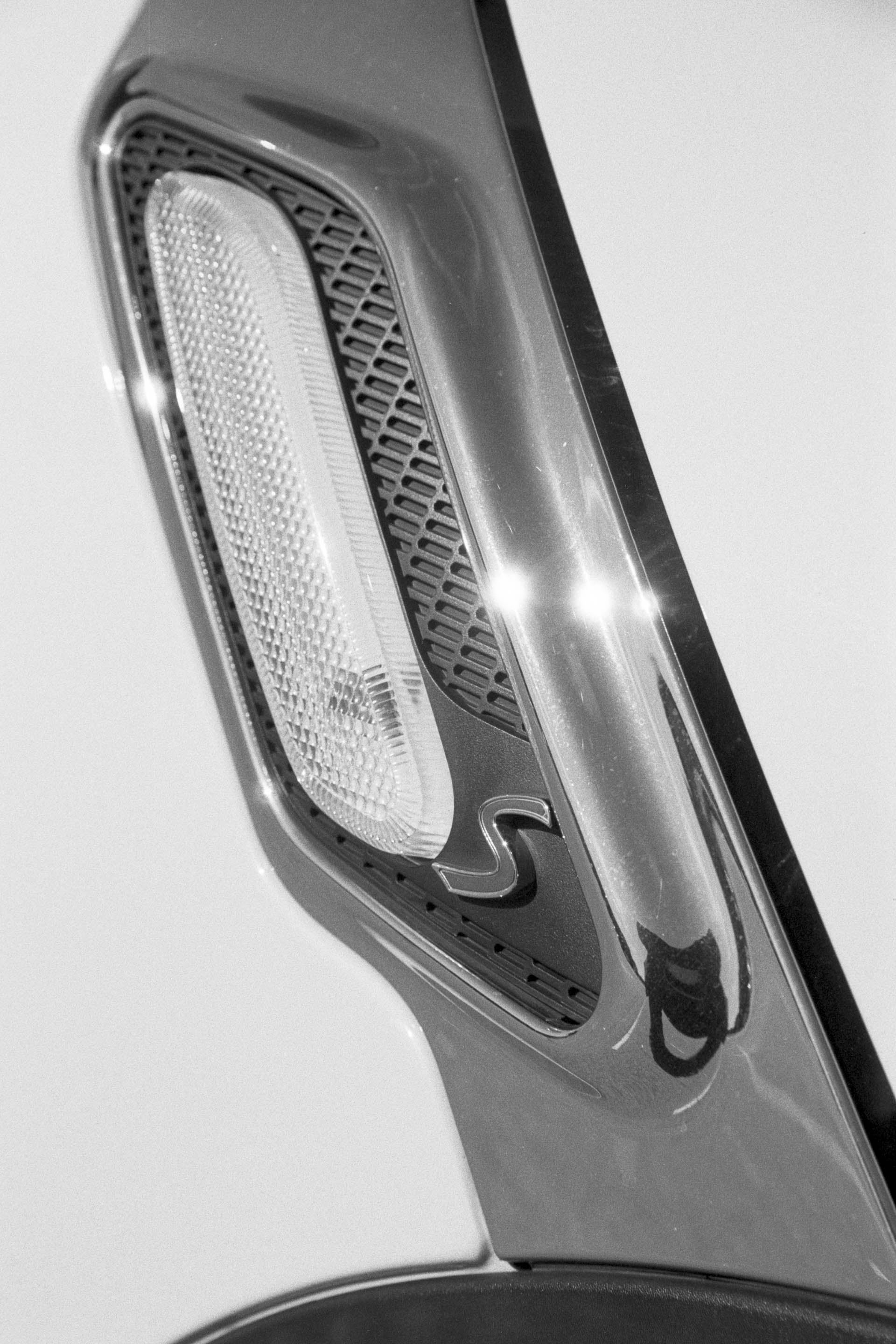
What inspired me to create this video was the recent purchase of a new car. Well, when I say “new,” it’s all relative. Considering New College Oxford dates back to the 14th century and the New Seekers peaked in the 1970s, “new” takes on a different meaning. But fear not, this isn’t merely a video about cars. That’s not really my usual content. Nor is it about the New Seekers, although that might cement my status as the go-to YouTuber for the retirement community.
The truth is, I’ve never felt much of a bond with my cars beyond hoping they’ll get me to my destination without any breakdowns. Given my history of acquiring or inheriting beat-up cars, that’s never been a given. Plus, I’ve had a couple of mishaps along life’s journey that remind me cars can be dangerous—yes, I even blinked when I sneezed.
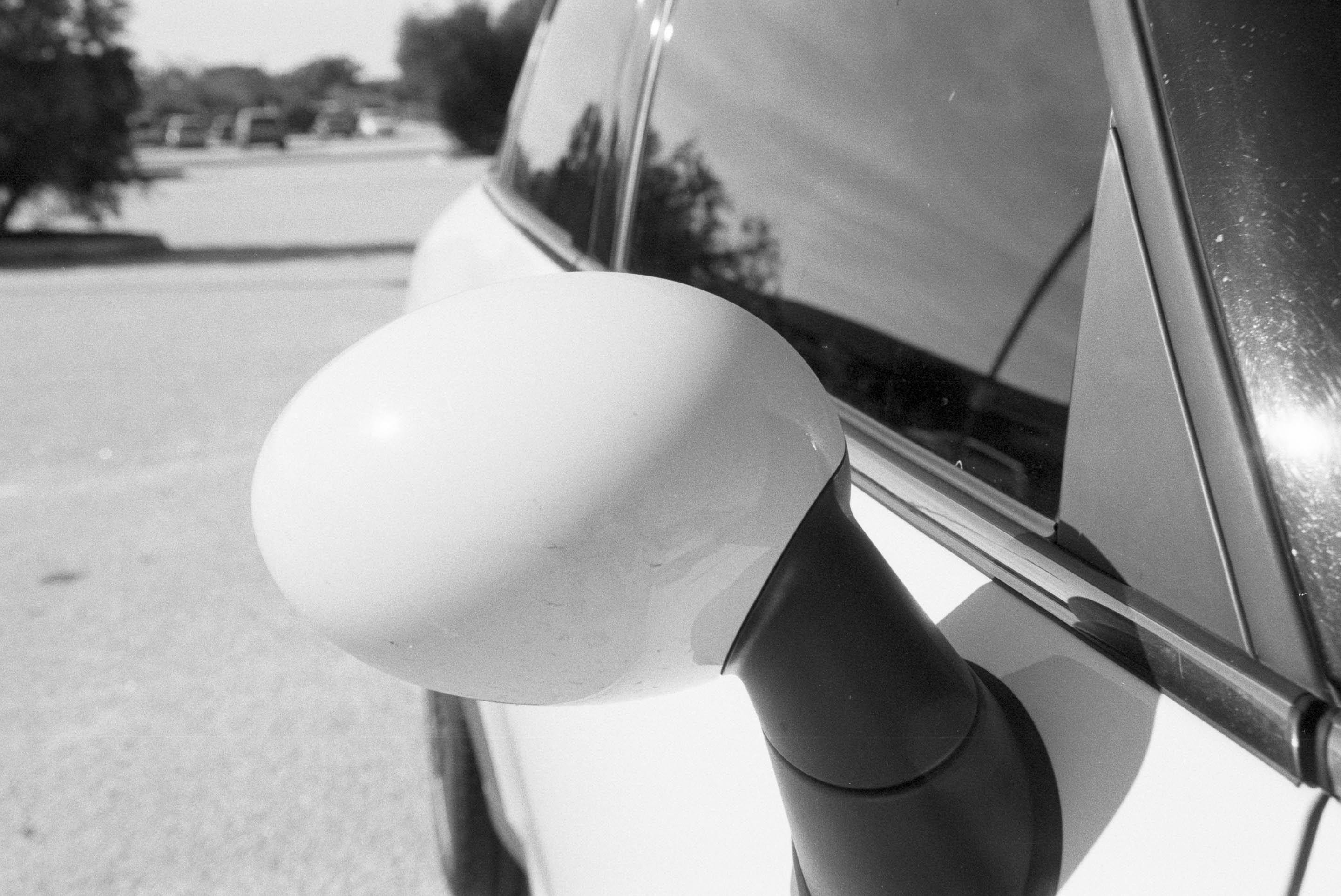
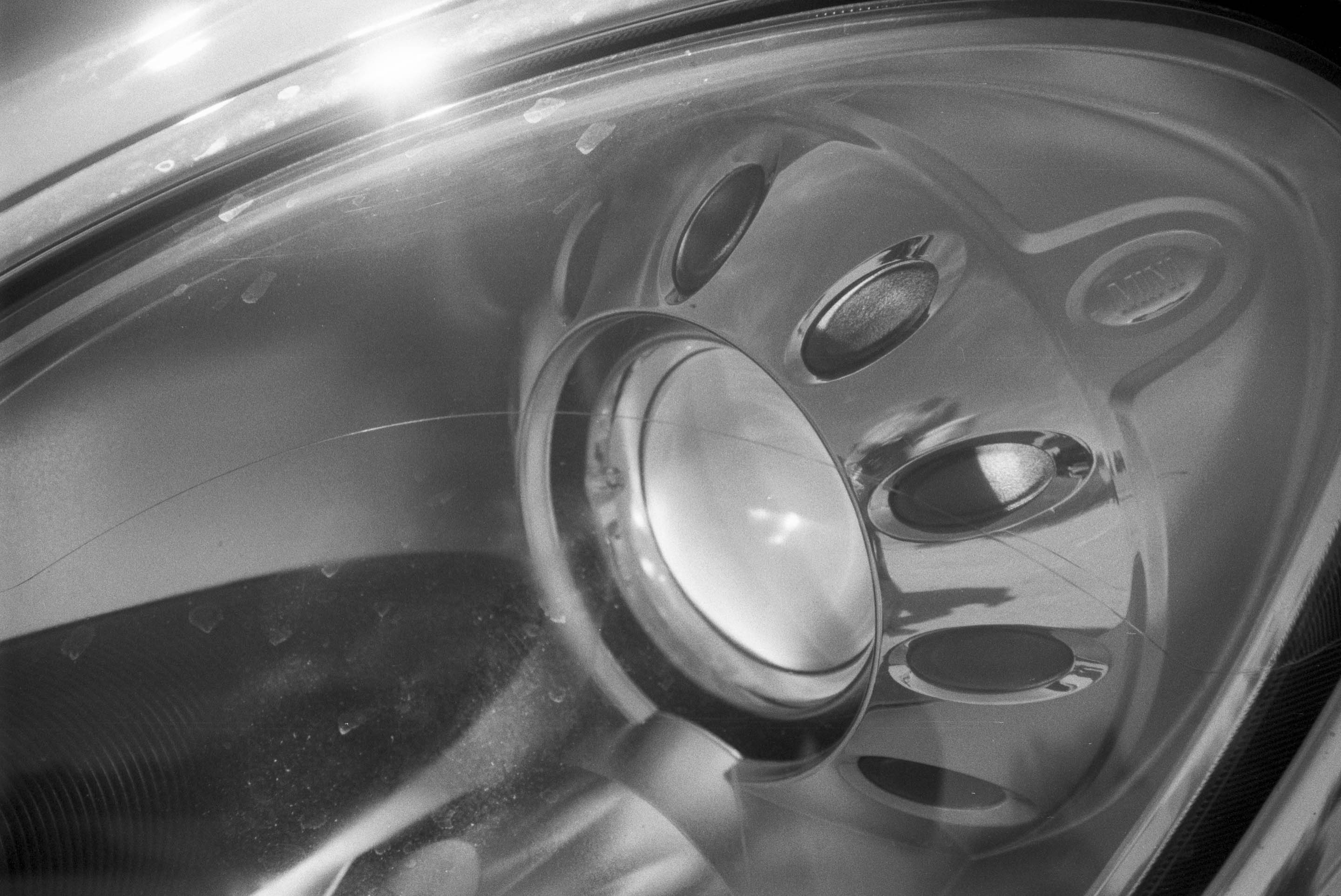
However, from the moment I test drove this car, actually, from the moment I laid eyes on it, there was an undeniable allure emanating from it, beckoning me to have some fun.And I think it’s because it’s a Mini. The Mini, as a car, epitomizes fun. It’s even ranked number 5 on Top Gear’s list of fun and economical cars, and even Chat GPT agrees with me on thi
That got me pondering about my most enjoyable camera. It’s a tough call. I’ve owned many cameras that I’d describe as ‘fun’, from the quirky Carl Zeiss Werra to the comically oversized Fuji medium format rangefinder. But ultimately, I settled on my Olympus Pen F Digital. Just as the Mini serves as my everyday ride, this camera is my everyday companion. While any dependable car can get me from A to Z, this camera provides the versatility I require to capture the photos I desire.
Sure, any modern camera can produce quality images, much like how any reliable car can get you where you need to go. But what sets apart the ‘fun’ factor in both cases compared to other similar tools? That’s the question I find myself exploring.
What is Fun? The Five Ss
It sounds like a simple question, but the answer can be complicated. Often we think of fun as something that has no purpose or meaning but cars and cameras are both tools. There has to be something more to it than that and I’ve come tho think about it as the Five Ss
Firstly, fun is a sensuous, not to be confused with sensuAL. It’s about the tactile quality of things, the immediate satisfaction they provide. Whether it’s driving a fast car or handling a camera, the user interface and tangible experience play a significant role in the enjoyment.
Take this car, for instance. Despite its modest engine size, the turbocharger gives it a surprising speed, accompanied by a distinct sound that adds to the sensory experience. Similarly, my Olympus Pen F camera feels fast in hand, capable of shooting at high speeds and providing a seamless interface for capturing images.
But fun isn’t just about speed; it’s also about surprises. Despite its compact size, both the car and the camera pack a punch, offering unexpected features and capabilities that enhance the overall experience.
Additionally, there’s an element of silliness to both. From quirky design choices in the car’s interior to overengineered buttons on the camera, there’s a sense of playfulness that adds to the enjoyment.
However, fun doesn’t always mean impracticality. Both the car and the camera serve practical purposes while still providing an enjoyable experience. In fact, the fun aspects can often enhance the serious outcomes, making mundane tasks more enjoyable.
Photos from the Olympus Pen F, exemplifying the Five Ss of Fun
Ultimately, whether it’s driving a fast car or capturing moments with a camera, fun can be found in the serious and the silly alike. And in the end, both the car and the camera prove to be more than just tools; they’re sources of enjoyment and satisfaction in their own right.
Here’s to Fun!
The word ‘fun comes from the old English word ‘befon’ which is to make a fool of someone. In that sense I’m very fun.
It’s just a pity that there isn’t much attention paid to the concept of fun. Flicking through the pages of the Dictionary of World Philosophy takes you directly from Frankfurt School to God without any fun in between and that’s a shame. After all, wasn’t it that great philosopher Miley Cyrus who said, ‘Life is all about having a good time’?
Look, I’m not sure I completely subscribe to the simplistic notion of fun being pleasure without purpose. Sure, no-one’s expecting you to have a riotous time bagging your broccoli in the supermarket. But that doesn’t mean shopping can’t be both fun and purposeful. Similarly It doesn’t mean every useful tool or purposeful activity is going to be fun. Some of the most optimised experiences are so seamless that they are barely register with us. Neither the mini nor the Pen F are perfect. But if they were, maybe they’d be boring. The fact that the Mini Countryman is a little bubble box on an all wheel drive X1 chassis means you get all of the benefits and compromises of a crossover vehicle including having the turning circle of a camel train. The Pen F is full of compromises too with its smaller sensor and quirky autofocus. It’s love of dials means that they had to put the on-off switch on the top left of the camera body, which means you can’t operate the camera one-handed but these aren’t just the limitations you learn to live with, they are the qualities you come to love. The minor annoyances slip into the background but we can still occasionally be surprised and beguiled by some of the unexpected whimsy that this camera offers. It’s a serious tool for a serious job but it stimulates my creativity and after all, it WAS Einstein who said ‘Creativity is Intelligence having fun.’ And while not quite the intellectual heavyweight that is Miley Cyrus, Albert does make good case – relatively speaking. And yes, that was a really bad pun. But that’s what fun is. It’s the little things. It’s this little thing and all the S words that seduce and surprise us. This small, singular, sensuous block of knurled magnesium and electronics manages to be both silly and serious at the same time. And in that sense very special to me.
Ah, the allure of the Leica M6, a camera to flaunt wealth and artistic prowess alike. But why bother with ostentation when you can blend in with the proletariat using a humble companion like the Nikon N55? Sure, you won’t garner as many admiring glances, but the stares you do receive may be tinged with curiosity or bemusement, which, let’s face it, is attention nonetheless.
Let me regale you with the tale of my photographic escapades through the bustling streets of Shanghai, armed not with a Leica but with the unassuming Nikon N55 and a curious film stock mysteriously labeled as 800T, procured from the upscale online emporium that is Ali Express. With this unassuming combination in hand, I embarked on a journey to capture the essence of the city.
As I peered through the viewfinder of the N55, a sense of anticipation mingled with uncertainty. Something seemed amiss – the exposure appeared off-kilter, suggesting a potential mismatch between the film speed and the camera’s settings. Despite this initial hiccup, I resolved to soldier on, embracing the idiosyncrasies of the N55, which stubbornly refused to recognize DX codes, leaving me with no option but to compensate for the overexposure manually.
Undeterred by technical hiccups, I ventured forth into the labyrinthine streets of Shanghai’s historic neighborhoods, where brighter conditions finally afforded me the opportunity for more favorable shooting conditions. The results, while not without their flaws, offered glimpses of everyday life in this vibrant city – from the hustle and bustle of the marketplace to the quiet serenity of a secluded alleyway.
Now, let’s delve into the enigma that was the 800T film. Despite my initial reservations about its origins and processing, it performed admirably, even when subjected to a two-stop overexposure. A cautious approach to development paid dividends, yielding clean, balanced negatives that belied the film’s budget-friendly origins.
Yet, amidst the mundane scenes captured on film, a few moments stood out like diamonds in the rough – a fleeting glimpse of Chinese line dancing in a sunlit square, the mesmerizing interplay of light and shadow on the city’s architectural facades, and the endearing charm of canine companions frolicking in a local park. These ephemeral encounters served as poignant reminders of the richness of life, transcending mere visual aesthetics.
The Nikon N55 and 28-80mm f/3.3-5.6G
But what of the N55 itself? Despite its plastic construction and finicky autofocus, it proved to be a stalwart travel companion, compact enough to slip into carry-on luggage yet robust enough to withstand the rigors of urban exploration. Its quirks and limitations only added to its charm, serving as a testament to the resilience of analog photography in an increasingly digital age.
A new roll of film, this time some Kodak Colorplus 200 and while it didn’t give me those same classic Cinestill halations or cinematic tones, it was more than able to capture the veracity of the streets with its muted palate.
And let us not overlook the unsung hero of this photographic odyssey – the 28-80mm kit lens. Despite its modest specifications, it delivered surprisingly sharp and contrasty images, a testament to the craftsmanship of its optics. In the hands of a skilled photographer, it transformed mundane scenes into captivating vignettes, elevating the humble N55 to new heights of artistic expression.
Great for Travel
In the end, the Nikon N55 may not have the cachet of a Leica or the technical prowess of a modern DSLR, but it more than held its own in capturing the essence of Shanghai’s bustling streets. It’s small and light so it won’t break your back on a long day of shooting. It’s cheap and even cheaper looking so no-one is going to mug you for it. Its kit lens is surprisingly sharp and it’s quick, smooth, and responsive. So, if you find yourself in need of a reliable travel companion, look no further than this unassuming gem of a camera – the Nikon N55.
Let’s dive right in, shall we? We’re talking about a particular gem in the realm of camera lenses: the Nikon 50mm f/1.2 AI-S. Now, this isn’t just any 50mm lens; it’s a certified light bucket. Back in 1978, when it first hit the scene, it promised to suck in light like a black hole without leaving your photos in a pit of despair. But does it still hold up in today’s unforgiving photographic landscape?
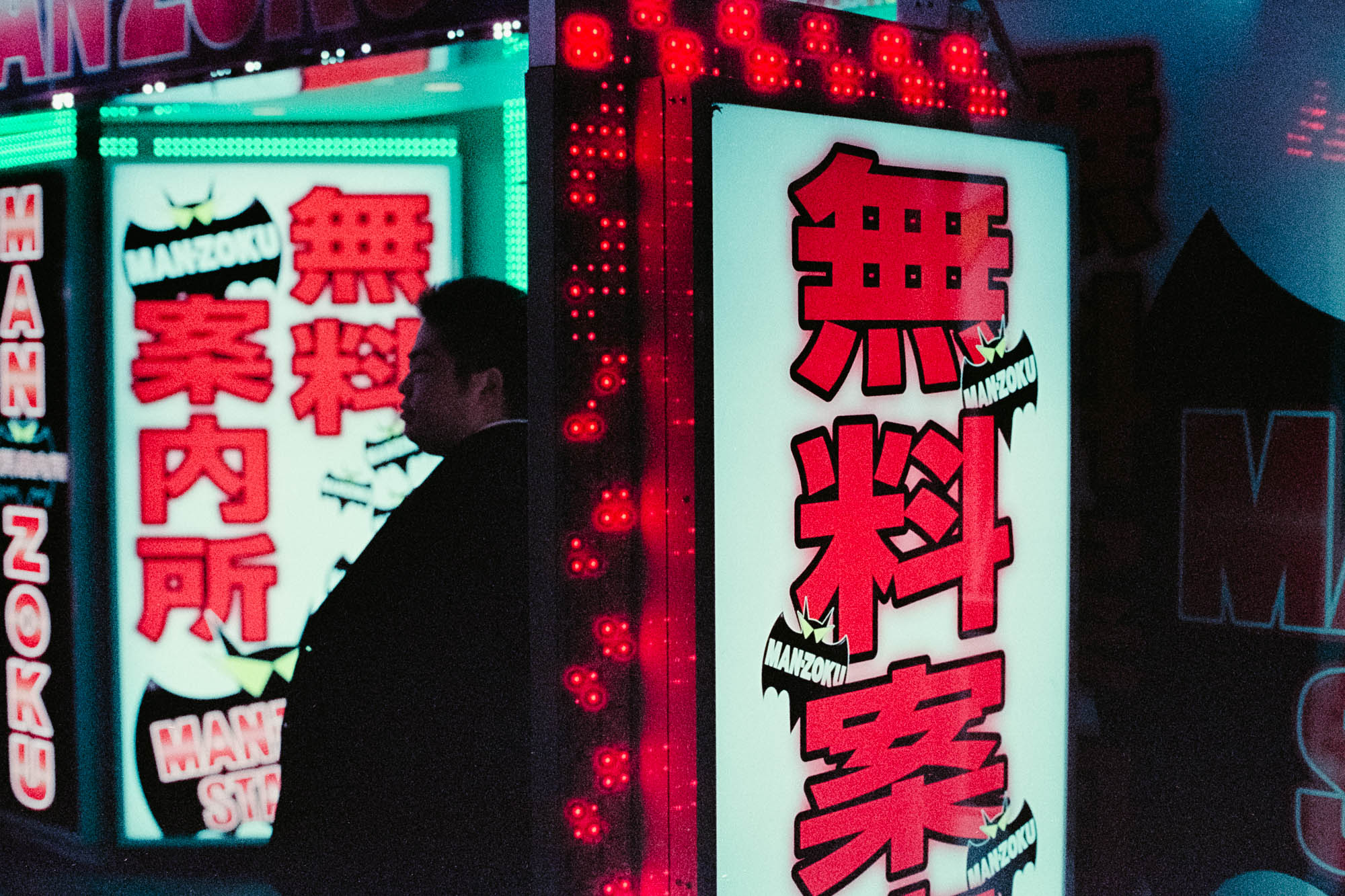
As the neon lights of Tokyo’s Shinjuku district flickered to life, I found myself armed with my trusty Nikon FE paired with the venerable Nikon 50mm f/1.2 AI-S lens. Venturing into the bustling streets, I was eager for a night off from my teaching responsibilities, ready to immerse myself in the vibrant energy of the city. I found camaraderie in the unlikeliest of places, forging bonds with newfound friends who shared a passion for exploration and discourse. As the night unfolded, I couldn’t help but marvel at the serendipitous moments captured through the lens of my Nikon FE, each frame a testament to the spontaneity and vibrancy of Shinjuku’s streets.
A Dance with Film and Light
Despite the film’s lack of objective reference for white balance, I embarked on a journey of post-processing exploration, extracting the raw beauty of the night through the lens of Lightroom. Amidst the chaos of the city, the Nikon 50mm f/1.2 AI-S lens stood as a stalwart companion, capturing moments with its timeless design and solid construction.
As I scanned the negatives, I marveled at the smorgasbord of colors and textures captured by the lens. From the vibrant hues of neon signs to the subtle interplay of light and shadow, each image told a story of urban life illuminated by the glow of the night. While some may dismiss the imperfections of the film as shortcomings, I embraced them as part of the charm, adding depth and character to my photographic narrative.
Nikon 50mm on Generic 800T Motion Picture Film
A Lens with Character
The Nikon 50mm f/1.2 AI-S lens boasts a rich history spanning over four decades, embodying a blend of craftsmanship and character. Despite its imperfections, this lens possesses a unique charm that transcends technical limitations. Its wide aperture renders scenes with a delicate balance of sharpness and softness, akin to an artistic brushstroke painting the canvas of the night. However, its quirks, from vignetting to chromatic aberration, add to its allure, transforming mundane scenes into ethereal compositions.
Delving deeper into the lens’s optical design, I discovered its simplicity belied its complexity. With seven optical elements arranged in six groups, the lens exhibited a traditional spherical design that harkened back to a bygone era of photography. Yet, its longevity and durability spoke to its enduring appeal, standing the test of time amidst advancements in technology. While modern lenses may boast technical superiority, the Nikon 50mm f/1.2 AI-S lens remained a timeless icon, revered by photographers for its distinctive character and versatility.
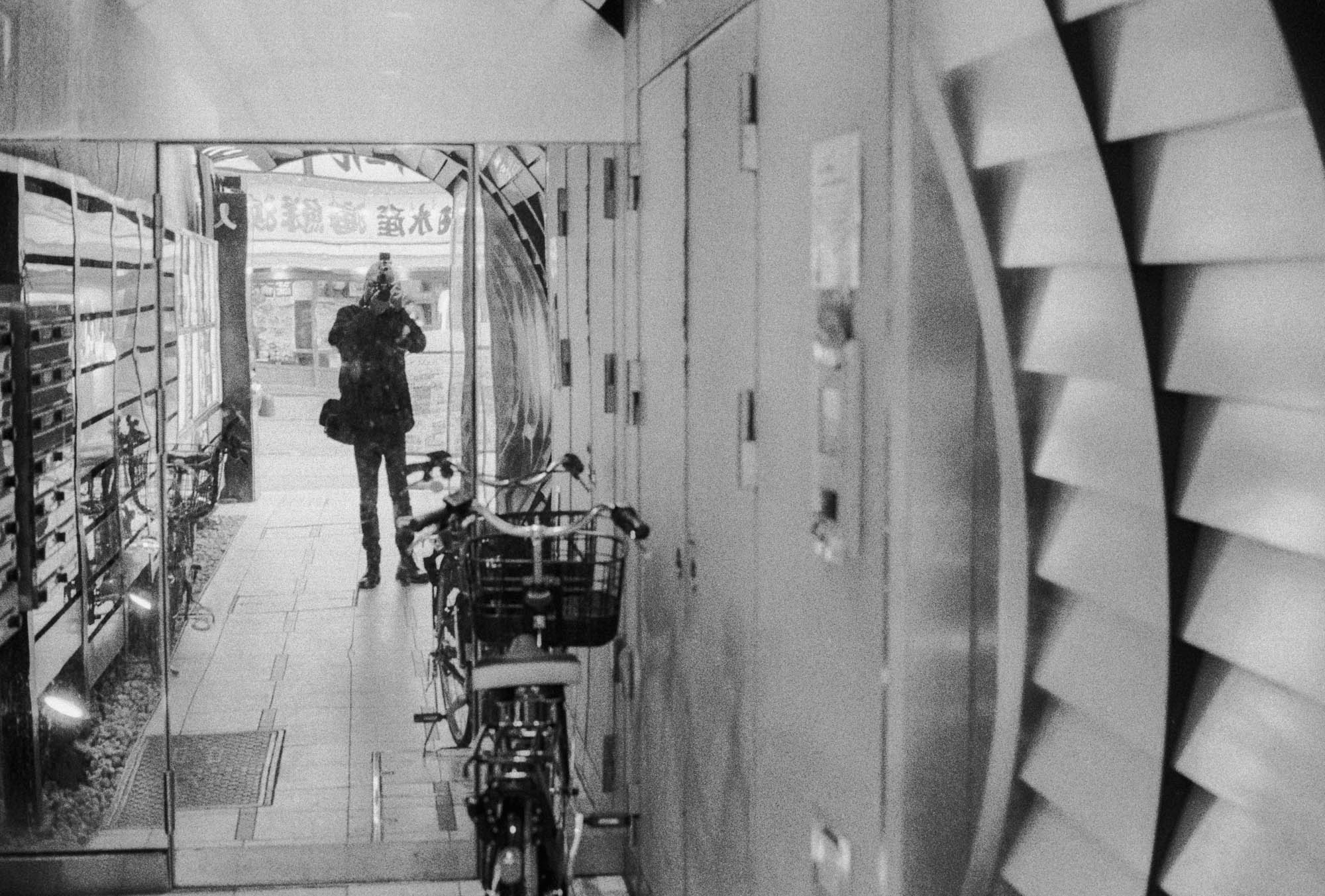
The Next Day, Shot with Ilford HP5 Pushed to 1600 ISO
Testament to a Legend
While modern optics may boast technical superiority, the Nikon 50mm f/1.2 AI-S lens stands as a testament to craftsmanship and individuality. Its imperfections become its strengths, offering photographers a tool to craft images imbued with personality and depth. From the glow of neon lights to the subtleties of the night, this lens embraces the art of photography, inviting exploration and creativity. As the world moves towards newer technologies, this lens remains a beacon of tradition and innovation, challenging photographers to see beyond perfection and embrace the beauty of imperfection.
In conclusion, Nikon’s 50mm f/1.2 AI-S lens may not be a flawless masterpiece, but it is undeniably an icon of photographic history. Its burnished brass and glass tell a story of craftsmanship and character, inviting photographers to embrace the quirks of analog photography in a digital age. So, as I reflect on my journey through the streets of Shinjuku, I can’t help but appreciate the timeless allure of this legendary lens, knowing that its legacy will continue to inspire photographers for generations to come.
Welcome to he Pentax 120SW – a tiny do-everything-for-you point-and-shoot from right at the time where everyone started buying digital cameras. To test this camera out, I decided to explore the Gardens by the Bay area of Singapore to see if I could experience the wonder of nature.
The Wonder of Nature
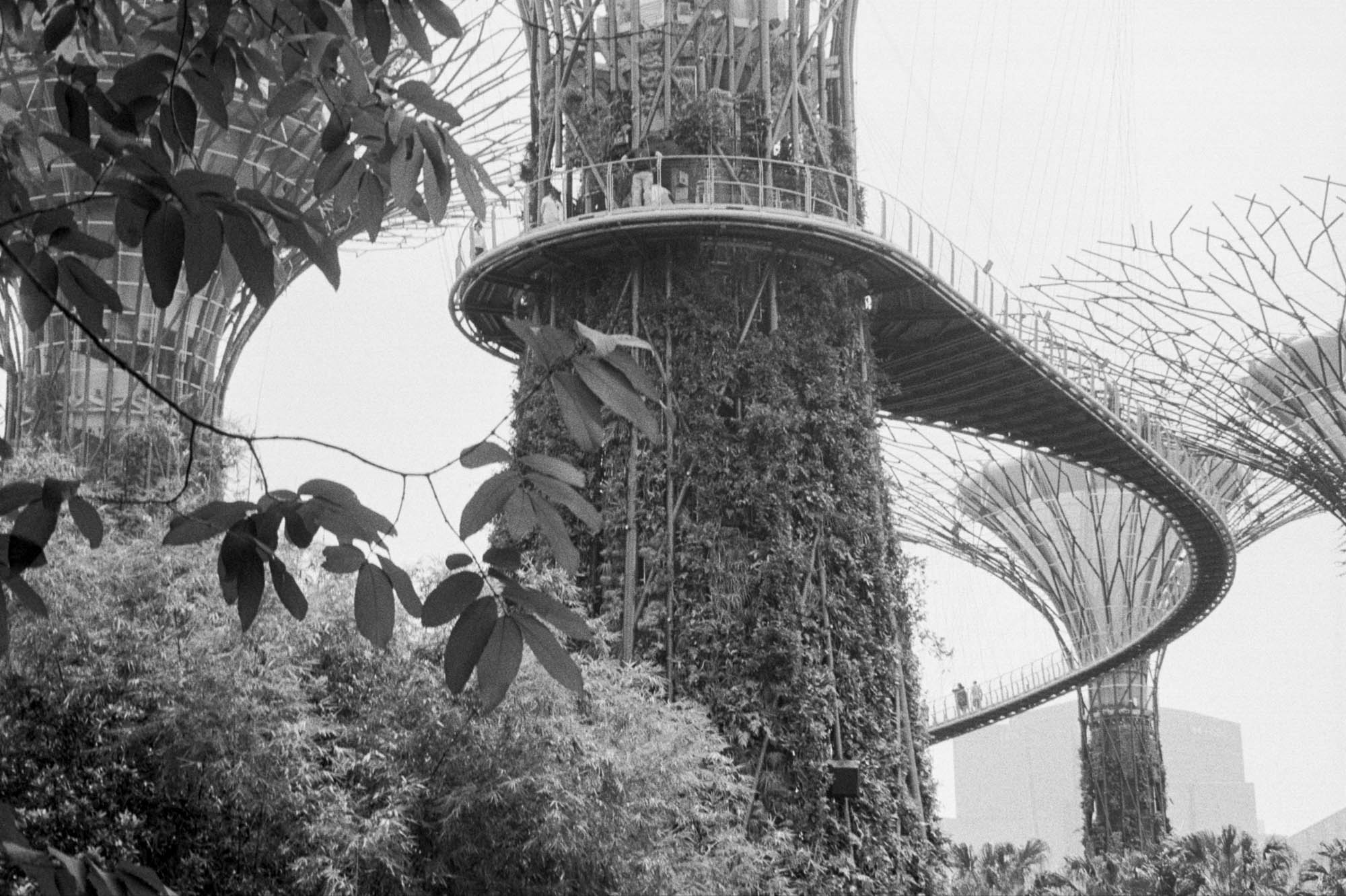
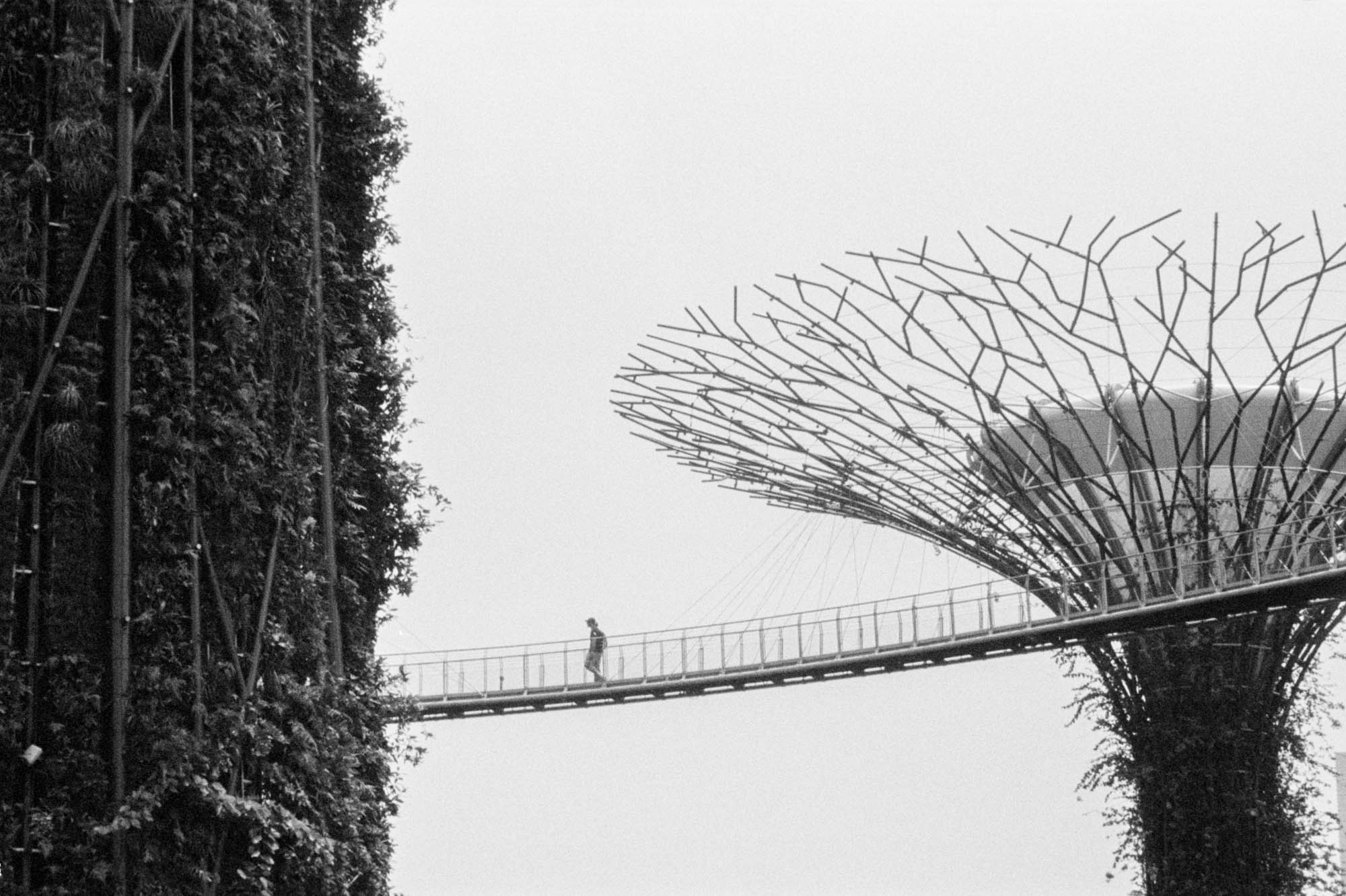
I think you can probably guess that the byline of the above video is somewhat sarcastic. Gardens by the Bay is as natural as a terra-formed Mars colony, with microclimate pods nestled among metal trees, all in the shadow of Marina Bay Sands hotel.
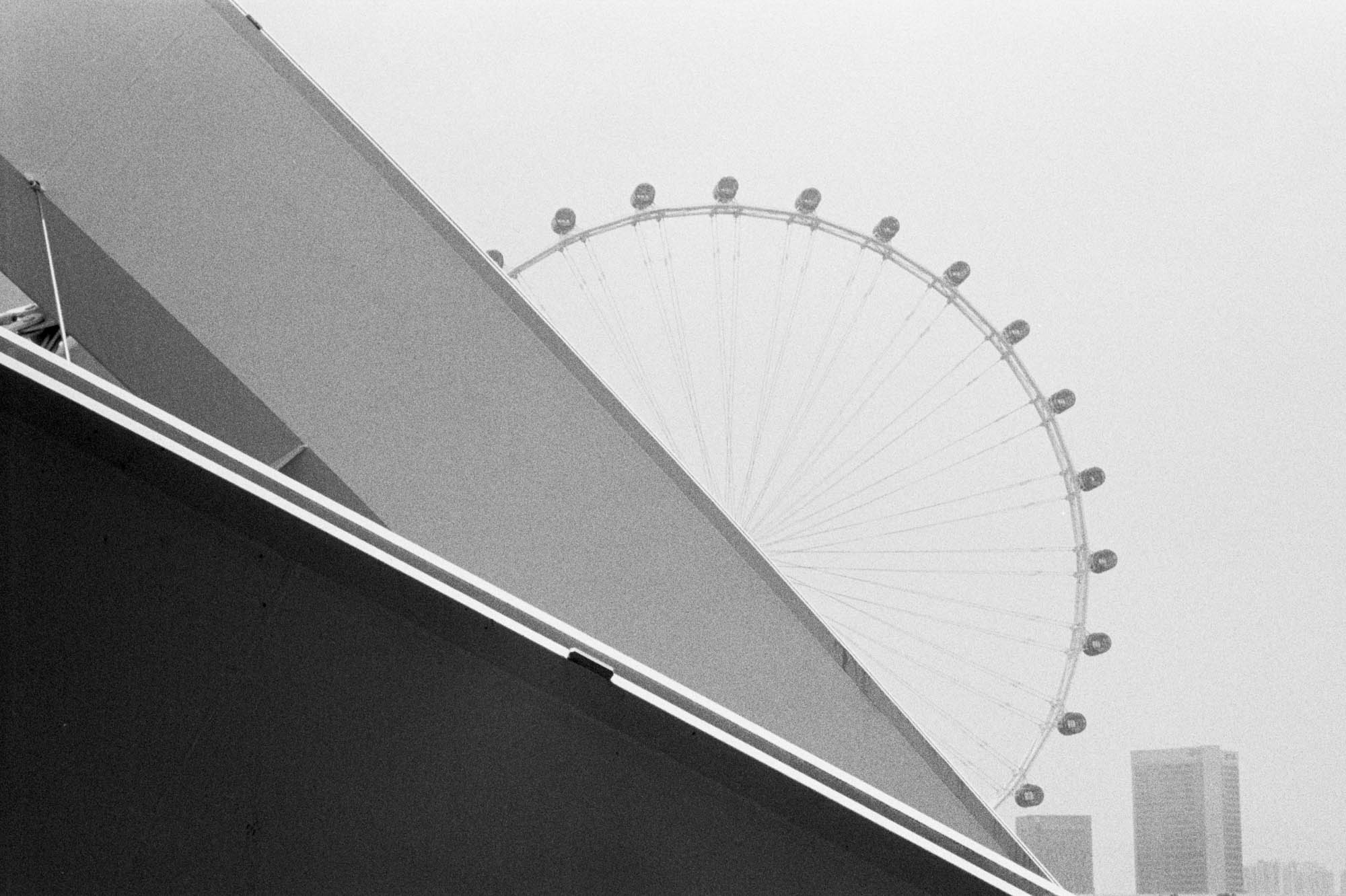
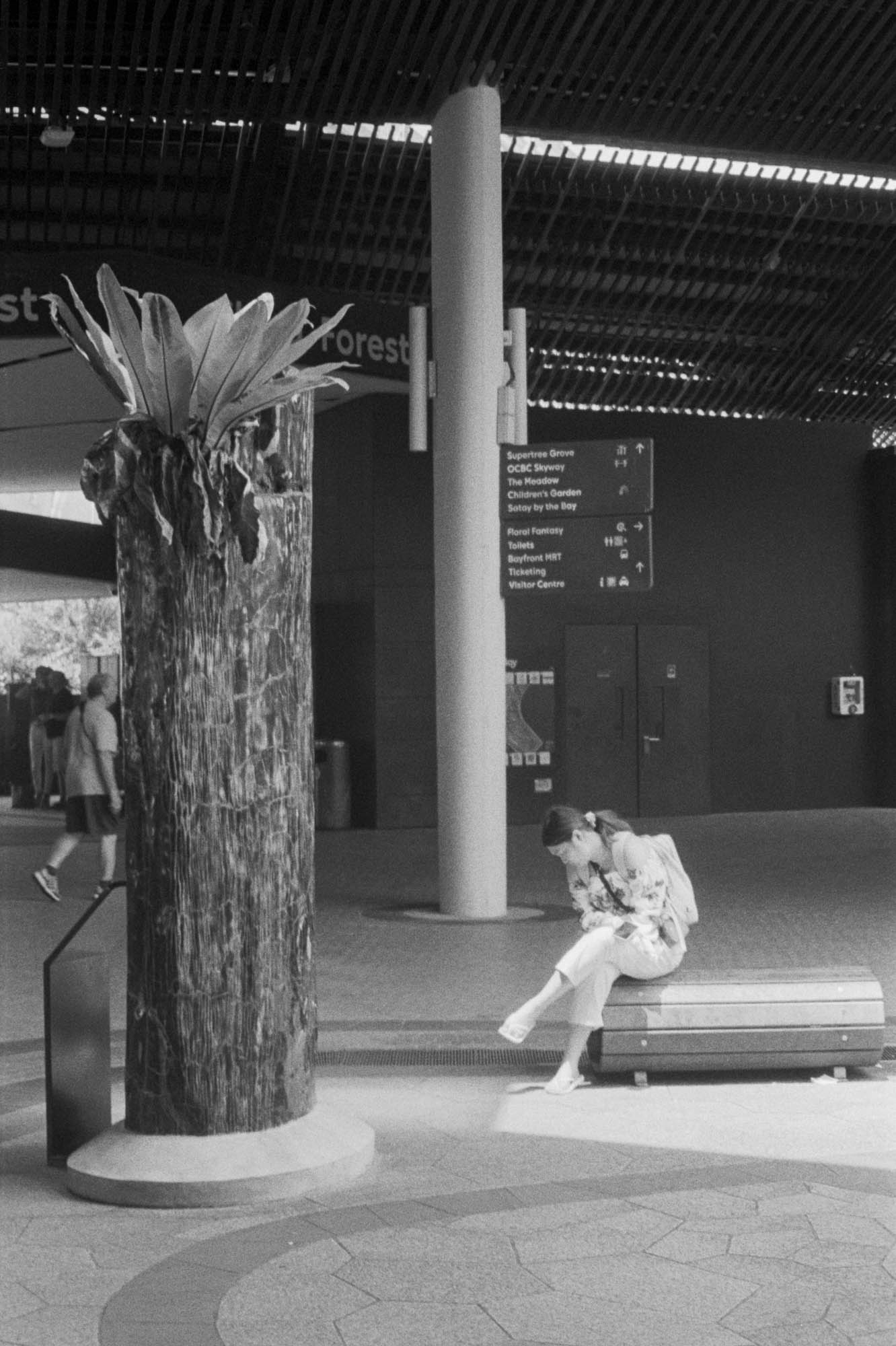
Most of the nature exploration involved photographing the topography and the tourists that milled around the area – wildlife of sorts, I suppose, just not the normal fodder for a David Attenborough documentary.
Using a mix of Ilford HP5 and Kodak Colorplus 200, I nevertheless put on my virtual pith helmet, strapped on my scythe and cut a swathe through the metal and concrete forests of Gardens by the Bay.
About the Pentax Espio 120SW
Well what’s to say? It’s a point and shoot.
It has a 28-120mm F5.6-12.8 lens, 6 elements in 5 groups, autofocus with focus lock, and with a minimum focus of 0.5m. It’s shutter speeds are from 2-1/360s and it has a bulb mode that’s 1/2s-1min though if it came with a remote shutter, I don’t have one so I’m not sure how useful bulb really is.
Like many point-and-shoots, this one is small and it’s light. It weighs 190 gr. without battery.
Pentax Espio 120SW
That, and it’s sweet sexy looks ,are probably it’s main attractions. Apparently, other than the film door it has an aluminium body. I don’t know though. It tastes like plastic to me. I don’t know how much this cost either but it was definitely positioned at the ‘luxury’ end of Pentax’s plastic point and shoot lineup.
in 2001 it won the Technical Image Press Association’s compact camera of the year award. But given those times, it’s probably like winning ‘Best new DSLR’ in 2023 when the whole world has gone mirrorless. You do get a really pretty orange backlight on the LCD though.
One of the problems is that it’s a Pentax. This was a company that churned out compact camera models like barbecue sausages and it’s not like there was ever much cachet in owning one. I have several Pentax point-and-shoots in my cupboard. I also have a few broken ones now hidden in draws that I might sell on ebay some time labelled ‘top mint’ but with ‘please read’ asterisked and in small print.
The fact is that there were so many camera versions, some good, some bad. How do you know if you’ve got a decent one?
Well you may have already made up your mind on this one but I think to make an accurate judgement, it’s only fair that I use some of that money I’ve been saving up for my kids education and blow it on a roll of colour film. Seriously, the things I do for science. And nature … obviously. Now this was Kodak Ultramax. Still a fast film at ISO400 but still a challenge for such a small aperture zoom on a cloudy day. BUT if Livingstone could conquer Everest with nothing but a woolly bobble hat and a block of Kendal mint cake then I could take on the challenge of Marina Bay with my trusty Pentax. Actually I might have got some of that detail wrong but that’s what happens when you trust Chat GPT to write your reviews for you.
A Slow-Lensed Camera
The Pentax Espio 120SW is perhaps not the best camera out there in terms of specifications and it doesn’t have a full array of modes and features. There’s no portrait, sport mode or dedicated macro facility here. You really have very little control.
You do get 25-3200 ISO, automatic DX coding, self-timer, automatic film advance, infinity and spot AF modes.
And for what it is, it’s capable of producing great results. It can meet the resolution of film and my favourite photos show that this has a lens that can be both sharp and contrasty. I didn’t really see much flare either thanks to it’s ‘super multi coating’.
If you use it properly it delivers good results. Unfortunately I bet back in the day there are a lot of people who have used this camera and wondered why the images came out blurry. That probably comes down to the lens. It has a maximum aperture of f/5.6 at 28mm down to f/12.8 at 120mm. That makes it tighter than the proverbial cat’s anus, though I haven’t actually done that test myself and I don’t know any proverbial feline proctologists.
You only get a focus confirmation or a warning light to tell you to use flash in the viewfinder and that’s not much feedback. It’s definitely capable at 120mm as shown here but where my shots failed it was usually because I was being overly optimistic of my ability to hand hold. Even with 400ISO, a dull day in Singapore meant that telephoto and slow shutter speeds conspired to give me soft results. Don’t bother putting 100 speed film in this unless you’re prepared to shoot with the flash turned on.
But it’s Sharp
On a sunny day like we have here in Australia I still managed to get great results. Finishing the colour roll, I was able to get really vivid photos like this.
Admittedly, I might have underdeveloped a bit, which often gives colours, contrast and grain a bit of a boost but if you look here, you can see that it produces pleasing images.
As with any example of this kind of camera, though, you have to accept a certain randomness in the results it produces. There was no way I could tell the camera where to focus in this photo and while having the ability to at least spot focus fix on infinity focus is nice, the end results can be a bit unpredictable depending on the film or quality of light. I wasn’t really able to get it to produce any bokeh but that’s hardly surprising. I could get some subject separation if I shot close up and what I did see in the out of focus areas wasn’t ugly. It just wasn’t particularly distinctive.
So what’s your experience with cameras like this? Have you owned this particular model and what do you think of it? Some point and shoots can be ridiculously overpriced these days. I’m looking at you Olympus Mju II.
If you’re prepared to slum it at the ugly end of the Pentax range, though, you might find a bargain. There are definitely hidden gems out there if you are prepared to be patient.
But let me know your thoughts. From my perspective, if not the best tool for the job, this camera isn’t the worst. And like your phone it’ll give you a photographic experience that you can put in your pocket; just with this one, it’s actual film.
My advice, though, use a FAST film so you can make the most of the sharpness of the lens stopped down and give you a bit ore leeway with hand holding. Or use flash, which on these things is… ‘a look’ and who knows? Maybe one I’ll experiment with a bit more on a future review.
The word perkeo means pygmy and while probably neither of these terms are very politically correct, those were different times and I don’t think the pygmy hippopotamus is going to sue my YouTUBE channel for being sizist.
Still, it’s small, it’s cute, it unfolds and in that sense it’s a delight. This particular camera had been gathering dust for a while before being gifted to me by someone who’d been following my photography. I’ve had this for around six years now and I have used it well.
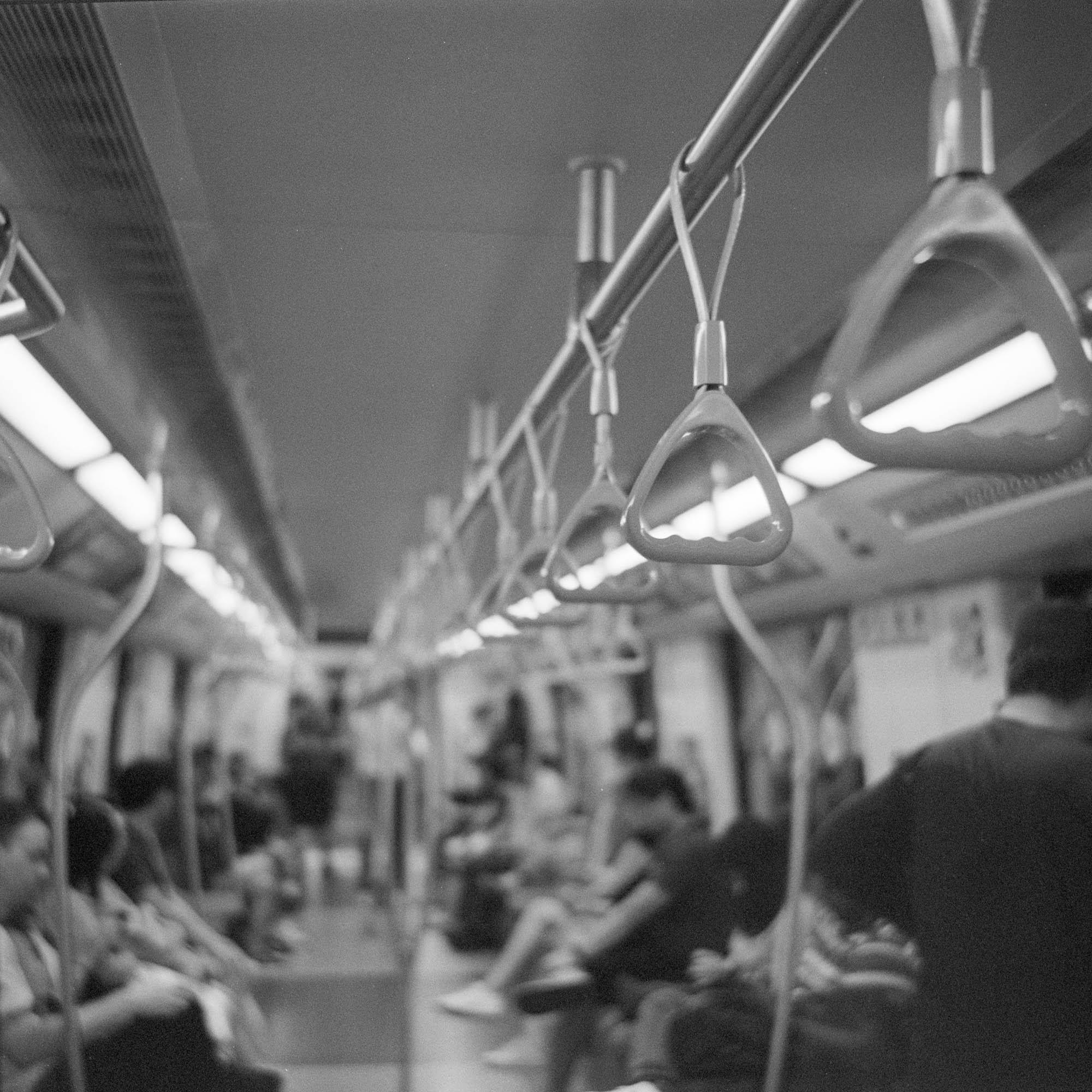
Most recently I found myself in Singapore for work and I had the option of either settling into another round of tiger beer with colleagues or taking the Perkeo with me for a brief walk from Bugis to Little India. I had two rolls of Ilford HP5 pushed to ISO 1600 and a fierce determination to find interesting subjects and pockets of light to illuminate them.
One of the cool things about Singapore is the different styles and cultures you can find in such a small area. It was just a short train ride from Promenade to Bugis Junction, where the stark modernity of Marina Bay gave way to a much more human and slightly chaotic street culture.
About the Camera
So what about the Voigtlander Perkeo 1? As the name suggests, this was the first version of the camera – it was superseded by the Perkeo 2 and the Perkeo E. There were over 100,000 copies of the Perkeo 1 made and there were a few iterations. This particular version came with some tweaks to the original, such as the ability to close off the red frame advance window and a clever automatic locking mechanism to prevent double exposure.
So far that’s two rounds to Voigtlander against my human error but unfortunately it’s not a foolproof camera. It’s fiddly. Firstly, this is manual medium format camera. No surprises there. It dates back to the early 1950s when 120 film was the dominant format. So, larger roll film that can be a bit annoying to load in and out but you do end up with those gorgeous 6×6 square medium format negatives.
Capturing images on that film, though, can be a bit challenging. Most of the cool stuff sits on the lens. That’s because it has a leaf shutter built into it rather than a cloth or metal mechanism at the focal plane. The good side of that is that you have everything available right there and the flash can synchronise at every shutter speed. The bad side is that you find yourself having to make micro-adjustments with your fingernails for the shutter speed and aperture.
The shutter speed ranges from 1/250th to 1/25th of a second, or not very fast to not very slow, though it does have a bulb mode that you can use if you want to put it on a tripod. The aperture range goes from a not too small f/16 to a not very wide f/4.5.
I wouldn’t worry about the lack of wide aperture. One of the quirks of medium format is that because of the physical image size, for a given focal length you end up a with a commensurately narrower depth of field. That’s not just true of film. The sensor of your full-frame 35mm camera allows you to obtain that creamy bokeh in ways that your iPhone just can’t because of the miniscule chip inside it. Trust me, it’s all about physics. That or phases of the moon working on the tides, which in turn are making a butterfly in China flap its wings.
In any case, f/1.8 would be impractical here. If it opened up wider than around f/3.5 then the focal plane would be perilously thin. And that’s made worse because you have no focusing aids in the camera. You have to rely on your ability to judge distance … in feet since this is basically a relic of the imperial system.
For a camera like this, f/4.5 is probably about as wide as you can go while still being able to make sure your point of focus will be sharp. So don’t worry about the lack of wide aperture.
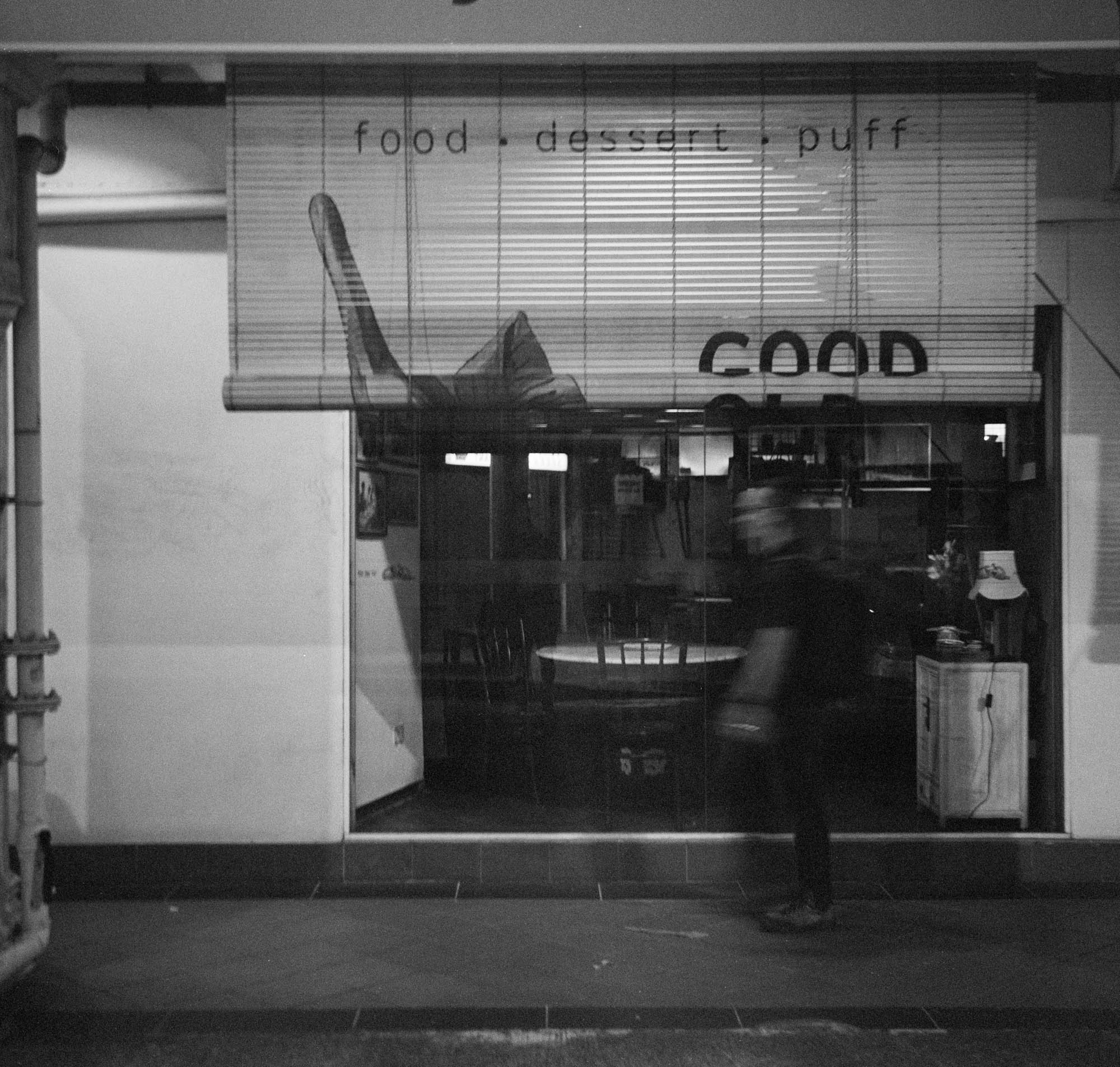
And I do say that but of course I was shooting at night. And I soon found out that the further away from Bugis I got, the deader and darker the streets became. Fortunately I’m a brave boy and armed with another roll of Ilford HP5, I tried to squeeze a final few frames before heading home.
What about the Results?
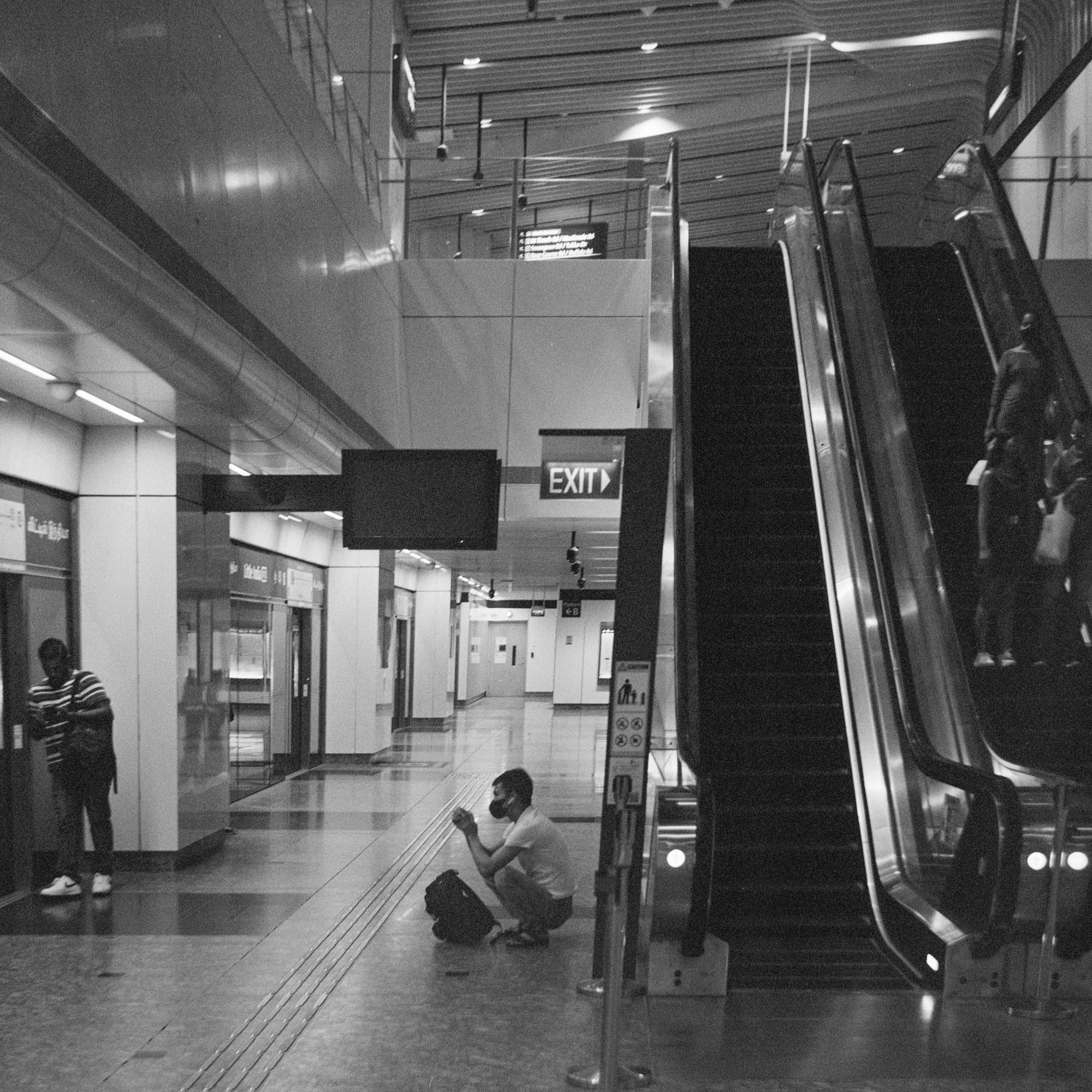
As you can probably guess from those photos, while I made my way to the Little India MRT, the opportunities thinned out just as the people did.
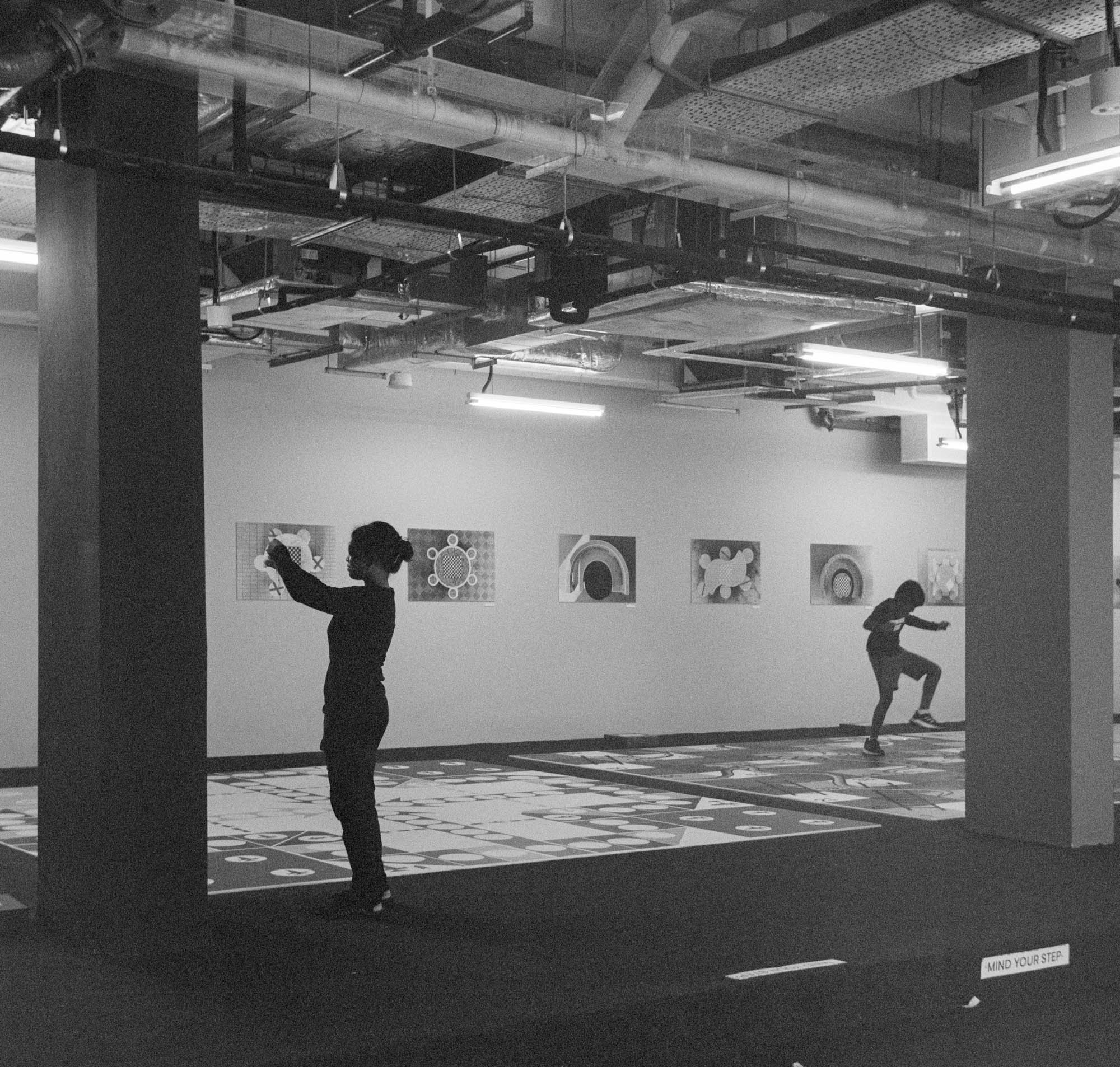
Overall I didn’t come away with lots of portfolio shots. I think the better shots were the ones that had people in them. I did hang around a couple of locations for people to walk by and in some cases, that took a long time.
And I’m not very patient. So apologies that instead of a fascinating street character, you end up with some random dude carrying a plastic shopping bag. Though I did find the poses of the people inside the building intriguing, if a little baffling.
But none of these photos are going to get me into Magnum. It was possibly a combination of the weeknight evening and my desperation to cram some creativity into a busy work schedule that’s to blame. And while shooting film at night with a nearly 70 year old camera was always going to be a challenge, I can’t really blame the technology.
Why I love the Voigtlander Perkeo.
In decent light, the Perkeo didn’t let me down at all. It’s sharp where it needs to be but still gives a nice characterful low contrast look that mitigates some of the issues of shooting ISO 1600. The fact that it’s medium format means the grain isn’t so noticeable and of course you do get that 3d pop when you shoot something fairly close wide open.
It has travelled the world with me, from Vancouver to Dubai, Estonia to Hangzhou. In fact I dropped it on the ground in Amsterdam once, leaving lovely big dent in the lens cover. Seriously, I don’t deserve good things.
It’s small but substantial, weighing in at 525g and if you’re patient enough to use an external meter and are comfortable with the square format, it takes some great shots. Even if you’re like me and too lazy to use a tripod or meter for exposure you can get good pictures from it – you just have to accept that not every photo is going to be a keeper.
So have you used one of these? If not, then it’s definitely worth seeking one out. I have a couple of other folding cameras – an Agfa Isolette and an even older Voigtlander Bessa that produces amazing 6×9 negatives, but this is probably the sweet spot in terms of size, quality and yes, even ease of use.
Perhaps not the greatest low light camera in the world but a gem nonetheless.
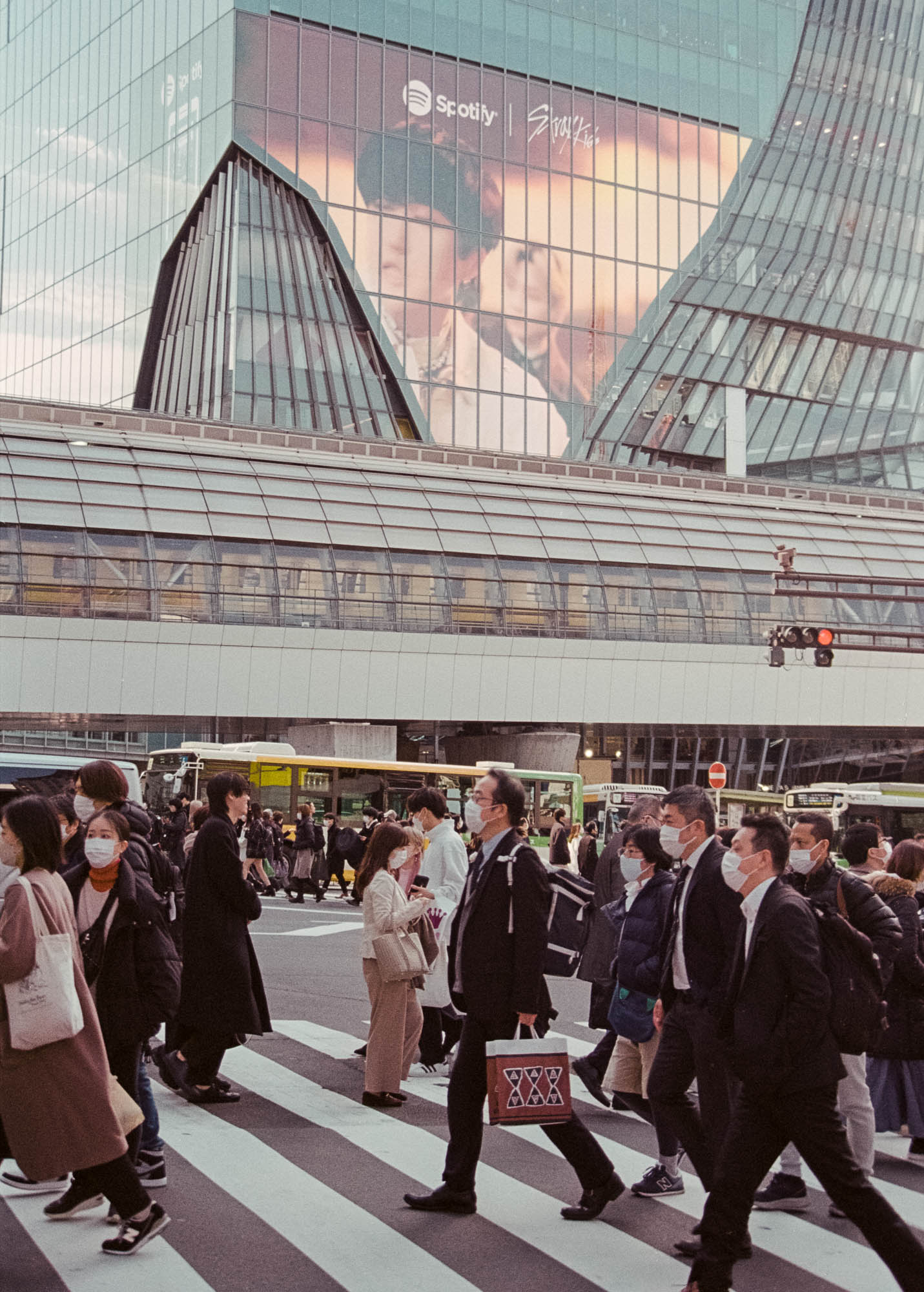
It was late February (not the 30th) and I was in Tokyo and wanted to go out and take some street photos on film. The classic choice of lens for this kind of photography would be something small and moderately wide. Maybe jump on the Diane Ar Bus with a 35mm or the get my Cartier Bress on with a slightly narrower 50mm.
But I didn’t do that. Instead I picked a monstrous old manual metal and glass 35-200mm zoom lens. Today we’re going to explore why.
A Marvelous Lens…
Was it the logical choice for the street? Probably not. But why do I find myself using this more than just about any other manual focus lens I own? It’s an optical marvel.
Before you spit vehemently on the floor at the description of a manual superzoom lens as a marvel, you have to cast your mind back to those bleak days of the early 80s when the optical imaging world was disrupted by the introduction of zoom lenses. It was a tumultuous time for lens manufacturing. Autofocus was starting to get its clumsy foot in the door and zooms were becoming more commonplace. After all, who doesn’t want a lens that gives you great versatility and ease of use?
In 1982 the longest zoom that Nikon could offer was a 50-135mm f/3.5. In the subsequent years, this range extended to 35-105 and 35-135mm. So you could see how they were incrementally improving things over time.
This particular lens was released in 1985 after what was by all accounts a long and tortuous process to design and refine it to achieve its 5.7x zoom range. That was the same year that Nikon released its first retail autofocus SLR the Nikon F-501. While the Nikon L35AF in 1983 had shown the potential of autofocus in compact cameras, it wasn’t mainstream at that point and the 501 was released at the same time as the manual focus F-301 which was probably more popular.
No autofocus but a very large zoom range. And In that context, when this lens was released, it was probably already a little out of date, while still being overly ambitious at the same time.
… But a Compromise
The result is a compromise but isn’t everything in life a compromise? You’re always going to struggle fitting your baby bassinet in your Bugatti Veron and if you’ve ever actually owned a pocketknife you’ll understand the limits of your corkscrew and scissors. Of course, that tool for getting the stones out of horse’s hooves is 100% fit for purpose even if that’s a purpose you’ll never need.
While the zoom range is great, it doesn’t go wider than 35mm.
The maximum aperture is 3.5 at the wide end and it’s variable to 4.5 at the long end. So not the worst but it’s not very fast.
It CAN focus as close as 0.27m or 0.86ft, giving a decent if not quite macro 1:4 life size reproduction. Annoyingly, that’s only at the 35mm end, accessible by a ring that increases the distance from the focal plane. Effectively a built in extension tube. It would be nice to have had it at the longer end to give you more working distance.
It does have amazing build quality. Really amazing. You could bludgeon your baby with it and given you might need to, to actually squeeze him into your Bugatti, that’s a selling point in itself. In any case, if you dropped it on your toes you’d be much more worried about your toes than the lens.
It weighs 740g or 1.63lbs for you imperials and that’s heavy but it is surprisingly compact. It has a 62mm filter thread which is actually quite small and probably smaller than most modern superzooms.
Compare it to Nikon’s modern 24-200mm Z lens and it still holds its own when you think that it’s nearly 40 years later. Well ok, it might teeter a bit.
While it is reasonably balances on my Nikon FE it’s not exactly discreet. The push-pull zoom itself is a compromise. I do have a couple of these style lenses and once you’ve had practice, it’s actually possible to zoom and focus in one action but this lens is bigger and much stiffer and more clumsy.
But it is what it is and I guess that’s going to be the theme of this review. But if it is what it is, then what is it? With all these compromises, is it good enough? To find out, I took the camera on a walk from Harajuku to Shibuya on a cold February day in Tokyo
From Harajuku…
It Is What It Is
Is this the swiss army knife of lenses or am I expecting too much? You can’t open a bottle of wine with it OR get the stones out of horses’ hooves. But can you take good pictures?
Earlier, I called this an optical marvel. There is a lot of lens crammed in here. Realistically, the marvel is that they managed to create it and it not be totally horrible. With 17 elements in 13 groups all working together to minimise aberration and field curvature at the various zoom lengths, it should have the light transmission qualities of a lump of coal.
But somehow light manages to reach the film plane and while this isn’t a 50mm f/1.2 Z lens, that lens can’t shoot 35 mm or 85mm or 135mm or 200mm. You get the idea.
It does distort but that’s very fixable and I have and no problems bending those lines back to right angles in post. F/3.5 is slow but you could see, on a winter’s day, it was still quite usable with 200 ISO Kodak Colorplus. The corners are soft wide open and diffraction creeps in by f/11 but at it’s rare that I’m going to want to shoot f/22 anyway.
I call it a Marvel and if there’s a downside to that, using it is the creative equivalent of watching a Marvel movie. You get a bit of comedy, romance, fantasy and action, and that’s even before I’ve taken the photo, just with trying to compose, zoom and focus with it is a drama. It’s not a shoot from the hip Arthouse experience though you could probably push a roll of HP5 in there if you want that black and white Zac Snyder aesthetic.
Perhaps my biggest complaint is that it is a bit like Captain Marvel. Overpowered but leaden and dull as a result, and I guess it ends up being a bit unsatisfying because it never quite lives up to its own ambition.
… to Shibuya
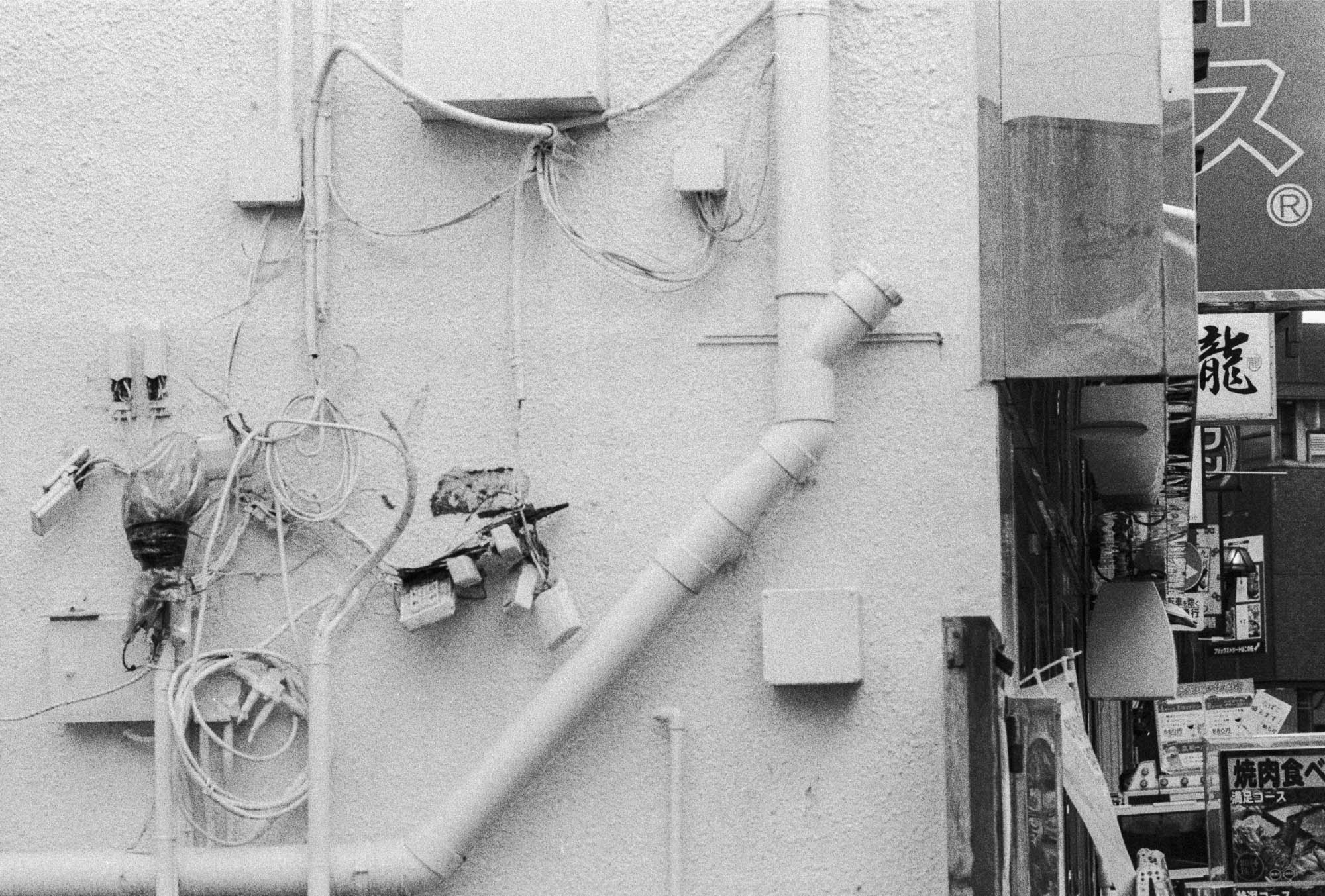
You can see that the best photos are the ones where I’ve had time to think through a composition to take in a street scene, capture close-up detail, or narrow the frame to point out details or find angles in the architecture. The strength of this lens is it’s versatility not it’s sharpness.
Great for the Price
In doing some research on this lens from people who actually know what they’re talking about, I found Nikon’s own review in which the words ‘relatively’ and ‘satisfactory’ both appear 6 times. That probably tells you something; and that’s coming from Nikon’s own PR machine.
It was never Nikon’s most successful lens but that might be because this hefty lens came with a hefty price-tag. As of 1996 this was still selling for US$1,290 and while it’s long discontinued now, that’s a testament to the engineering that went into it and the fact that there weren’t any great alternatives. As early as 1983 Tamron did have a 35-210mm lens available but from everything I’ve read, if that one’s a Marvel, it’s much more Carol Danvers than Nick Fury. For 15% of the original asking price you can now pick up an excellent quality copy and leave it on your camera. So why even bother to slum it in the 3rd party ghetto.
Ultimately, I’ve never heard anyone complain about the image quality. People don’t look at my photos and say, ‘oh, did you use a Nikon AI Zoom Nikkor 35-200mm f/3.5-4.5S’. They might say, ‘did you really take a photo of that.’ But that one’s on me, not the lens.
To me it’s sharp enough and when I look through my Lightroom catalogue it’s probably my most used lens. The reason for that may well be because I lack any sense of aesthetic intent as a photographer. I’m not getting up before sunrise to capture that perfect 20mm landscape, or using it exclusively for shallow depth of field portraits or sports photography.
This is the lens that I put on when I’m indecisive or feeling lazy. It’s a great travel lens and it’s also the one that I’ll stick on my camera when I’m just out walking the dog or don’t have any sense of what photographic opportunities might be out there. For me, that’s most of the time.
But let me know your thoughts. What’s your most versatile lens? Would you use a bloated beast like this or do you prefer to just take a wide prime locked to f/8 and zone focusing to capture the decisive moment?









































































 Mark McMahon