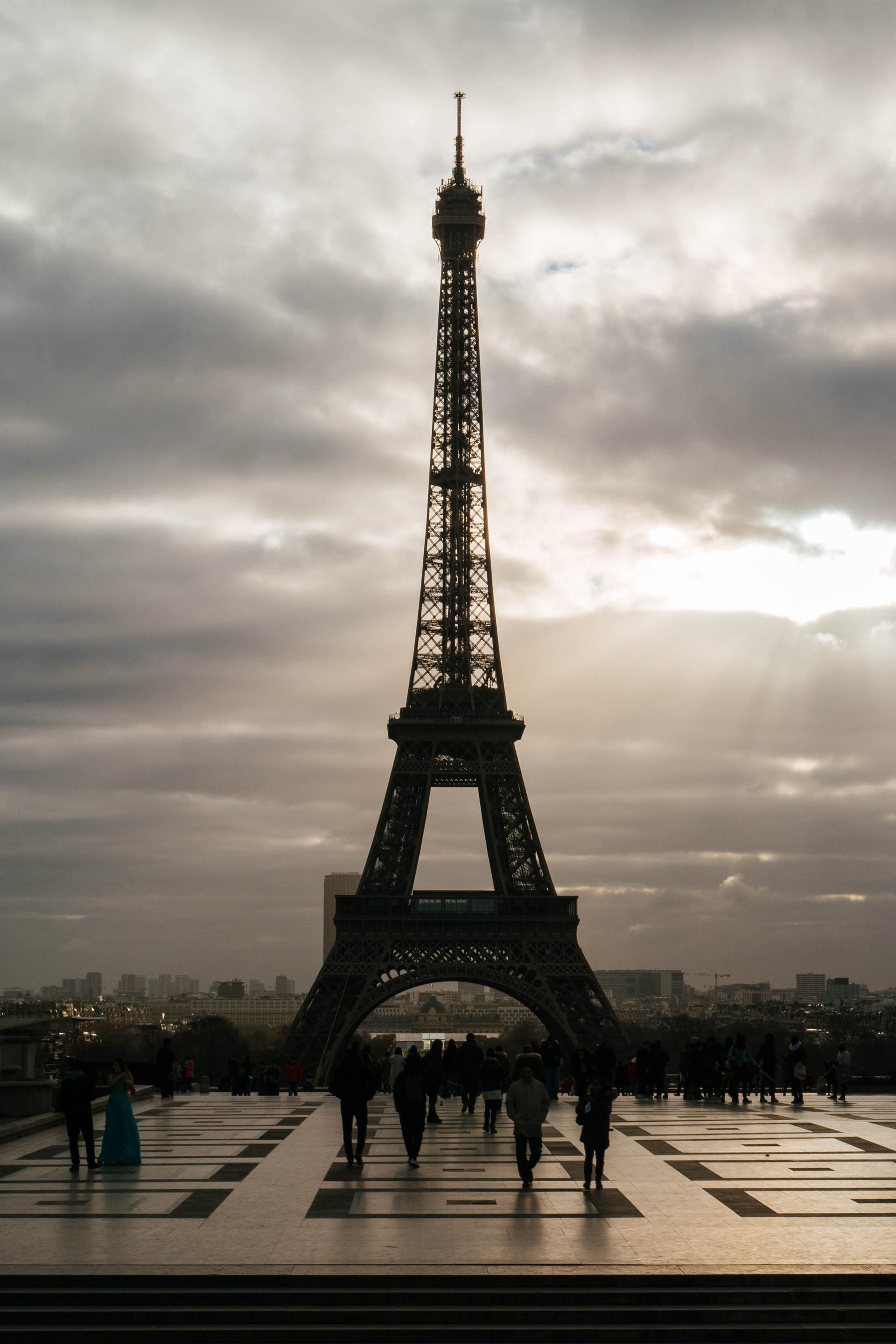
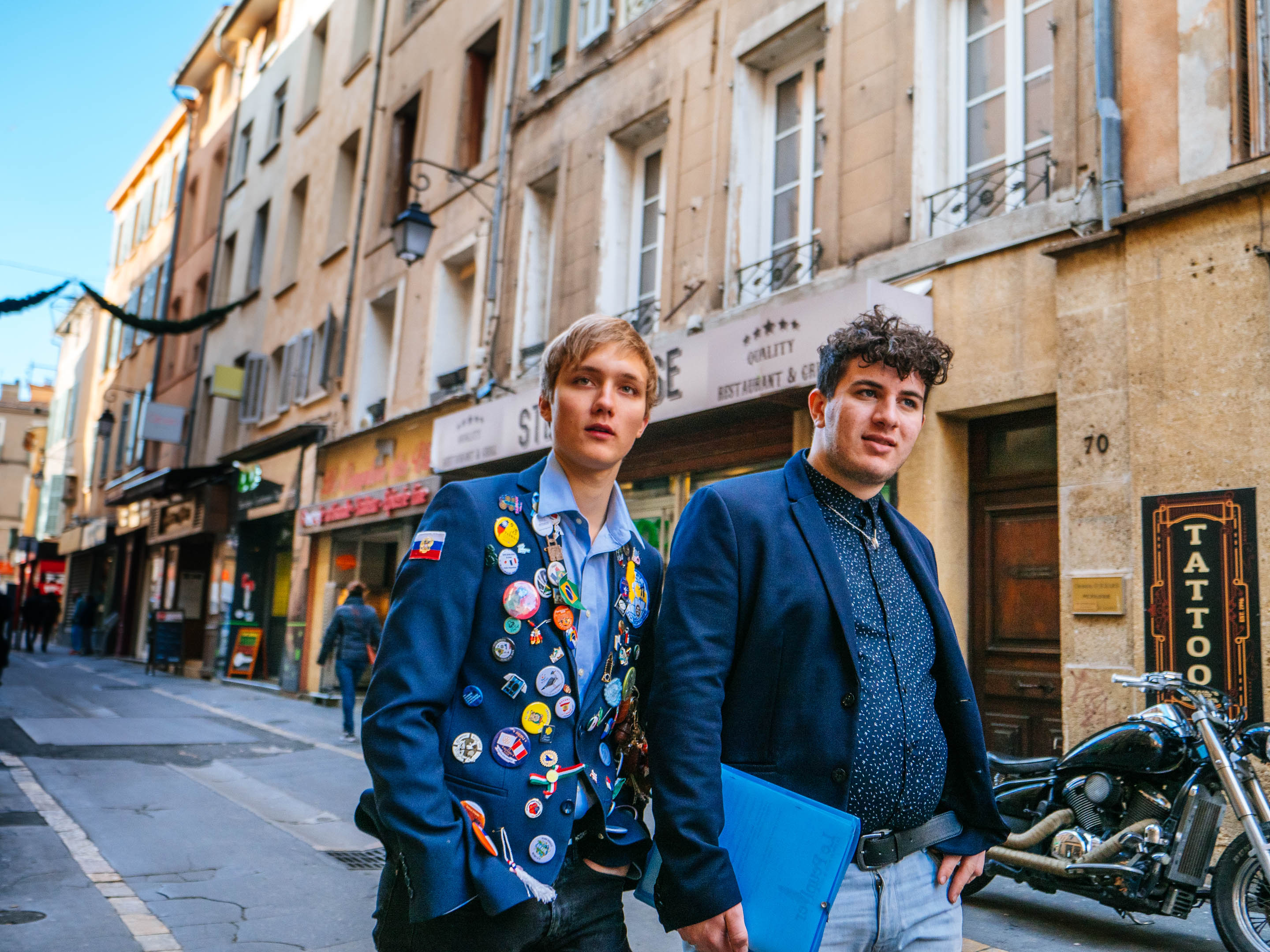
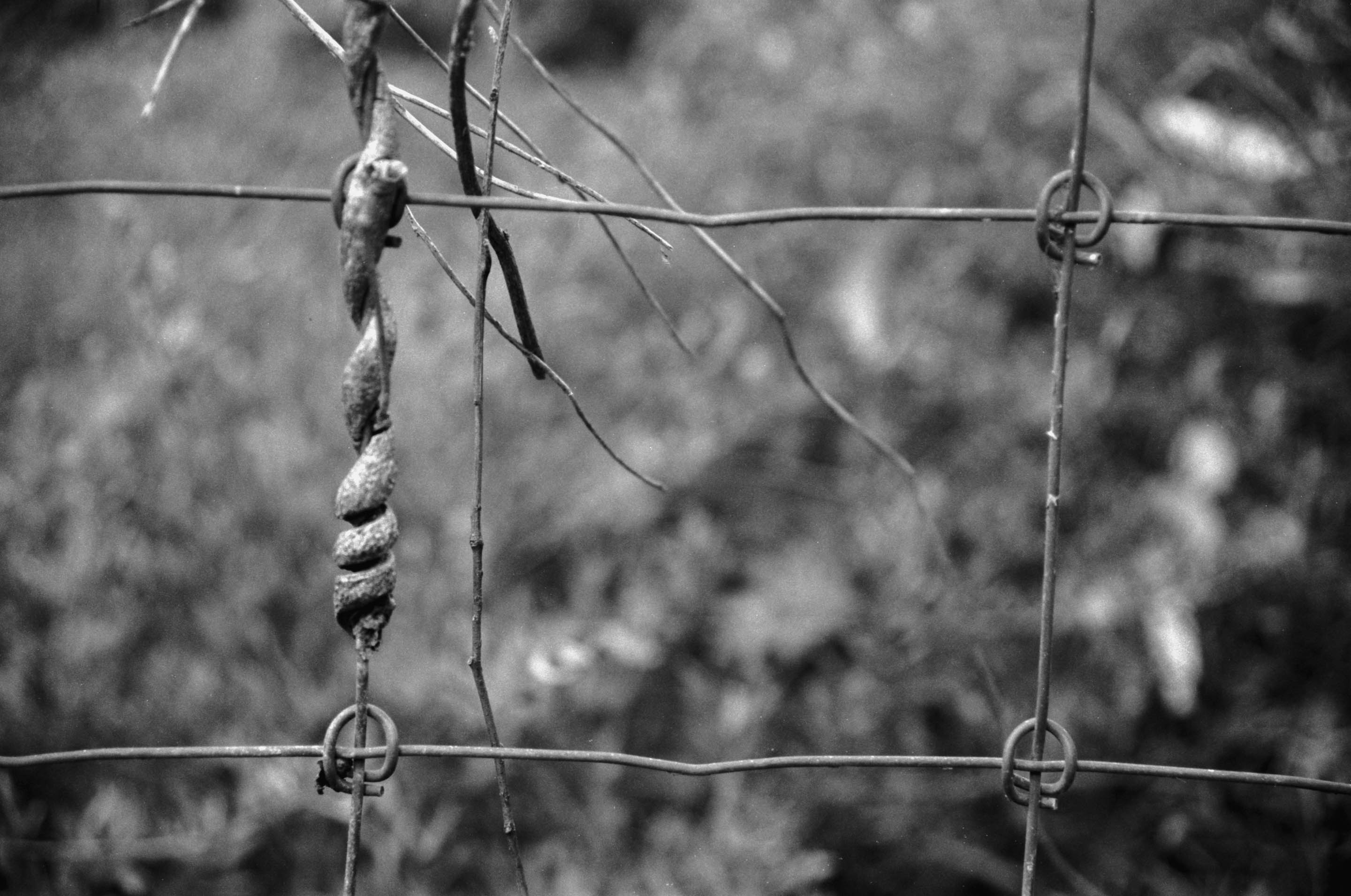
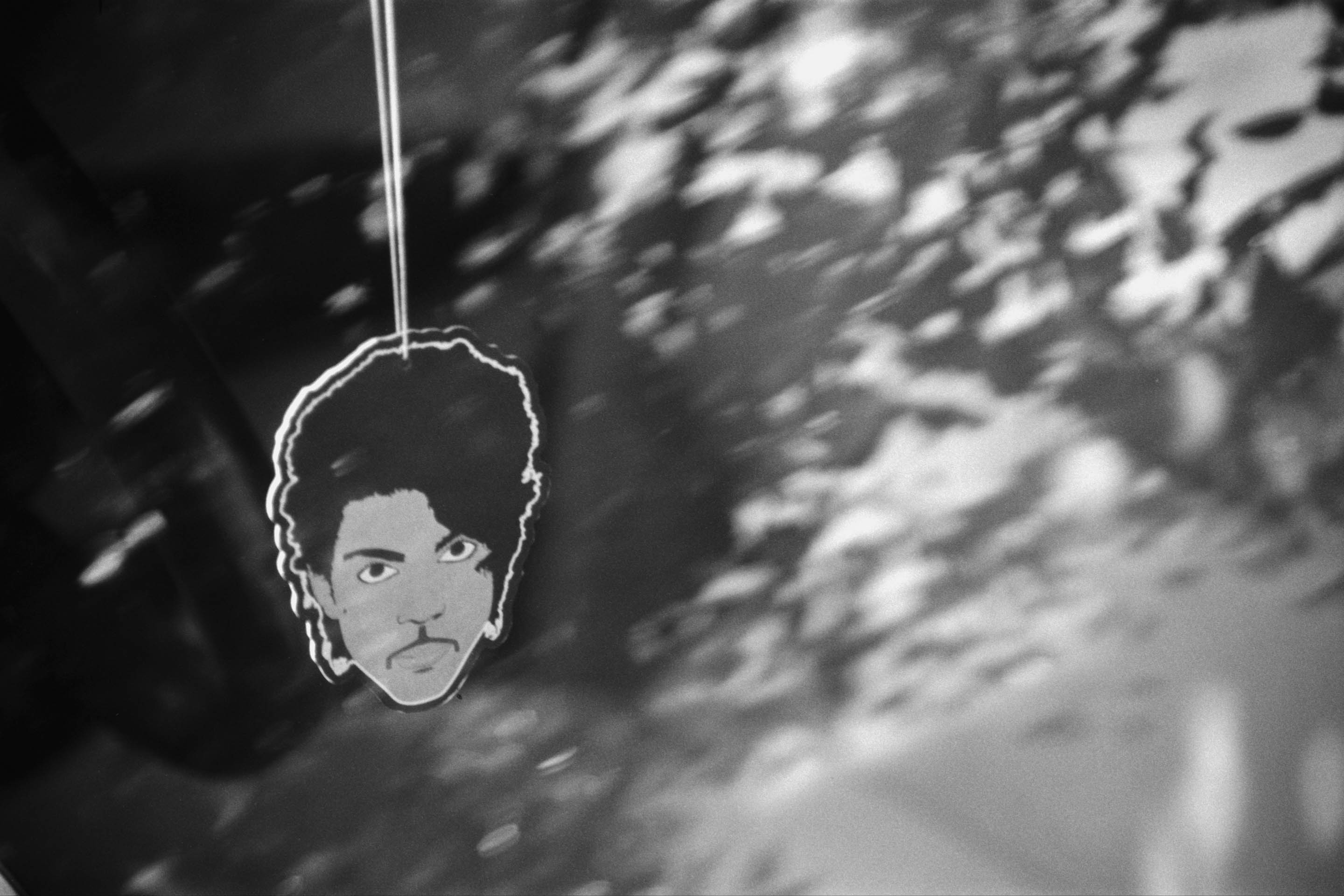
First experiences with the Pentax 17: Half Frame, Half Baked and Half Good?

If you have even a passing interest in film, you’ve probably heard of the Pentax 17 by now. Released last year in response to the growing nostalgia for analogue photography, it’s one of the few new film cameras to come out in the last decade—and probably the only one from a major manufacturer that isn’t Leica. Pentax took a risk, targeting Gen Z’s fascination with a world they never actually lived in by creating a half-frame camera that sits somewhere between fully manual and fully automatic.

But who is it for?

Rather than catering to professionals, serious enthusiasts, or wealthy collectors looking for flashy trinkets, this camera is clearly aimed at hipsters. You can tell just by the fact that its designer, Takeo Suzuki—who goes by TKO—sports a waistcoat and flat cap. But is this camera a technical knockout? Well, I had my doubts, but I bought one as a Christmas present to myself. Why? Because I deserve it. Okay, also because my wife saw it, immediately wanted one, and who am I to argue?

Credit where it’s due—Pentax took a bold step releasing this niche product, especially at around 800 Australian dollars. I wasn’t planning on buying it until my wife convinced me that it would make me happier, healthier, and an all-around better human being. Has it changed my life? Not really. Let’s be honest—I don’t need another camera. But I do love half-frame cameras, and my old Canon Demi is getting unreliable. The Pentax 17, on the other hand, is brand new, fully functional, and—unlike my usual vintage finds—doesn’t smell like leather, tobacco, and urine. Don’t worry, I’ll add that patina over time.

This camera is supposed to be fun. Half-frame means I don’t have to worry as much about film costs, and the resolution is decent for most uses. Unlike Pentax’s 90s-era fully automatic point-and-shoots, this one puts some control back in my hands. Some, but not all. You have to focus manually using an icon-based system (flowers, people, mountains, and—of course—your dinner, because Instagram). You also have to wind the film on manually, which was about the hardest work I did all summer.

An odd choice to include manual focus

Early frames

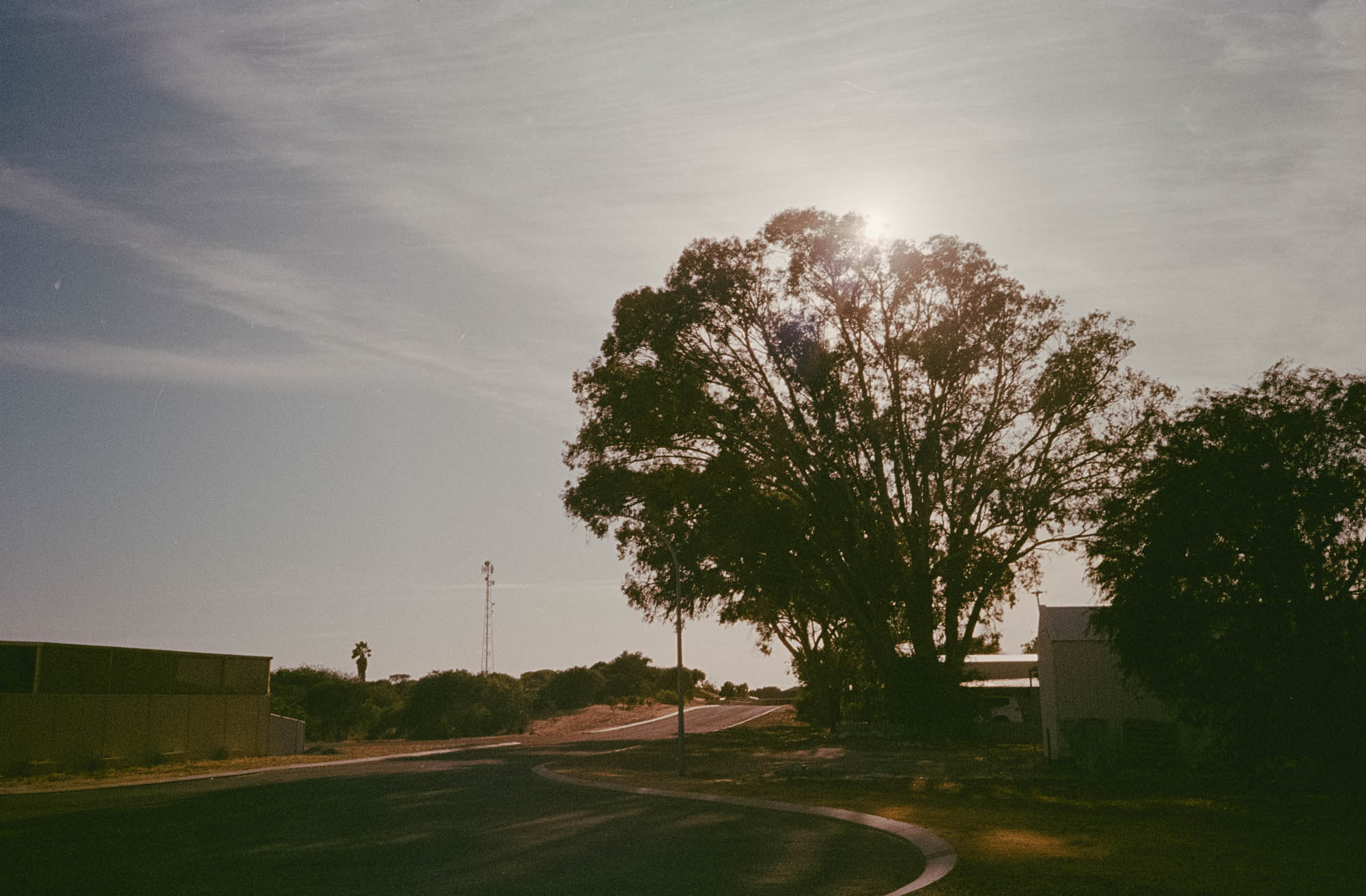
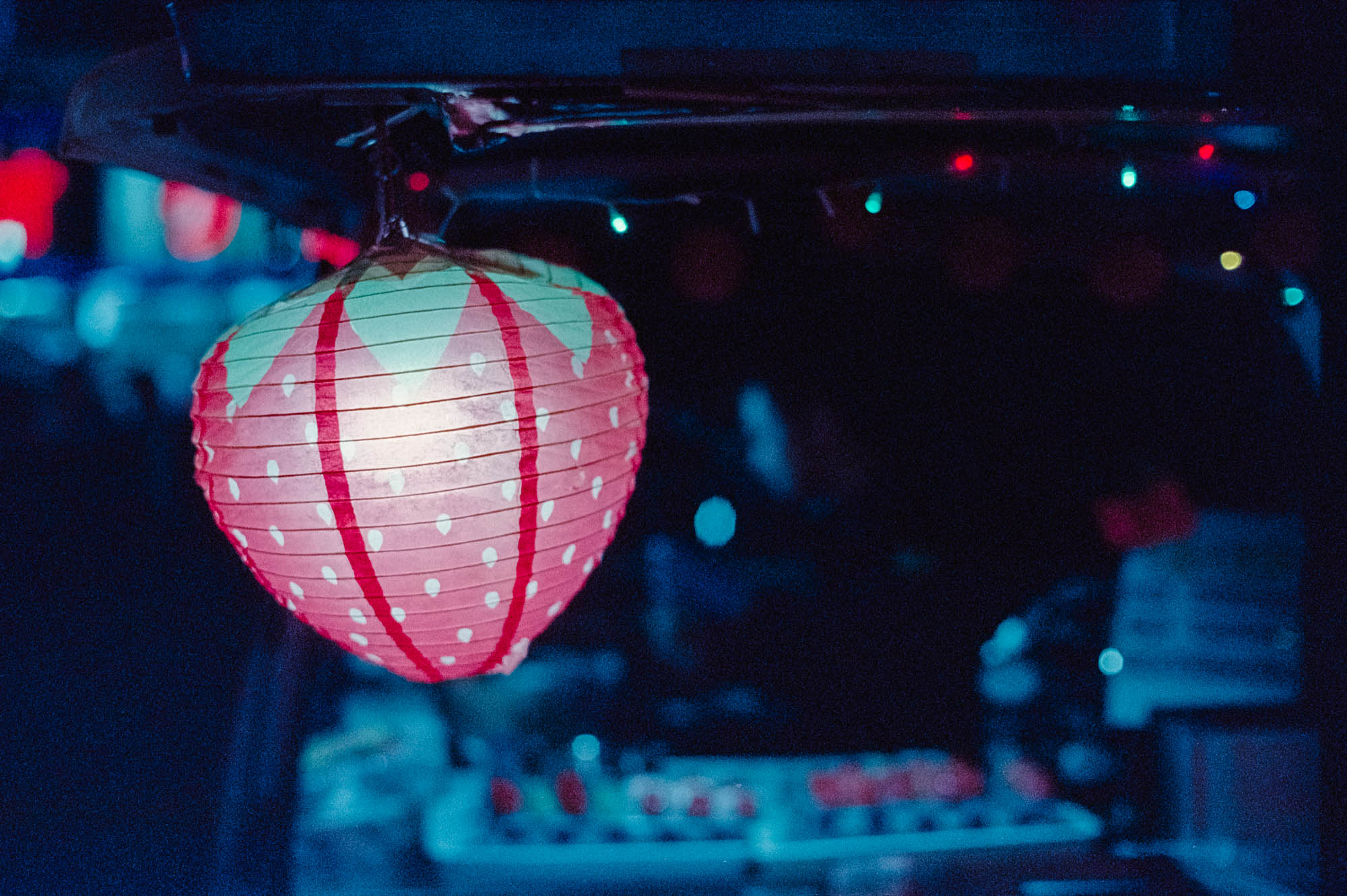
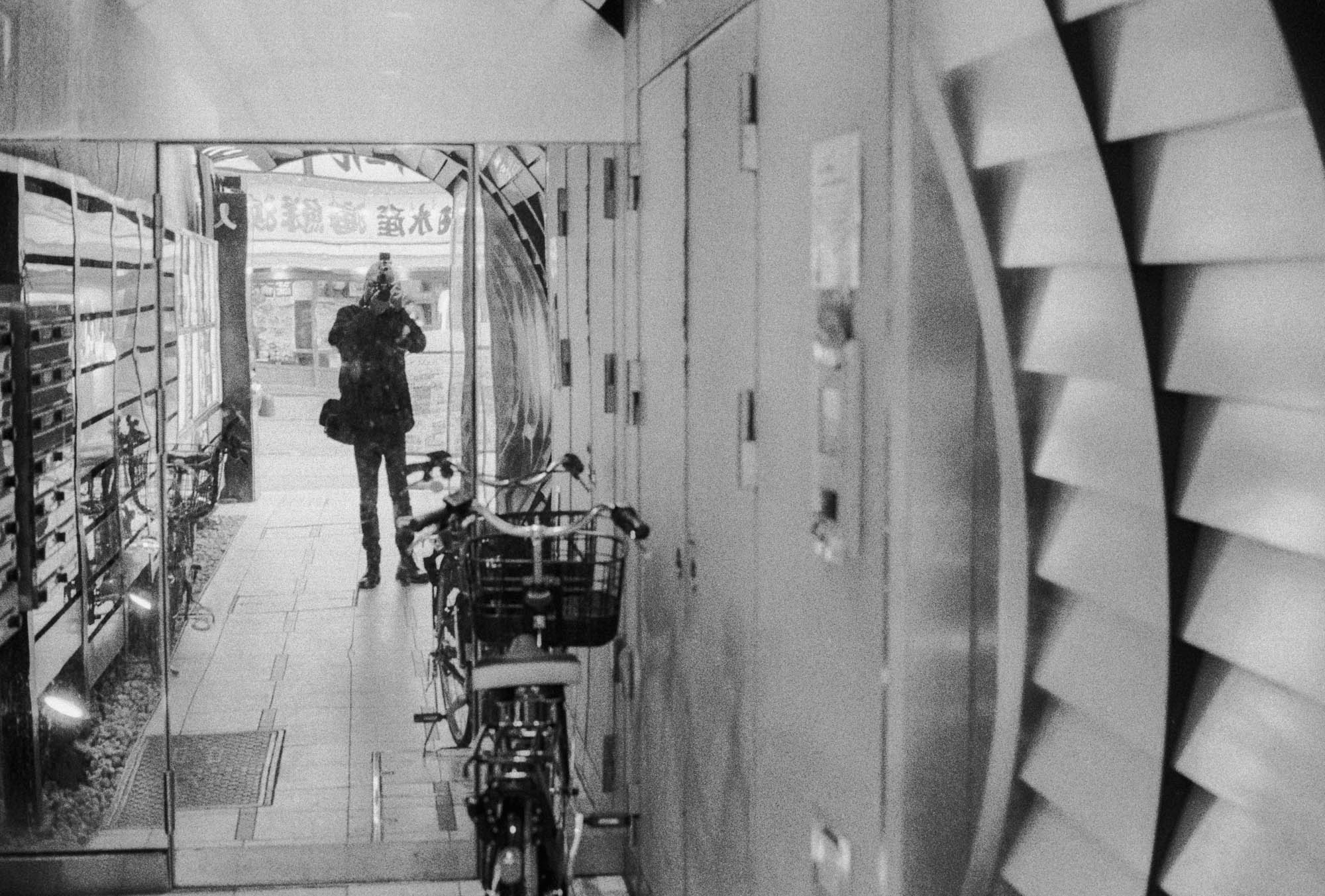
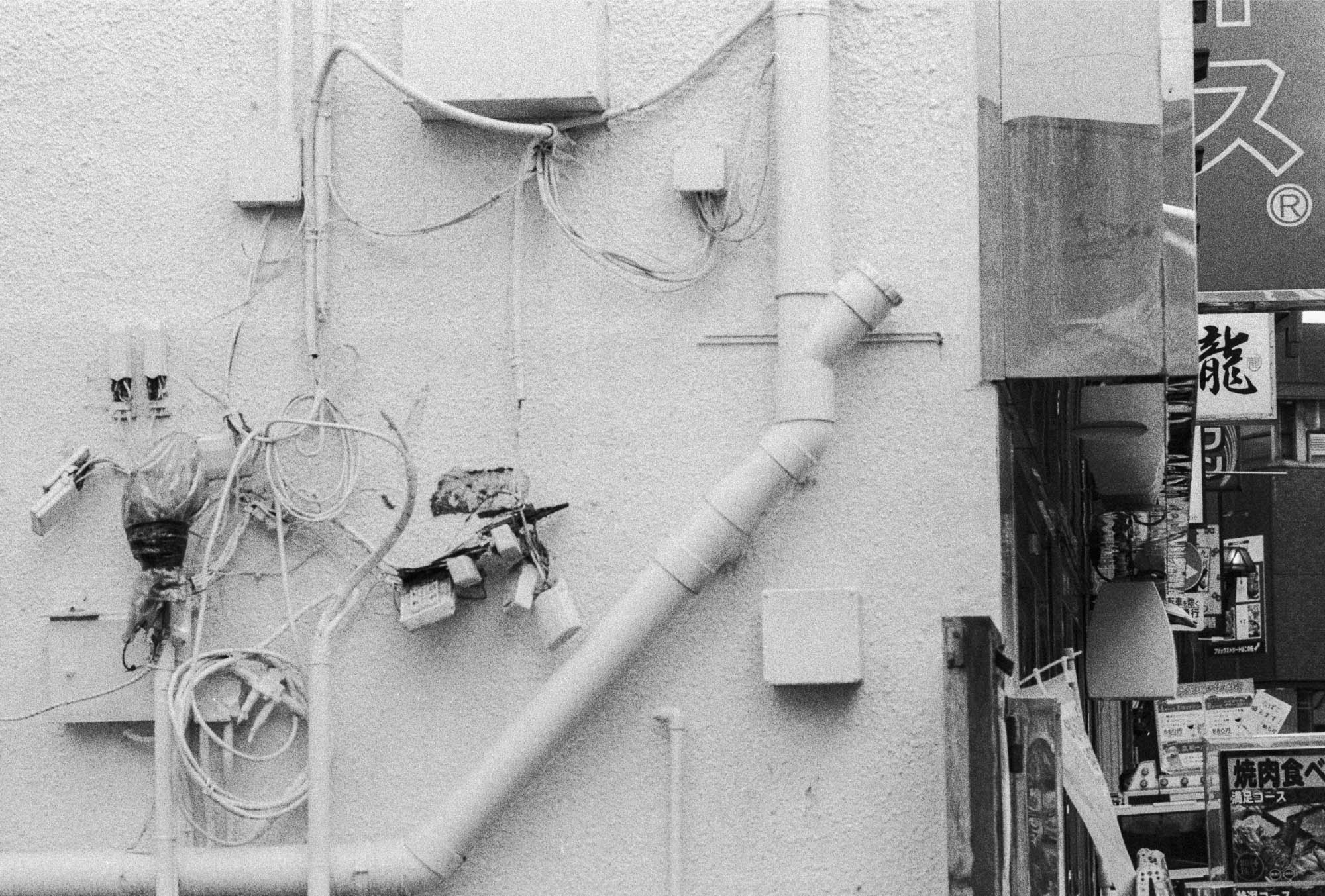
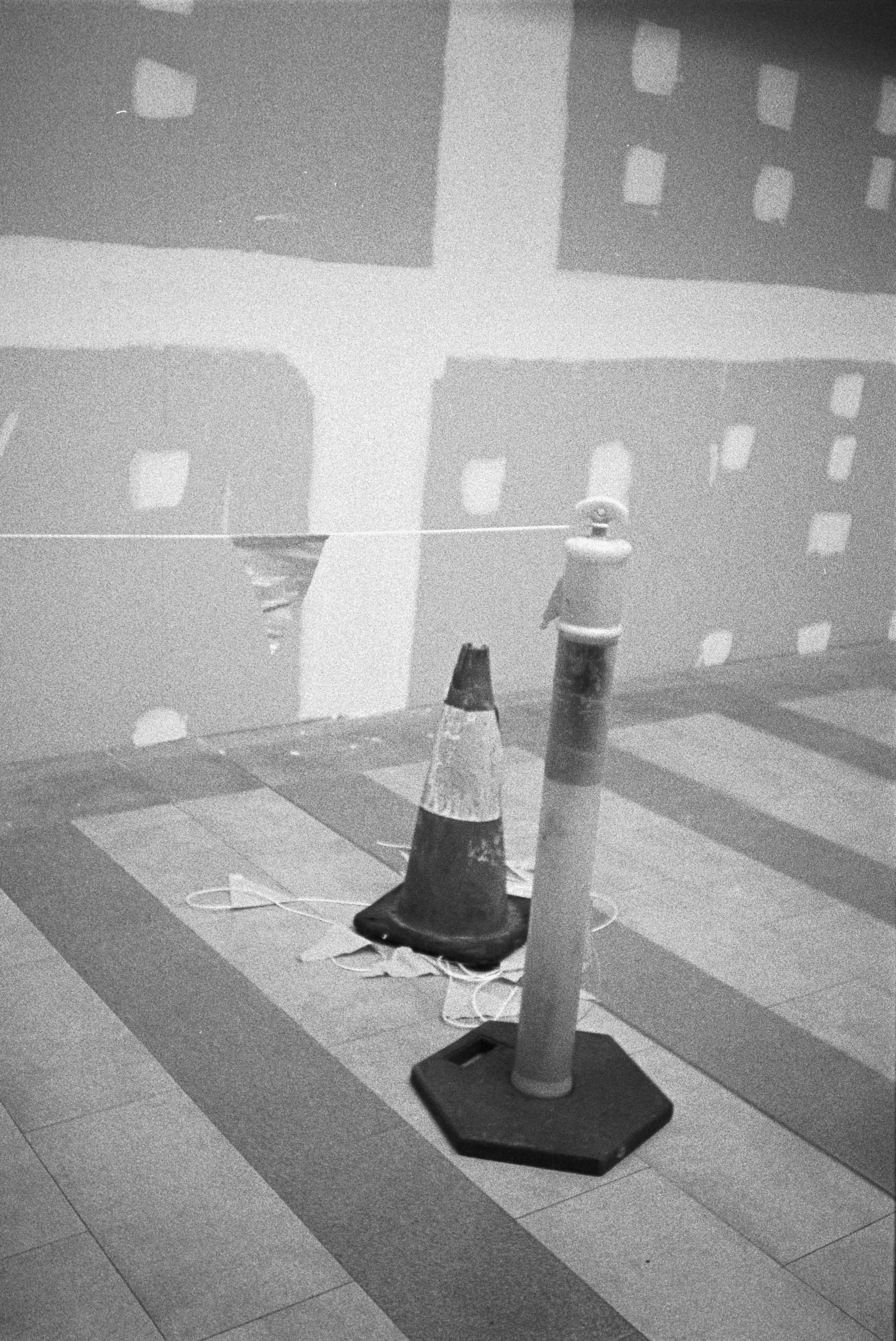
Of course, it’s not all fun and games. I took my Pentax 17 and some Ilford HP5 and set out to capture some of the urban decay of tired shopping malls. The results? Nothing spectacular, but it did at least provide a monochromatic record of decline. But I know that’s not what you’re here for—you want your decrepitude in full color. So, I loaded up some Fuji 400 and headed to my home away from home, Leeman, for post-Christmas dog walks on the beach.

Speaking of which, my groodle puppy, Juni, has had plenty of exposure on film this summer. If you’ve been following along, yes, it’s the same dog—just three times bigger. We’re considering renaming her Ginger Monster. Capturing a fast-moving ball of auburn fur with a half-frame camera? Tricky, but fun.

Camera quirks

Now, about those exposure modes. They’re confusing. The dial is color-coded: white for non-flash modes, yellow for flash-based ones, and—just to mess with you—a blue auto mode that isn’t actually fully automatic. It basically turns your expensive camera into a $20 disposable. What focus distance? What aperture? What shutter speed? Who knows? I don’t use it. Instead, I stick to P mode, though I still don’t really know what it does. The biggest issue? The dial is way too easy to knock out of place, which led to some overexposed outdoor shots and underexposed indoor ones before I realized I’d accidentally switched to Bulb mode while winding on.

After some trial and error, I learned a few things. One: get your finger out of the way when shooting macro. Two: framing in a viewfinder camera is always a challenge, but the Pentax 17’s clear viewfinder and close-up frame lines help. Three: for general shooting, the 3m focus setting is usually good enough, though I did cheat and use an iPhone app to double-check distances.

I still haven’t touched auto mode—it gives me anxiety. With half-frame, I like to have two exposed rolls ready before developing to save time and chemicals. So, to make things more difficult for myself, I loaded up a roll of OneShot film next. Why? Because it was cheap. The results? Let’s just say OneShot probably isn’t ideal for a bright Perth summer—or for this camera. The muted colors and heavy grain didn’t do me any favors. The Fuji 400 shots fared better, and while nothing groundbreaking, I did get a few fun summer snapshots.


So, what’s the verdict? This isn’t a spectacular camera. It has its quirks—no self-timer, confusing exposure modes, and some incredibly bright blinking LEDs that don’t provide focus confirmation (because it’s manual focus). Plus, the electronic focus system introduces a slight shutter lag, which is odd for a manual-focus camera. The design is an eclectic mash-up of different Pentax and Ricoh cameras, with an Olympus Pen-style viewfinder and a winding lever that feels straight out of a Pentax 110. It’s a Frankenstein creation, and the real question is: does that make it charming or just dumb?

For me, it’s both. Plenty of YouTubers have reviewed this camera and been left scratching their heads, but that’s because it wasn’t made for high-end photographers. Honestly, it wasn’t even made for me—and I have no standards. But I love it. It’s quirky, fun, and surprisingly decent for what it is. Most of all, it’s brave and weird—just like Juni. Maybe I’m just brave and weird enough to appreciate it.


Is the Nikkor Z 28mm f/2.8 Nikon’s most Boring Lens?

Whenever I visit a new country, I like to check out the second-hand camera scene for potential bargains as souvenirs. On a trip to Shanghai, I went to Xingguang Photographic Equipment City, a sprawling, multi-story mall full of small camera shops selling used gear. Armed with 1000 Renminbi in my WeChat wallet, I hoped to find a unique lens within my budget. I was drawn to the idea of a 135mm, but it was too expensive, so I set my sights on something more modest.

I eventually found Nikon’s 28mm Z f/2.8 SE lens, a lens with a retro design that fits Nikon’s ZF digital camera. It’s affordable but not particularly exciting in quality, as it has a plastic mount and feels more like a cheap throwback than anything premium. However, it was within my budget and looked decent enough. The shopkeepers were friendly and humored my attempts at speaking Chinese, making the experience enjoyable.

Reflecting on the 28mm focal length, I find it somewhat mundane. Back in the film era, 28mm was considered wide, but these days, it’s essentially the default view on smartphone cameras. The world is now saturated with 28mm photos—thanks to the trillions of smartphone shots shared online—creating a visual monotony that’s almost tiresome.

To test the lens, I decided to take it to Zhujiajiao, a historic water town near Shanghai, to see if I could capture something interesting with this “boring uncle” of a focal length.

Serviceable, yes but… Exciting?

When I downloaded the photos from my 28mm lens, I felt a bit disappointed. They felt overfamiliar, like the endless shots of water taxis or gondolas in Venice that we’ve all seen. I started questioning if it was the lens itself or simply my inability to break away from typical tourist shots. Maybe the 28mm field of view kept me stuck in that mode.

The 28mm lens is easy to use, with smooth and quiet focusing, and it focuses closer than my zoom lens at 28mm, which is a nice feature. When focusing close, it handles out-of-focus areas beautifully with soft, creamy bokeh. While it won’t completely blur the background like other lenses, it subtly draws attention to the subject without being overpowering.

That said, the Nikon 28mm Z f/2.8 isn’t perfect—28mm does feel a bit dull. At least, to me. I got some decent shots, but reviewing them feels like scrolling through my phone gallery. My 24-200mm offers more versatility, letting me capture close-ups and control framing better by using its longer focal length to keep distractions out of the frame. With the 28mm, I have to be more mindful of composition, especially on the streets, compared to a 35 or 50mm lens.

After sorting through, I picked a few shots that captured the feel of the place without looking too postcard-like. The dim light drained some color from the scene, and a few images actually worked better in black and white.

I do think this lens is a good lens, maybe even a great one if you consider the price and can get over the plastic mount. I can’t fault it that I find the 28mm field of view a bit dull and perhaps, actually, with more use, I might to appreciate that focal length a little more.

Photography Roadtrip Part 2 – Capturing Australia’s Great Ocean Road

Day Two of my exploration of Victoria, not the royal lady but the rugged Australian shores. Winding along the Great Ocean Road between Aireys Inlet and Port Fairy, I found myself greeted by a sky painted with rainbows and ever-changing conditions. Each stop along the way presented a chance to scan the coastline for unique features, though initially, I felt out of place in the natural world.

However, as I ventured on, I stumbled upon a lunar-like landscape of rutted rocks and alien vistas that captured my imagination. Shooting into the light yielded some of my favorite photos of the day, showcasing glistening reflections and odd shapes. Moving inland, I explored the lush greenery of Barham Paradise Scenic Reserve with my drone, capturing the undulating beauty of the Victorian countryside.

Returning to the coast, the Great Ocean Road revealed its promise and decay, with limestone cliffs battered by the southern ocean. Despite the cliché of photographing the Twelve Apostles, I aimed to bring a unique perspective to the iconic location, acknowledging its imminent erosion and the misnomer of its name.

Continuing along the coast, I sought to evoke a sense of the strange and fascinating, rather than merely document the landscape. From silhouetted birds against dreamy backdrops to timeless structures along the shore, each image told its own story.

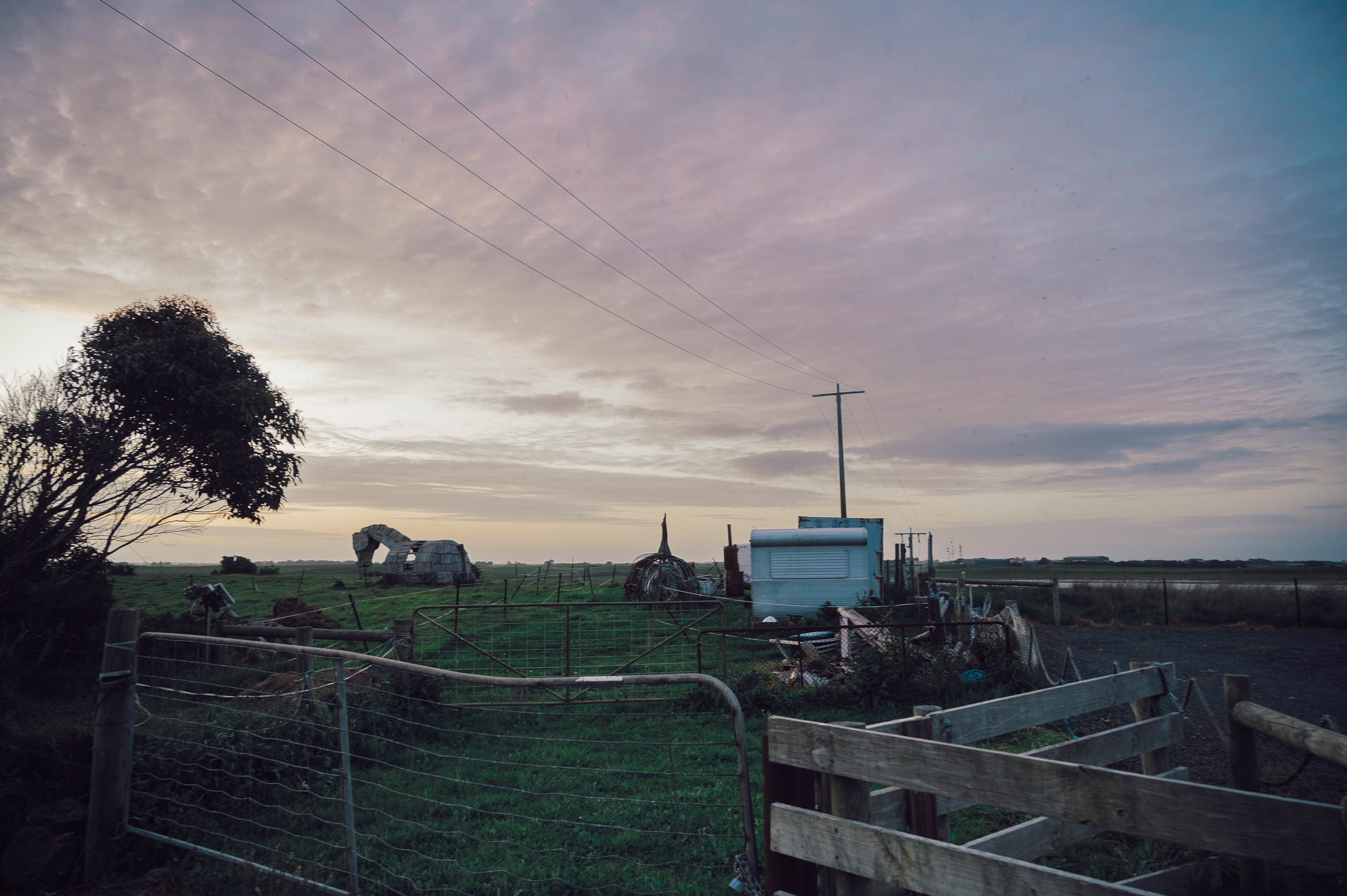
Arriving at Port Fairy, I found a tonal counterpoint to the fierceness of the coastline, with a serene sunset casting its glow over the landscape. Even mundane scenes by the roadside took on mythical proportions, like a Trojan horse abandoned in an Australian landscape.

In conclusion, I didn’t aim to capture the landscape’s majesty in the conventional sense, but rather to invite viewers into a world of ambiguity and intrigue. The best photos were those that sparked curiosity and imagination, leaving room for interpretation and storytelling.

First Impressions of the Nikon Z 180-600mm f/5.6-6.3 VR

So, I finally got my hands on Nikon’s latest zoom telephoto lens, the 180-600mm f/5.6-6.3 Z. The big question is: is it a wildlife warrior, slicing through the wilderness to capture distant action, or just a hefty fella trying to compensate for its lack of sporting prowess?

Let’s start with the unboxing, which was honestly a bit underwhelming. All you get is the lens, some cardboard, and the usual paperwork. The lens case is a joke, more like a napkin than anything protective. It’s not exactly travel-friendly, to say the least.

But enough about the packaging, let’s talk about the lens itself. It’s big, no doubt about it, but compared to its competitors, it’s not that intimidating. Plus, it doesn’t extend when you zoom, which is a plus. As for ergonomics, it feels solid in my hands, though it’s definitely on the heavier side. Still, it’s manageable without a tripod, thanks to its balance and design.

The zoom range is impressive, and the short throw of the zoom ring makes it easy to adjust quickly. Overall, it’s a well-designed lens that’s comfortable to use, even handheld.

But the real test is in the field, or in my case, at the zoo. Hey, I’m not about to go traipsing through the wilderness. So, off I went to capture some wildlife action, and let me tell you, this lens didn’t disappoint.

How Good is the Lens?

After surviving various landscapes from the African savannah to the frozen Antarctic tundra, I’m here to share my wildlife photography adventures with you. I did find myself surrounded by children more than animals, though. Mixed feelings about zoos aside, Perth Zoo isn’t too bad, offering enrichment for its inhabitants, even if it’s with plastic containers instead of TV sets showing David Attenborough documentaries.

But enough about zoos, let’s talk lenses. The Nikon Z 180-600mm proved to be a reliable companion during my zoo excursion. Comfortably hanging it around my shoulder for hours, I was able to shoot handheld or on a railing with ease. The images turned out sharp and vibrant, as seen in the giraffe example. While I did some editing, minimal adjustments were needed thanks to the lens’s performance.

Telephoto lenses often lack flexibility in tight situations, but the ability to zoom with this lens was invaluable. Despite its smaller aperture, ranging from f/5.6 to f/6.3, I was pleasantly surprised by the results, even at high ISOs. My favorite shot, taken at ISO 11,400, showcased the lens’s sharpness and the Z 6 sensor’s ability to handle detail even at high ISOs. While extracting detail from white fur was challenging, overall, I’m impressed with the lens’s performance.

Still a Challenge

So, let me dive into the nitty-gritty of my experience with the Nikon Z 180-600mm lens. Focusing was the biggest hurdle I faced, and it’s not entirely the lens’s fault. The Z 6 camera, despite firmware updates, showed its first-generation mirrorless roots with its unreliable autofocus. I found myself constantly switching between autofocus modes, particularly struggling with pinpointing focus on small subjects at 600mm.

Once I got focus right, though, the results were stunning. The sharpness of the lens was apparent, perhaps even too sharp for my taste. I often find modern photography produces images that feel clinically perfect but lack soul. Shooting through glass or fences impacted image quality at times, but the lens still delivered impressive detail.

However, I did encounter situations where the contrast and crispness felt a bit overpowering. I had to employ post-processing techniques like the Orton effect to soften the harshness. Despite this, the lens still managed to maintain character, producing smooth bokeh and delivering sharpness where needed, like capturing the intricate details of a penguin’s iris.

While I’m not a wildlife photographer per se, I purchased this lens for my ongoing telephoto project focusing on ships along the Perth coast. It offers a significant reach and excellent stabilization, allowing me to capture stunning seascapes handheld. At $3k Australian dollars, it’s not cheap, but considering its performance and versatility, it’s a worthy investment.

In conclusion, this lens isn’t perfect, but it’s pretty darn close. I can see it becoming my go-to companion for capturing distant ships on the horizon—a testament to its sharpness, size, and overall performance.

Road Testing the Nikon F50: Is this Nikon’s Ugliest Camera?

Get ready for a first-hand look at my latest thrift find, the Nikon F50. As I awkwardly wrestle with the packaging, I can’t help but wonder if this will be a Hitchcock-level suspenseful experience, especially as I attempt to tackle that pesky bubble wrap without injuring myself.

And there it is, the Nikon F50, not exactly the epitome of elegance or charm. As a devoted Nikon SLR film camera enthusiast, I’ve got a long list of favorites, and this one definitely hasn’t made the cut. Every time I see it online, I can’t help but cringe at its less-than-appealing appearance.

But hey, when I stumbled upon it for just $19, I thought, why not take a chance? After all, it’s cheaper than a gallon of methylated spirits, and while I can’t drink it, at least I can take pictures with it, right? So, despite my reservations, I took the plunge and made it mine.

Now, let’s talk about its quirks and limitations. This camera is definitely not for the faint of heart. It’s designed for older Nikon lenses, lacks focus assist for manual lenses, and don’t even get me started on its menu system. It’s like solving a puzzle just to change a setting.

But it’s not all doom and gloom. After a quick test, I can confirm that it does indeed work, which means I’m stuck with it now. On the bright side, it’s time to load it up with some film and see what it can really do. So, despite its flaws, let’s keep an open mind and give it a fair shot. Who knows, it might just surprise us in the end.

An Imperfect Camera

Using this camera isn’t exactly a walk in the park, but here’s the kicker: it takes surprisingly good pictures! In the end, isn’t a camera just a tool? As I experimented with it, I managed to capture some impressive shots on just one roll of film. Sure, it wasn’t the most enjoyable experience, but the results spoke for themselves.

A big part of its success was probably thanks to the lens I used, a humble Tamron 28-200mm. Despite its quirks, like significant distortion, it produced sharp images with fine focus. Sure, the autofocus could be a bit shaky, but with careful adjustment, I got the shots I wanted.

This got me thinking: am I being too harsh on this camera? Am I judging it solely based on its looks? After all, beauty is subjective, right? Maybe this chunky, unassuming camera has its own unique charm that I’ve overlooked.

Sure, it’s not the most ergonomic or user-friendly camera out there. Its menu system can be frustrating, and it lacks some advanced features. But maybe that’s okay. Maybe its simplicity is its strength. If you’re not too hung up on aesthetics and just want a camera that gets the job done without fuss, then this might be the one for you.

So, here’s the bottom line: if you’re a budget-conscious film photographer who values function over form, this camera might just surprise you. Give it a chance, and who knows? You might end up with some Hasselblad-worthy shots after all.

A MINI, an Olympus Pen F Digital, and the Concept of ‘Fun’

What inspired me to create this video was the recent purchase of a new car. Well, when I say “new,” it’s all relative. Considering New College Oxford dates back to the 14th century and the New Seekers peaked in the 1970s, “new” takes on a different meaning. But fear not, this isn’t merely a video about cars. That’s not really my usual content. Nor is it about the New Seekers, although that might cement my status as the go-to YouTuber for the retirement community.

The truth is, I’ve never felt much of a bond with my cars beyond hoping they’ll get me to my destination without any breakdowns. Given my history of acquiring or inheriting beat-up cars, that’s never been a given. Plus, I’ve had a couple of mishaps along life’s journey that remind me cars can be dangerous—yes, I even blinked when I sneezed.

However, from the moment I test drove this car, actually, from the moment I laid eyes on it, there was an undeniable allure emanating from it, beckoning me to have some fun.And I think it’s because it’s a Mini. The Mini, as a car, epitomizes fun. It’s even ranked number 5 on Top Gear’s list of fun and economical cars, and even Chat GPT agrees with me on thi

That got me pondering about my most enjoyable camera. It’s a tough call. I’ve owned many cameras that I’d describe as ‘fun’, from the quirky Carl Zeiss Werra to the comically oversized Fuji medium format rangefinder. But ultimately, I settled on my Olympus Pen F Digital. Just as the Mini serves as my everyday ride, this camera is my everyday companion. While any dependable car can get me from A to Z, this camera provides the versatility I require to capture the photos I desire.

Sure, any modern camera can produce quality images, much like how any reliable car can get you where you need to go. But what sets apart the ‘fun’ factor in both cases compared to other similar tools? That’s the question I find myself exploring.

What is Fun? The Five Ss

It sounds like a simple question, but the answer can be complicated. Often we think of fun as something that has no purpose or meaning but cars and cameras are both tools. There has to be something more to it than that and I’ve come tho think about it as the Five Ss

Firstly, fun is a sensuous, not to be confused with sensuAL. It’s about the tactile quality of things, the immediate satisfaction they provide. Whether it’s driving a fast car or handling a camera, the user interface and tangible experience play a significant role in the enjoyment.

Take this car, for instance. Despite its modest engine size, the turbocharger gives it a surprising speed, accompanied by a distinct sound that adds to the sensory experience. Similarly, my Olympus Pen F camera feels fast in hand, capable of shooting at high speeds and providing a seamless interface for capturing images.

But fun isn’t just about speed; it’s also about surprises. Despite its compact size, both the car and the camera pack a punch, offering unexpected features and capabilities that enhance the overall experience.

Additionally, there’s an element of silliness to both. From quirky design choices in the car’s interior to overengineered buttons on the camera, there’s a sense of playfulness that adds to the enjoyment.

However, fun doesn’t always mean impracticality. Both the car and the camera serve practical purposes while still providing an enjoyable experience. In fact, the fun aspects can often enhance the serious outcomes, making mundane tasks more enjoyable.

Photos from the Olympus Pen F, exemplifying the Five Ss of Fun

Ultimately, whether it’s driving a fast car or capturing moments with a camera, fun can be found in the serious and the silly alike. And in the end, both the car and the camera prove to be more than just tools; they’re sources of enjoyment and satisfaction in their own right.

Here’s to Fun!

The word  ‘fun comes from the old English word ‘befon’ which is to make a fool of someone. In that sense I’m very fun.

It’s just a pity that there isn’t much attention paid to the concept of fun. Flicking through the pages of the Dictionary of World Philosophy takes you directly from Frankfurt School to God without any fun in between and that’s a shame. After all, wasn’t it that great philosopher Miley Cyrus who said, ‘Life is all about having a good time’?

Look, I’m not sure I completely subscribe to the simplistic notion of fun being pleasure without purpose. Sure, no-one’s expecting you to have a riotous time bagging your broccoli in the supermarket. But that doesn’t mean shopping can’t be both fun and purposeful. Similarly It doesn’t mean every useful tool or purposeful activity is going to be fun. Some of the most optimised experiences are so seamless that they are barely register with us. Neither the mini nor the Pen F are perfect. But if they were, maybe they’d be boring. The fact that the Mini Countryman is a little bubble box on an all wheel drive X1 chassis means you get all of the benefits and compromises of a crossover vehicle including having the turning circle of a camel train. The Pen F is full of compromises too with its smaller sensor and quirky autofocus. It’s love of dials means that they had to put the on-off switch on the top left of the camera body, which means you can’t operate the camera one-handed but these aren’t just the limitations you learn to live with, they are the qualities you come to love. The minor annoyances slip into the background but we can still occasionally be surprised and beguiled by some of the unexpected whimsy that this camera offers. It’s a serious tool for a serious job but it stimulates my creativity and after all, it WAS Einstein who said ‘Creativity is Intelligence having fun.’ And while not quite the intellectual heavyweight that is Miley Cyrus, Albert does make good case – relatively speaking. And yes, that was a really bad pun. But that’s what fun is. It’s the little things. It’s this little thing and all the S words that seduce and surprise us. This small, singular, sensuous block of knurled magnesium and electronics manages to be both silly and serious at the same time. And in that sense very special to me.

Road Testing a Beaten up Nikon F75 Film SLR

Well, what can I say? Like myself, this camera has seen better days. All of that millennial photographic optimism, crushed by the insurgency of digital and hindered by its flimsy build quality.

I harbor a peculiar fondness for Nikon’s less prestigious SLRs. Or maybe that’s just Stockholm Syndrome—a strange psychological bond forged between crappy old cameras and a crappy old photographer, both steeped in nostalgia. But let’s not dive into self-flagellation just yet; instead, let’s direct our attention toward the Nikon F75.

Now, I can’t be certain whether the last owner treated this camera as toilet paper or handed it to their three-year-old as a plaything before relegating it to the second-hand shelf alongside fallen aspirations—exercise bicycles and DVD copies of “Daddy Day Camp.” Suffice it to say, this camera wears its battle scars.

In its prime, I imagine the F75 stood tall—a photographic titan. But it followed the Mickey Rourke path of self-improvement. Let’s address the worst of its woes: the batteries drain suspiciously quickly, and the zoom ring turns as smoothly as a skier on asphalt.

Amidst the wreckage, though, there was promise. I’ve encountered several similar Nikons—the hideously ugly F50 and the perilously flimsy F55. Both have graced my channel, and while they’re crippled clones of what we’d associate with a “real” Nikon camera, the F50 at least had reassuring heft, and the F55 prided itself on being the smallest and lightest 35mm SLR in my collection.

Enter the F65, sandwiched between the F55 and our battered F75. Supposedly a notch up, the F75 boasts more segments for matrix exposure metering and spot metering—nothing groundbreaking. Unfortunately, the F55 refuses to play nice with newer lenses sporting built-in focus motors, and none of these cameras truly embrace manual lenses.

The F75 is just an incremental improvement on the F55 and F65. It sidesteps the plastic lens mount of the F55, supports TTL for external flashes, and claims the title of the first cheap consumer camera to support stabilization in VR lenses. Yet, it remains plagued by a low flash sync of 1/90 second and the inability to adjust ISO manually—limitations that hinder its outdoor flash photography prowess and bulk loading potential.

To unlock professional features, one must ascend the greasy pole of photographic power, reaching for cameras like the F80 and F100. But let’s not get ahead of ourselves; for now, let’s consider the F75 on its own merits.

First things first—it works. Quality-wise, I didn’t push the camera to its limits. I set it to program mode, peered through the viewfinder, ensured focus, and checked the shutter speed. Random shots ensued, and it was liberating not to overthink every click.

As for the lens—it’s acceptably sharp. The corners may smear a tad, but in the open areas, I didn’t need to wide open the aperture. It behaves much like the G version of the lens that accompanied the Nikon F55, albeit with an aperture ring—a touch more versatility for compatible cameras.

Venture beyond the focal zone, and things unravel. The bokeh—well, it possesses ‘character.’ Imagine Cartman from South Park—either mildly amusing or downright offensive, depending on your subjective taste. Personally, I don’t mind; the subject is so mundane that the background’s busyness bludgeons you into submission. Photography shouldn’t be a game of “spot the subject,” but here we are.

So, dear F75, you’re a relic, a survivor. And perhaps, in your pixelated embrace, I find solace—a connection across time and technology. Or maybe I’m just another crappy old photographer, capturing moments with a camera that’s seen better days.

The Nikon L35 AD and Exploring the Concept of Light in Photography

Let There Be Light

Let’s embark on a journey into the heart of one of photography’s most captivating elements: light. Ah, yes, light—the ethereal essence that dances upon the canvas of our visual narratives, weaving tales of brilliance and shadow, of illumination and obscurity. But what truly defines this enigmatic force?

Allow me to shed some light on the matter—pun intended. We all know light is the radiant energy manifested in the form of electromagnetic radiation, with wavelengths spanning from 380 to 750 nanometers, perceptible to the human eye. However, let us not confine ourselves rigid constraints of scientific definition. Let’s delve into the realm of poetry, where light becomes glancing, gleaming, glimmering, and beyond – and that’s just the G words.

Light shifts and changes. While our friends in the northern hemisphere find themselves enveloped in the cloak of darkness, here in my corner of the world, we find ourselves basking in the relentless embrace of summer’s scorching sun, leaving the venerable Sunny 16 rule in faded tatters. Here it goes up to 22.

Light and the Nikon L35AD

The Nikon L35AD is a date-back edition of the esteemed Nikon L35AF. This camera deserves a full review but let us not be hasty; today, our focus lies solely on its ability to harness that most precious of commodities—light.

Don’t expect an objective and scientific treatment of the subject here, though. There’s nothing objective about film. Film imbues each frame with a unique character, a personality all its own. In the case of my chosen film, Kodak Ultramax, we have a medium contrast stock, suitable for a myriad of conditions. However, as the astute among you may have already discerned, there were… complications. Yes, complications stemming from my own hubris.

There might have been a few errors during the development process. The results were a bit underdeveloped resulting in thin negatives. But I don’t blame the Nikon L35AD here. There error was in the one factor I could control – me.

Direction, Intensity, Quality, and Continuity: A Quest for the Perfect Light

So let’s try to break this concept down. Light has direction, intensity, quality, and continuity. Direction is probably the most obvious. As a young photographer, I was often reminded to shoot with the light at our backs, bathing our subjects in a soft, even glow. But that simplicity belies the true complexity of light’s nuances. Shoot from the side, you get more dimensionality and with the light behind your subject you get all the fun of silhouettes and halos.

Intensity, too, plays a pivotal role in shaping our photography. From the blistering radiance of the Australian sun to the gentle caress of cloud-filtered light, each variation presents its own unique challenges and opportunities. But sheer intensity isn’t everything. Whether crisp and clear or soft and diffused, the quality of light infuses our images with a palpable sense of atmosphere.

Finally, continuity. This often overlooked dimension of light isn’t so much about the light itself as the scene. Shadows dance across the landscape, reflections shimmer upon the water’s surface, and every object becomes a player in the grand symphony of illumination. How things in the scene, reflect, block and break up the light is a key component of being able to play with it.

Embrace the Light: A Call to Arms

In the end, whatever conditions you find yourself in, cast aside the shackles of convention and venture forth into the boundless realm of photographic exploration and embrace light. Let’s revel in the myriad possibilities that light presents, bending it to our will, shaping it to suit our vision. In the end, it is not the rules that define us, but our willingness to challenge them—to forge our own path in pursuit of luminous enlightenment.

So go forth, and may the light illuminate your path as you capture the world’s wonders through the lens of your camera.

A Review of the Nikon 50mm f/1.2 AI-S in Shinjuku

Meet One of Nikon’s Longest Produced Lenses

Let’s dive right in, shall we? We’re talking about a particular gem in the realm of camera lenses: the Nikon 50mm f/1.2 AI-S. Now, this isn’t just any 50mm lens; it’s a certified light bucket. Back in 1978, when it first hit the scene, it promised to suck in light like a black hole without leaving your photos in a pit of despair. But does it still hold up in today’s unforgiving photographic landscape?

As the neon lights of Tokyo’s Shinjuku district flickered to life, I found myself armed with my trusty Nikon FE paired with the venerable Nikon 50mm f/1.2 AI-S lens. Venturing into the bustling streets, I was eager for a night off from my teaching responsibilities, ready to immerse myself in the vibrant energy of the city. I found camaraderie in the unlikeliest of places, forging bonds with newfound friends who shared a passion for exploration and discourse. As the night unfolded, I couldn’t help but marvel at the serendipitous moments captured through the lens of my Nikon FE, each frame a testament to the spontaneity and vibrancy of Shinjuku’s streets.

A Dance with Film and Light

Despite the film’s lack of objective reference for white balance, I embarked on a journey of post-processing exploration, extracting the raw beauty of the night through the lens of Lightroom. Amidst the chaos of the city, the Nikon 50mm f/1.2 AI-S lens stood as a stalwart companion, capturing moments with its timeless design and solid construction.

As I scanned the negatives, I marveled at the smorgasbord of colors and textures captured by the lens. From the vibrant hues of neon signs to the subtle interplay of light and shadow, each image told a story of urban life illuminated by the glow of the night. While some may dismiss the imperfections of the film as shortcomings, I embraced them as part of the charm, adding depth and character to my photographic narrative.

Nikon 50mm on Generic 800T Motion Picture Film

A Lens with Character

The Nikon 50mm f/1.2 AI-S lens boasts a rich history spanning over four decades, embodying a blend of craftsmanship and character. Despite its imperfections, this lens possesses a unique charm that transcends technical limitations. Its wide aperture renders scenes with a delicate balance of sharpness and softness, akin to an artistic brushstroke painting the canvas of the night. However, its quirks, from vignetting to chromatic aberration, add to its allure, transforming mundane scenes into ethereal compositions.

Delving deeper into the lens’s optical design, I discovered its simplicity belied its complexity. With seven optical elements arranged in six groups, the lens exhibited a traditional spherical design that harkened back to a bygone era of photography. Yet, its longevity and durability spoke to its enduring appeal, standing the test of time amidst advancements in technology. While modern lenses may boast technical superiority, the Nikon 50mm f/1.2 AI-S lens remained a timeless icon, revered by photographers for its distinctive character and versatility.

The Next Day, Shot with Ilford HP5 Pushed to 1600 ISO

Testament to a Legend

While modern optics may boast technical superiority, the Nikon 50mm f/1.2 AI-S lens stands as a testament to craftsmanship and individuality. Its imperfections become its strengths, offering photographers a tool to craft images imbued with personality and depth. From the glow of neon lights to the subtleties of the night, this lens embraces the art of photography, inviting exploration and creativity. As the world moves towards newer technologies, this lens remains a beacon of tradition and innovation, challenging photographers to see beyond perfection and embrace the beauty of imperfection.

In conclusion, Nikon’s 50mm f/1.2 AI-S lens may not be a flawless masterpiece, but it is undeniably an icon of photographic history. Its burnished brass and glass tell a story of craftsmanship and character, inviting photographers to embrace the quirks of analog photography in a digital age. So, as I reflect on my journey through the streets of Shinjuku, I can’t help but appreciate the timeless allure of this legendary lens, knowing that its legacy will continue to inspire photographers for generations to come.