Whenever I visit a new country, I like to check out the second-hand camera scene for potential bargains as souvenirs. On a trip to Shanghai, I went to Xingguang Photographic Equipment City, a sprawling, multi-story mall full of small camera shops selling used gear. Armed with 1000 Renminbi in my WeChat wallet, I hoped to find a unique lens within my budget. I was drawn to the idea of a 135mm, but it was too expensive, so I set my sights on something more modest.
I eventually found Nikon’s 28mm Z f/2.8 SE lens, a lens with a retro design that fits Nikon’s ZF digital camera. It’s affordable but not particularly exciting in quality, as it has a plastic mount and feels more like a cheap throwback than anything premium. However, it was within my budget and looked decent enough. The shopkeepers were friendly and humored my attempts at speaking Chinese, making the experience enjoyable.
Reflecting on the 28mm focal length, I find it somewhat mundane. Back in the film era, 28mm was considered wide, but these days, it’s essentially the default view on smartphone cameras. The world is now saturated with 28mm photos—thanks to the trillions of smartphone shots shared online—creating a visual monotony that’s almost tiresome.
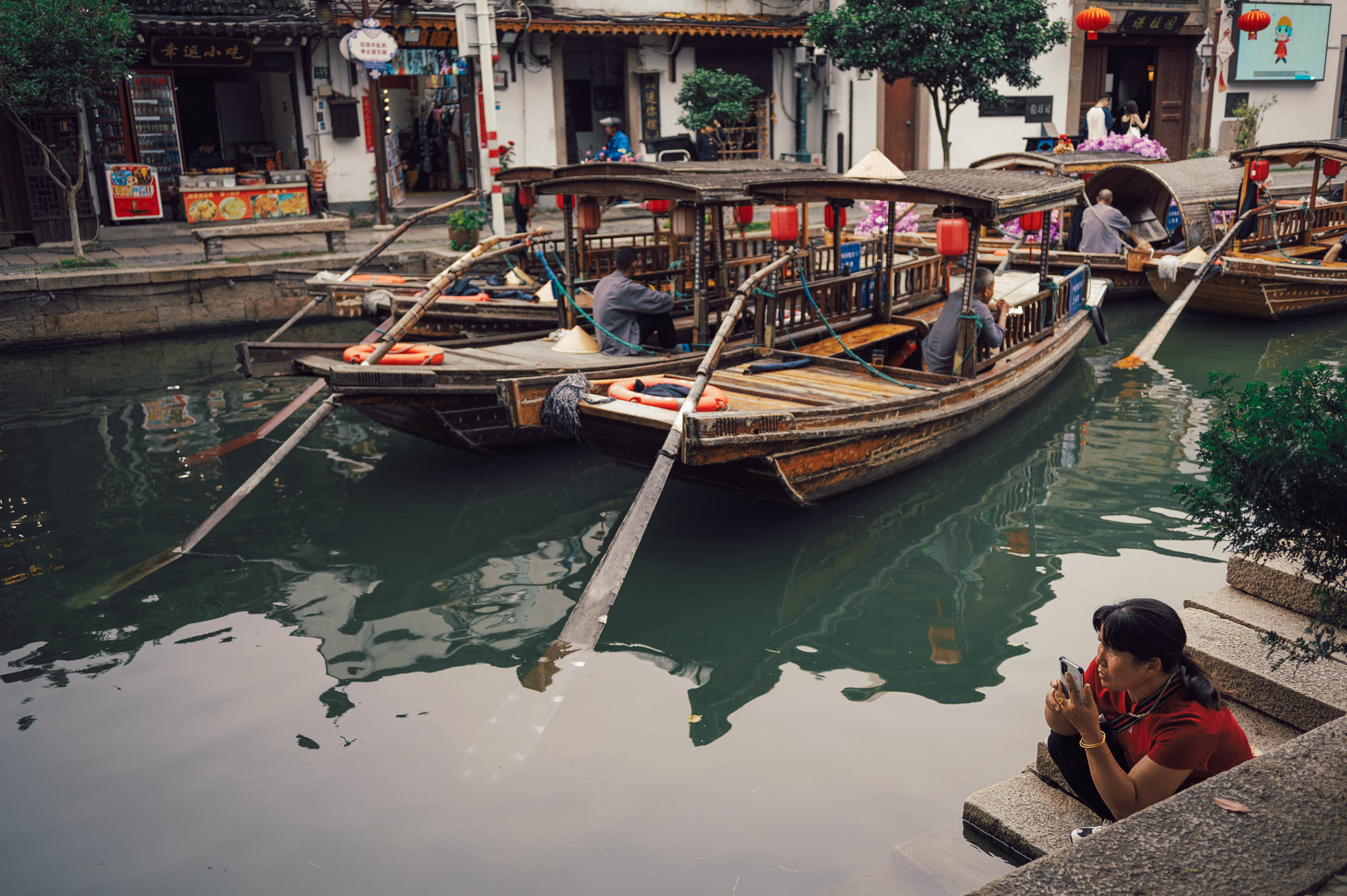
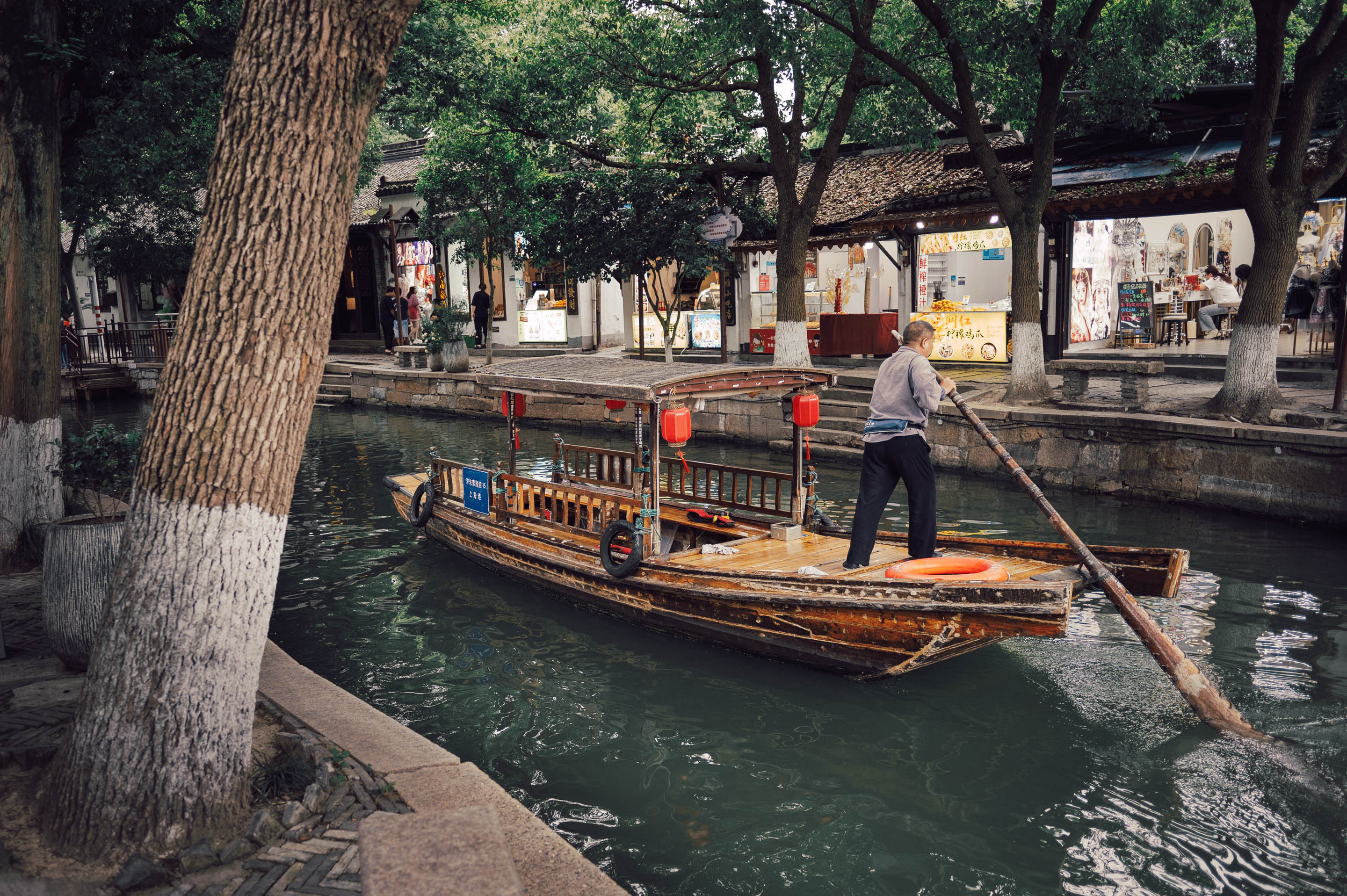
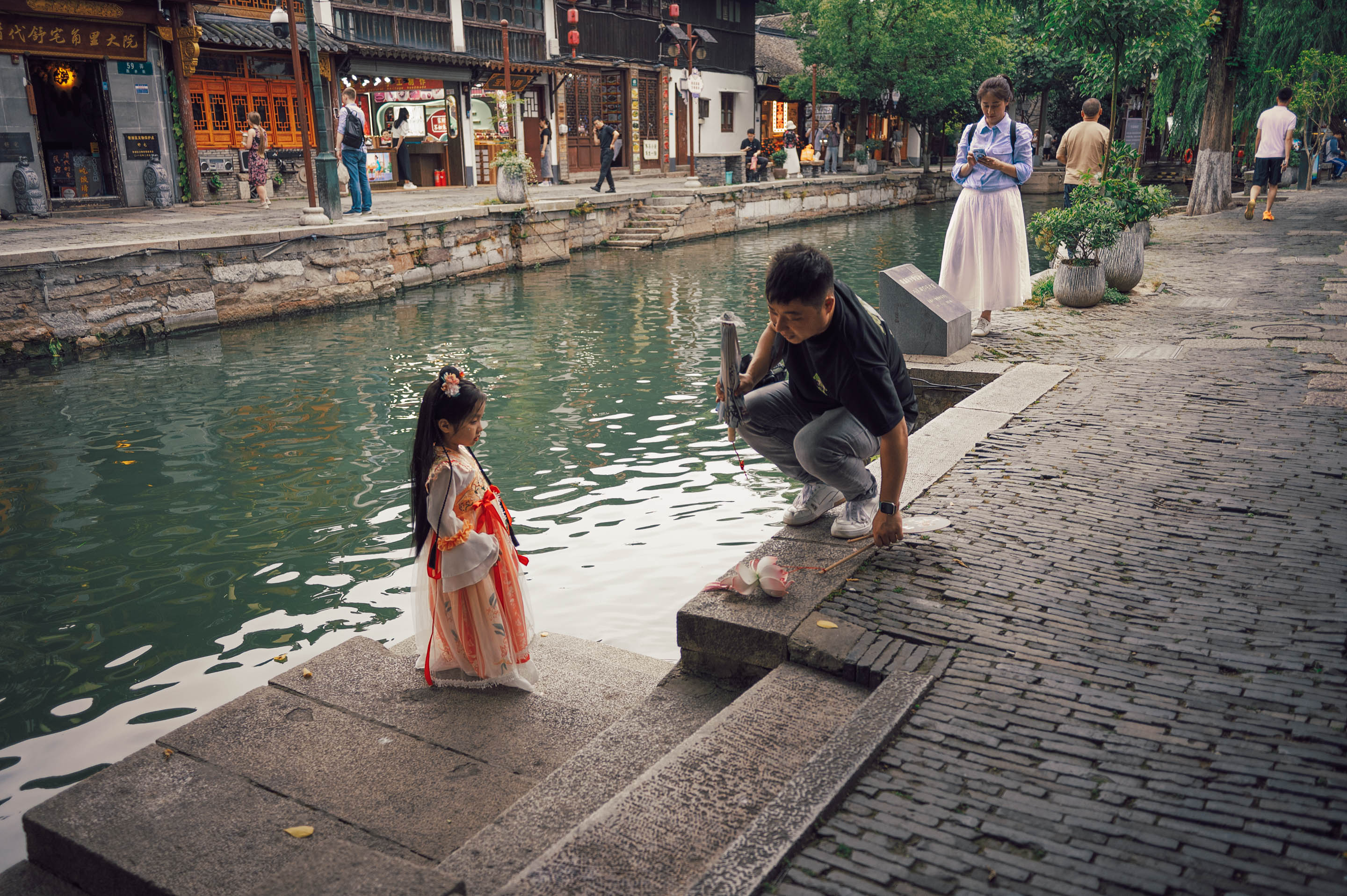
To test the lens, I decided to take it to Zhujiajiao, a historic water town near Shanghai, to see if I could capture something interesting with this “boring uncle” of a focal length.
Serviceable, yes but… Exciting?
When I downloaded the photos from my 28mm lens, I felt a bit disappointed. They felt overfamiliar, like the endless shots of water taxis or gondolas in Venice that we’ve all seen. I started questioning if it was the lens itself or simply my inability to break away from typical tourist shots. Maybe the 28mm field of view kept me stuck in that mode.
The 28mm lens is easy to use, with smooth and quiet focusing, and it focuses closer than my zoom lens at 28mm, which is a nice feature. When focusing close, it handles out-of-focus areas beautifully with soft, creamy bokeh. While it won’t completely blur the background like other lenses, it subtly draws attention to the subject without being overpowering.
That said, the Nikon 28mm Z f/2.8 isn’t perfect—28mm does feel a bit dull. At least, to me. I got some decent shots, but reviewing them feels like scrolling through my phone gallery. My 24-200mm offers more versatility, letting me capture close-ups and control framing better by using its longer focal length to keep distractions out of the frame. With the 28mm, I have to be more mindful of composition, especially on the streets, compared to a 35 or 50mm lens.
After sorting through, I picked a few shots that captured the feel of the place without looking too postcard-like. The dim light drained some color from the scene, and a few images actually worked better in black and white.
I do think this lens is a good lens, maybe even a great one if you consider the price and can get over the plastic mount. I can’t fault it that I find the 28mm field of view a bit dull and perhaps, actually, with more use, I might to appreciate that focal length a little more.
You know how it is when you get a new family member and want to capture all those special moments? First day of school, first soccer goal, and so on. Well, it’s the same with puppies. Sure, their moments might be a bit different—I’m pretty sure I never licked myself as a kid, though who knows, maybe I would have if I could. Kids grow up fast, and those moments slip away quickly. And if dogs are truly our best friends, don’t they deserve more photo attention than your last Instagram post of spaghetti bolognese?
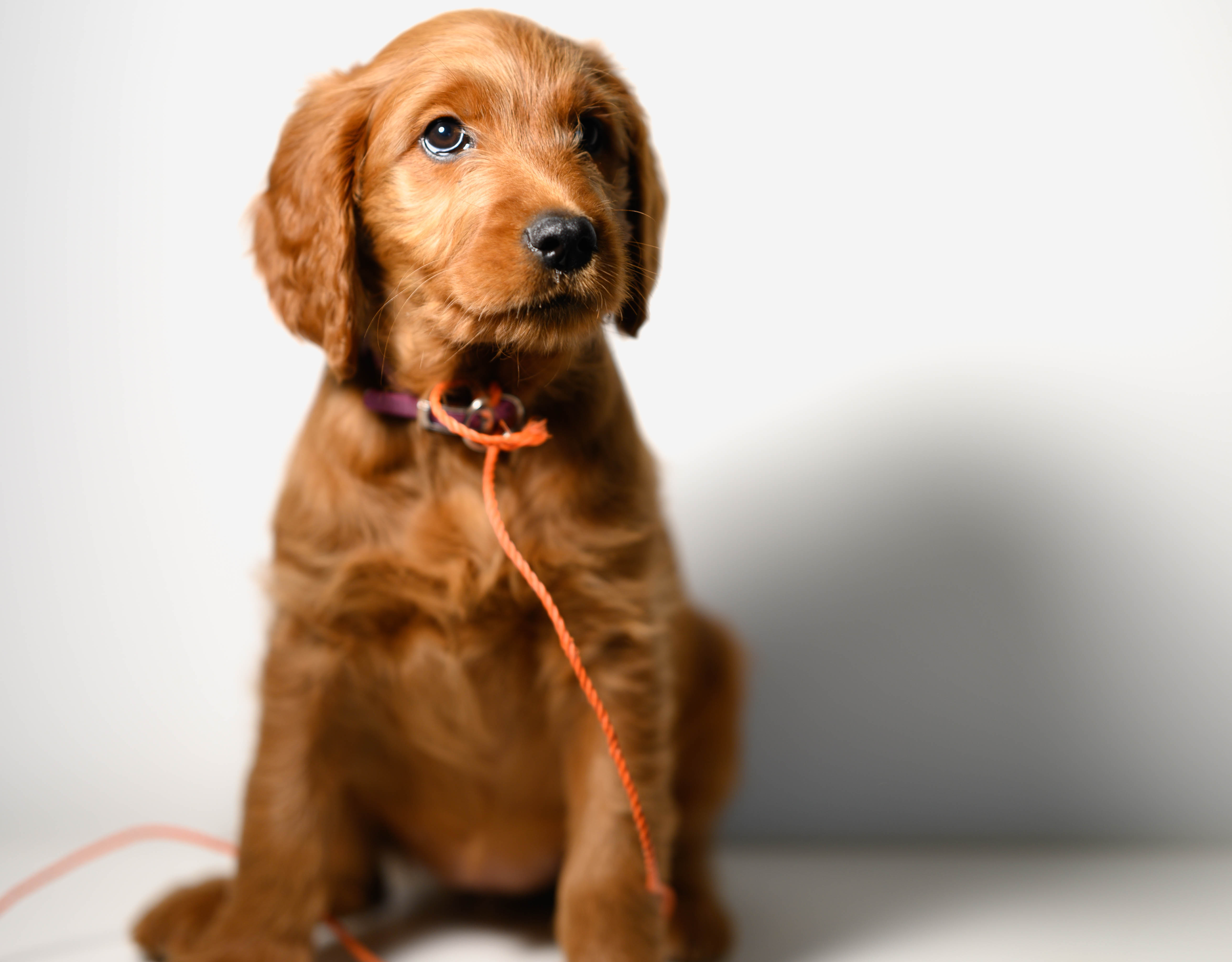
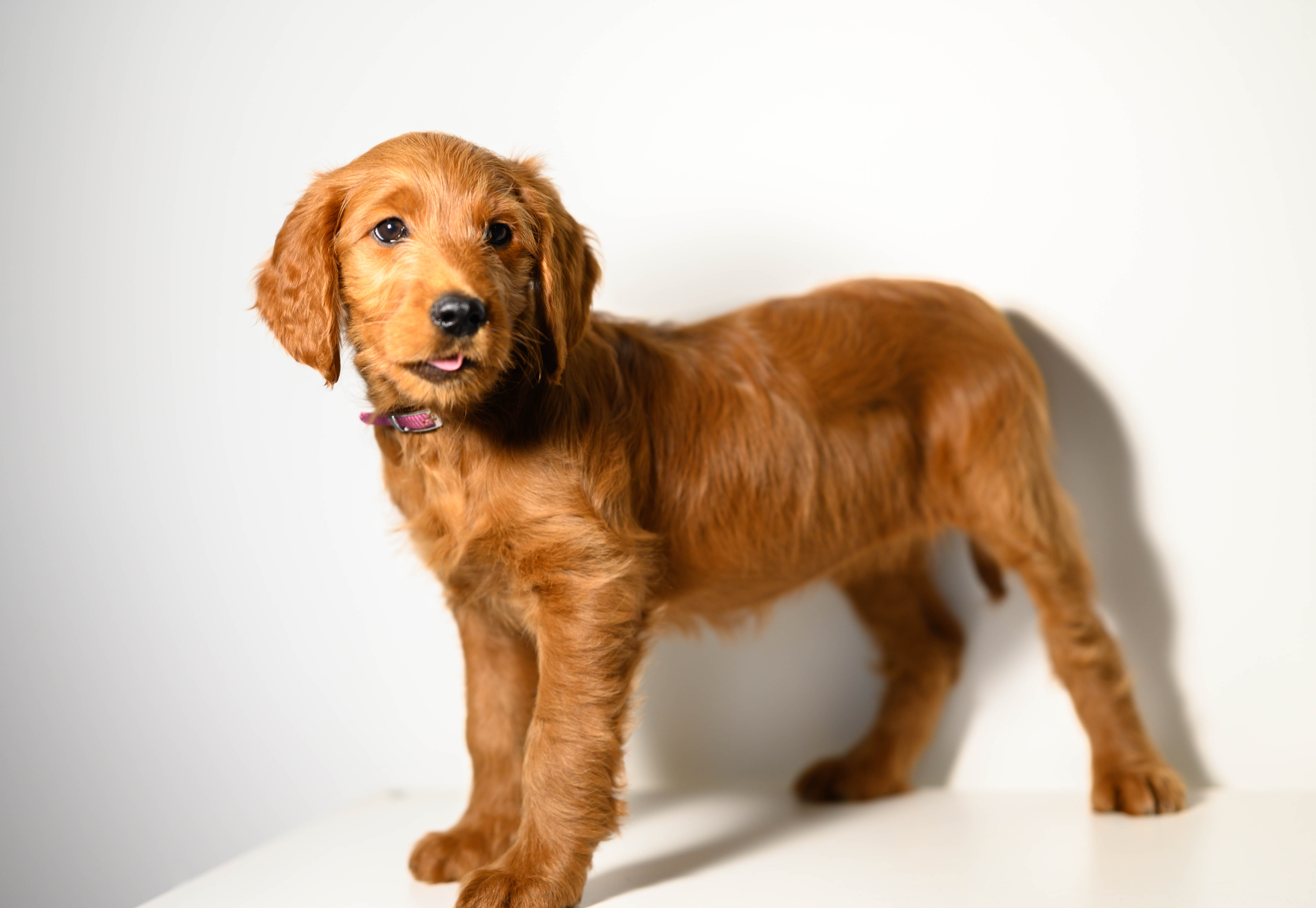
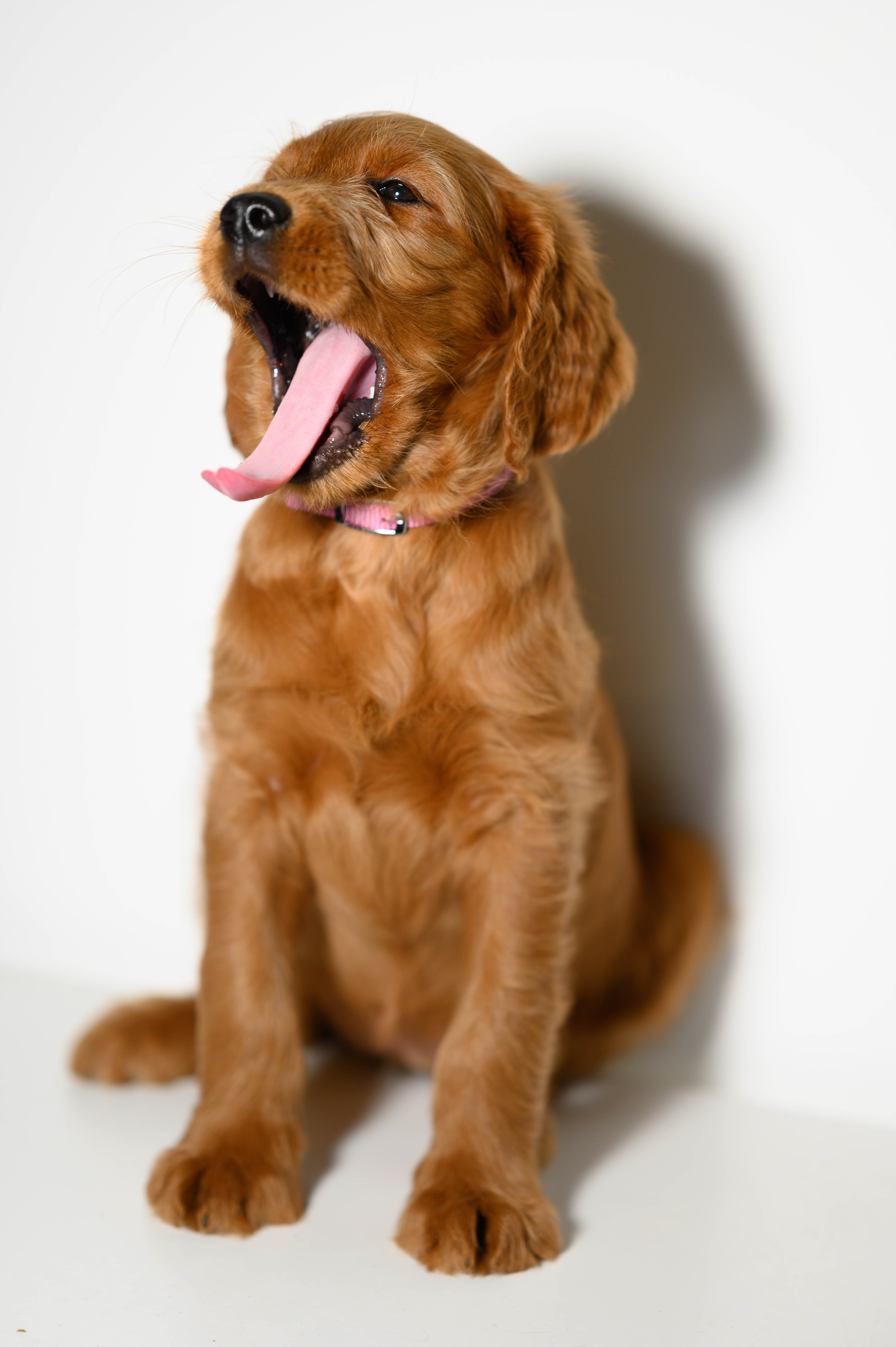
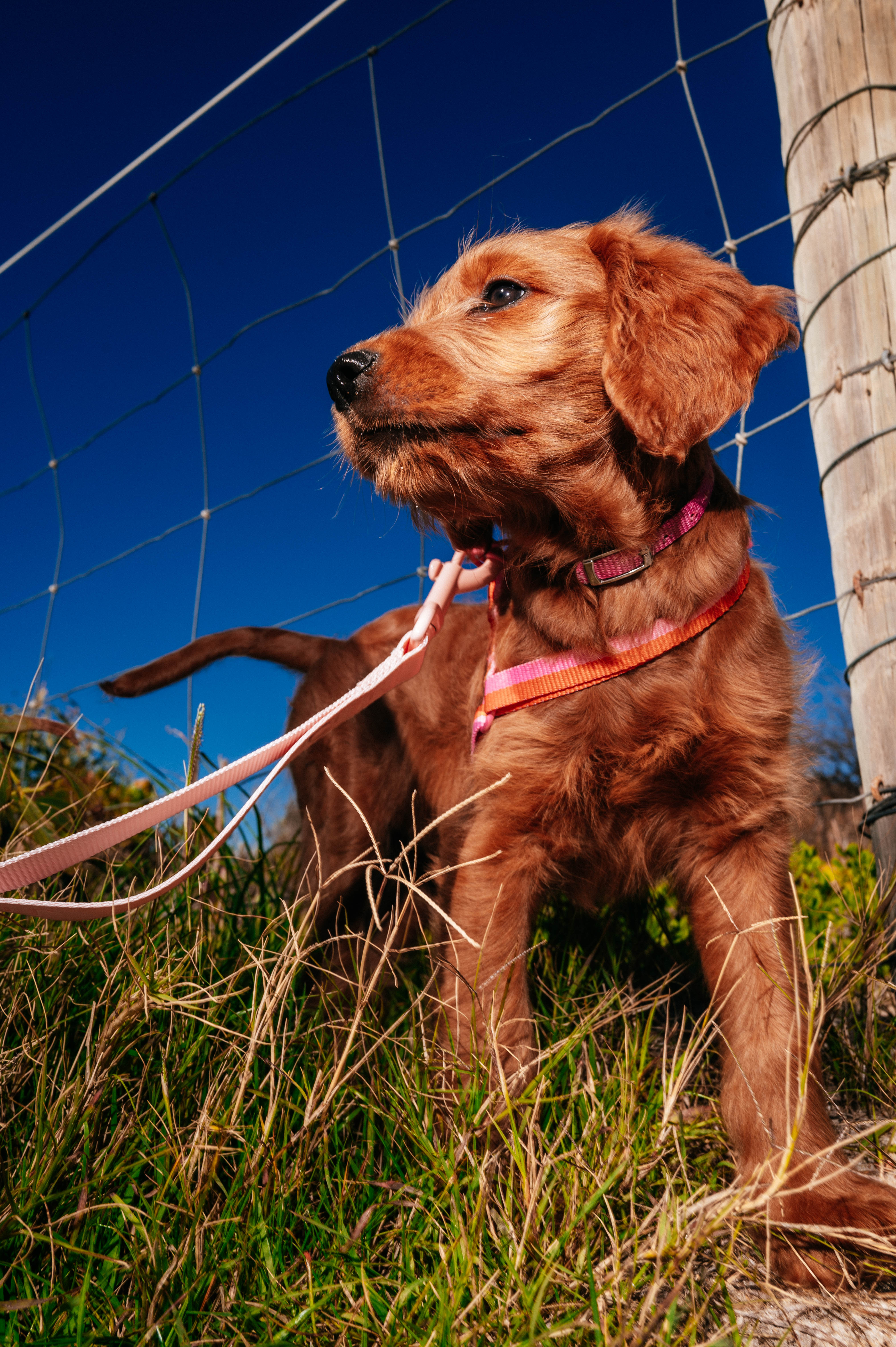
Meet the latest member of our family, Juniper the Groodle. Fresh faced and furry at 14 weeks, it was time to immortalize this little lady. I checked out some pet photography and found it uninspiring. How many photos of dogs in lavender fields do you need? Cute, cuddly, charming—these aren’t the words that inspire me. Instead, I think of artists like Terry Richardson and Bruce Gilden.
Richardson is known for his raw, uncompromising fashion and celebrity photos, stripping away the glamour for a more stark and sometimes harsh look. Gilden, on the other hand, captures New Yorkers in their most unguarded moments, creating shocking, brutal, and even ugly photos. While I don’t want to emulate their exact styles, I do appreciate their approach to challenging traditional aesthetics.
Juniper Meets Terry Richardson
For Juniper the Groodle, I aimed to channel a bit of their spirit. I set up with a flat white wall and used a Zhiyun Molus 60 with a small softbox for lighting. I even enlisted Slothy, a stunt double, to help with the setup while Juniper relaxed. After getting the settings right, I swapped in Juniper and was pleasantly surprised. She could easily outshine supermodels with her lustrous ginger hair and prehensile tongue.
Juniper Meets Bruce Gilden
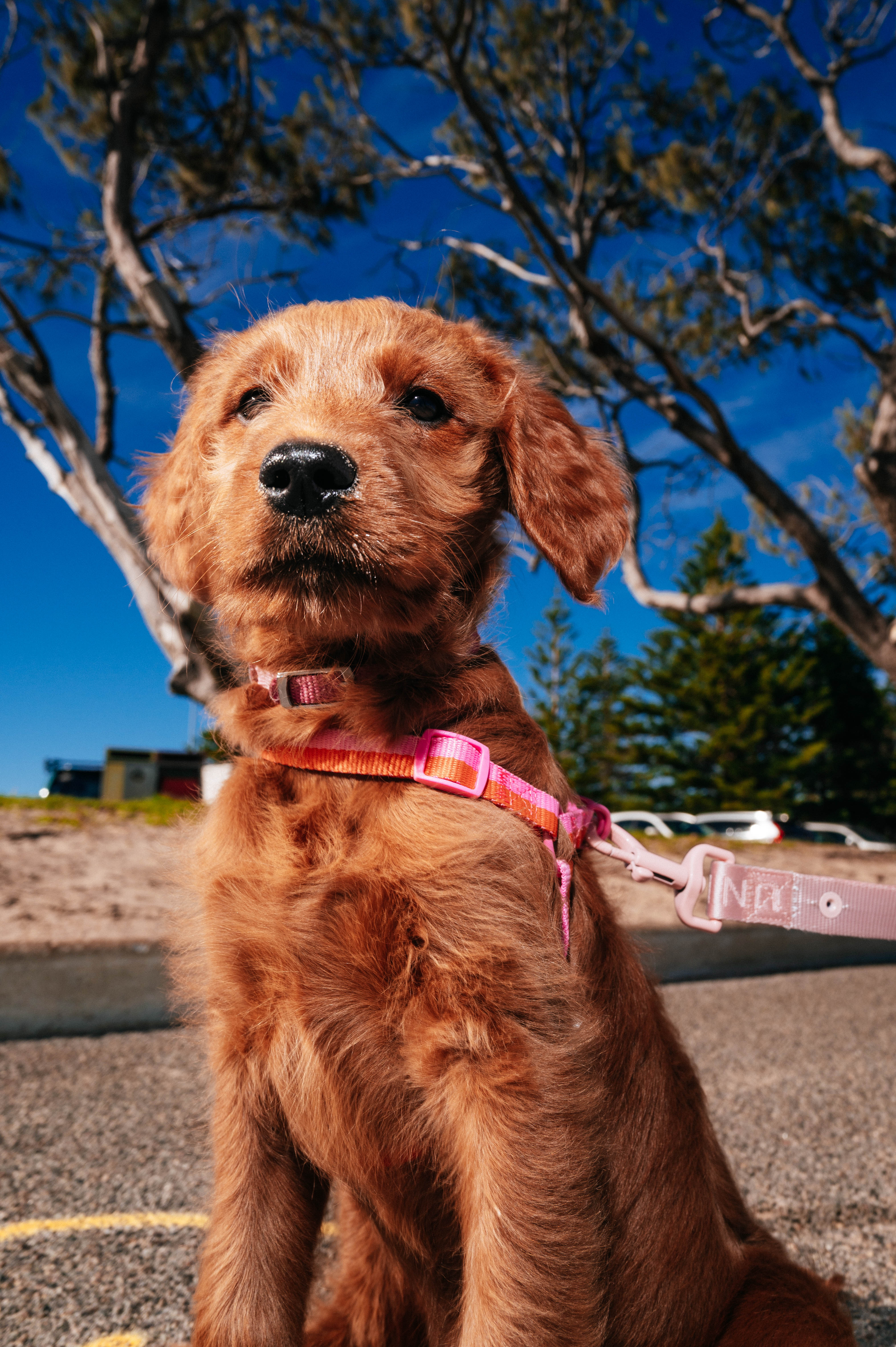
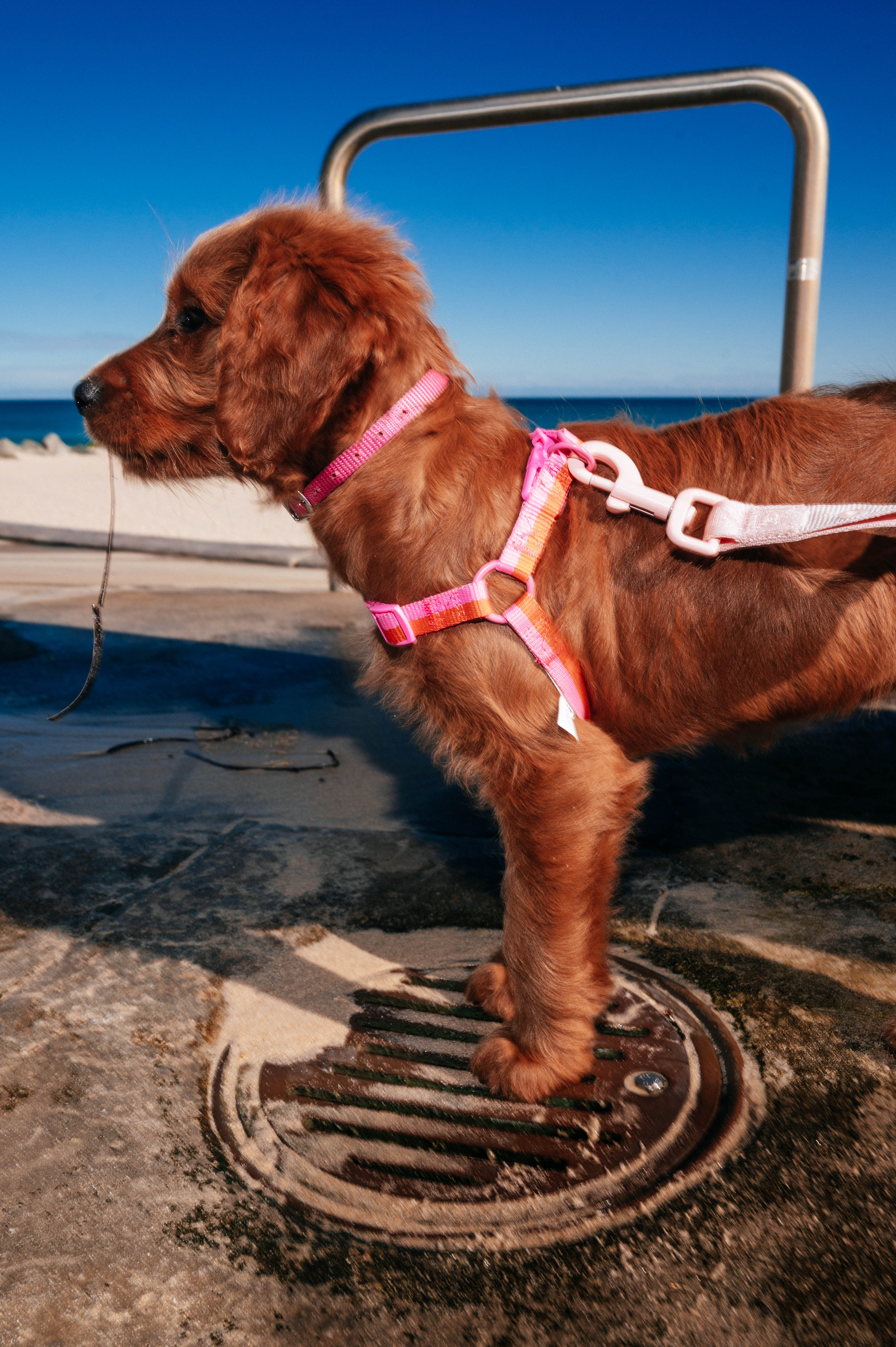
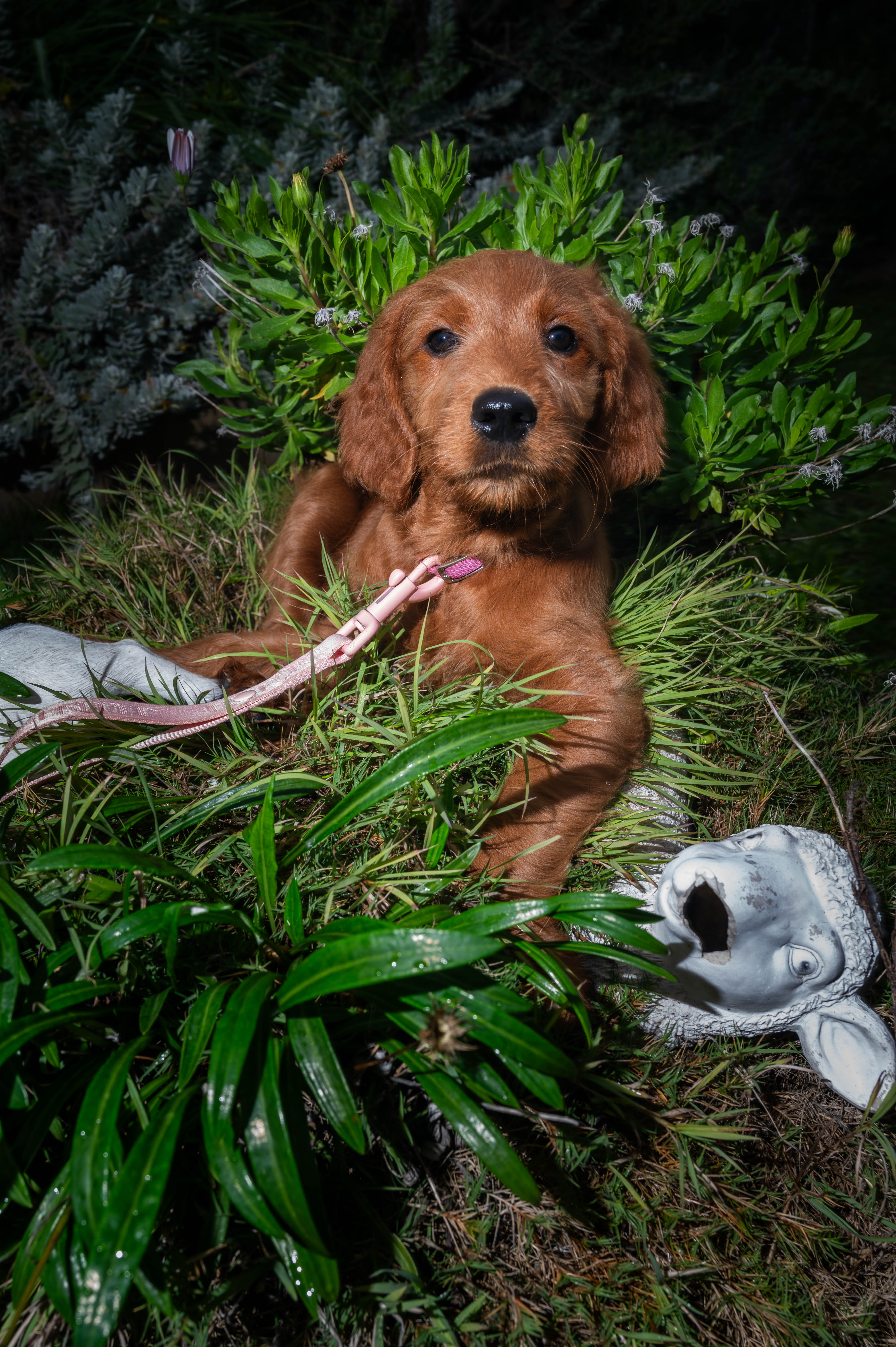
For the Gilden-style shoot, I needed to recreate his gritty look digitally. Using my Nikon Z6 with a 24-50mm lens, I adjusted the aperture to f/8 to capture as much detail as possible while keeping the background dark. I added a neutral density filter to manage the ambient light and used a powerful flash to highlight Juniper against the darkness.
In the end, instead of capturing a marginalized character with my uncompromising lens, it was more like me running backward while Juniper pounced and tugged at the lead, trying to chase the camera like it was some high-tech chew toy.
Juniper isn’t exactly tall, and Gilden’s method involves crouching and shooting from below, holding the flash higher to model the subject. With Juniper’s head just a foot off the ground, the whole process taxed my back and patience, and completely embarrassed my daughter as I backed down the path like a hunched paparazzi at the beach on a Sunday morning. Needless to say, I didn’t get many great shots. In that sense, I guess it was an authentic shoot – Gilden is known for being selective in curating his own work. Usually, I show the whole roll, but in this case, it’s better to showcase only a few that worked.
More Experiments
I tried to recreate the look at home. Gilden loves an eye patch and and a munted-mouthed look. I thought including a prop and providing some peanut butter could promote the masticated gurning that could typify that Gilden Crack Whore Aesthetic. Again, with limited success. Our model, Juniper, wasn’t cooperating, and it seems all the attention has gone to her head. She scampered, jumped, rolled, and did everything except stay put. I was too tired to work with such a privileged, unprofessional model. In the end, I was left with some subpar frames, and the eye patch I’d added for effect was discarded in 15 seconds.
It occurred to me that maybe the best way to get Juniper to behave was to be in the picture myself. So, I did a quick setup early one morning, trying to capture both of us. This approach was more successful, though trying to hold a dog and operate the camera remotely was tricky. I think I managed to capture some of that gritty style I was aiming for, channeling a bit of that “Hoboken Hobo” energy.
Check out the video for how I created a Dragan-style edit that upped the grit and contrast of the image of Juni to reflect the grimy urban streets of New York.
Perhaps I could revisit this scenario when a life time of pain and deprivation has left its indelible mark on her pretty face. In any case, I think I will keep at this because… even if I can’t channel the genius of Richardson and Gilden, I can at the very least end up with some slightly different and somewhat distinctive photos. And who knows? Maybe there is some more photographic magic to be mined from this process.
So, I finally got my hands on Nikon’s latest zoom telephoto lens, the 180-600mm f/5.6-6.3 Z. The big question is: is it a wildlife warrior, slicing through the wilderness to capture distant action, or just a hefty fella trying to compensate for its lack of sporting prowess?
Let’s start with the unboxing, which was honestly a bit underwhelming. All you get is the lens, some cardboard, and the usual paperwork. The lens case is a joke, more like a napkin than anything protective. It’s not exactly travel-friendly, to say the least.
But enough about the packaging, let’s talk about the lens itself. It’s big, no doubt about it, but compared to its competitors, it’s not that intimidating. Plus, it doesn’t extend when you zoom, which is a plus. As for ergonomics, it feels solid in my hands, though it’s definitely on the heavier side. Still, it’s manageable without a tripod, thanks to its balance and design.
The zoom range is impressive, and the short throw of the zoom ring makes it easy to adjust quickly. Overall, it’s a well-designed lens that’s comfortable to use, even handheld.
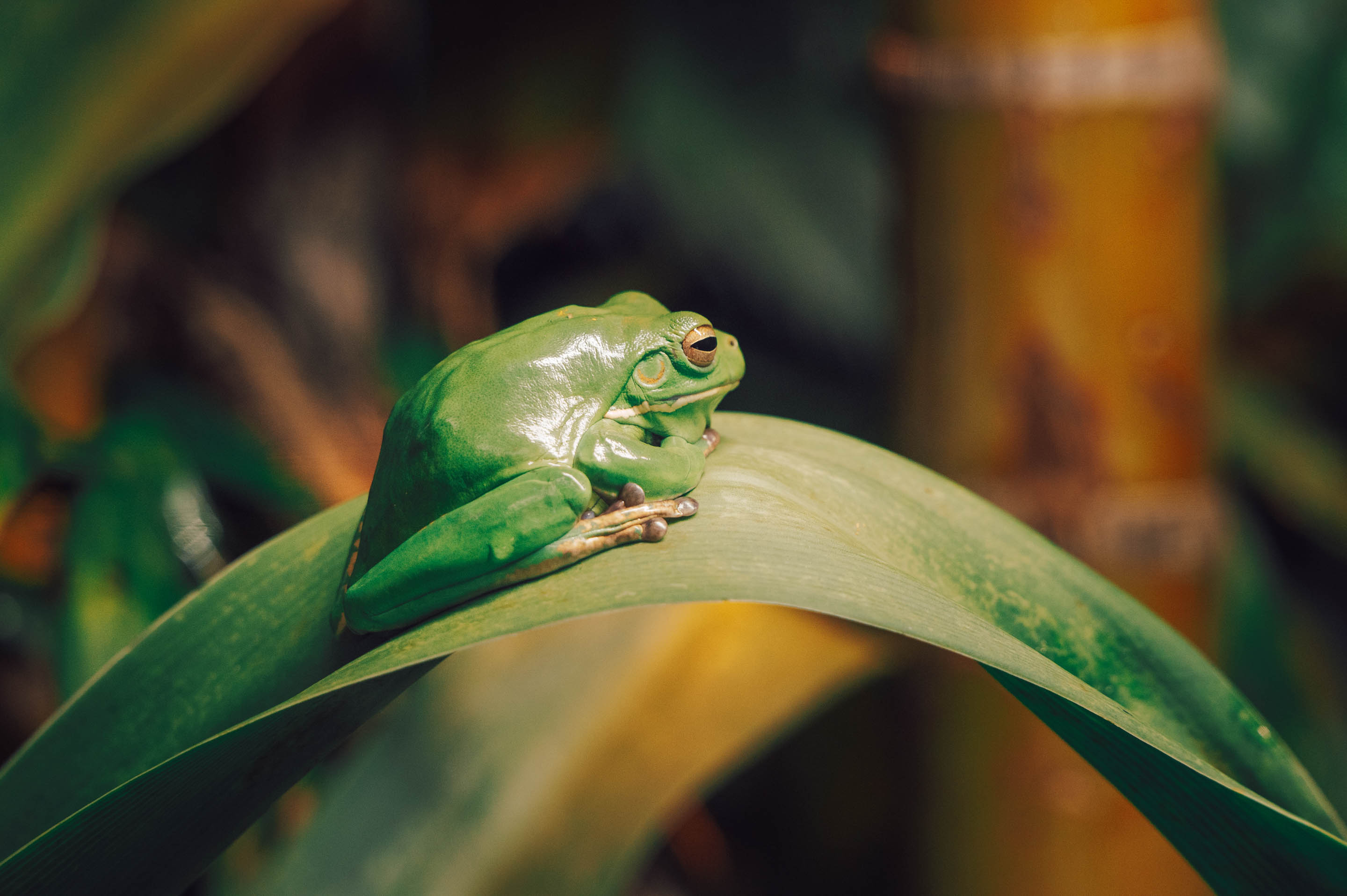
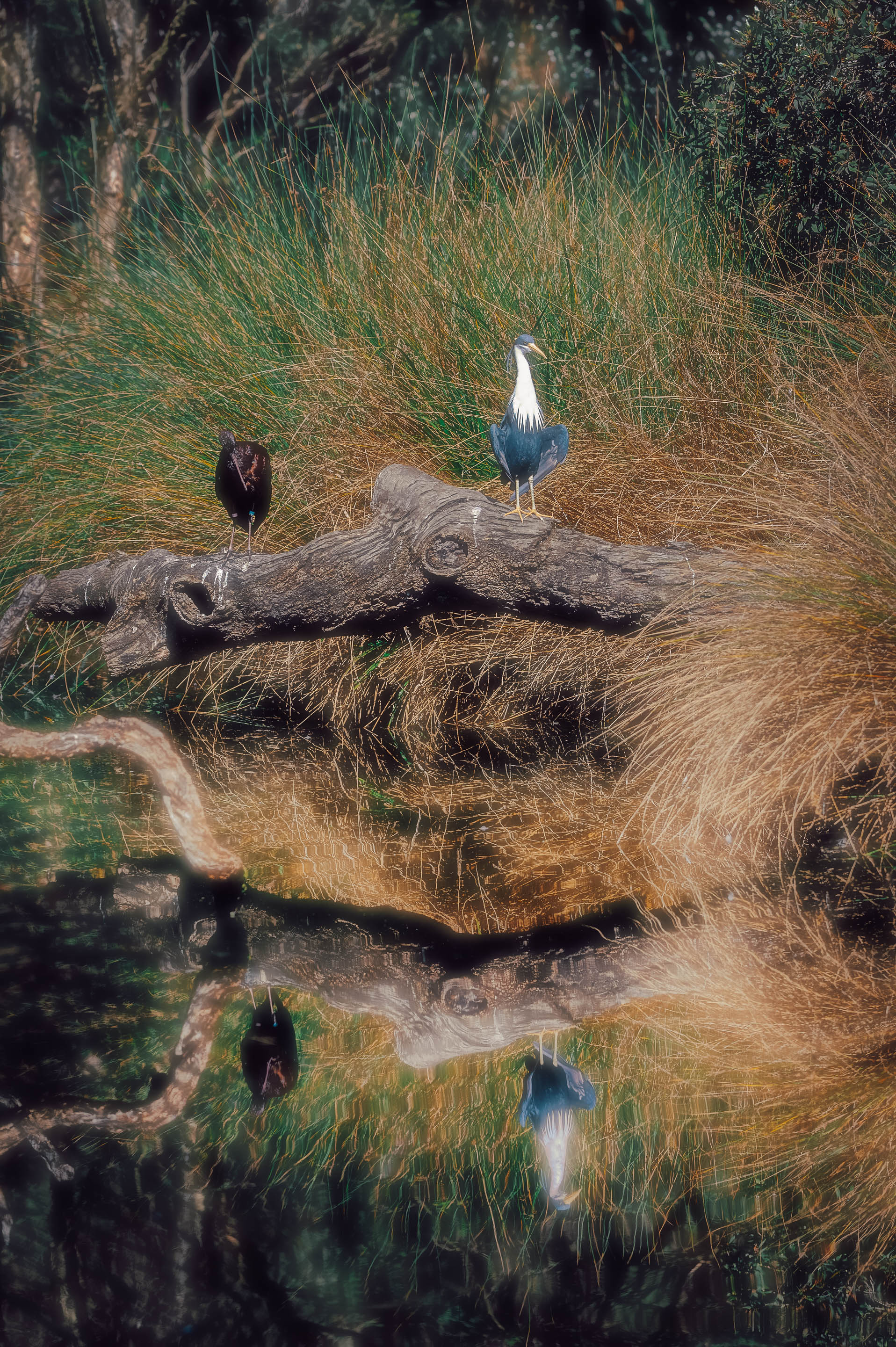
But the real test is in the field, or in my case, at the zoo. Hey, I’m not about to go traipsing through the wilderness. So, off I went to capture some wildlife action, and let me tell you, this lens didn’t disappoint.
How Good is the Lens?
After surviving various landscapes from the African savannah to the frozen Antarctic tundra, I’m here to share my wildlife photography adventures with you. I did find myself surrounded by children more than animals, though. Mixed feelings about zoos aside, Perth Zoo isn’t too bad, offering enrichment for its inhabitants, even if it’s with plastic containers instead of TV sets showing David Attenborough documentaries.
But enough about zoos, let’s talk lenses. The Nikon Z 180-600mm proved to be a reliable companion during my zoo excursion. Comfortably hanging it around my shoulder for hours, I was able to shoot handheld or on a railing with ease. The images turned out sharp and vibrant, as seen in the giraffe example. While I did some editing, minimal adjustments were needed thanks to the lens’s performance.
Telephoto lenses often lack flexibility in tight situations, but the ability to zoom with this lens was invaluable. Despite its smaller aperture, ranging from f/5.6 to f/6.3, I was pleasantly surprised by the results, even at high ISOs. My favorite shot, taken at ISO 11,400, showcased the lens’s sharpness and the Z 6 sensor’s ability to handle detail even at high ISOs. While extracting detail from white fur was challenging, overall, I’m impressed with the lens’s performance.
Still a Challenge
So, let me dive into the nitty-gritty of my experience with the Nikon Z 180-600mm lens. Focusing was the biggest hurdle I faced, and it’s not entirely the lens’s fault. The Z 6 camera, despite firmware updates, showed its first-generation mirrorless roots with its unreliable autofocus. I found myself constantly switching between autofocus modes, particularly struggling with pinpointing focus on small subjects at 600mm.
Once I got focus right, though, the results were stunning. The sharpness of the lens was apparent, perhaps even too sharp for my taste. I often find modern photography produces images that feel clinically perfect but lack soul. Shooting through glass or fences impacted image quality at times, but the lens still delivered impressive detail.
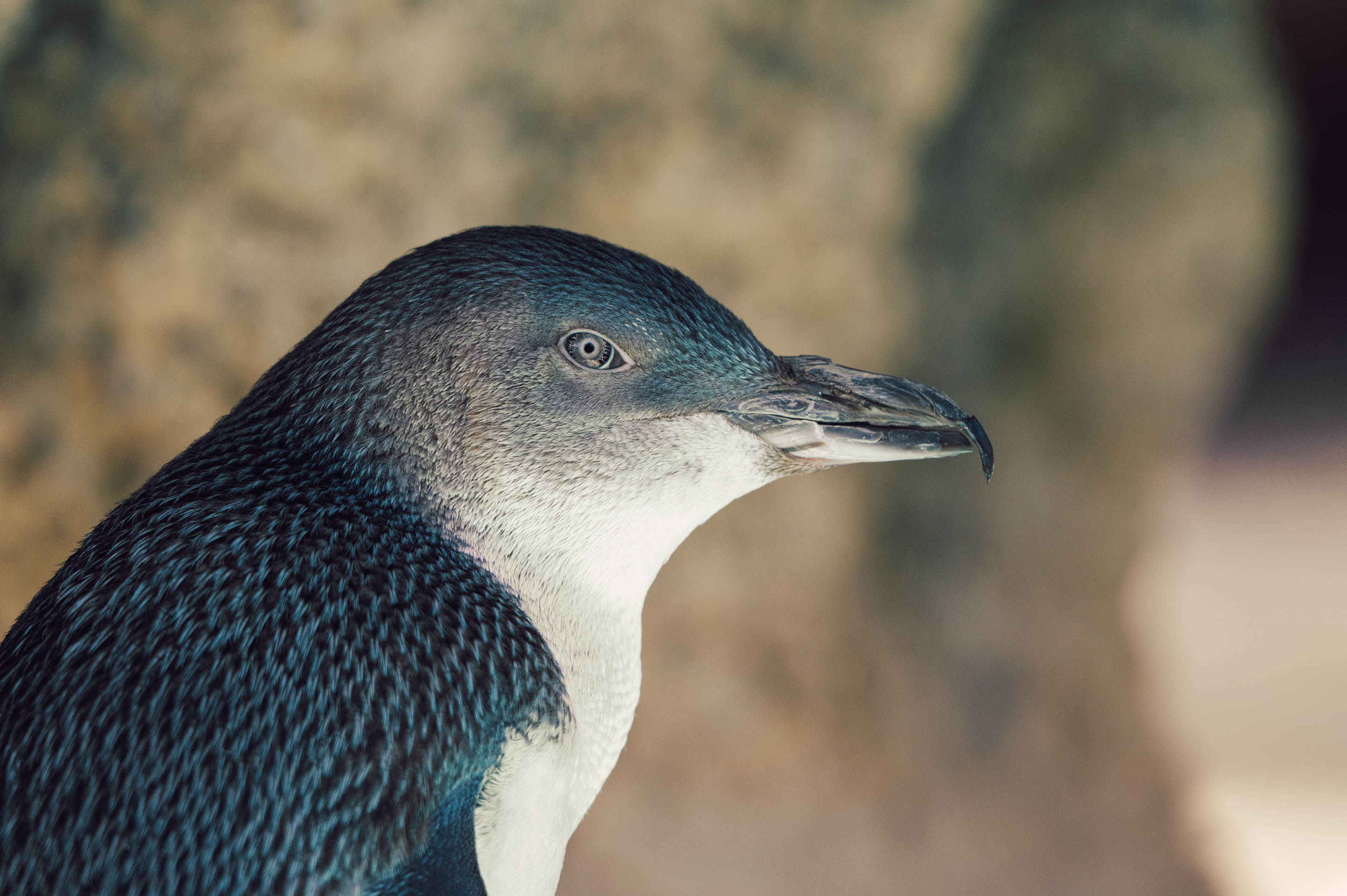
However, I did encounter situations where the contrast and crispness felt a bit overpowering. I had to employ post-processing techniques like the Orton effect to soften the harshness. Despite this, the lens still managed to maintain character, producing smooth bokeh and delivering sharpness where needed, like capturing the intricate details of a penguin’s iris.
While I’m not a wildlife photographer per se, I purchased this lens for my ongoing telephoto project focusing on ships along the Perth coast. It offers a significant reach and excellent stabilization, allowing me to capture stunning seascapes handheld. At $3k Australian dollars, it’s not cheap, but considering its performance and versatility, it’s a worthy investment.
In conclusion, this lens isn’t perfect, but it’s pretty darn close. I can see it becoming my go-to companion for capturing distant ships on the horizon—a testament to its sharpness, size, and overall performance.
Who doesn’t love unboxing videos, right? Well, in my latest video, I attempted to build up some suspense as I clumsily opened what wasn’t exactly a box. Instead, I revealed the Canon Prima 5, a forgotten point-and-shoot from 1991, known by various names like the Canon Sure Shot Max and the Autoboy Mini.
I snagged this camera second-hand for just AU$15, a real steal considering its potential. But the big question remained: does it work, and can I create art with it? Well, let’s dive into my initial impressions.
First up, some specifications, because nothing is more exciting than reading a list of bullet points about the features of an old point and shoot camera:
Lens: 38mm, f/3.5 with 3-point smart autofocus.
Auto-exposure with shutter speeds of 1/8-1/250s.
Integral flash. (Guide No: 9m at ISO 100.)
ISO range: 25 – 3200 (via DX code – 25 Non-DX)
Auto-load, wind and rewind of DX-coded film.
Dimensions: 125x68x43mm.
Weight: 245g (with battery)
Power: One 3V CR123A lithium battery.
A version with an autodate function was available.
Nothing particularly exciting, let’s face it, but it it does shoot up to ISO3200 for DX Coded film and while the f/3.5 lens is quite modest, it’s better than most zooms and unlike zooms, you know with a prime that the quality will be tuned to that 38mm focal length. To really test this camera, I need to run a roll of film through it. Colour film is like gold dust these days, and the prices are soaring. Yet, armed with Kodak Colorplus 200, I was ready to test this camera’s capabilities.
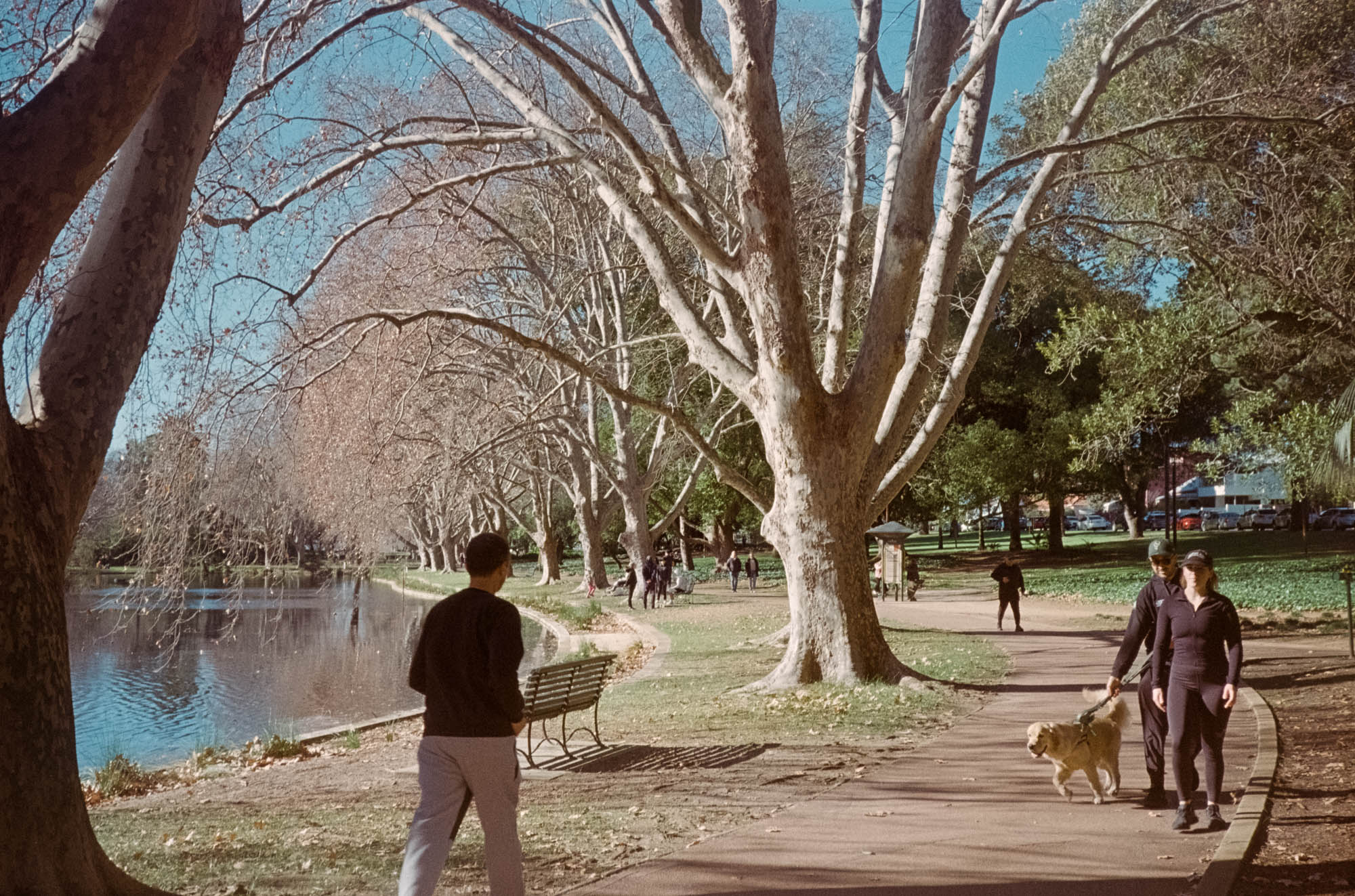
Now, onto the shots. From capturing leaves backlit by sunlight to exploring human interactions in a park, I attempted to weave narratives through my photographs. Whether it’s a solitary figure masked by foliage or a couple on a bench, each image tells a story, prompting viewers to ponder human existence and relationships.
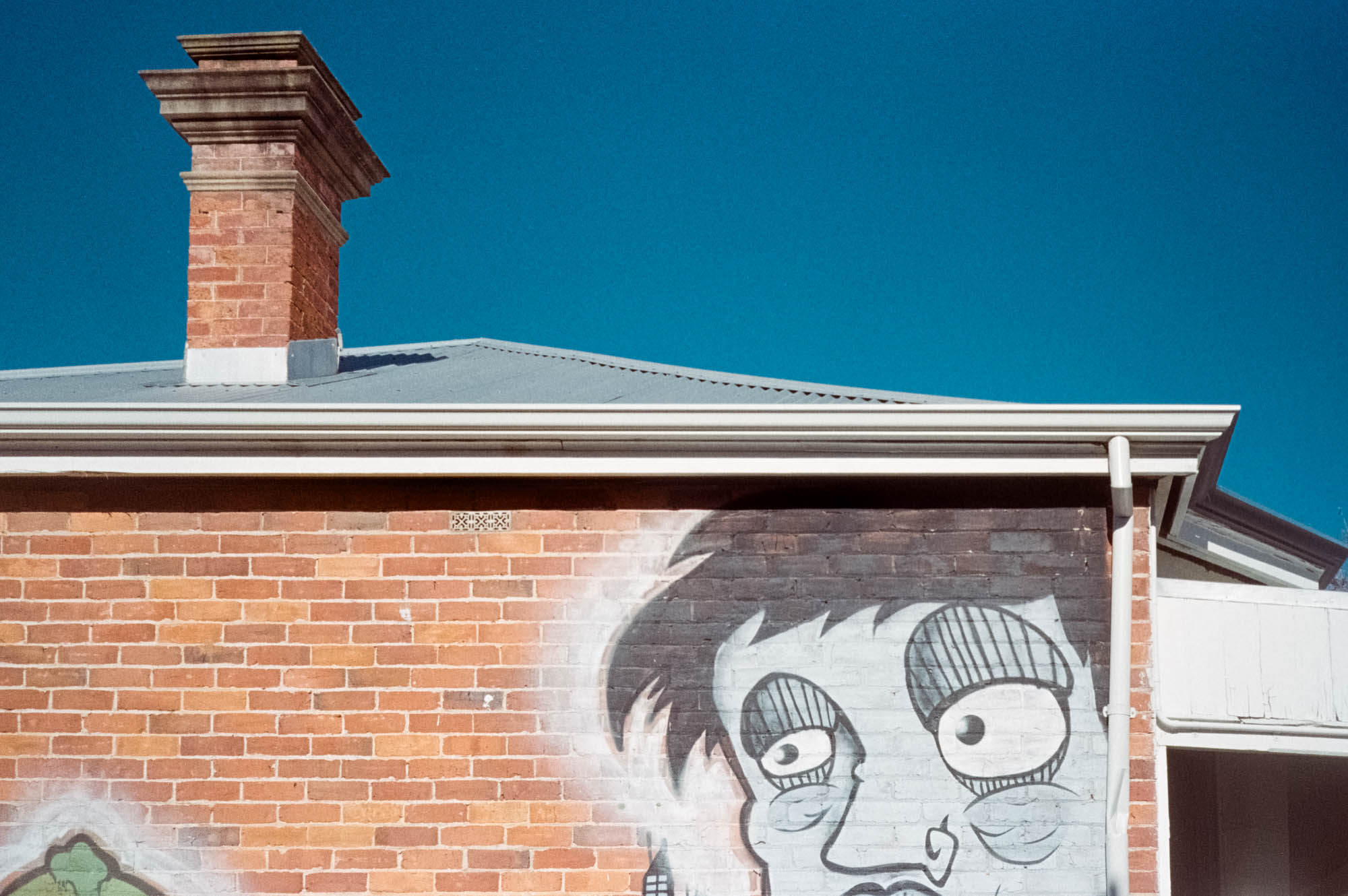
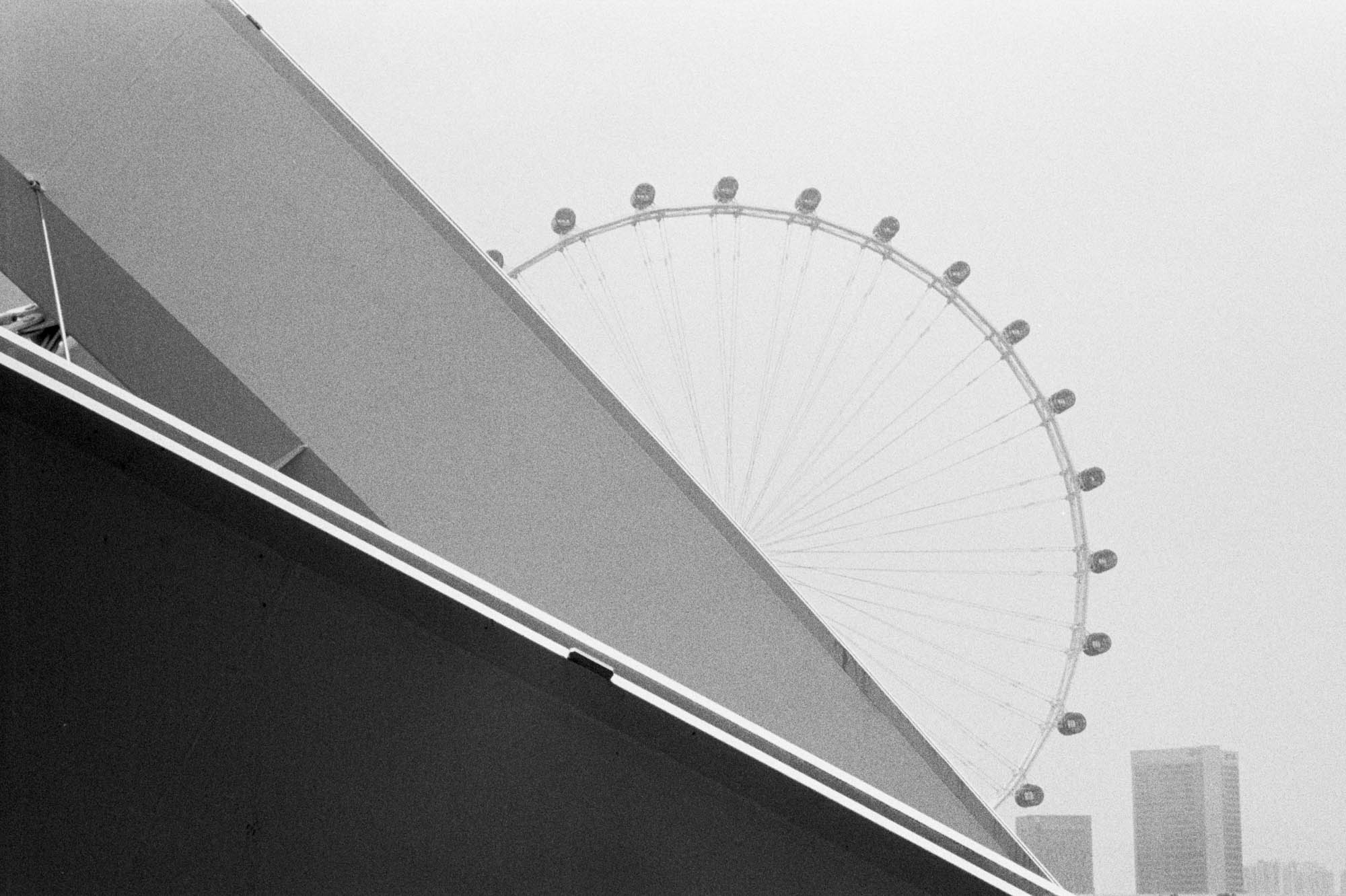
Moving from nature to urban landscapes, I sought to celebrate human resilience and the quest for enlightenment amidst the complexities of city life. Through frames within frames and minimalist compositions, I aimed to provoke thought and reflection.
Yes, you can make art with it. Or at the very least you can reflect on your artistic intent as you intersperse random snaps with pretentious musing.
Despite its simplicity, the Canon Prima 5 impressed me with its sharpness and reliability. Sure, it has its quirks like occasional flares and a default autoflash setting, but its performance outweighs these minor drawbacks.
Now, the big question: is this camera a hidden gem or just another addition to the plastic pile? I’m leaning towards the former, but I’m eager to hear your thoughts. Do you have any recommendations for budget compact film cameras? Let me know in the comments below.
As for me, I’ll continue experimenting with this camera while keeping an eye out for other photographic relics. Who knows what hidden treasures I might uncover next?
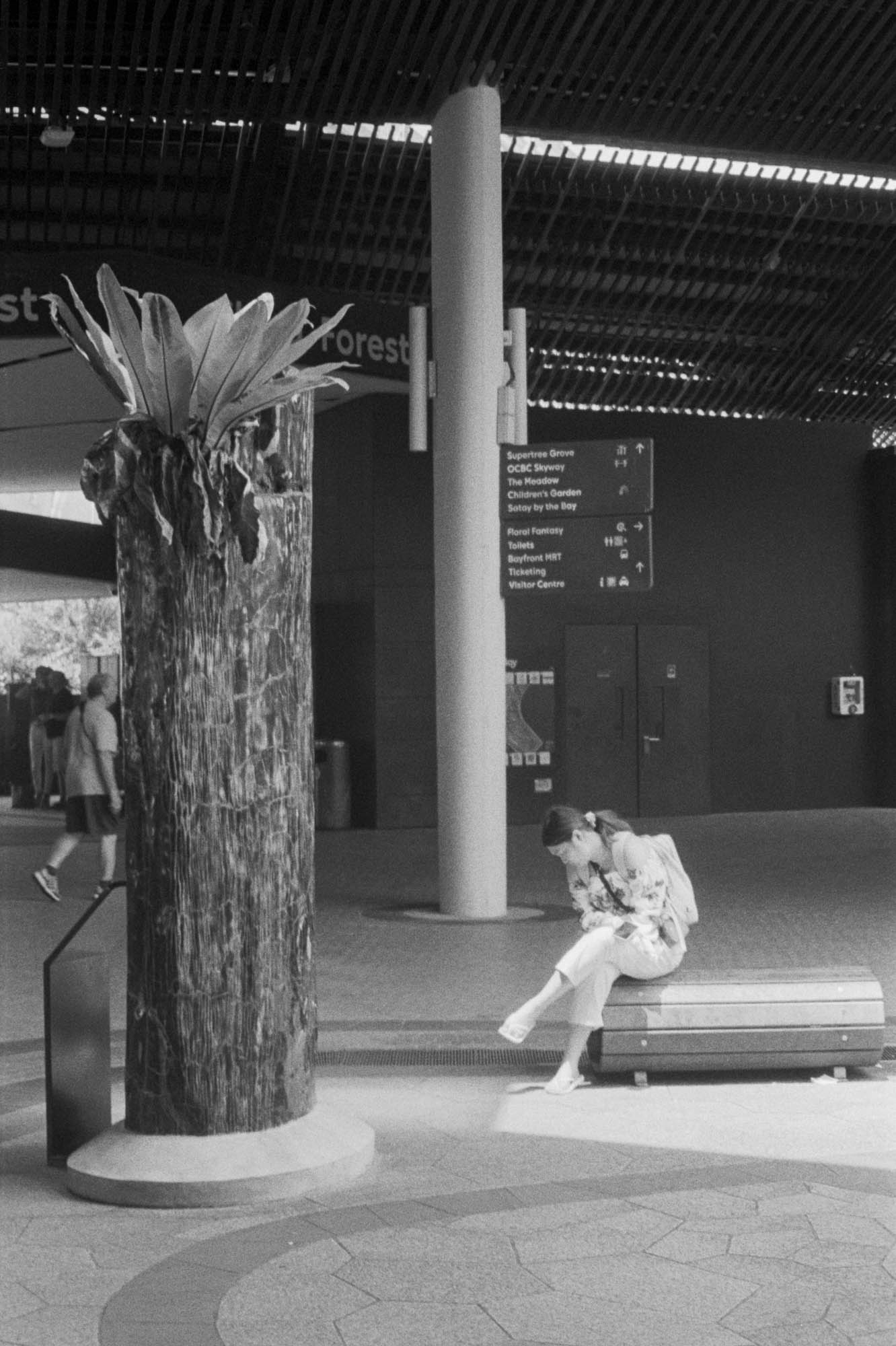
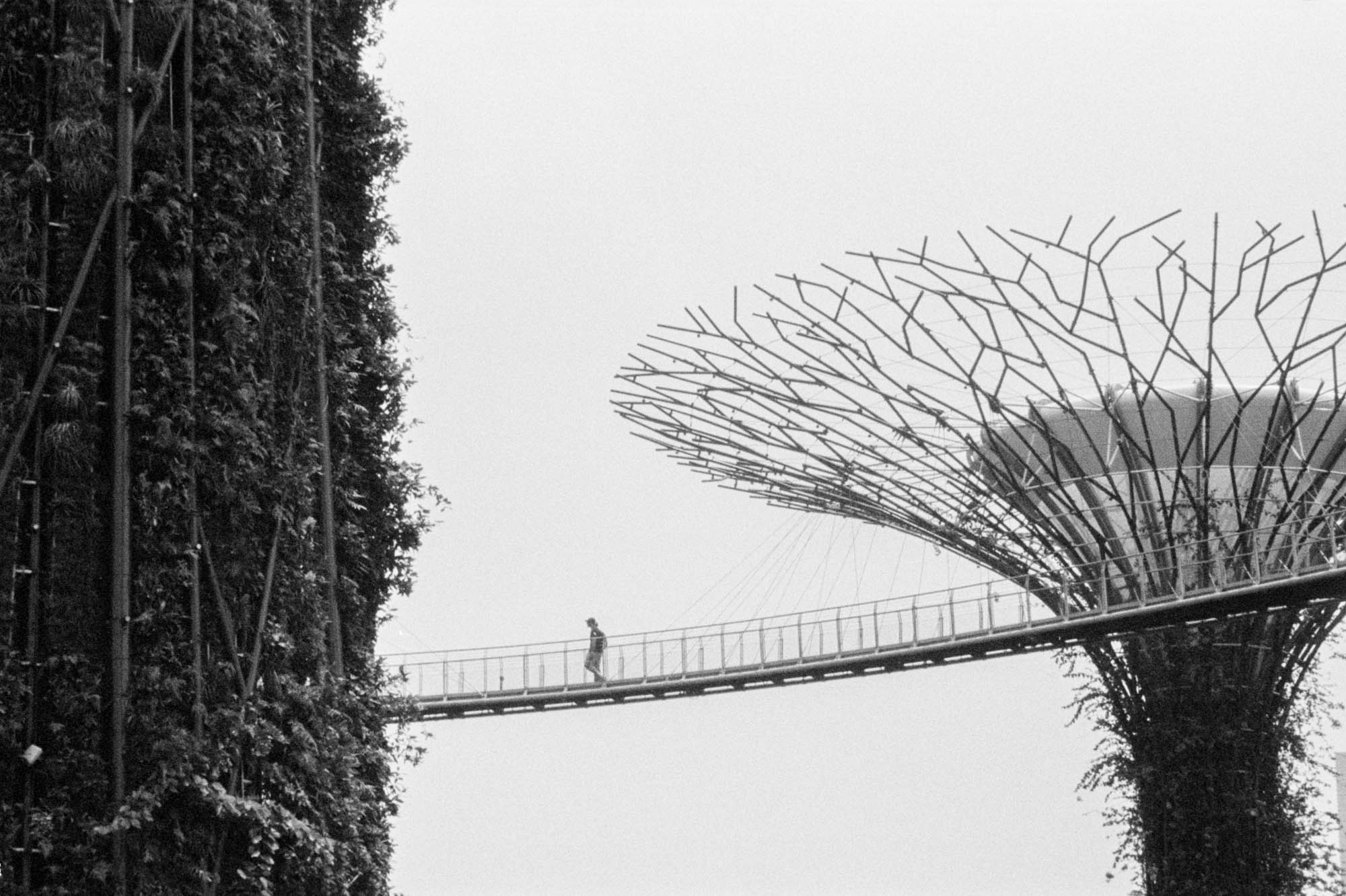
Welcome to he Pentax 120SW – a tiny do-everything-for-you point-and-shoot from right at the time where everyone started buying digital cameras. To test this camera out, I decided to explore the Gardens by the Bay area of Singapore to see if I could experience the wonder of nature.
The Wonder of Nature
I think you can probably guess that the byline of the above video is somewhat sarcastic. Gardens by the Bay is as natural as a terra-formed Mars colony, with microclimate pods nestled among metal trees, all in the shadow of Marina Bay Sands hotel.
Most of the nature exploration involved photographing the topography and the tourists that milled around the area – wildlife of sorts, I suppose, just not the normal fodder for a David Attenborough documentary.
Using a mix of Ilford HP5 and Kodak Colorplus 200, I nevertheless put on my virtual pith helmet, strapped on my scythe and cut a swathe through the metal and concrete forests of Gardens by the Bay.
About the Pentax Espio 120SW
Well what’s to say? It’s a point and shoot.
It has a 28-120mm F5.6-12.8 lens, 6 elements in 5 groups, autofocus with focus lock, and with a minimum focus of 0.5m. It’s shutter speeds are from 2-1/360s and it has a bulb mode that’s 1/2s-1min though if it came with a remote shutter, I don’t have one so I’m not sure how useful bulb really is.
Like many point-and-shoots, this one is small and it’s light. It weighs 190 gr. without battery.
Pentax Espio 120SW
That, and it’s sweet sexy looks ,are probably it’s main attractions. Apparently, other than the film door it has an aluminium body. I don’t know though. It tastes like plastic to me. I don’t know how much this cost either but it was definitely positioned at the ‘luxury’ end of Pentax’s plastic point and shoot lineup.
in 2001 it won the Technical Image Press Association’s compact camera of the year award. But given those times, it’s probably like winning ‘Best new DSLR’ in 2023 when the whole world has gone mirrorless. You do get a really pretty orange backlight on the LCD though.
One of the problems is that it’s a Pentax. This was a company that churned out compact camera models like barbecue sausages and it’s not like there was ever much cachet in owning one. I have several Pentax point-and-shoots in my cupboard. I also have a few broken ones now hidden in draws that I might sell on ebay some time labelled ‘top mint’ but with ‘please read’ asterisked and in small print.
The fact is that there were so many camera versions, some good, some bad. How do you know if you’ve got a decent one?
Well you may have already made up your mind on this one but I think to make an accurate judgement, it’s only fair that I use some of that money I’ve been saving up for my kids education and blow it on a roll of colour film. Seriously, the things I do for science. And nature … obviously. Now this was Kodak Ultramax. Still a fast film at ISO400 but still a challenge for such a small aperture zoom on a cloudy day. BUT if Livingstone could conquer Everest with nothing but a woolly bobble hat and a block of Kendal mint cake then I could take on the challenge of Marina Bay with my trusty Pentax. Actually I might have got some of that detail wrong but that’s what happens when you trust Chat GPT to write your reviews for you.
A Slow-Lensed Camera
The Pentax Espio 120SW is perhaps not the best camera out there in terms of specifications and it doesn’t have a full array of modes and features. There’s no portrait, sport mode or dedicated macro facility here. You really have very little control.
You do get 25-3200 ISO, automatic DX coding, self-timer, automatic film advance, infinity and spot AF modes.
And for what it is, it’s capable of producing great results. It can meet the resolution of film and my favourite photos show that this has a lens that can be both sharp and contrasty. I didn’t really see much flare either thanks to it’s ‘super multi coating’.
If you use it properly it delivers good results. Unfortunately I bet back in the day there are a lot of people who have used this camera and wondered why the images came out blurry. That probably comes down to the lens. It has a maximum aperture of f/5.6 at 28mm down to f/12.8 at 120mm. That makes it tighter than the proverbial cat’s anus, though I haven’t actually done that test myself and I don’t know any proverbial feline proctologists.
You only get a focus confirmation or a warning light to tell you to use flash in the viewfinder and that’s not much feedback. It’s definitely capable at 120mm as shown here but where my shots failed it was usually because I was being overly optimistic of my ability to hand hold. Even with 400ISO, a dull day in Singapore meant that telephoto and slow shutter speeds conspired to give me soft results. Don’t bother putting 100 speed film in this unless you’re prepared to shoot with the flash turned on.
But it’s Sharp
On a sunny day like we have here in Australia I still managed to get great results. Finishing the colour roll, I was able to get really vivid photos like this.
Admittedly, I might have underdeveloped a bit, which often gives colours, contrast and grain a bit of a boost but if you look here, you can see that it produces pleasing images.
As with any example of this kind of camera, though, you have to accept a certain randomness in the results it produces. There was no way I could tell the camera where to focus in this photo and while having the ability to at least spot focus fix on infinity focus is nice, the end results can be a bit unpredictable depending on the film or quality of light. I wasn’t really able to get it to produce any bokeh but that’s hardly surprising. I could get some subject separation if I shot close up and what I did see in the out of focus areas wasn’t ugly. It just wasn’t particularly distinctive.
So what’s your experience with cameras like this? Have you owned this particular model and what do you think of it? Some point and shoots can be ridiculously overpriced these days. I’m looking at you Olympus Mju II.
If you’re prepared to slum it at the ugly end of the Pentax range, though, you might find a bargain. There are definitely hidden gems out there if you are prepared to be patient.
But let me know your thoughts. From my perspective, if not the best tool for the job, this camera isn’t the worst. And like your phone it’ll give you a photographic experience that you can put in your pocket; just with this one, it’s actual film.
My advice, though, use a FAST film so you can make the most of the sharpness of the lens stopped down and give you a bit ore leeway with hand holding. Or use flash, which on these things is… ‘a look’ and who knows? Maybe one I’ll experiment with a bit more on a future review.
This is something of a tongue-in-cheek post. Don’t expect an in depth discussion about whether photography is art. I think that debate is settled now. I’m also not going to claim that all photography is art – my snapshot of a brick wall is not the same as Jeff Wall and my Martin is definitely sub Parr.
But if I learnt anything through years of getting my PhD it’s that stringing together a few well chosen quotes can be a adequate substitute for a coherent thesis.
What is Art?
It was Aristotle who said ‘Art completes what nature cannot bring to a finish. The artist gives us knowledge of nature’s unrealised ends.’ And that’s always resonated with me. Firstly because it makes us sound almost Godlike in that we’re somehow improving on what’s actually there. But secondly, it acknowledges that nature is messy and complex and there’s something about photography that is consciously selective, reductive even and that rationalisation can make you see things in new ways.
I know in my own photography I find myself constantly trying to remove things from the scene, to impose my own need for order on it. It’s probably why I photograph the built environment more than nature. Nature is pretty chaotic and meaningless really.
So Art can transcend nature but but what does it tell us? Is it a harbinger of truth? Picasso said, ‘Art is a lie that makes us realise truth’. But then Theodore Adorno argued, ‘Art is magic delivered from the lie of being truth.’ Then again, Marcel Duchamp characterised Art as, ‘the missing link. Not the links which exist. It’s not what you see that is Art; art is the gap.’
So Art is everything and nothing, a truth that lies and a lie that is true. You’ve got to wonder if artists are taking the piss, probably literally in Duchamp’s case given that his most famous work is a urinal.
But like Duchamp’s fountain, there is something about art that lasts beyond the moment in which it was created.
According to Hypocrates, Art is long, life is short. ‘Ars Longa, Vita Brevis’. The work stands beyond the person that makes it. They are the creative spawn, the legacy that we leave for others.
Speaking of spawn, over the years, I’ve I mated with lots of cameras – I’m kind of a photographic floozy, a streetwalker, literally, making picture babies, all with various DNA combinations and an inherent lack of consistency and style.
And it makes sense that the camera you use is going to influence the end product. Oils and a spatula are going to make a different picture than a brush and watercolours. Similarly, the work you produce is a reflection of where you are, when you are and who you are. It’s the interplay of light, subject, and your own life and vision.
Edvard Munch is quoted as saying, ‘What is art? Art grows out of grief and joy, but mainly grief.
Yes, I have suffered for my art. And now it’s your turn.
But first, let me introduce you to the camera. Bertholdt Brecht supposedly said, ‘Art is not a mirror held up to reality but a hammer with which to shape it.’ Today’s hammer of choice is the Olympus C-4000Z.
About the Olympus C-4000 Zoom
This arrived 2002 and is not the first in its class. It followed the very successful C-2000, C-2020, and the C-3020Z, that came a year before this one. It also has a slightly higher end stable mate the C-4040 Zoom that has an f/1.8 lens.
The Olympus C-4000 Zoom isn’t the first camera of it’s kind but follows a trusted design formula
The C-4000 was US$499 on release, I picked this one up 2nd hand for AU$20. That makes me smile, though I’m still looking for that leica in my local charity store.
Back to the lens, though. No f/1.8 here. This one goes from f/2.8 to f/11 and has a 32-96mm equivalent 3x zoom, 3.3x digital
It has a four megapixel CCD sensor. That sounds primitive but it was 25% more pixels than the previous model that came out just the year before and 4mpx can easily produce 14×11 inch prints. Let’s face it, how many pixels do you really need for Instagram? The intriguing thing about this sensor is that it’s a legacy CCD sensor rather than the more recent and common CMOS technology.
Some people will tell you there’s a magic to CCD sensors. And theoretically they could be right. Any common-all-garden photonic physicist will be able to tell you that Charge Coupled Devices are known to produce high quality, low noise images. The photosites are packed closer together because they don’t have individual transistors, which supposedly improves light gathering.
CMOS sensors or Complementary Metal-Oxide Semiconductors as they’re known in the sensor engineering department of ACME Industries are a lot cheaper to produce and use a fraction of the power.
The fact is, the CMOS sensor in your phone is likely to blitz the one in here but there are those that still talk about CCDs as being more ‘filmic’ in the same way I guess as vinyl records are warmer and more soulful. We’ll see.
In terms of exposure, this has a program mode and 6 scene settings, allowing various combinations, such as portrait, sports and so on. You can change the metering between centre weighted, spot and multimetering, which as far as I can tell has the camera do multiple readings in spot mode and then averages out to get the best exposure for the scene.
But it’s really quite advanced in that it also has Aperture and Shutter priority modes as well as full manual exposure including manual focus. You can also save your settings to four custom modes.
I do think there’s a use case for setting up custom mode where you set your aperture and lock focus zone for street photography. I’m not sure you’d want to be making lots of changes, though, unless you’re keen to dive into the treacly slow menu system. Still it’s it’s nice to have the flexibility.
In manual mode you can go from 1/1000s all the way to 16 seconds, 1 second in Program mode
This can shoot close up, with a Macro Mode of 0.2m-0.8m and Super Macro Mode 0.8″ to 8″ 2.0cm to 0.2m
As you could tell from the intro of this video, it can also shoot video, albeit at postage stamp sized and without audio. That was me doing some very clever editing there.
One nice feature is it has an optical viewfinder with diopter control. This wasn’t just a throwback but actually necessary given the low quality of the LCD screen.
The screen also vampirically sucks the life out of the battery, which is a shame because of the quirks of this camera is that it’s a bit faster in focusing and taking shots when the LCD screen is on than using the optical finder.
This is NOT a speed demon though. It takes seven seconds to start up and then a throws a fit because you left the lens cap on – that’s going to cause you to miss shots. You could be framing that decisive moment of your baby’s first smile and by the time the picture’s taken, he’s 6ft tall and giving you the finger while telling you he impregnated the babysitter.
Let’s call this a contemplative camera; one that causes you to pause and reflect a little, maybe make a cup of tea, have a shower, watch Gone with the Wind before it’s good and ready to let you make Art with it.
It has a range of built-in flash has modes for Auto flash, Auto flash with red-eye Reduction, Fill- flash, Fill-Flash with red-eye reduction, Flash Cancel and Slow Shutter Synchronization Flash (1st curtain effect).
Connectivity
Let’s broach the Pachiderm in the pantry. This thing takes Smart Media Cards. These were brought to the market by Toshiba in 1995 and it’s actually quite a cool format. Wafer thin, it makes Compact Flash looks prehistoric in comparison. It was really designed as the successor to floppy disks rather than specifically for cameras, and originally they called it SSFDC or Solid State Floppy Disk Card. They obviously listened to the marketing department. Smart Media is a bit more catchy.
By 2001 nearly half current digital cameras used Smart Media but it was quickly replaced with the equally obsolete XD, before SD cards came along and just wiped the floor with them all.
Sure, you can find Smart Media readers but at 4 times the cost of the camera I wasn’t going that way.
But this has a nifty trick up its sleeve. USB!! Ok, Type B mini USB but USB nonetheless. Type B USB Mini is the sad divorced uncle of USB Connectors, once dominant but now relegated to drunkenly dancing at the nephew’s wedding and hitting on the bride’s Auntie.
Like drunk uncles, though, you can still find USB cables everywhere. Grab one, plug the camera in, turn it on, and instantly your camera become a mass storage device and you can happily drag down the files at turtle neck speed.
Which brings us to the next issue. It’s just as well this is only a 4mpx camera because you don’t get much storage on a Smart Media card. No raw, just a range of JPG settings including a ‘super high quality’ setting that artificially scales up the image. I guess we’ll see how good that is.
The only other alternative to JPG is uncompressed TIF. On the original 16mb card this came with you could fit ONE tif image. So not exactly practical and they never made Smart Media bigger than 128mb.
One of the biggest issues for obsolete cameras of course is keeping them powered. Fortunately this has another trick up its sleeve, taking standard AA batteries or two CR-V3 battery packs. I stuck with AA. They don’t pack as much power but seemed to last long enough for me when I wasn’t shooting from the screen and again, I’m not going to shell out $40 on batteries for a $20 camera.
But how does it fare as an Art-making device? To test it out, I took it on a dog walk and shot a few pictures around the house and the garden. My garden is itself a shrine to the Greek God of Art, Hephaestus. According to Wikipedia he was born congenitally impaired and grew up to be lame. I can certainly relate to that last part. Just as Zeus once banished Hephaestus from Olympus to live among human for being too ugly to be a God, I wandered the mortal plane of the garden tiptoeing through the dog turds and detritus to find pearls of artistic beauty to share with you.
Are These ‘Art’?
Verdict
Well, I feel that even the act of sharing this with you has been Art. My process laid bare before you, inviting you to see the world through my eyes, the pain and beauty of life rendered powerfully through my Olympus C-4000z
But what of this camera? All pretentiousness aside, it’s actually pretty good!
Around 2001 was when things really started to take off for digital photography and by the turn of the century I was already shooting less film. My kids were born in 1999 and 2000 and I remember using a borrowed Apple QuickTake camera to snap some photos of my eldest when she was newborn. I’ve lost the photos now but I don’t remember them being very good.
But this is actually usable; not just for 20 years ago but even today. It is not perfect of course. One thing this doesn’t give you is much room for editing. The resolution and dynamic range just aren’t there.
The Superhigh Res Mode gives a modest bump but like digital zoom it’s interpolated. Taking a standard file and increasing the resolution to about 3200×2400 in photoshop just using automatic sampling, you get as good if not better results.
The same goes with shooting TIF too. It’s definitely not a raw file. The sharpness and contrast of the image are baked in. Here you do see a bit less artefacting in the TIF file but I’m not sure it’s worth the extra file size Applying my own Velvia-like preset on the files produces equally ugly results with either.
You’re really best of just living within its limitations and getting what you can in camera rather than trying to do anything in post.
Strengths
Colours. They have that Olympus punch – nature amped up – which of course is one of our definitions of Art. Whether it’s the CCD sensor or not, I don’t know. I have always loved the colours out of my Olympus cameras.
Lens. Sharp enough and with a decent zoom range, it makes for a versatile camera. It does get a bit soft in the corners, there is some chromatic aberration, and a hint of barrel distortion (easily fixed) but the pictures have a presence about them that I think isn’t just the sensor.
Ergonomics. It feels good in the hand. Everything is kind of in the right place. This ended up being a popular form factor for lots of cameras of this generation.
Usable in 2022 – as long as you have a smart media card. You won’t have to worry about obsolete batteries and connectivity. You can actually put in some AA batteries, go out and shoot and then easily transfer the photos over to your computer.
Weaknesses
Smart media, obviously. In reality, it will be one TIF file or a handful of JPGs you’ll be copying over since that’s all you can fit on the 16mb card this camera came with.
Speed. Not exactly a sports/action camera or suitable for wildlife. Unless that wildlife is roadkill.
And the optical viewfinder, while nice is not very accurate. At least, that’s my excuse for the crappy framing.
Dynamic range. I didn’t bracket here but I would certainly do that if I was shooting any high contrast landscape scene.
4mpx. This is obviously a recognised issue but the ‘super high quality’ interpolation doesn’t really do anything that enlarging in Photoshop wouldn’t produce.
Summary
As long as you subscribe to Oscar Wilde’s comment that ‘all art is quite useless’ then today I have resoundingly made Art. He was, of course, referring to the emotional impact of art rather than its utility, but it’s still a phrase I relate to. I am after all, a living picture of Dorian Gray. Somewhere in a photo album there’s a trapped young handsome version of myself squeaking to be let out.
Let me know your own thoughts. What is Art to you? Do you have an old camera that you still use and have you taken any photos with it that you would call art?
I will leave you with one quote.
Ed Ruscha in 2003 said, ‘Art has to be something that makes you scratch your head.’ Whether that means lice or dandruff can be art, I’m not sure but if you have made it this far and are scratching your head then at least I can relax, happy that I have once again climbed the photographic aesthetic pinnacle and am looking down on you with the benign but patronising gaze of true artist – knowing that perhaps I have added just a little bit of beauty into your lives and given you some kind of appreciation of what true Art is.
I had a brief holiday in Seoul, South Korea in October 2022 and decided to make the most of a free morning by shooting some Kodak Vision3 500T motion picture film stock around Ihwa Mural village and the ancient city wall that skirts side of Mt Naksa.
Those of you pockets and a love of photographing petrol stations at night will know this film as Cinestill 800T.
But 500T is the original, the wellspring from which Cinestill was born, complete with the remjet layer designed to provide lubrication as it’s fed through a movie camera as well as antihalation, antistatic, and scratch protection.
It’s also known to foul up automatic film processors so you don’t try to get this stuff developed at the local chemist, you have been warned
If you’ve ever shot Cinestill 800T you’ll be familiar with the qualities of this film – high speed, sharp, low grain but because they remove the remjet layer before you shoot it, you get this love ’em or hate ’em red blooming halations in highlights of the image.
It’s a look. A pretty well documented look by anyone who loves hanging out around petrol stations at night. It’s a bit like how dressing up as a squid game guard for halloween is a look – kinda cool when you see it for the first time but then it just gets old and cheap really quickly.
MY motivation wasn’t to lurk in neon shadows. It was simply to save money. My motivation LOTS of things in life is simply to save money but that’s an article for another time. I guess the question for me was… in this dystopian nightmare of film shortages and exorbitant prices, where people are literally killing each other on the streets for a roll of Kodak Colorplus… well ok, figuratively not literally – it’s not Kodak Portra 800. But that’s the question, isn’t it! is Vision3 500T a viable alternative? Will I get Portra in plain packaging or a steaming membrane of slime coated celluloid with all the quality and resolution of 1970s vhs porn pic that’s been duplicated too many times? Yes, I was 16 in 1984.
It was time to find out.
I grabbed my Nikon FE film SLR and my Nikkor 35-200mm manual focus lens and headed out on the South Korean Subway to Ihwa Mural village – just one change and a few stops from where I was staying in Myeongdong but a place with a very different vibe. Nestled on the side of Mt Naksa, it’s a fairly quiet residential area, skirted by the ancient walls of the city and now fairly well known for its street art, which was painted as part of an urban renewal project in the early 2000s, though some of them have been painted back over again because the locals didn’t like the influx of tourists who descended on the community. Or let’s face it, wannabe film photography YouTUBERS.
First conclusion, it wasn’t easy walking all the way up that hill. More importantly, though, what about Kodak Vision3 500T??
I like it! I’d already seen a lot of information about it. It’s known for producing good, fairly neutral looking colours, with acceptable grain, plenty of detail without being overly sharp and a fair amount of exposure latitude.
I shot it at the box speed of ISO 500 and developed it using Cinestill CS41 2 bath kit, which is a standard C41 colour negative process. Technically that’s cross processing it – I could have used the more rarified ECN2, which is what the film was designed for.
Developing was pretty simple really. Other than the standard developer and blix, you do need to do an initial phase in the prewash where you add a table spoon of sodium bicarbonate and agitate it for a minute or two. What comes out is pretty gruesome and I can see why labs won’t touch the stuff.
At the end of the process, though, the negatives looked good. I did give it a final wipe on the non-emulsion side and was probably a bit heavy handed. I got a few more black holes and smudges on my scans where the emulsion might have been a bit abused. I promise I’ll be more gentle next time Mr Kodak.
Some people have said that to get the best out of it, you should really dunk it in the right soup but I’ve seen lots of examples of ECN2 processed Vision3 and they haven’t really impressed me.
You often see shots that are bit muddy and with a tendency to lean into teal. It may be more ‘cinematic’ but that is a very loaded term, and you don’t want every photo to look like The Matrix. C41 gave a fairly natural colour palate. Remember, too, that this is tungsten film so there is no natural baseline to work from when you’re scanning photos shot in daylight.
I did struggle a bit with choosing the white balance and sometimes small changes seemed to throw off the colour of sky or earth tones. That said, the film good exposure latitude. You can really see the texture in the clouds on what was a pretty grey day and there was plenty of detail in shadows without it being grainy. I felt it could be tamed to a few different looks.
All of this suggests it could be quite a versatile film. Most of the photos below were urban landscapes but it works fine too with portraits. Skin tones are rendered nicely. I shot a second roll the following day and the colours seemed quite true to life.
At about AU$17 a respooled roll at the time of writing, its price sits somewhere between my usual Kodak Colorplus and more ‘professional’ film such as Portra. You have to ask yourself if it’s worth the minor extra effort in processing. However, colour film is not just getting expensive, it’s getting harder to find, so if you can’t find your favourite film, Kodak Vision3 500T is a great alternative.
“To me, photography is an art of observation. It’s about finding something interesting in an ordinary place… I’ve found it has little to do with the things you see and everything to do with the way you see them.”
— Elliott Erwitt































 Mark McMahon