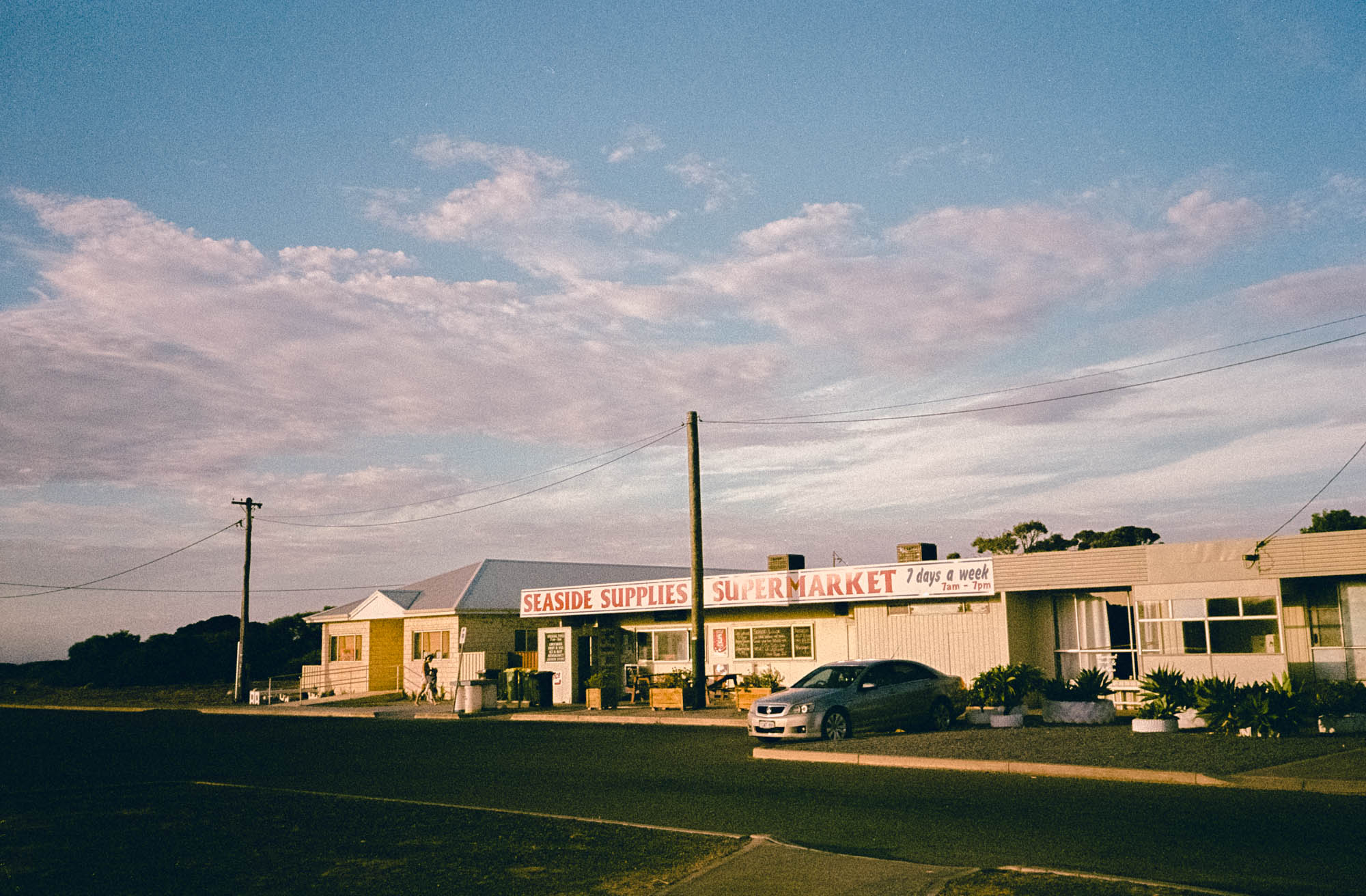
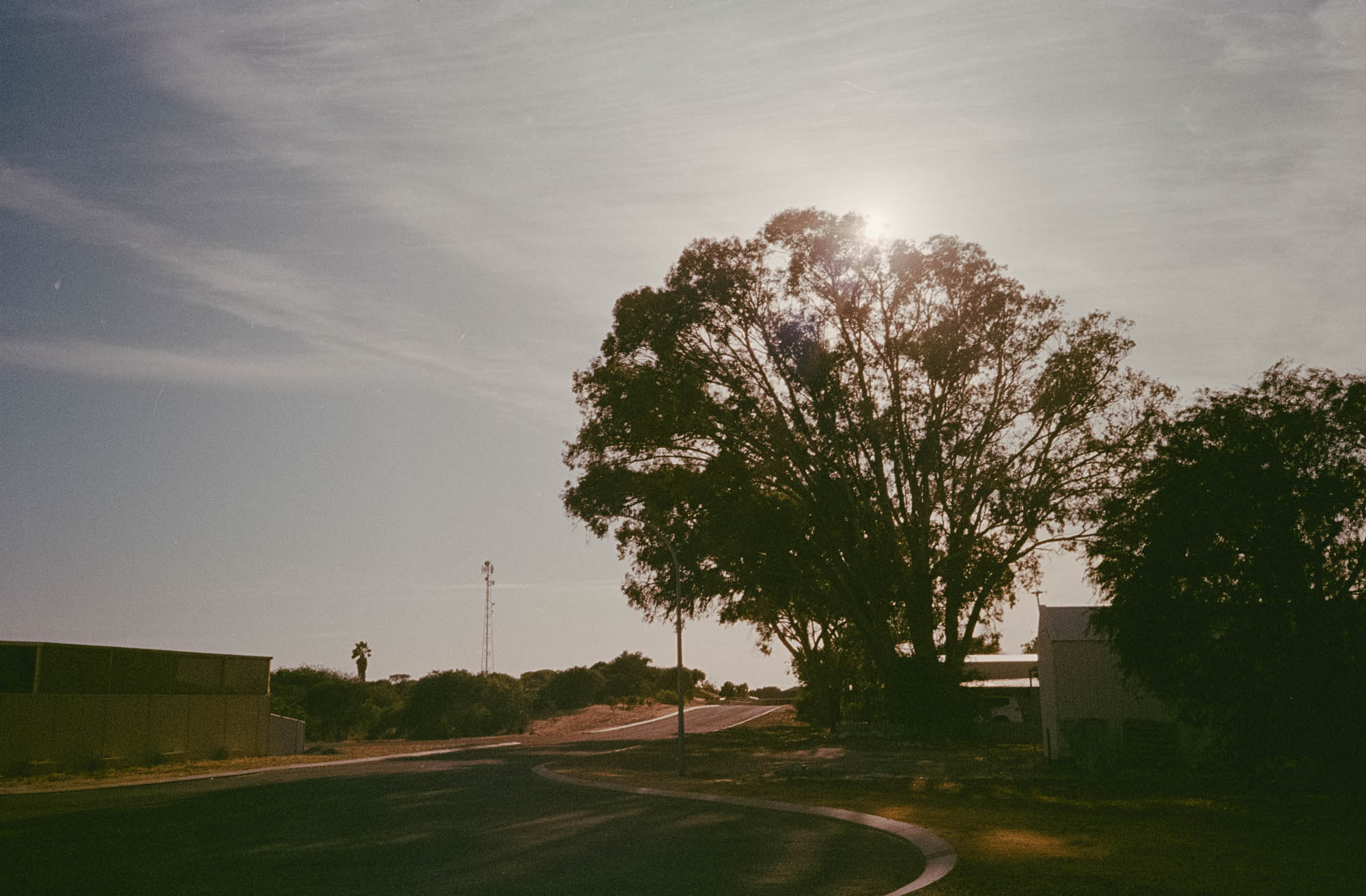
First experiences with the Pentax 17: Half Frame, Half Baked and Half Good?

If you have even a passing interest in film, you’ve probably heard of the Pentax 17 by now. Released last year in response to the growing nostalgia for analogue photography, it’s one of the few new film cameras to come out in the last decade—and probably the only one from a major manufacturer that isn’t Leica. Pentax took a risk, targeting Gen Z’s fascination with a world they never actually lived in by creating a half-frame camera that sits somewhere between fully manual and fully automatic.

But who is it for?

Rather than catering to professionals, serious enthusiasts, or wealthy collectors looking for flashy trinkets, this camera is clearly aimed at hipsters. You can tell just by the fact that its designer, Takeo Suzuki—who goes by TKO—sports a waistcoat and flat cap. But is this camera a technical knockout? Well, I had my doubts, but I bought one as a Christmas present to myself. Why? Because I deserve it. Okay, also because my wife saw it, immediately wanted one, and who am I to argue?

Credit where it’s due—Pentax took a bold step releasing this niche product, especially at around 800 Australian dollars. I wasn’t planning on buying it until my wife convinced me that it would make me happier, healthier, and an all-around better human being. Has it changed my life? Not really. Let’s be honest—I don’t need another camera. But I do love half-frame cameras, and my old Canon Demi is getting unreliable. The Pentax 17, on the other hand, is brand new, fully functional, and—unlike my usual vintage finds—doesn’t smell like leather, tobacco, and urine. Don’t worry, I’ll add that patina over time.

This camera is supposed to be fun. Half-frame means I don’t have to worry as much about film costs, and the resolution is decent for most uses. Unlike Pentax’s 90s-era fully automatic point-and-shoots, this one puts some control back in my hands. Some, but not all. You have to focus manually using an icon-based system (flowers, people, mountains, and—of course—your dinner, because Instagram). You also have to wind the film on manually, which was about the hardest work I did all summer.

An odd choice to include manual focus

Early frames

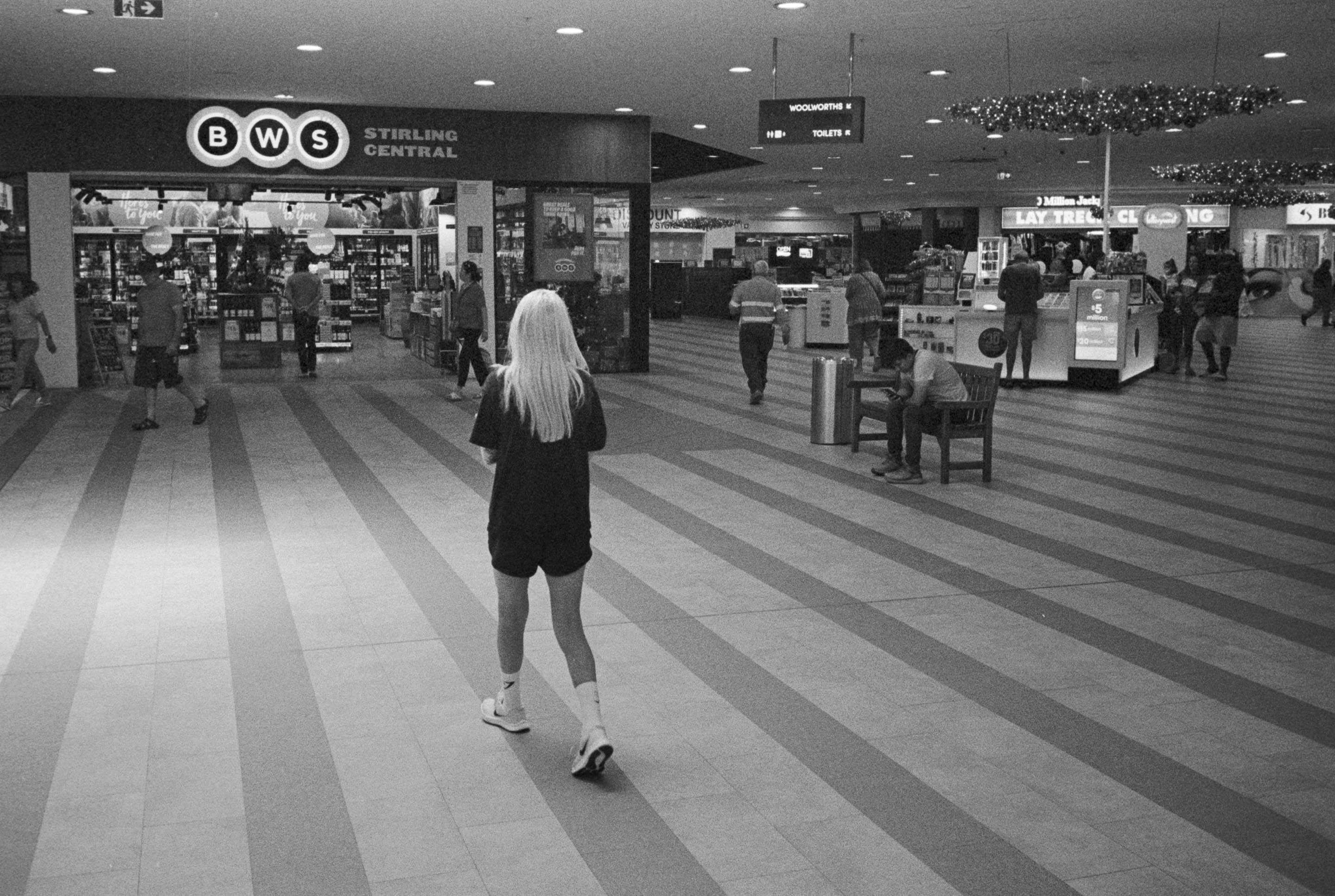
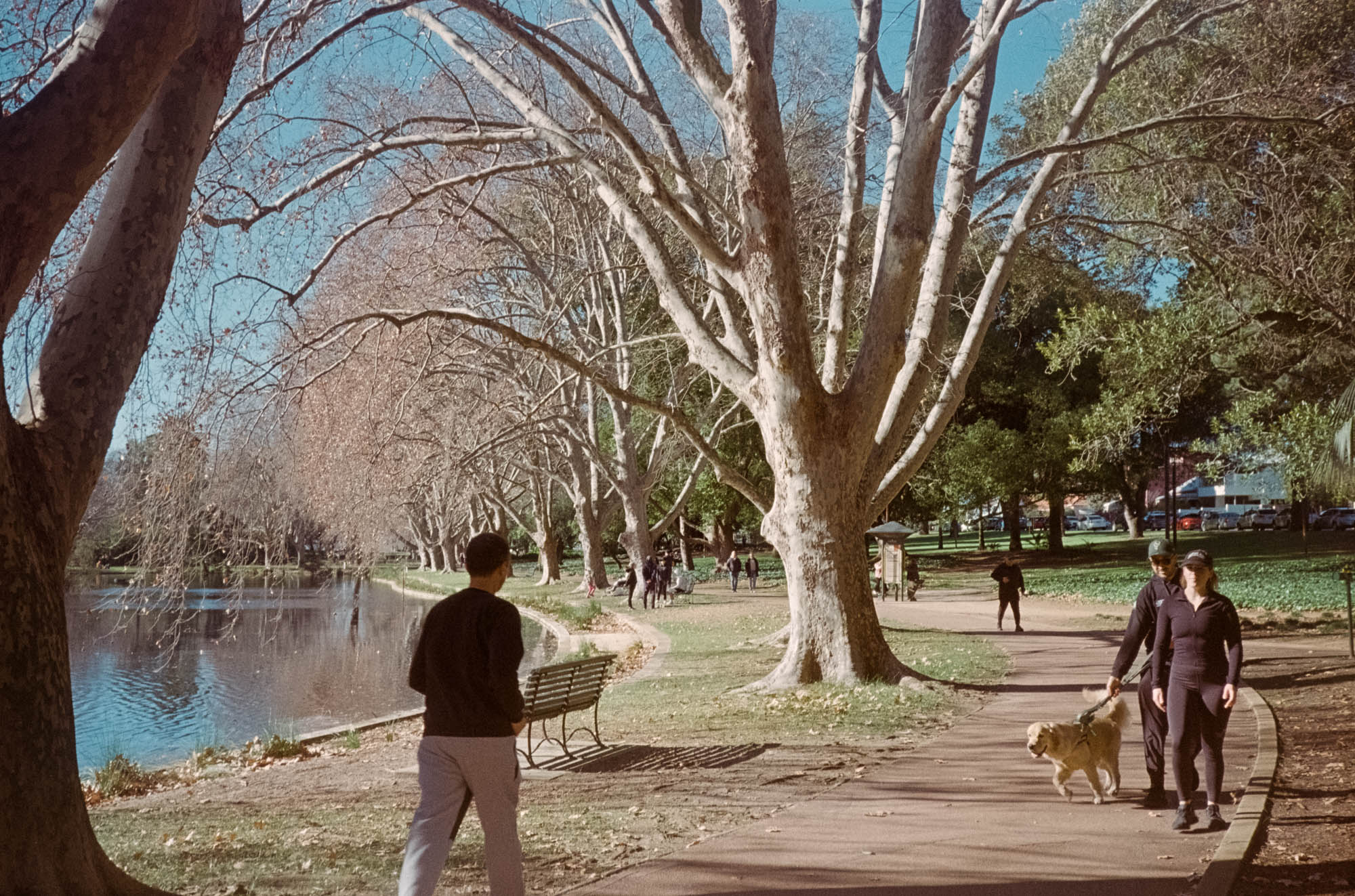
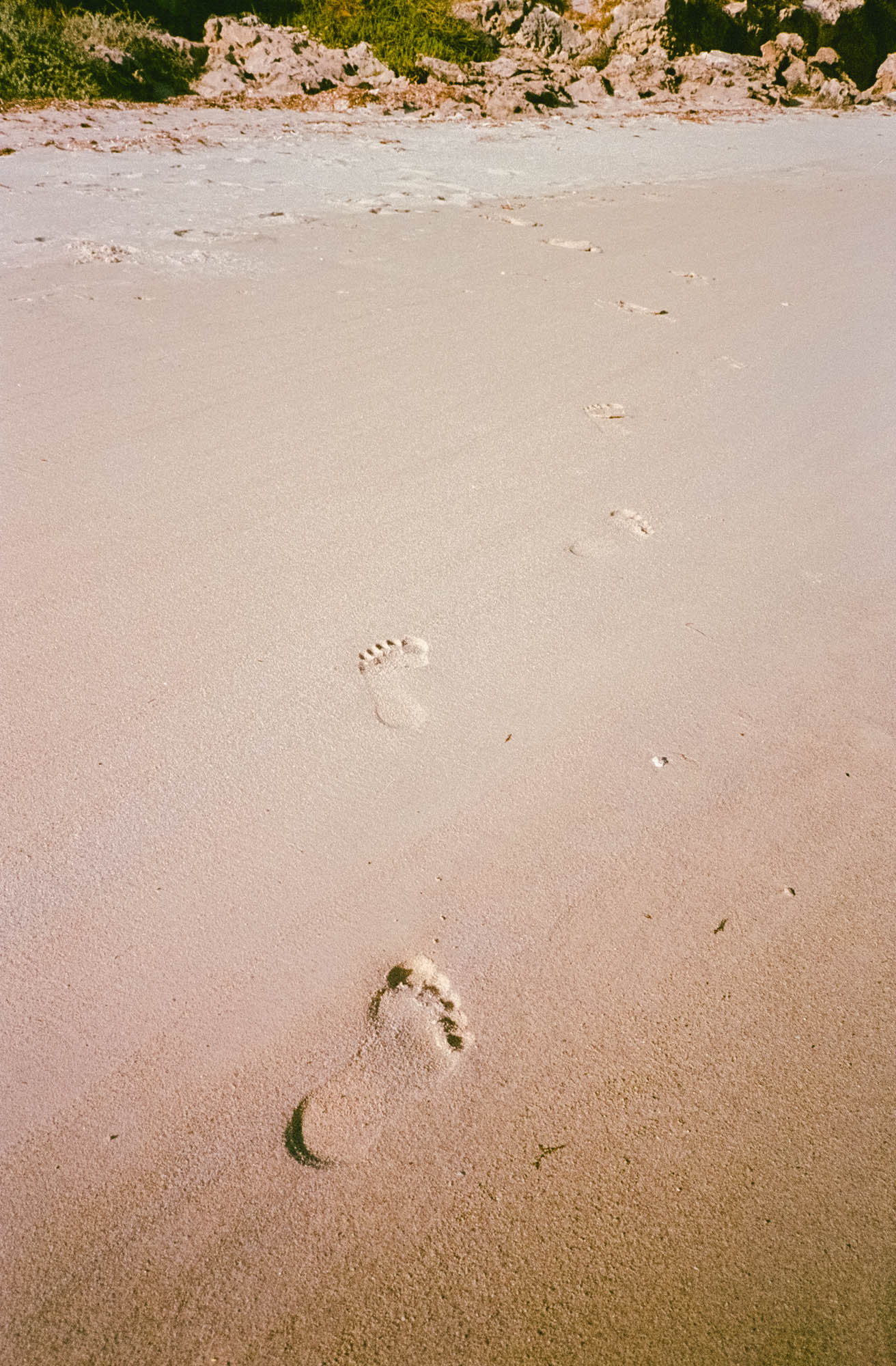
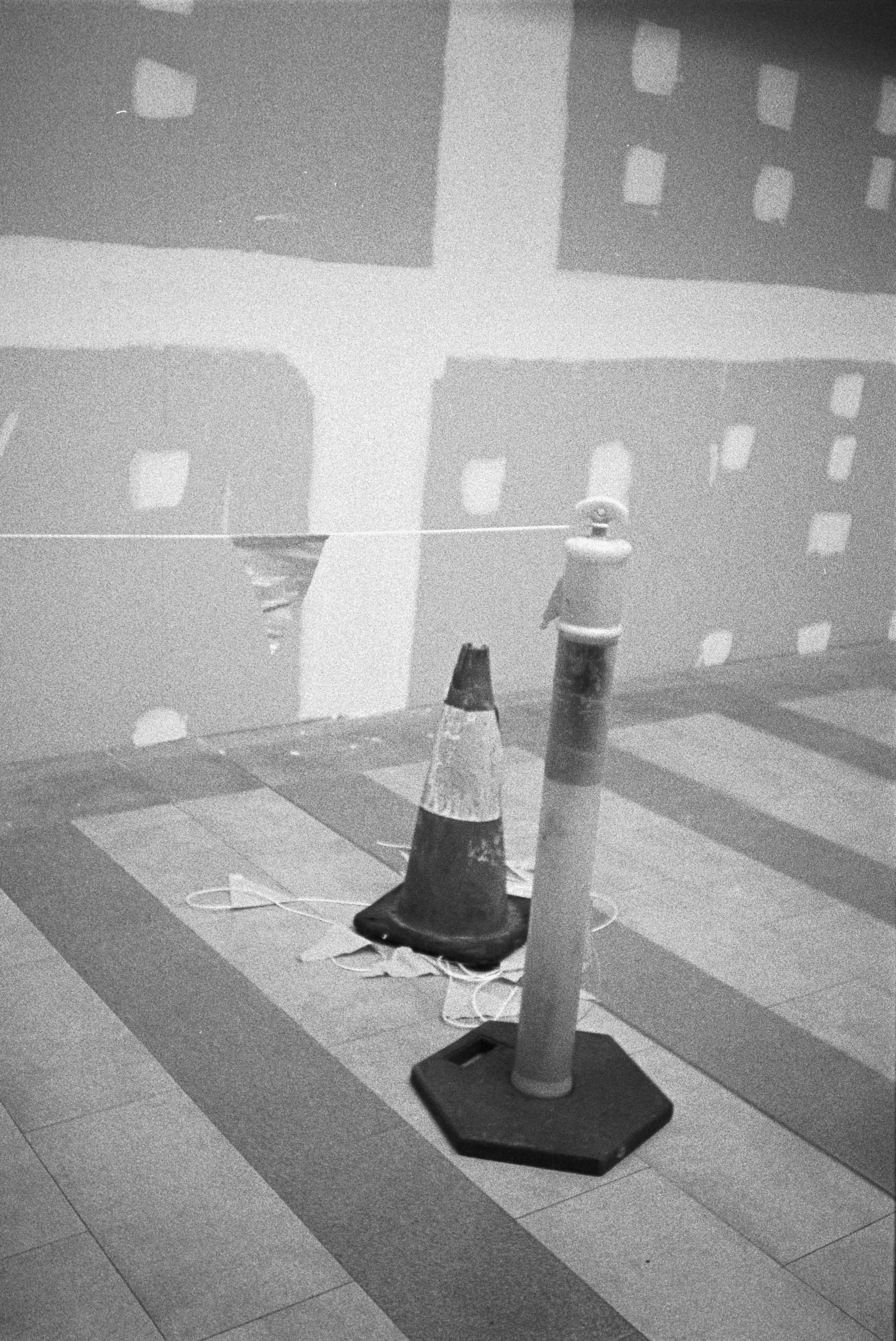
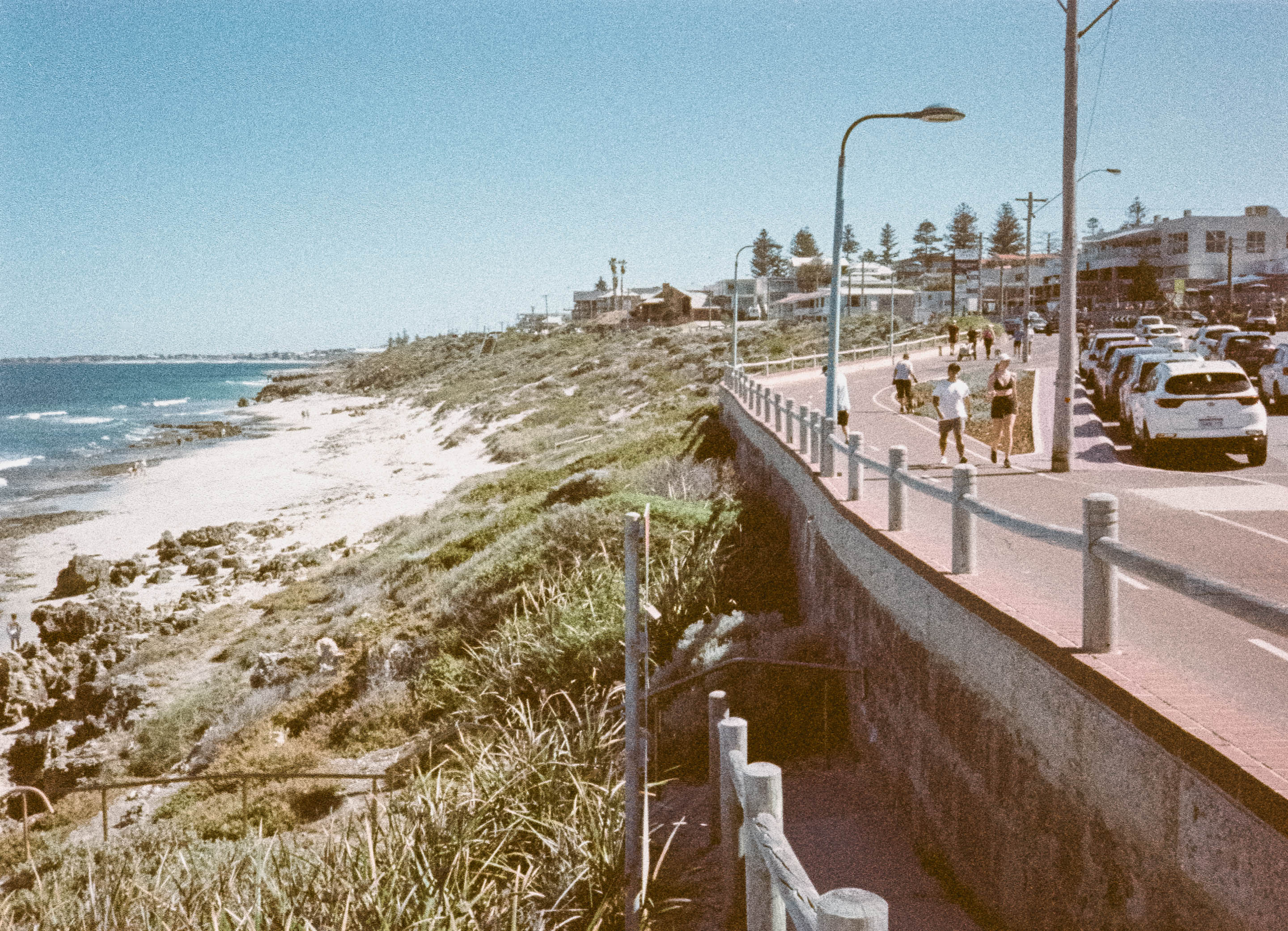
Of course, it’s not all fun and games. I took my Pentax 17 and some Ilford HP5 and set out to capture some of the urban decay of tired shopping malls. The results? Nothing spectacular, but it did at least provide a monochromatic record of decline. But I know that’s not what you’re here for—you want your decrepitude in full color. So, I loaded up some Fuji 400 and headed to my home away from home, Leeman, for post-Christmas dog walks on the beach.

Speaking of which, my groodle puppy, Juni, has had plenty of exposure on film this summer. If you’ve been following along, yes, it’s the same dog—just three times bigger. We’re considering renaming her Ginger Monster. Capturing a fast-moving ball of auburn fur with a half-frame camera? Tricky, but fun.

Camera quirks

Now, about those exposure modes. They’re confusing. The dial is color-coded: white for non-flash modes, yellow for flash-based ones, and—just to mess with you—a blue auto mode that isn’t actually fully automatic. It basically turns your expensive camera into a $20 disposable. What focus distance? What aperture? What shutter speed? Who knows? I don’t use it. Instead, I stick to P mode, though I still don’t really know what it does. The biggest issue? The dial is way too easy to knock out of place, which led to some overexposed outdoor shots and underexposed indoor ones before I realized I’d accidentally switched to Bulb mode while winding on.

After some trial and error, I learned a few things. One: get your finger out of the way when shooting macro. Two: framing in a viewfinder camera is always a challenge, but the Pentax 17’s clear viewfinder and close-up frame lines help. Three: for general shooting, the 3m focus setting is usually good enough, though I did cheat and use an iPhone app to double-check distances.

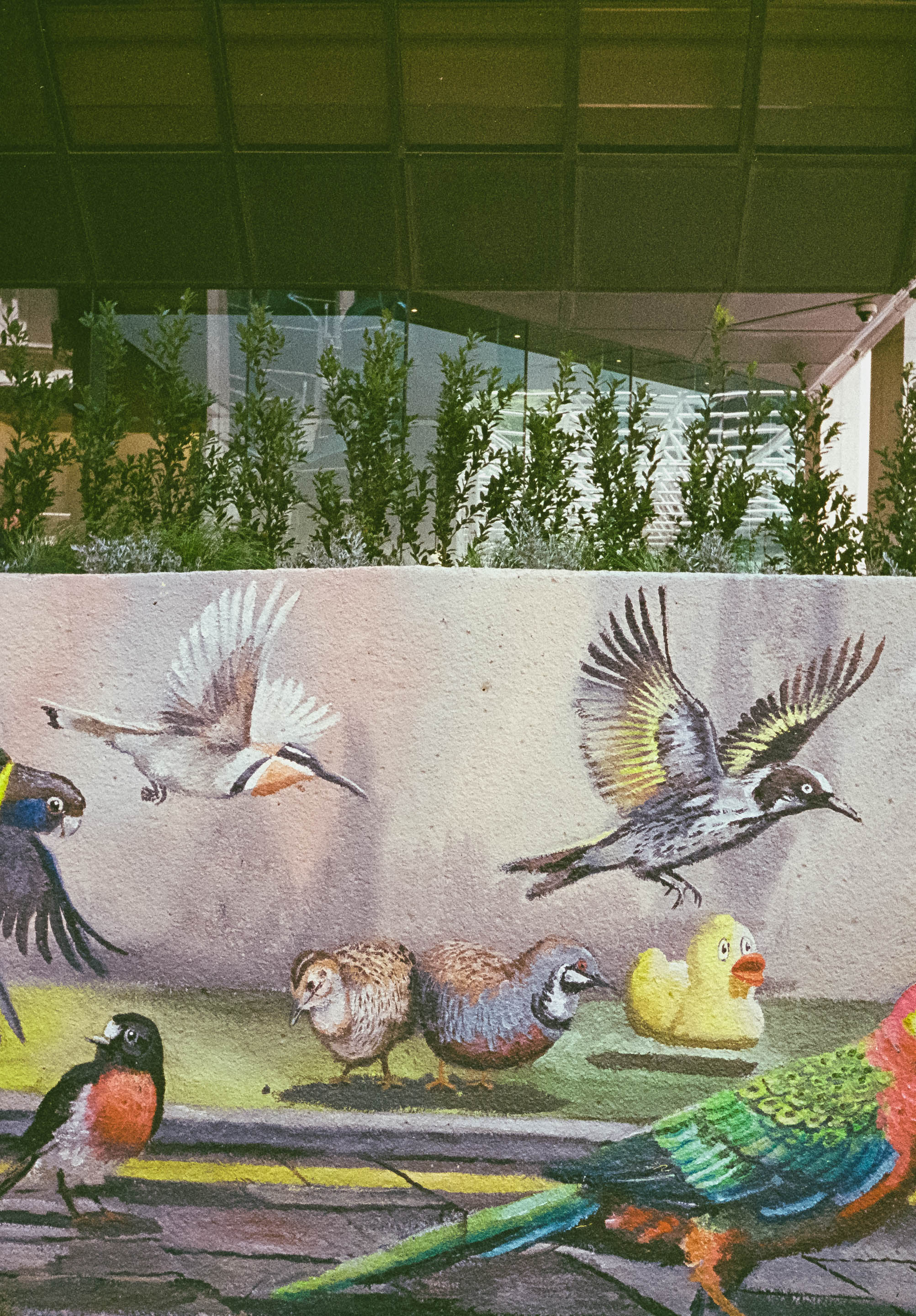
I still haven’t touched auto mode—it gives me anxiety. With half-frame, I like to have two exposed rolls ready before developing to save time and chemicals. So, to make things more difficult for myself, I loaded up a roll of OneShot film next. Why? Because it was cheap. The results? Let’s just say OneShot probably isn’t ideal for a bright Perth summer—or for this camera. The muted colors and heavy grain didn’t do me any favors. The Fuji 400 shots fared better, and while nothing groundbreaking, I did get a few fun summer snapshots.

So, what’s the verdict? This isn’t a spectacular camera. It has its quirks—no self-timer, confusing exposure modes, and some incredibly bright blinking LEDs that don’t provide focus confirmation (because it’s manual focus). Plus, the electronic focus system introduces a slight shutter lag, which is odd for a manual-focus camera. The design is an eclectic mash-up of different Pentax and Ricoh cameras, with an Olympus Pen-style viewfinder and a winding lever that feels straight out of a Pentax 110. It’s a Frankenstein creation, and the real question is: does that make it charming or just dumb?

For me, it’s both. Plenty of YouTubers have reviewed this camera and been left scratching their heads, but that’s because it wasn’t made for high-end photographers. Honestly, it wasn’t even made for me—and I have no standards. But I love it. It’s quirky, fun, and surprisingly decent for what it is. Most of all, it’s brave and weird—just like Juni. Maybe I’m just brave and weird enough to appreciate it.

First Impressions of the Diana F Plus

Today, I found myself facing a philosophical dilemma: is the Diana F+ truly a legitimate photography tool masquerading as a toy, or am I merely a tool for using a toy camera? As I embarked on this journey with the Diana, I couldn’t help but be drawn in by its quirky charm and historical associations with the goddess of the moon.

Inauspicious Origins

Despite my initial skepticism towards toy cameras, I remained open to the creative possibilities they offered. After all, some of the greatest art has been created using the most primitive of tools. Plus, snagging the Diana from a thrift store for a fraction of its original cost seemed like too good of an opportunity to pass up.

Delving into the lore of Lomography, I learned that the Diana had humble beginnings as a novelty item produced by the Great Wall Plastic Co. Yet, over time, it was embraced by a new generation of photographers seeking an alternative to the clinical perfection of digital imaging.

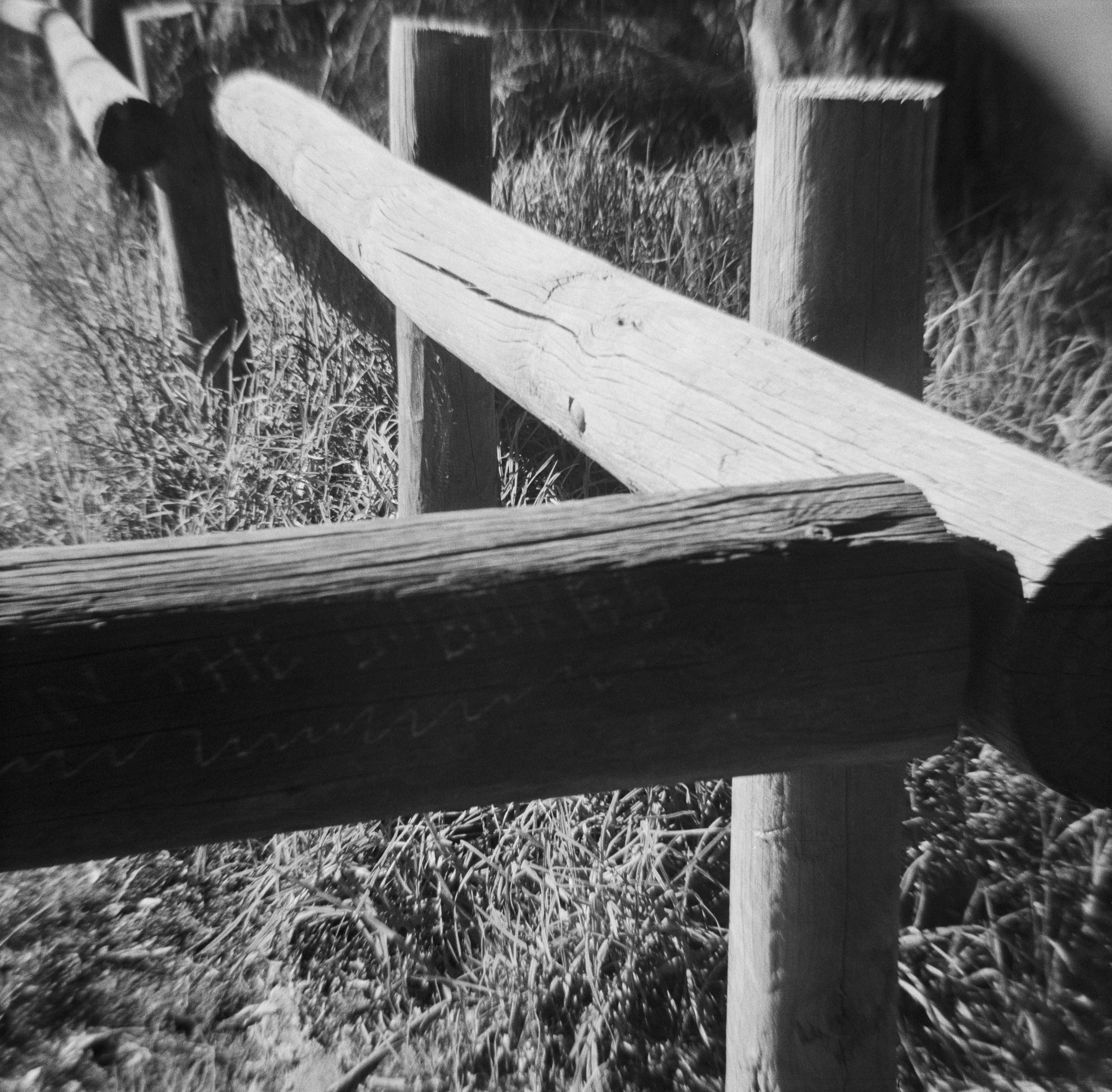
However, I couldn’t ignore the criticism that toy cameras often produce subpar photos due to their inherent flaws. Despite my doubts, I decided to put the Diana to the test by taking it out to a local wetland armed with Kentmere 400 medium format film.

As I loaded the film into the camera, I couldn’t help but wonder if I was about to embark on a futile endeavor. Would I be able to overcome the constraints of the Diana and capture meaningful images, or would I end up disappointed by the results?

Only time would tell as I ventured forth with the Diana in hand, ready to explore its creative potential and perhaps uncover some hidden gems amidst its quirks and imperfections.

It’s … Ok, I Guess

So, I’m here to give you my unfiltered take on this piece of plastic, based solely on my experience of shooting one roll of film with it. In short, it’s… meh.

Sure, it wasn’t a complete disaster. I managed to guess the focus and exposure fairly accurately, and the negatives turned out clean with decent density and no blown highlights. Despite encountering some light leaks and strange artifacts on the film, I can’t say I was entirely disappointed.

However, when it comes to usability, the Diana F+ falls short. It’s uncomfortable to hold, and the build quality leaves much to be desired. The viewfinder is virtually useless for framing, and the shutter sounds less than inspiring.

On the upside, it’s incredibly lightweight, making it a viable option for a day trip camera. But its lack of precision and flexibility means you’re limited in your creative control. You’re essentially along for the ride, with the camera dictating the final outcome.

While some may argue that these quirks are part of the Diana’s charm, they can also be seen as limitations. The softness of the lens, inconsistency across the focal plane, and tendency for highlights to glow are all baked into the final image, for better or worse.

As for recommending this camera, I’m torn. While it may have its niche uses, particularly for street photography where spontaneity is valued over precision, I can’t help but think there are better options out there. Personally, I’d lean towards something like the Agfa Isola, which may not be much better but at least offers a sense of authenticity with its glass lens.

In the end, my experience with the Diana F+ wasn’t terrible, but it wasn’t exactly inspiring either. It’s unlikely to become my go-to camera, but it has piqued my curiosity enough to give it another chance in the future. After all, sometimes it’s worth exploring the unconventional, even if the results are a bit… unconventional themselves.

First Impressions of the Canon Prima 5

Who doesn’t love unboxing videos, right? Well, in my latest video, I attempted to build up some suspense as I clumsily opened what wasn’t exactly a box. Instead, I revealed the Canon Prima 5, a forgotten point-and-shoot from 1991, known by various names like the Canon Sure Shot Max and the Autoboy Mini.

I snagged this camera second-hand for just AU$15, a real steal considering its potential. But the big question remained: does it work, and can I create art with it? Well, let’s dive into my initial impressions.

First up, some specifications, because nothing is more exciting than reading a list of bullet points about the features of an old point and shoot camera:

  • Lens: 38mm, f/3.5 with 3-point smart autofocus.
  • Auto-exposure with shutter speeds of 1/8-1/250s.
  • Integral flash. (Guide No: 9m at ISO 100.)
  • ISO range: 25 – 3200 (via DX code – 25 Non-DX)
  • Auto-load, wind and rewind of DX-coded film.
  • Dimensions: 125x68x43mm.
  • Weight: 245g (with battery)
  • Power: One 3V CR123A lithium battery.
  • A version with an autodate function was available.

Nothing particularly exciting, let’s face it, but it it does shoot up to ISO3200 for DX Coded film and while the f/3.5 lens is quite modest, it’s better than most zooms and unlike zooms, you know with a prime that the quality will be tuned to that 38mm focal length. To really test this camera, I need to run a roll of film through it. Colour film is like gold dust these days, and the prices are soaring. Yet, armed with Kodak Colorplus 200, I was ready to test this camera’s capabilities.

Now, onto the shots. From capturing leaves backlit by sunlight to exploring human interactions in a park, I attempted to weave narratives through my photographs. Whether it’s a solitary figure masked by foliage or a couple on a bench, each image tells a story, prompting viewers to ponder human existence and relationships.

Moving from nature to urban landscapes, I sought to celebrate human resilience and the quest for enlightenment amidst the complexities of city life. Through frames within frames and minimalist compositions, I aimed to provoke thought and reflection.

Yes, you can make art with it. Or at the very least you can reflect on your artistic intent as you intersperse random snaps with pretentious musing.

Despite its simplicity, the Canon Prima 5 impressed me with its sharpness and reliability. Sure, it has its quirks like occasional flares and a default autoflash setting, but its performance outweighs these minor drawbacks.

Now, the big question: is this camera a hidden gem or just another addition to the plastic pile? I’m leaning towards the former, but I’m eager to hear your thoughts. Do you have any recommendations for budget compact film cameras? Let me know in the comments below.

As for me, I’ll continue experimenting with this camera while keeping an eye out for other photographic relics. Who knows what hidden treasures I might uncover next?

The Nikon L35 AD and Exploring the Concept of Light in Photography

Let There Be Light

Let’s embark on a journey into the heart of one of photography’s most captivating elements: light. Ah, yes, light—the ethereal essence that dances upon the canvas of our visual narratives, weaving tales of brilliance and shadow, of illumination and obscurity. But what truly defines this enigmatic force?

Allow me to shed some light on the matter—pun intended. We all know light is the radiant energy manifested in the form of electromagnetic radiation, with wavelengths spanning from 380 to 750 nanometers, perceptible to the human eye. However, let us not confine ourselves rigid constraints of scientific definition. Let’s delve into the realm of poetry, where light becomes glancing, gleaming, glimmering, and beyond – and that’s just the G words.

Light shifts and changes. While our friends in the northern hemisphere find themselves enveloped in the cloak of darkness, here in my corner of the world, we find ourselves basking in the relentless embrace of summer’s scorching sun, leaving the venerable Sunny 16 rule in faded tatters. Here it goes up to 22.

Light and the Nikon L35AD

The Nikon L35AD is a date-back edition of the esteemed Nikon L35AF. This camera deserves a full review but let us not be hasty; today, our focus lies solely on its ability to harness that most precious of commodities—light.

Don’t expect an objective and scientific treatment of the subject here, though. There’s nothing objective about film. Film imbues each frame with a unique character, a personality all its own. In the case of my chosen film, Kodak Ultramax, we have a medium contrast stock, suitable for a myriad of conditions. However, as the astute among you may have already discerned, there were… complications. Yes, complications stemming from my own hubris.

There might have been a few errors during the development process. The results were a bit underdeveloped resulting in thin negatives. But I don’t blame the Nikon L35AD here. There error was in the one factor I could control – me.

Direction, Intensity, Quality, and Continuity: A Quest for the Perfect Light

So let’s try to break this concept down. Light has direction, intensity, quality, and continuity. Direction is probably the most obvious. As a young photographer, I was often reminded to shoot with the light at our backs, bathing our subjects in a soft, even glow. But that simplicity belies the true complexity of light’s nuances. Shoot from the side, you get more dimensionality and with the light behind your subject you get all the fun of silhouettes and halos.

Intensity, too, plays a pivotal role in shaping our photography. From the blistering radiance of the Australian sun to the gentle caress of cloud-filtered light, each variation presents its own unique challenges and opportunities. But sheer intensity isn’t everything. Whether crisp and clear or soft and diffused, the quality of light infuses our images with a palpable sense of atmosphere.

Finally, continuity. This often overlooked dimension of light isn’t so much about the light itself as the scene. Shadows dance across the landscape, reflections shimmer upon the water’s surface, and every object becomes a player in the grand symphony of illumination. How things in the scene, reflect, block and break up the light is a key component of being able to play with it.

Embrace the Light: A Call to Arms

In the end, whatever conditions you find yourself in, cast aside the shackles of convention and venture forth into the boundless realm of photographic exploration and embrace light. Let’s revel in the myriad possibilities that light presents, bending it to our will, shaping it to suit our vision. In the end, it is not the rules that define us, but our willingness to challenge them—to forge our own path in pursuit of luminous enlightenment.

So go forth, and may the light illuminate your path as you capture the world’s wonders through the lens of your camera.