
Well, what can I say? Like myself, this camera has seen better days. All of that millennial photographic optimism, crushed by the insurgency of digital and hindered by its flimsy build quality.
I harbor a peculiar fondness for Nikon’s less prestigious SLRs. Or maybe that’s just Stockholm Syndrome—a strange psychological bond forged between crappy old cameras and a crappy old photographer, both steeped in nostalgia. But let’s not dive into self-flagellation just yet; instead, let’s direct our attention toward the Nikon F75.
Now, I can’t be certain whether the last owner treated this camera as toilet paper or handed it to their three-year-old as a plaything before relegating it to the second-hand shelf alongside fallen aspirations—exercise bicycles and DVD copies of “Daddy Day Camp.” Suffice it to say, this camera wears its battle scars.
In its prime, I imagine the F75 stood tall—a photographic titan. But it followed the Mickey Rourke path of self-improvement. Let’s address the worst of its woes: the batteries drain suspiciously quickly, and the zoom ring turns as smoothly as a skier on asphalt.
Amidst the wreckage, though, there was promise. I’ve encountered several similar Nikons—the hideously ugly F50 and the perilously flimsy F55. Both have graced my channel, and while they’re crippled clones of what we’d associate with a “real” Nikon camera, the F50 at least had reassuring heft, and the F55 prided itself on being the smallest and lightest 35mm SLR in my collection.
Enter the F65, sandwiched between the F55 and our battered F75. Supposedly a notch up, the F75 boasts more segments for matrix exposure metering and spot metering—nothing groundbreaking. Unfortunately, the F55 refuses to play nice with newer lenses sporting built-in focus motors, and none of these cameras truly embrace manual lenses.
The F75 is just an incremental improvement on the F55 and F65. It sidesteps the plastic lens mount of the F55, supports TTL for external flashes, and claims the title of the first cheap consumer camera to support stabilization in VR lenses. Yet, it remains plagued by a low flash sync of 1/90 second and the inability to adjust ISO manually—limitations that hinder its outdoor flash photography prowess and bulk loading potential.
To unlock professional features, one must ascend the greasy pole of photographic power, reaching for cameras like the F80 and F100. But let’s not get ahead of ourselves; for now, let’s consider the F75 on its own merits.







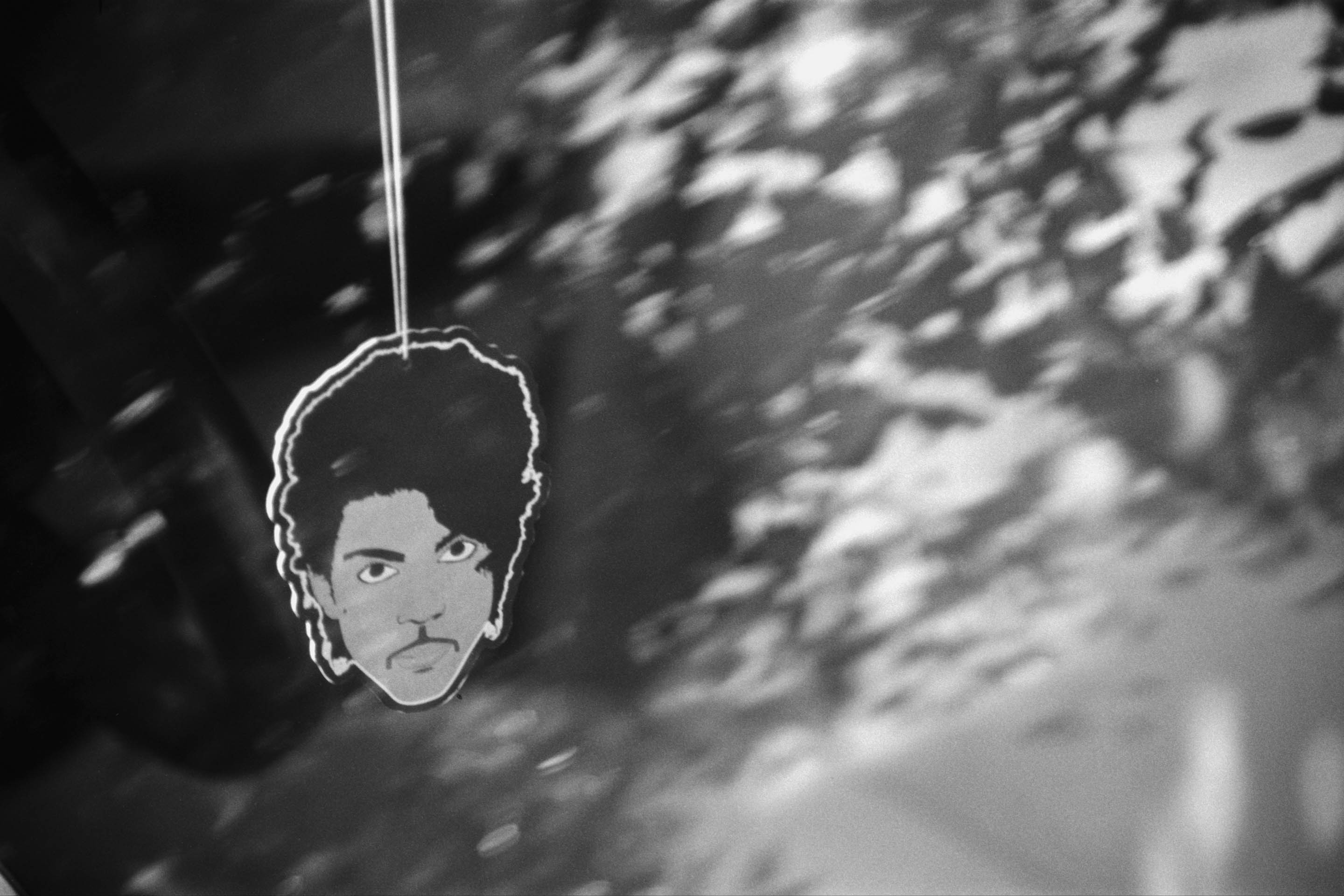
First things first—it works. Quality-wise, I didn’t push the camera to its limits. I set it to program mode, peered through the viewfinder, ensured focus, and checked the shutter speed. Random shots ensued, and it was liberating not to overthink every click.
As for the lens—it’s acceptably sharp. The corners may smear a tad, but in the open areas, I didn’t need to wide open the aperture. It behaves much like the G version of the lens that accompanied the Nikon F55, albeit with an aperture ring—a touch more versatility for compatible cameras.
Venture beyond the focal zone, and things unravel. The bokeh—well, it possesses ‘character.’ Imagine Cartman from South Park—either mildly amusing or downright offensive, depending on your subjective taste. Personally, I don’t mind; the subject is so mundane that the background’s busyness bludgeons you into submission. Photography shouldn’t be a game of “spot the subject,” but here we are.
So, dear F75, you’re a relic, a survivor. And perhaps, in your pixelated embrace, I find solace—a connection across time and technology. Or maybe I’m just another crappy old photographer, capturing moments with a camera that’s seen better days.
 Mark McMahon