
Olympus is no more, but before OM System started warming up yesterday’s ramen in the form of rebadged products from a more successful era, Olympus was a major innovator in camera technology. The IS-2000 isn’t one of those cameras that gets whispered about in hushed tones alongside legends like the original OM-1 or the Mju series of point-and-shoots, but I think it deserves a little more attention.
The only thing it really has in common with the Olympus Mju is the cheap plastic housing. While those cameras were celebrated for putting sharp optics into compact bodies, the only thing small about the IS-2000 is the price tag. I picked mine up for the princely sum of 18 Australian dollars, or closer to $30 once postage was included. As princely prices go, we’re talking bargain-basement Prince Andrew, with all the associated heft, although at least this camera actually works.
The Mju may have legendary status, but the hundreds of dollars being asked for a second-hand Mju II puts it firmly into the Emperor Has No Clothes category. My own copy no longer works and I’m not prepared to replace it at those prices, so perhaps this Olympus can fill the gap. The only problem is finding the gap, because this thing is big. It lumbered onto the scene in 1991 and, in today’s world of sleek electronics, it’s probably best described as husky.
That size was actually part of the appeal when it was new. Olympus marketed the IS-2000, also known as the IS-2 or L-2 depending on where you were, as a ZLR — a Zoom Lens Reflex camera — offering the advantages of an SLR without the weight and inconvenience of carrying interchangeable lenses on holiday. These days we’d call it a bridge camera, but at the time it represented a new class of camera, and this was the second model in Olympus’s flagship range. It certainly wasn’t cheap either, with the retail price approaching US$1,000.
So the question I wanted to answer was simple: adjusted for inflation, is this thing really worth close to two thousand Australian dollars, or have I overpaid at a hundred times less?
Taking the IS-2000 for a Walk
To find out, I took this heritage camera to a heritage town, Guildford in Perth’s Swan Valley. Founded in 1829, it’s one of Western Australia’s earliest settlements, and the pioneers apparently arrived, discovered that you could grow grapes here, and decided never to leave. It takes a while to go from vine to wine, though, and I was only there for a short walk.
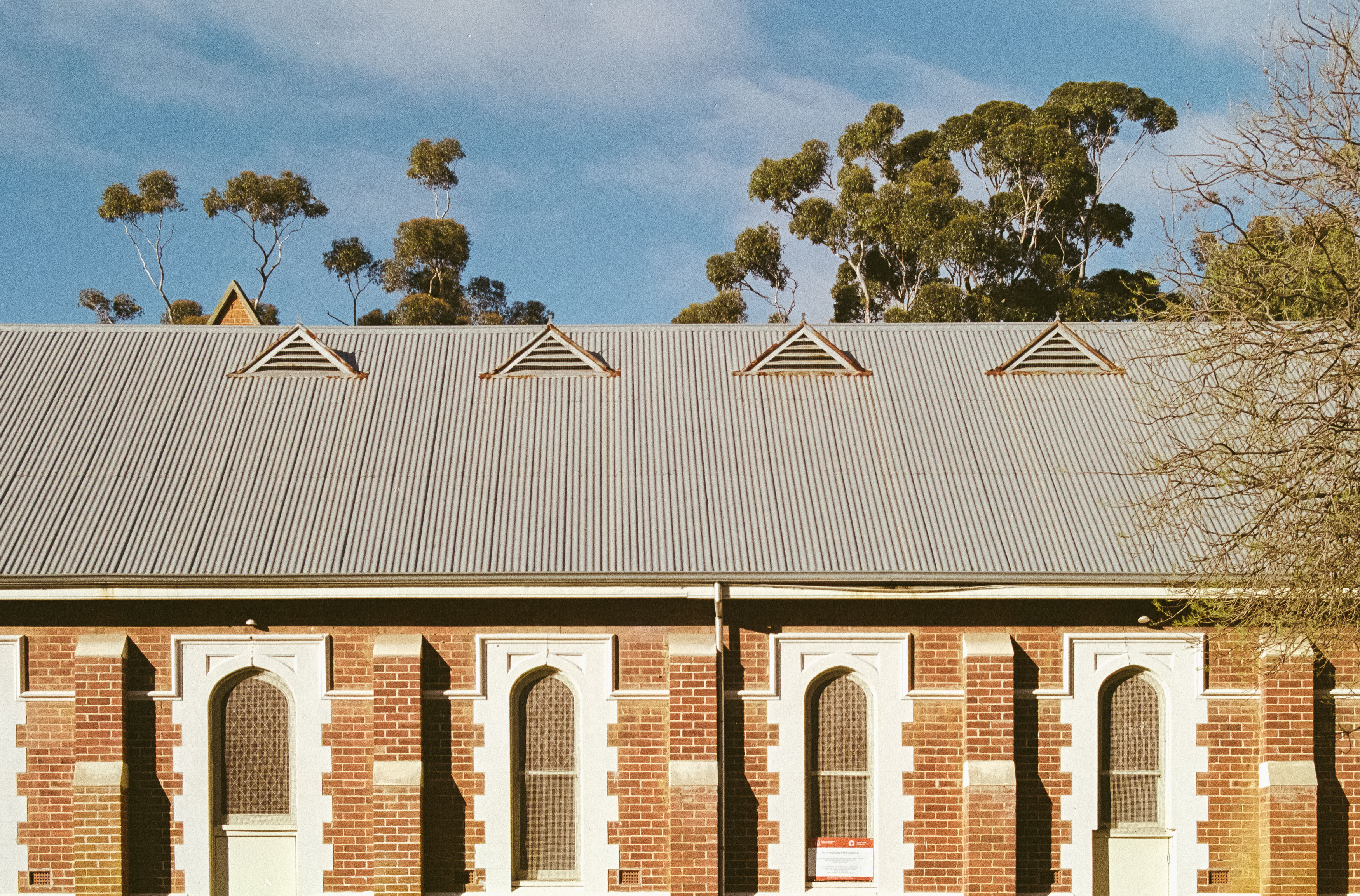
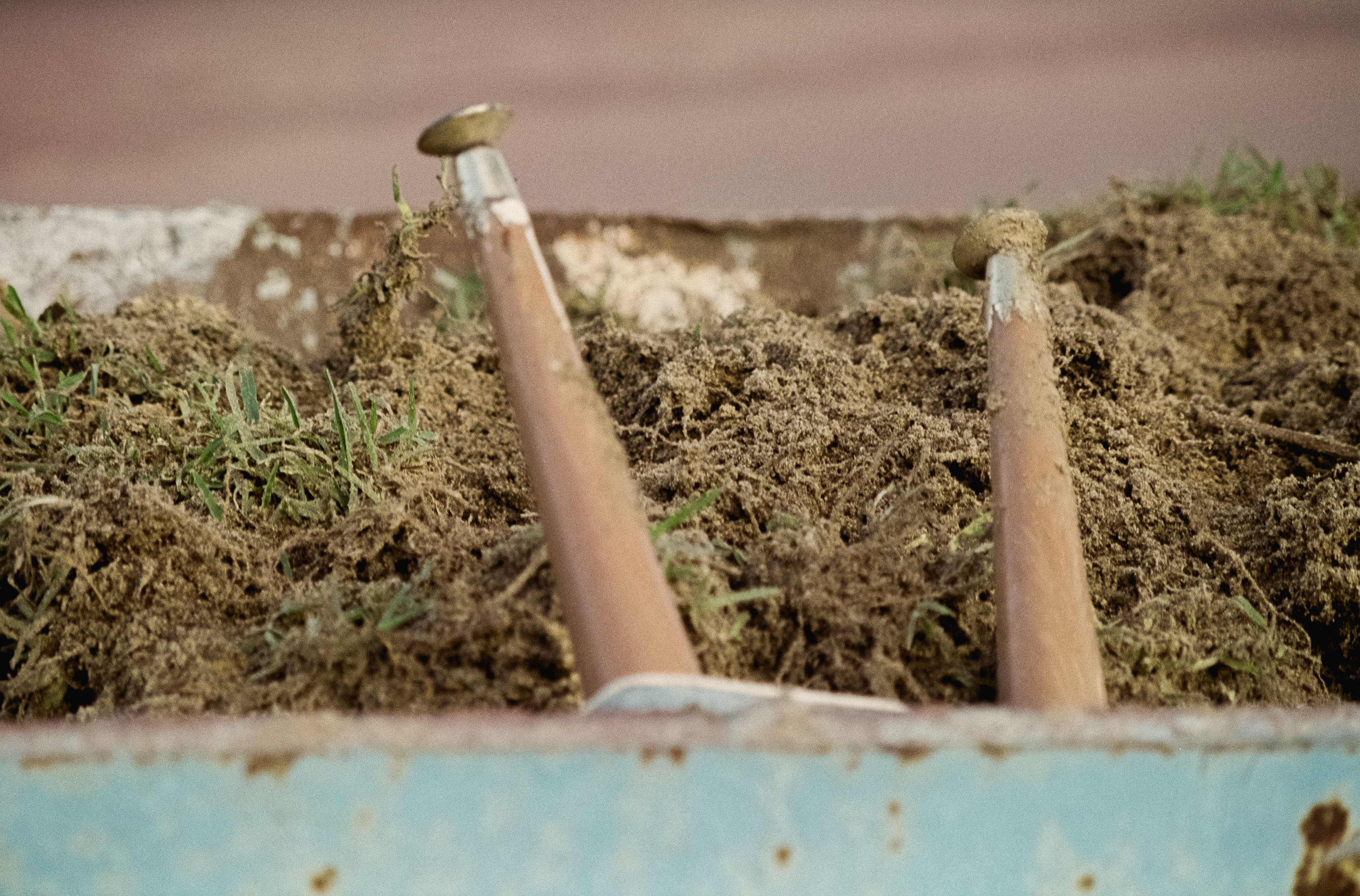
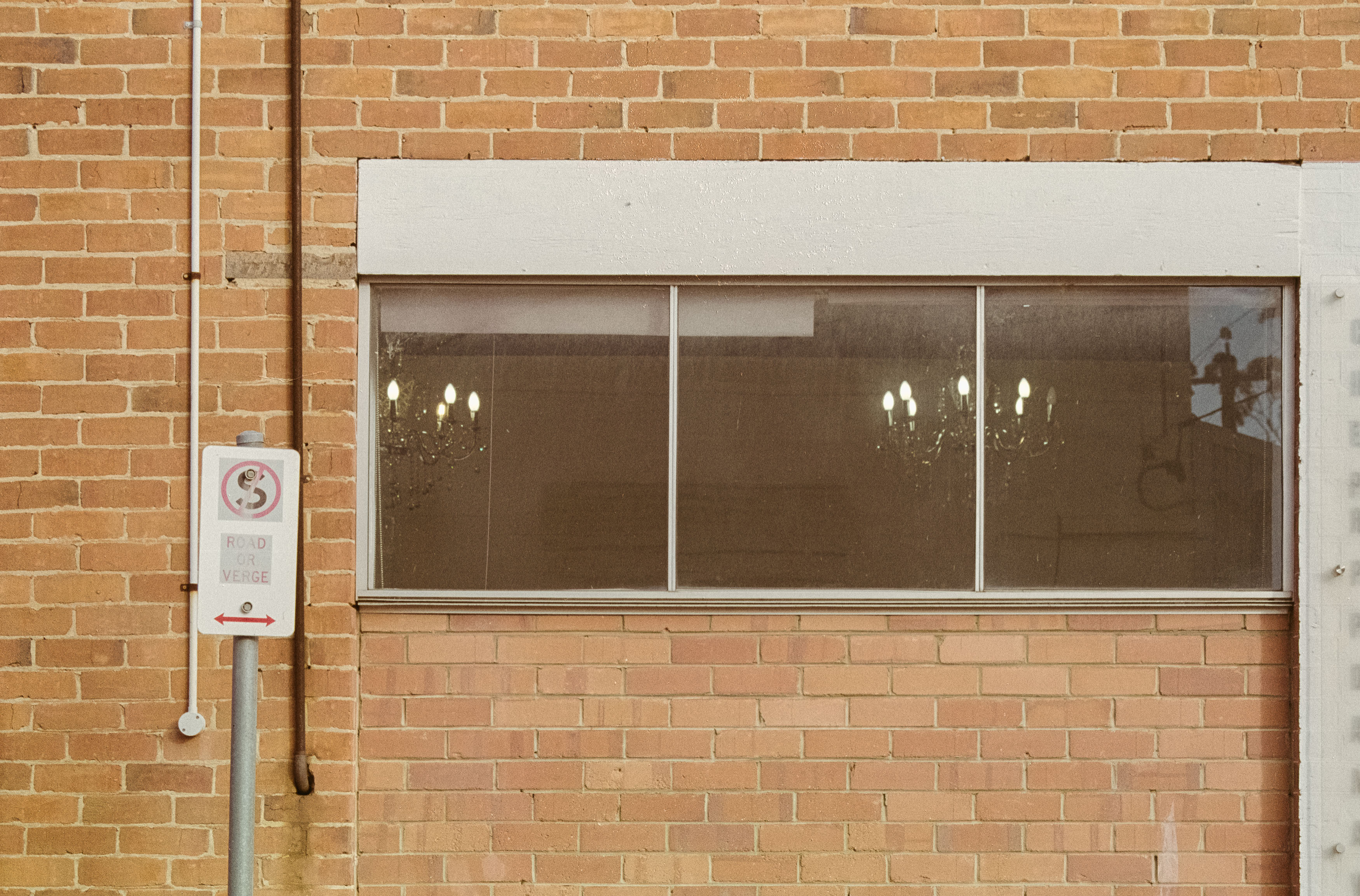
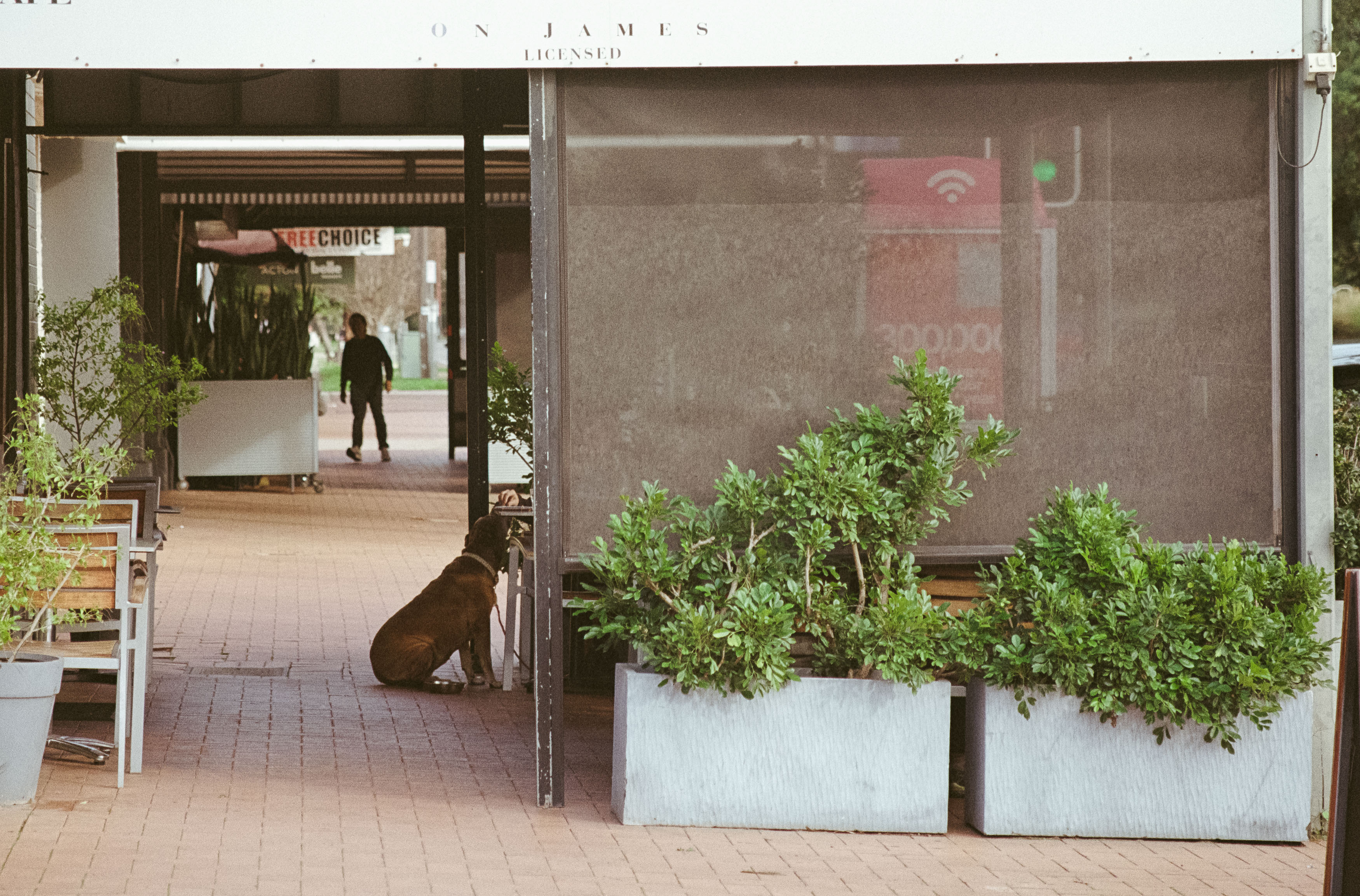
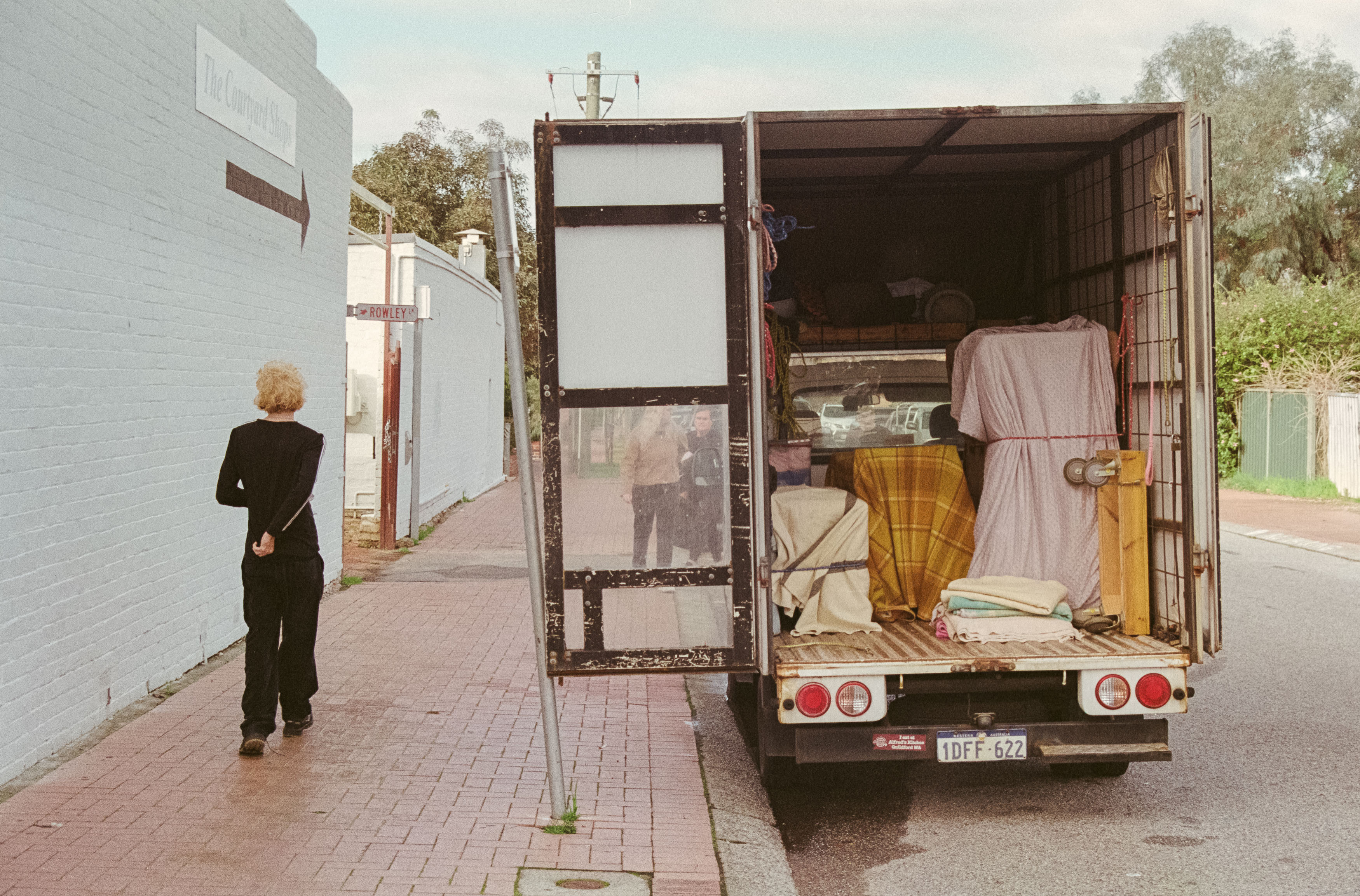
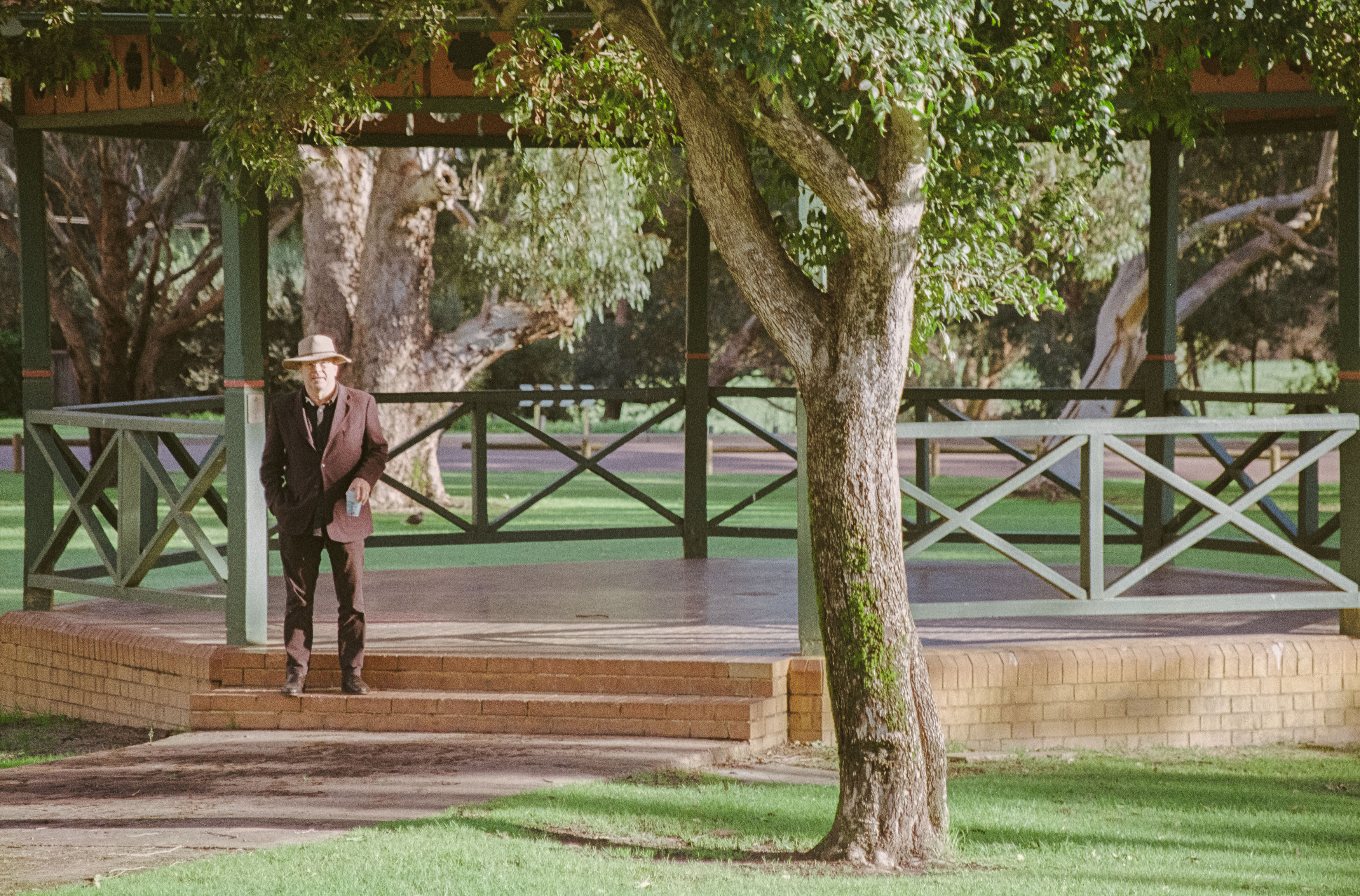
Despite the size, the Olympus is genuinely quite a pleasure to use. For all intents and purposes, you’re using a single-lens reflex camera, just one with a fixed zoom lens and somewhat dubious build quality. You get shutter speeds all the way to 1/2000th, shooting at up to two and a half frames per second, although I’m not sure anyone had the money or interest in blasting through a roll of film in fifteen seconds.
The maximum aperture is a slightly disappointing f/4.5 at the wide end and f/5.6 at telephoto, and there doesn’t appear to be any image stabilisation. The 35-135mm zoom range is practical for a point-and-shoot, although 35mm isn’t going to let you fit the whole ceiling of the Sistine Chapel into the frame. You also get an ISO range from 25 to 3200, provided your film is DX encoded or you’re prepared to hack the cassette if you want to push or pull it.
It does, however, have considerably more going on than a conventional point-and-shoot. There are three macro modes, including a zoom macro that lets you focus as close as 0.6m and a supermacro mode that gets you down to 39cm with the zoom locked at 70mm. There’s even an accessory capable of producing a 1:1 reproduction ratio, although naturally I don’t have that, nor do I have the panorama accessory.
The flash system is more interesting than it initially looks. It uses Olympus’s Intelligent Variable-Power flash system, and there are actually two flashes built into the camera. The system can put enough light into a scene without simply blowing out the highlights in close-up subjects.
Most of the cleverness is hidden from the user, but the function button gives you access to considerably more control than you’d expect. There are program, aperture-priority and manual exposure modes, along with options to prioritise fast shutter speeds for sport, wide apertures for portraits or slower shutter speeds for night photography. There’s single or continuous autofocus, double exposure, exposure lock and multiple flash modes including fill-in.
Ergonomically, it feels surprisingly good in the hand, even though it’s big and heavy. The buttons are a little spongy but well placed, and the zoom rocker sits naturally on the top left of the lens barrel. It feels good to shoot with, even if aesthetically it takes its cues from a 1940s gas mask.
The Good, the Bad and the Film
The camera isn’t perfect. One of the first problems I encountered was loading film, because the film door only opens 90 degrees, partly because of the technology stuffed into the databack. You have to get the film underneath a red tab and push it deep into the corner so the teeth can grab the film leader. I managed it in one go previously, but doing it one-handed in the field while holding a GoPro proved considerably more difficult.
Once I got going, I used the flash to see what the camera could do. In automatic mode, it apparently decided the scene didn’t need any assistance, while the fill-in flash did a much better job of forcing some light into the shadows. A backlit portrait of my daughter showed the same thing: despite the flare and lack of contrast, the fill-in flash added some useful punch to an otherwise flat scene.
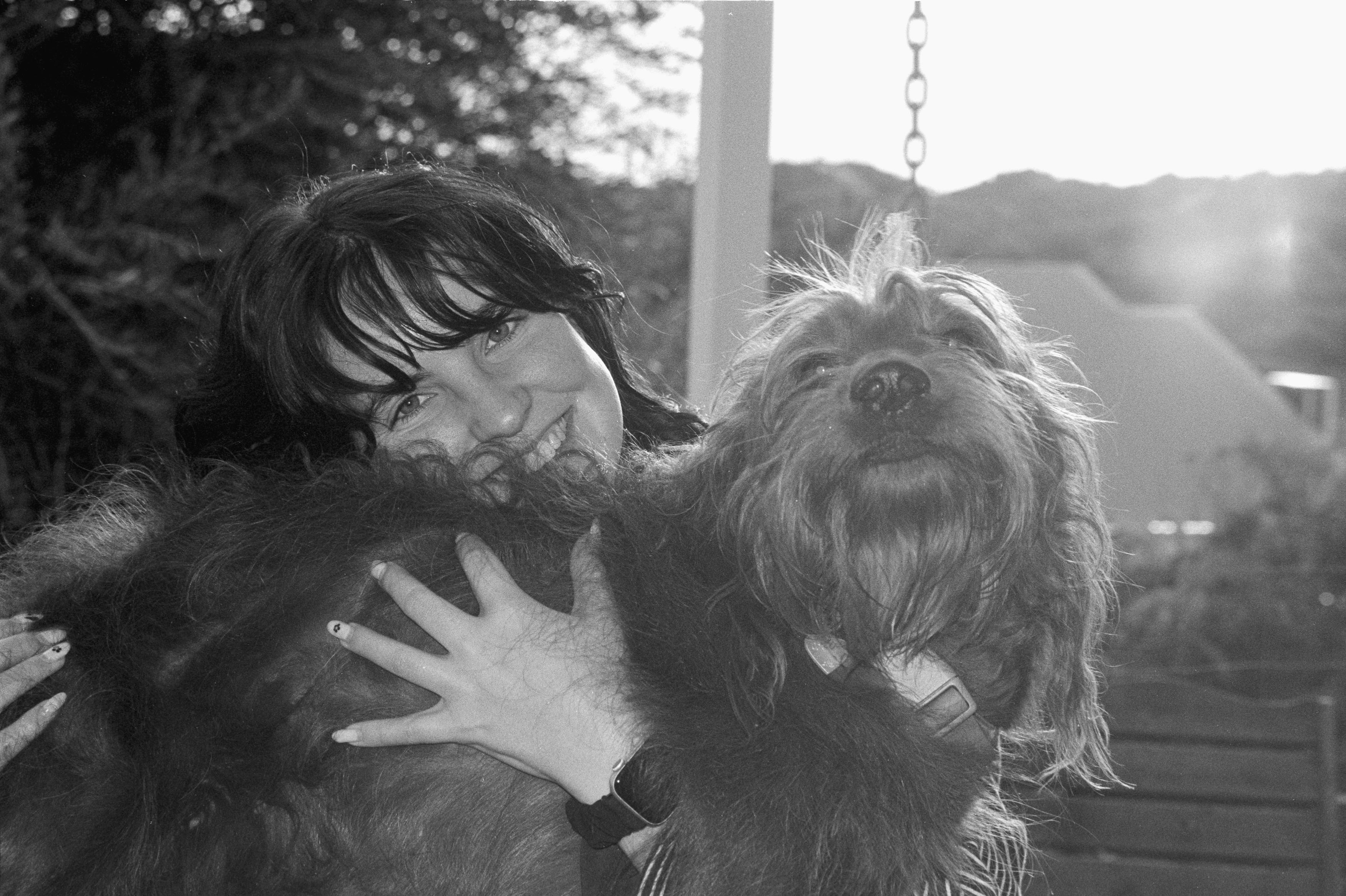
The lens can flare, too. It isn’t a problem in most situations, but there’s a visible veiling haze in some images, probably not surprising given the sophisticated lens design with sixteen elements in four groups. That’s a lot of glass. The subject matter, meanwhile, was considerably less sophisticated.
Shooting black and white was particularly liberating. Every frame of colour feels precious, but with the Kentmere 100 I found myself shooting with a sense of joyful abandon, randomly spattering the scene with black and white film. By the end of the walk, I’d also finished a roll of Kodak Colorplus and had enough material to see what this lumbering beast could actually produce.
So, Is It Any Good?
The surprising answer is yes. The lens on this thing is sharp, and I found myself wondering whether you could really tell the difference between these photographs and images from an SLR costing considerably more. The obvious compromises are the size, the slow maximum aperture and the fact that you can’t remove the lens and replace it with something faster or wider.
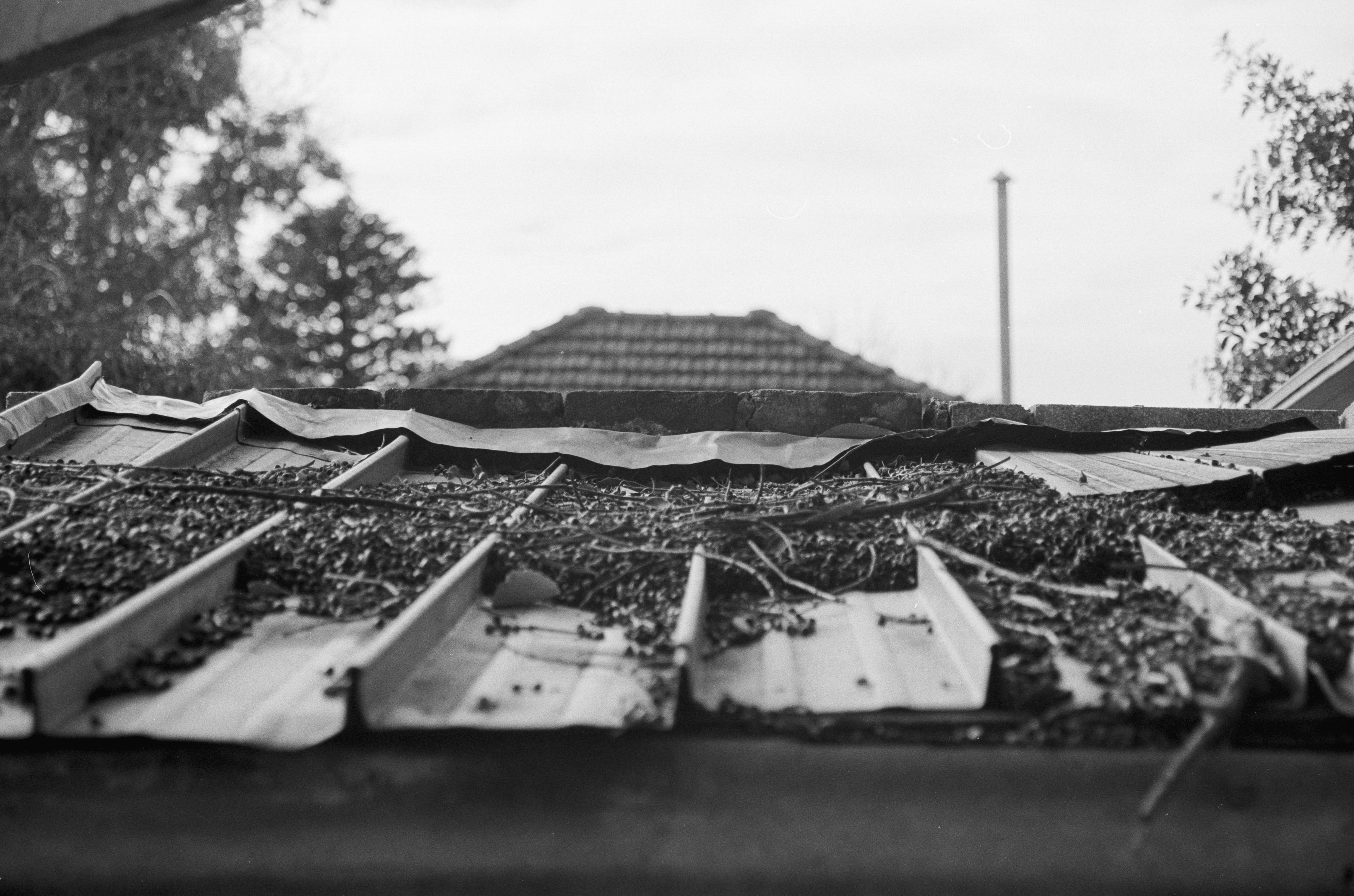
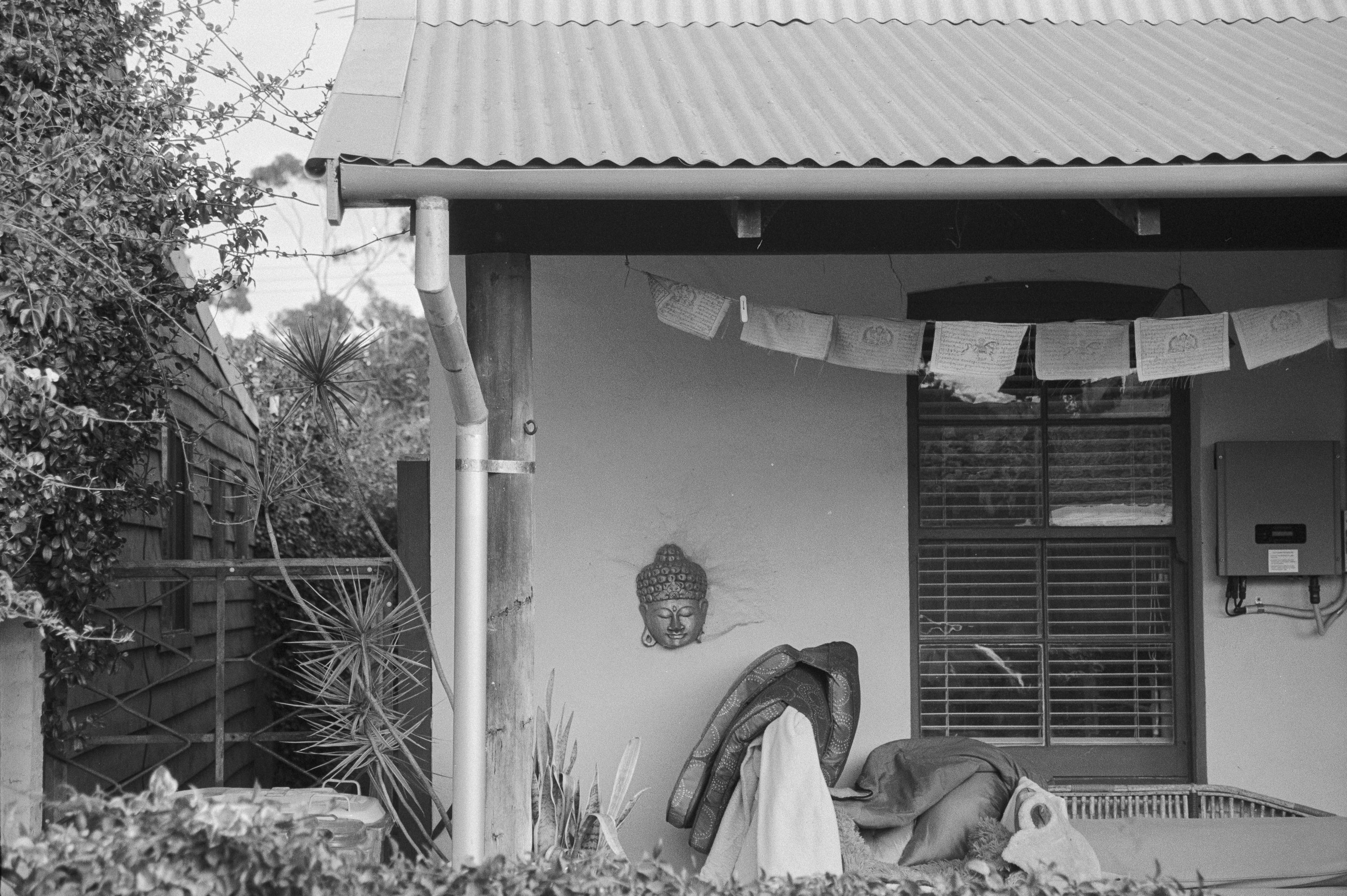
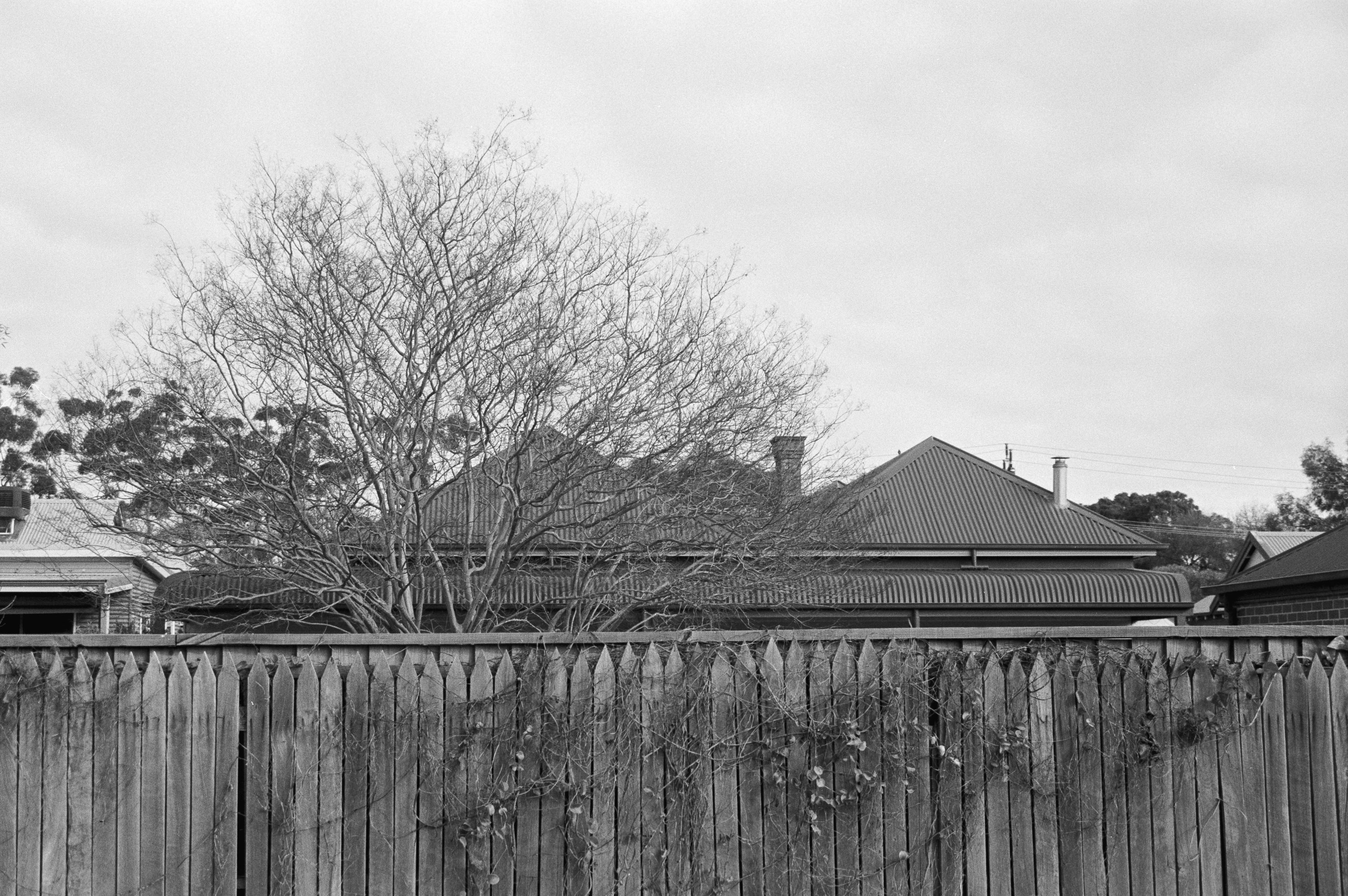
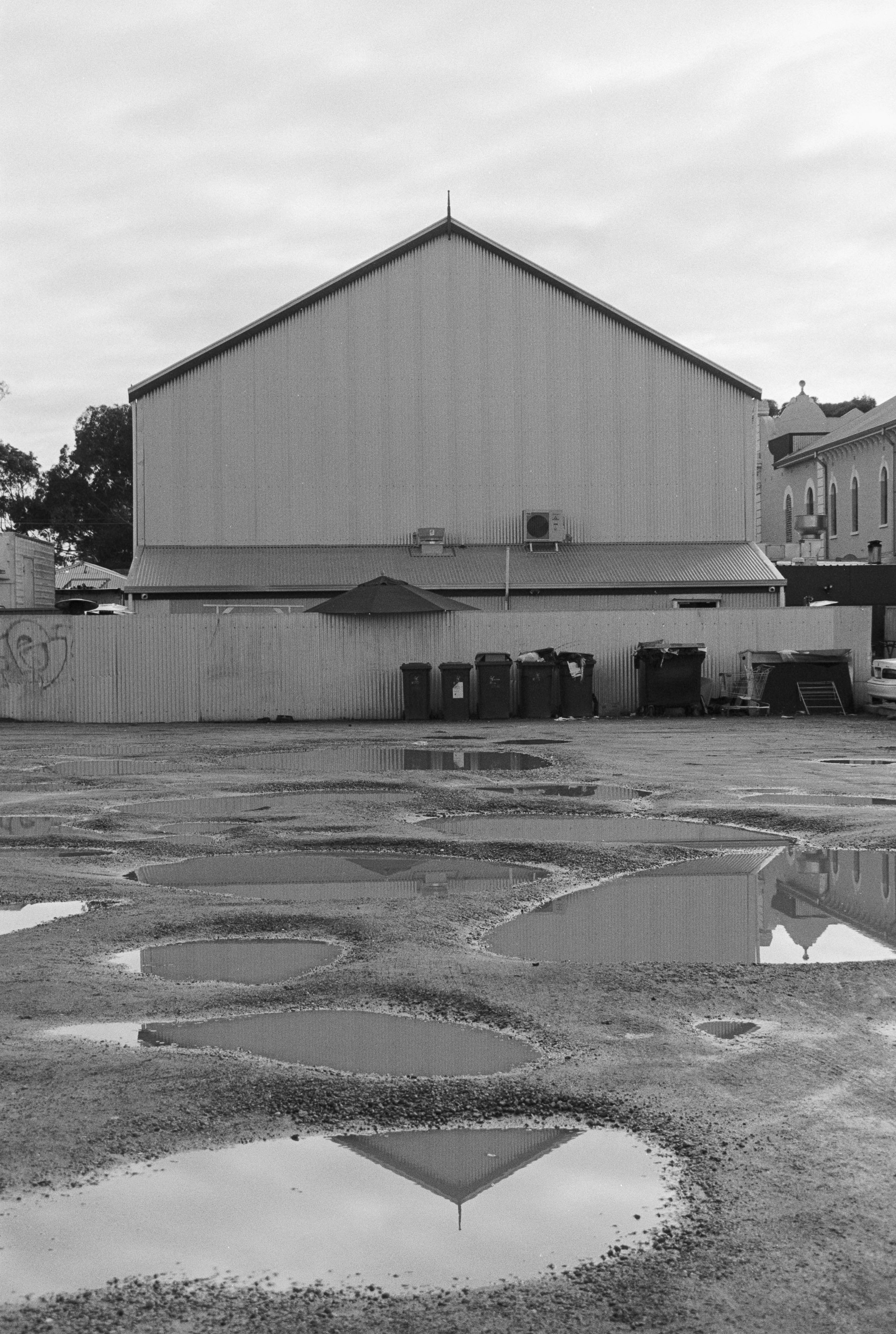
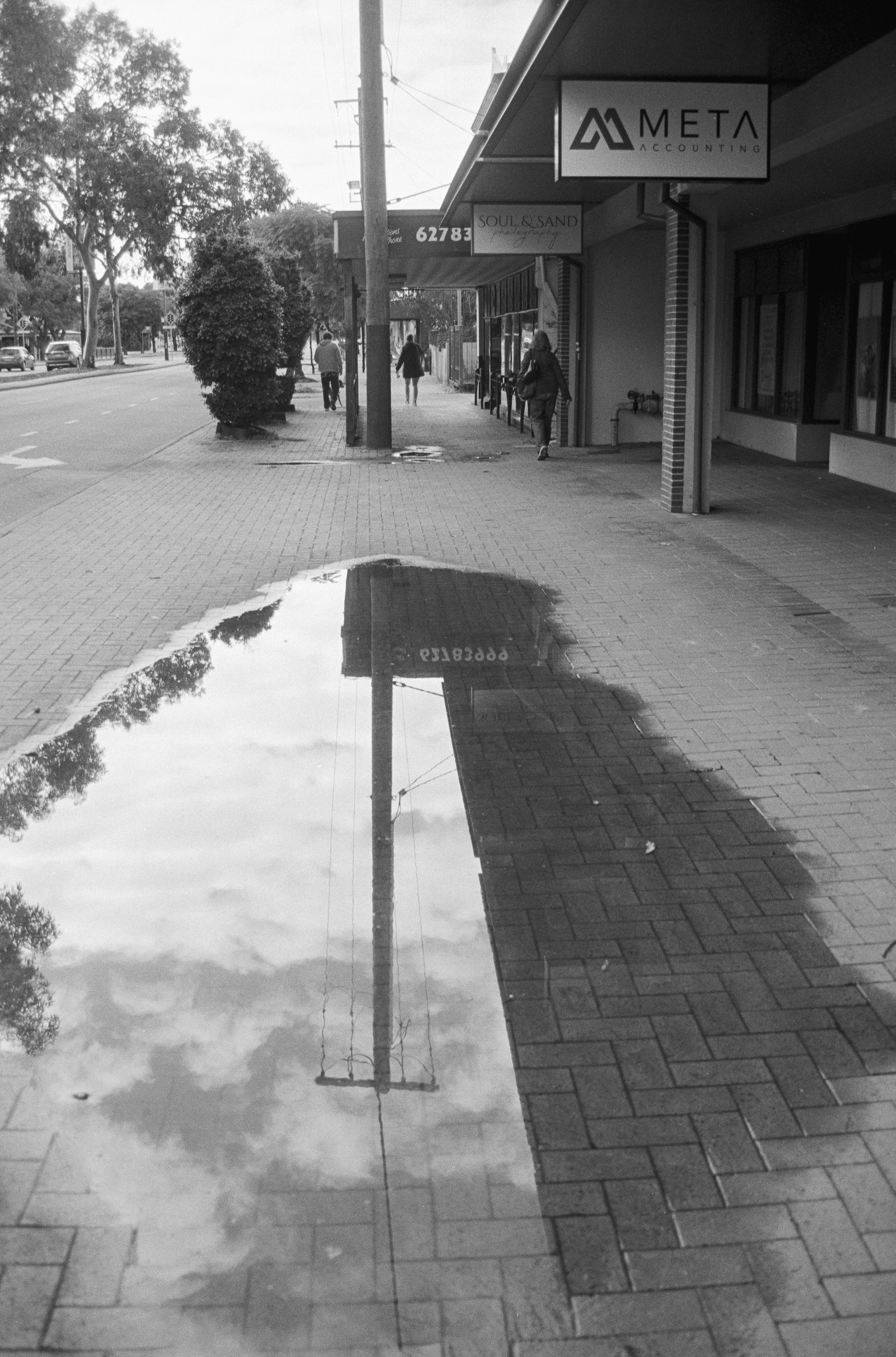
But perhaps that’s the point. Olympus had apparently found that many people were buying SLRs in the early nineties because they wanted better image quality, only to spend most of their time using the kit lens that came with the camera. With the IS-2000, there’s only one lens, but Olympus made it a good one. The 35-135mm range doesn’t show any major weaknesses, and the addition of macro makes it considerably more versatile.
The price is another standout. It’s difficult to argue with the quality of film photographs you can get from an $18 Australian camera. Even if you can’t find one for that price, this class of camera still feels like one of the last true bargains. I would have preferred something wider — 28mm would have made more sense to me for a walkabout camera — but the 135mm telephoto is perfectly usable.
There’s no getting around the cheap-feeling plastic, either, and the size and build quality could be a dealbreaker. I’ve already lamented the slow death of my Fuji GA645Zi medium format camera, and I suspect this Olympus may eventually meet the same fate, becoming one more slab of comically large 90s landfill.
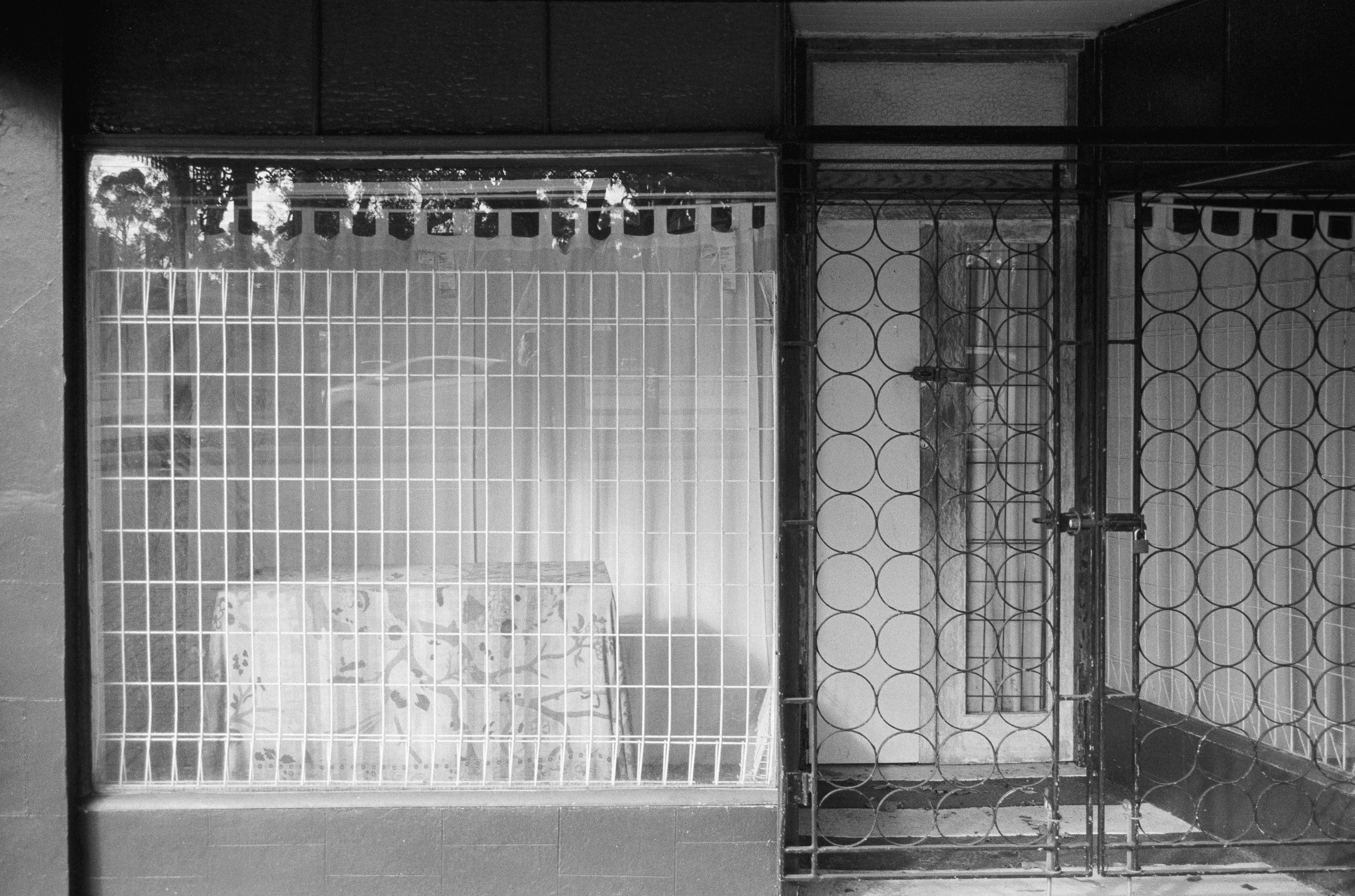
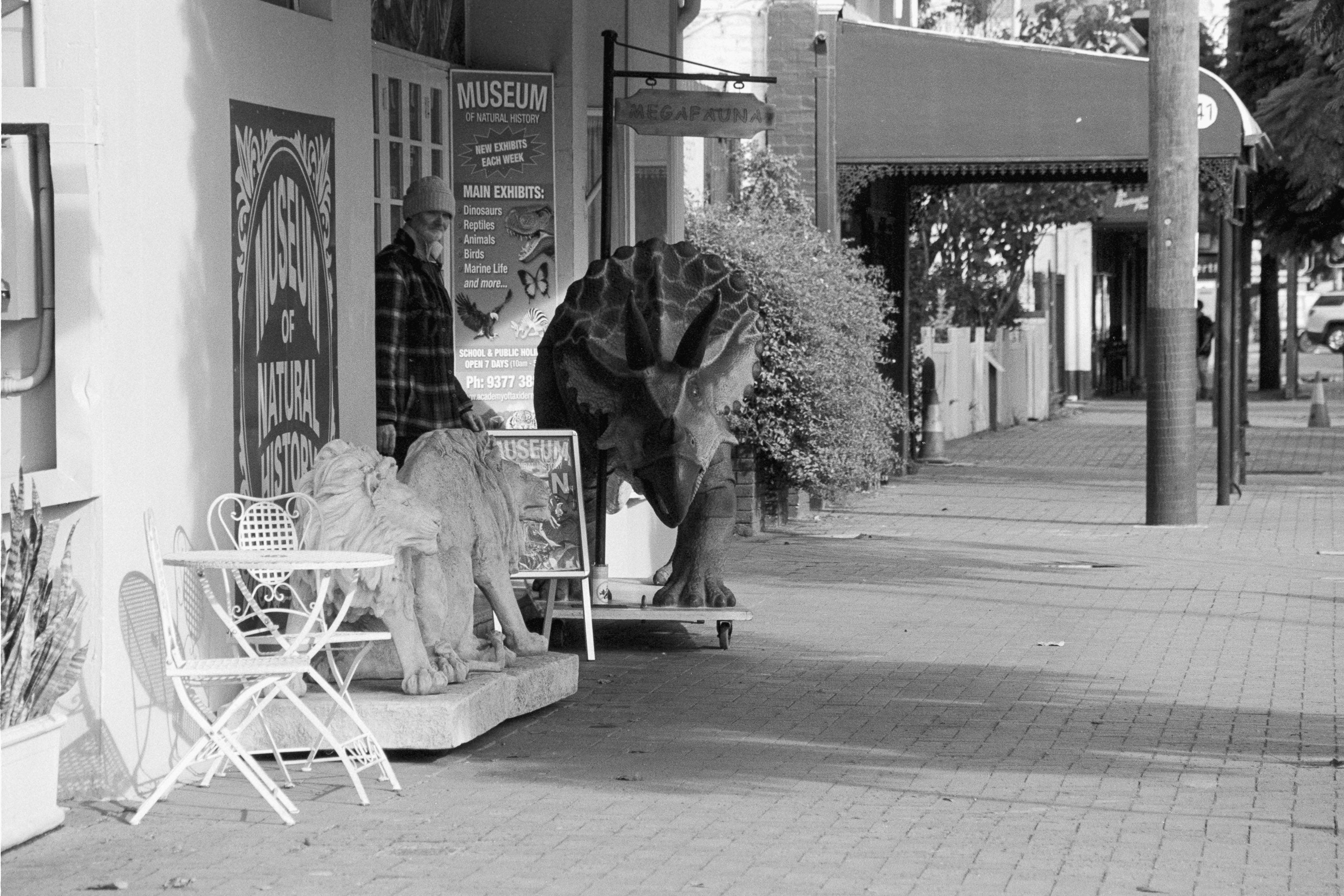
At 18 dollars, though, who cares? This was a dog walk rather than a formal photoshoot, and the photographs are nothing more than snapshots of a part of Perth I rarely visit. Still, the camera delivered where it mattered. I ended up with six Golden moments from Guildford, including the triceratops, a suburban shrine and, very nearly, the back of a sign — a deliberately contrary photograph that I still rather liked.
So these are the six for today: a strange and banal set of photographs from a strange and banal camera. The Olympus IS-2000 may not be something I’m going to pull out to impress the girls at parties, and sometimes size isn’t everything, but in terms of pure image quality, this lumbering beast delivers.

