Let’s embark on a journey into the heart of one of photography’s most captivating elements: light. Ah, yes, light—the ethereal essence that dances upon the canvas of our visual narratives, weaving tales of brilliance and shadow, of illumination and obscurity. But what truly defines this enigmatic force?
Allow me to shed some light on the matter—pun intended. We all know light is the radiant energy manifested in the form of electromagnetic radiation, with wavelengths spanning from 380 to 750 nanometers, perceptible to the human eye. However, let us not confine ourselves rigid constraints of scientific definition. Let’s delve into the realm of poetry, where light becomes glancing, gleaming, glimmering, and beyond – and that’s just the G words.
Light shifts and changes. While our friends in the northern hemisphere find themselves enveloped in the cloak of darkness, here in my corner of the world, we find ourselves basking in the relentless embrace of summer’s scorching sun, leaving the venerable Sunny 16 rule in faded tatters. Here it goes up to 22.
Light and the Nikon L35AD
The Nikon L35AD is a date-back edition of the esteemed Nikon L35AF. This camera deserves a full review but let us not be hasty; today, our focus lies solely on its ability to harness that most precious of commodities—light.
Don’t expect an objective and scientific treatment of the subject here, though. There’s nothing objective about film. Film imbues each frame with a unique character, a personality all its own. In the case of my chosen film, Kodak Ultramax, we have a medium contrast stock, suitable for a myriad of conditions. However, as the astute among you may have already discerned, there were… complications. Yes, complications stemming from my own hubris.
There might have been a few errors during the development process. The results were a bit underdeveloped resulting in thin negatives. But I don’t blame the Nikon L35AD here. There error was in the one factor I could control – me.
Direction, Intensity, Quality, and Continuity: A Quest for the Perfect Light
So let’s try to break this concept down. Light has direction, intensity, quality, and continuity. Direction is probably the most obvious. As a young photographer, I was often reminded to shoot with the light at our backs, bathing our subjects in a soft, even glow. But that simplicity belies the true complexity of light’s nuances. Shoot from the side, you get more dimensionality and with the light behind your subject you get all the fun of silhouettes and halos.
Intensity, too, plays a pivotal role in shaping our photography. From the blistering radiance of the Australian sun to the gentle caress of cloud-filtered light, each variation presents its own unique challenges and opportunities. But sheer intensity isn’t everything. Whether crisp and clear or soft and diffused, the quality of light infuses our images with a palpable sense of atmosphere.
Finally, continuity. This often overlooked dimension of light isn’t so much about the light itself as the scene. Shadows dance across the landscape, reflections shimmer upon the water’s surface, and every object becomes a player in the grand symphony of illumination. How things in the scene, reflect, block and break up the light is a key component of being able to play with it.
Embrace the Light: A Call to Arms
In the end, whatever conditions you find yourself in, cast aside the shackles of convention and venture forth into the boundless realm of photographic exploration and embrace light. Let’s revel in the myriad possibilities that light presents, bending it to our will, shaping it to suit our vision. In the end, it is not the rules that define us, but our willingness to challenge them—to forge our own path in pursuit of luminous enlightenment.
So go forth, and may the light illuminate your path as you capture the world’s wonders through the lens of your camera.
Ah, the allure of the Leica M6, a camera to flaunt wealth and artistic prowess alike. But why bother with ostentation when you can blend in with the proletariat using a humble companion like the Nikon N55? Sure, you won’t garner as many admiring glances, but the stares you do receive may be tinged with curiosity or bemusement, which, let’s face it, is attention nonetheless.
Let me regale you with the tale of my photographic escapades through the bustling streets of Shanghai, armed not with a Leica but with the unassuming Nikon N55 and a curious film stock mysteriously labeled as 800T, procured from the upscale online emporium that is Ali Express. With this unassuming combination in hand, I embarked on a journey to capture the essence of the city.
As I peered through the viewfinder of the N55, a sense of anticipation mingled with uncertainty. Something seemed amiss – the exposure appeared off-kilter, suggesting a potential mismatch between the film speed and the camera’s settings. Despite this initial hiccup, I resolved to soldier on, embracing the idiosyncrasies of the N55, which stubbornly refused to recognize DX codes, leaving me with no option but to compensate for the overexposure manually.
Undeterred by technical hiccups, I ventured forth into the labyrinthine streets of Shanghai’s historic neighborhoods, where brighter conditions finally afforded me the opportunity for more favorable shooting conditions. The results, while not without their flaws, offered glimpses of everyday life in this vibrant city – from the hustle and bustle of the marketplace to the quiet serenity of a secluded alleyway.
Now, let’s delve into the enigma that was the 800T film. Despite my initial reservations about its origins and processing, it performed admirably, even when subjected to a two-stop overexposure. A cautious approach to development paid dividends, yielding clean, balanced negatives that belied the film’s budget-friendly origins.
Yet, amidst the mundane scenes captured on film, a few moments stood out like diamonds in the rough – a fleeting glimpse of Chinese line dancing in a sunlit square, the mesmerizing interplay of light and shadow on the city’s architectural facades, and the endearing charm of canine companions frolicking in a local park. These ephemeral encounters served as poignant reminders of the richness of life, transcending mere visual aesthetics.
The Nikon N55 and 28-80mm f/3.3-5.6G
But what of the N55 itself? Despite its plastic construction and finicky autofocus, it proved to be a stalwart travel companion, compact enough to slip into carry-on luggage yet robust enough to withstand the rigors of urban exploration. Its quirks and limitations only added to its charm, serving as a testament to the resilience of analog photography in an increasingly digital age.
A new roll of film, this time some Kodak Colorplus 200 and while it didn’t give me those same classic Cinestill halations or cinematic tones, it was more than able to capture the veracity of the streets with its muted palate.
And let us not overlook the unsung hero of this photographic odyssey – the 28-80mm kit lens. Despite its modest specifications, it delivered surprisingly sharp and contrasty images, a testament to the craftsmanship of its optics. In the hands of a skilled photographer, it transformed mundane scenes into captivating vignettes, elevating the humble N55 to new heights of artistic expression.
Great for Travel
In the end, the Nikon N55 may not have the cachet of a Leica or the technical prowess of a modern DSLR, but it more than held its own in capturing the essence of Shanghai’s bustling streets. It’s small and light so it won’t break your back on a long day of shooting. It’s cheap and even cheaper looking so no-one is going to mug you for it. Its kit lens is surprisingly sharp and it’s quick, smooth, and responsive. So, if you find yourself in need of a reliable travel companion, look no further than this unassuming gem of a camera – the Nikon N55.
Today, I’m embarking on a journey into the world of vintage cameras with the Nikon N2020, dating back to 1986. The burning question on my mind: Is it as sharp as its name suggests, or does it fall into the category of outdated relics like acid wash jeans and hypercolour t-shirts? Join me as I set out to uncover the truth about this iconic piece of photography history.
Stepping back into the vibrant decade of the 1980s, I can’t help but feel a sense of nostalgia wash over me. But beyond the retro vibes, the Nikon N2020, also known as the Nikon F-501 in some parts of the world, captures the essence of its era with its sleek design and futuristic name. It’s like a time capsule, transporting us back to a period when the future seemed dazzlingly bright, and everyone rocked sunglasses at night.
Released in 1986, the Nikon N2020 emerged amidst a musical landscape dominated by hits like Duran Duran’s “Girl’s on Film” and J Geils Band’s “Freeze Frame”. It’s a time when every song seemed to begin with the sound of a motorized film winder, evoking a sense of nostalgia for a bygone era. The camera itself continues the sleek aesthetic of its predecessors, maintaining the iconic black exterior with red highlights that epitomized the 80s. It’s a nod to an era characterized by bold fashion choices and vibrant color palettes.
Despite being crafted from polycarbonate rather than brass, the Nikon N2020 feels surprisingly solid in my hands. Weighing in at 604g, it’s a testament to the durability of 80s design. Paired with a Nikon 28-105mm lens, the camera exudes an air of sophistication, blending seamlessly with the black plastic body. But beyond its aesthetic appeal, the lens proves to be a reliable companion, delivering sharp images throughout the zoom range with minimal distortion and chromatic aberration.
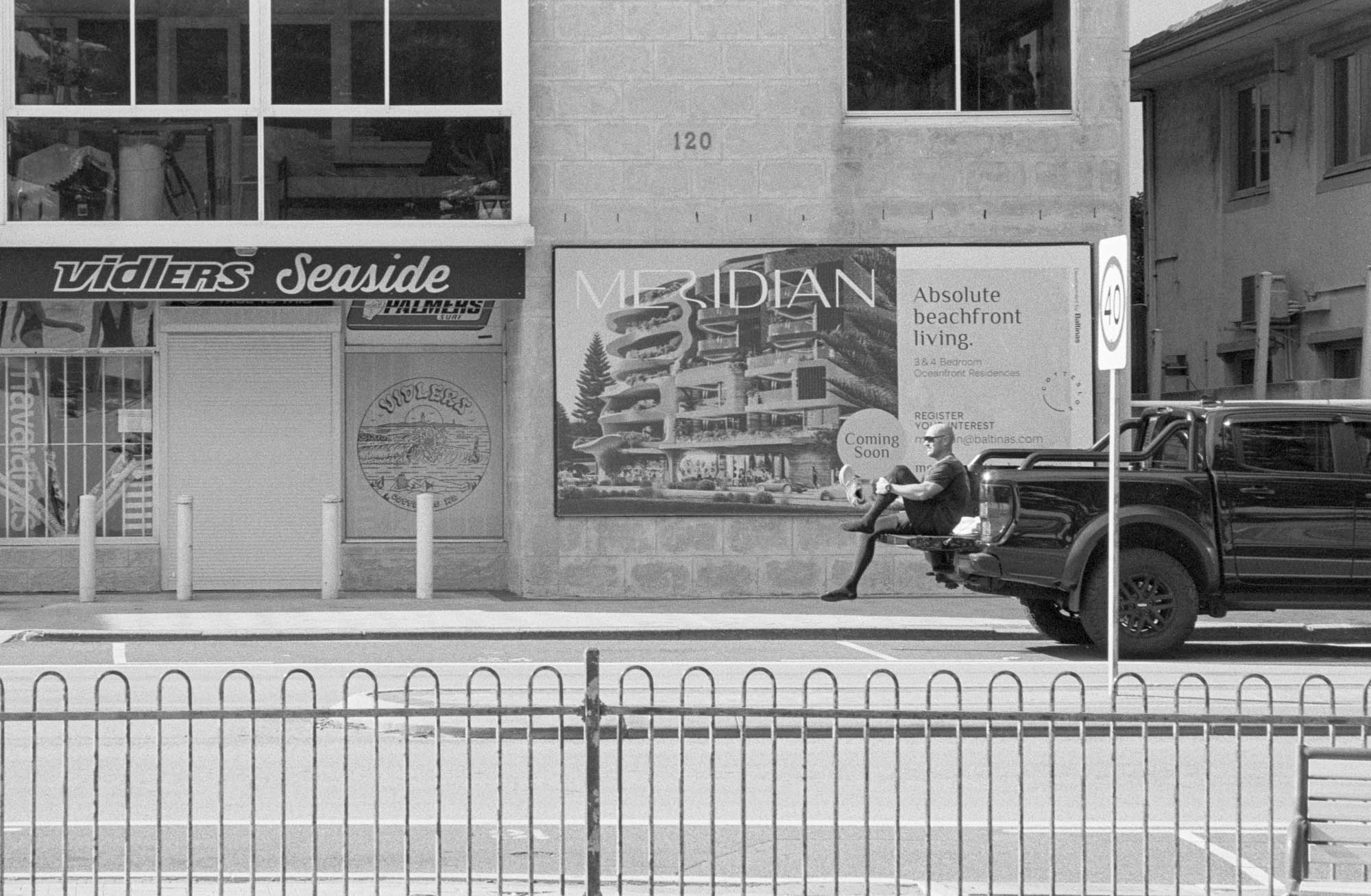
As I embark on a Sunday walk at my local beach to put the Nikon N2020 to the test, I encounter a minor hiccup with the film. However, this setback is quickly resolved with a second roll, allowing me to fully immerse myself in the shooting experience. Despite occasional struggles in bright light and the absence of a shutter priority mode, the camera impresses with its fast shutter speed and versatile shooting modes.
But let’s not overlook the quirks and flaws of the Nikon N2020. Its ergonomic design leaves much to be desired, and the motor drive isn’t exactly discreet, announcing its presence with a noticeable whir. Autofocus can be hit or miss, occasionally settling just forward or backward from the selected focus point. However, the bright viewfinder and LED focusing aid help mitigate these issues, ensuring a relatively smooth shooting experience.
Despite its imperfections, the Nikon N2020 boasts some impressive features for its time. From autofocus modes to TTL metering, it offers a level of control that’s commendable for a camera of its era. And with the ability to use both manual and DX settings for ISO, it provides flexibility in various shooting conditions.
As I reflect on my experience with the Nikon N2020, I can’t help but appreciate its timeless appeal. While it may not be perfect, it captures the essence of the 1980s in all its glory. And much like the era it represents, it’s a reminder that perfection is elusive, but beauty lies in imperfection. So, while I may not be flawless myself, I can embrace the retro charm of the Nikon N2020 and moonwalk through life with confidence. After all, in a world where nothing is perfect, sometimes it’s the quirks that make us truly memorable.
Let’s dive right in, shall we? We’re talking about a particular gem in the realm of camera lenses: the Nikon 50mm f/1.2 AI-S. Now, this isn’t just any 50mm lens; it’s a certified light bucket. Back in 1978, when it first hit the scene, it promised to suck in light like a black hole without leaving your photos in a pit of despair. But does it still hold up in today’s unforgiving photographic landscape?
As the neon lights of Tokyo’s Shinjuku district flickered to life, I found myself armed with my trusty Nikon FE paired with the venerable Nikon 50mm f/1.2 AI-S lens. Venturing into the bustling streets, I was eager for a night off from my teaching responsibilities, ready to immerse myself in the vibrant energy of the city. I found camaraderie in the unlikeliest of places, forging bonds with newfound friends who shared a passion for exploration and discourse. As the night unfolded, I couldn’t help but marvel at the serendipitous moments captured through the lens of my Nikon FE, each frame a testament to the spontaneity and vibrancy of Shinjuku’s streets.
A Dance with Film and Light
Despite the film’s lack of objective reference for white balance, I embarked on a journey of post-processing exploration, extracting the raw beauty of the night through the lens of Lightroom. Amidst the chaos of the city, the Nikon 50mm f/1.2 AI-S lens stood as a stalwart companion, capturing moments with its timeless design and solid construction.
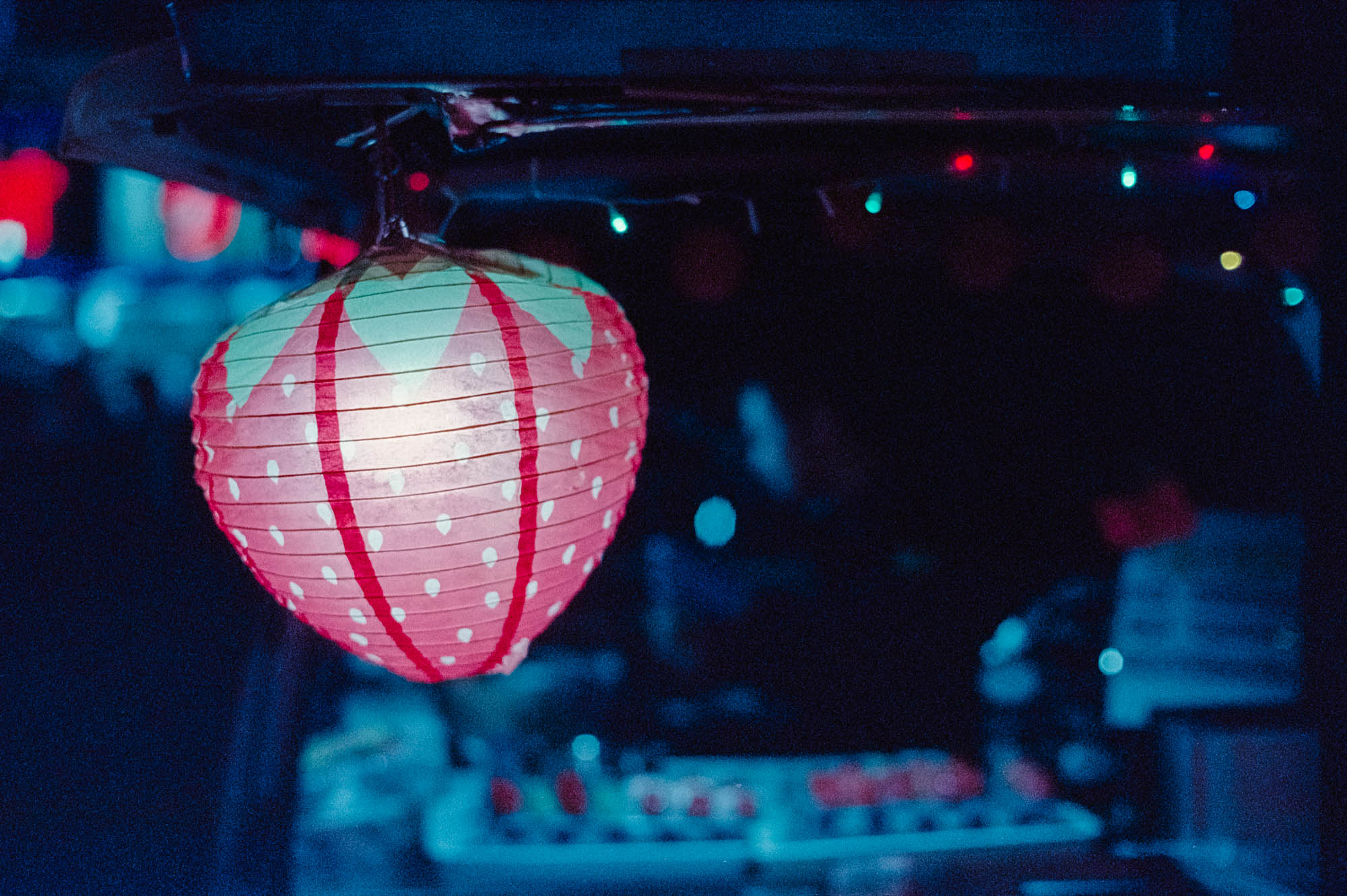
As I scanned the negatives, I marveled at the smorgasbord of colors and textures captured by the lens. From the vibrant hues of neon signs to the subtle interplay of light and shadow, each image told a story of urban life illuminated by the glow of the night. While some may dismiss the imperfections of the film as shortcomings, I embraced them as part of the charm, adding depth and character to my photographic narrative.
Nikon 50mm on Generic 800T Motion Picture Film
A Lens with Character
The Nikon 50mm f/1.2 AI-S lens boasts a rich history spanning over four decades, embodying a blend of craftsmanship and character. Despite its imperfections, this lens possesses a unique charm that transcends technical limitations. Its wide aperture renders scenes with a delicate balance of sharpness and softness, akin to an artistic brushstroke painting the canvas of the night. However, its quirks, from vignetting to chromatic aberration, add to its allure, transforming mundane scenes into ethereal compositions.
Delving deeper into the lens’s optical design, I discovered its simplicity belied its complexity. With seven optical elements arranged in six groups, the lens exhibited a traditional spherical design that harkened back to a bygone era of photography. Yet, its longevity and durability spoke to its enduring appeal, standing the test of time amidst advancements in technology. While modern lenses may boast technical superiority, the Nikon 50mm f/1.2 AI-S lens remained a timeless icon, revered by photographers for its distinctive character and versatility.
The Next Day, Shot with Ilford HP5 Pushed to 1600 ISO
Testament to a Legend
While modern optics may boast technical superiority, the Nikon 50mm f/1.2 AI-S lens stands as a testament to craftsmanship and individuality. Its imperfections become its strengths, offering photographers a tool to craft images imbued with personality and depth. From the glow of neon lights to the subtleties of the night, this lens embraces the art of photography, inviting exploration and creativity. As the world moves towards newer technologies, this lens remains a beacon of tradition and innovation, challenging photographers to see beyond perfection and embrace the beauty of imperfection.
In conclusion, Nikon’s 50mm f/1.2 AI-S lens may not be a flawless masterpiece, but it is undeniably an icon of photographic history. Its burnished brass and glass tell a story of craftsmanship and character, inviting photographers to embrace the quirks of analog photography in a digital age. So, as I reflect on my journey through the streets of Shinjuku, I can’t help but appreciate the timeless allure of this legendary lens, knowing that its legacy will continue to inspire photographers for generations to come.
It was late February (not the 30th) and I was in Tokyo and wanted to go out and take some street photos on film. The classic choice of lens for this kind of photography would be something small and moderately wide. Maybe jump on the Diane Ar Bus with a 35mm or the get my Cartier Bress on with a slightly narrower 50mm.
But I didn’t do that. Instead I picked a monstrous old manual metal and glass 35-200mm zoom lens. Today we’re going to explore why.
A Marvelous Lens…
Was it the logical choice for the street? Probably not. But why do I find myself using this more than just about any other manual focus lens I own? It’s an optical marvel.
Before you spit vehemently on the floor at the description of a manual superzoom lens as a marvel, you have to cast your mind back to those bleak days of the early 80s when the optical imaging world was disrupted by the introduction of zoom lenses. It was a tumultuous time for lens manufacturing. Autofocus was starting to get its clumsy foot in the door and zooms were becoming more commonplace. After all, who doesn’t want a lens that gives you great versatility and ease of use?
In 1982 the longest zoom that Nikon could offer was a 50-135mm f/3.5. In the subsequent years, this range extended to 35-105 and 35-135mm. So you could see how they were incrementally improving things over time.
This particular lens was released in 1985 after what was by all accounts a long and tortuous process to design and refine it to achieve its 5.7x zoom range. That was the same year that Nikon released its first retail autofocus SLR the Nikon F-501. While the Nikon L35AF in 1983 had shown the potential of autofocus in compact cameras, it wasn’t mainstream at that point and the 501 was released at the same time as the manual focus F-301 which was probably more popular.
No autofocus but a very large zoom range. And In that context, when this lens was released, it was probably already a little out of date, while still being overly ambitious at the same time.
… But a Compromise
The result is a compromise but isn’t everything in life a compromise? You’re always going to struggle fitting your baby bassinet in your Bugatti Veron and if you’ve ever actually owned a pocketknife you’ll understand the limits of your corkscrew and scissors. Of course, that tool for getting the stones out of horse’s hooves is 100% fit for purpose even if that’s a purpose you’ll never need.
While the zoom range is great, it doesn’t go wider than 35mm.
The maximum aperture is 3.5 at the wide end and it’s variable to 4.5 at the long end. So not the worst but it’s not very fast.
It CAN focus as close as 0.27m or 0.86ft, giving a decent if not quite macro 1:4 life size reproduction. Annoyingly, that’s only at the 35mm end, accessible by a ring that increases the distance from the focal plane. Effectively a built in extension tube. It would be nice to have had it at the longer end to give you more working distance.
It does have amazing build quality. Really amazing. You could bludgeon your baby with it and given you might need to, to actually squeeze him into your Bugatti, that’s a selling point in itself. In any case, if you dropped it on your toes you’d be much more worried about your toes than the lens.
It weighs 740g or 1.63lbs for you imperials and that’s heavy but it is surprisingly compact. It has a 62mm filter thread which is actually quite small and probably smaller than most modern superzooms.
Compare it to Nikon’s modern 24-200mm Z lens and it still holds its own when you think that it’s nearly 40 years later. Well ok, it might teeter a bit.
While it is reasonably balances on my Nikon FE it’s not exactly discreet. The push-pull zoom itself is a compromise. I do have a couple of these style lenses and once you’ve had practice, it’s actually possible to zoom and focus in one action but this lens is bigger and much stiffer and more clumsy.
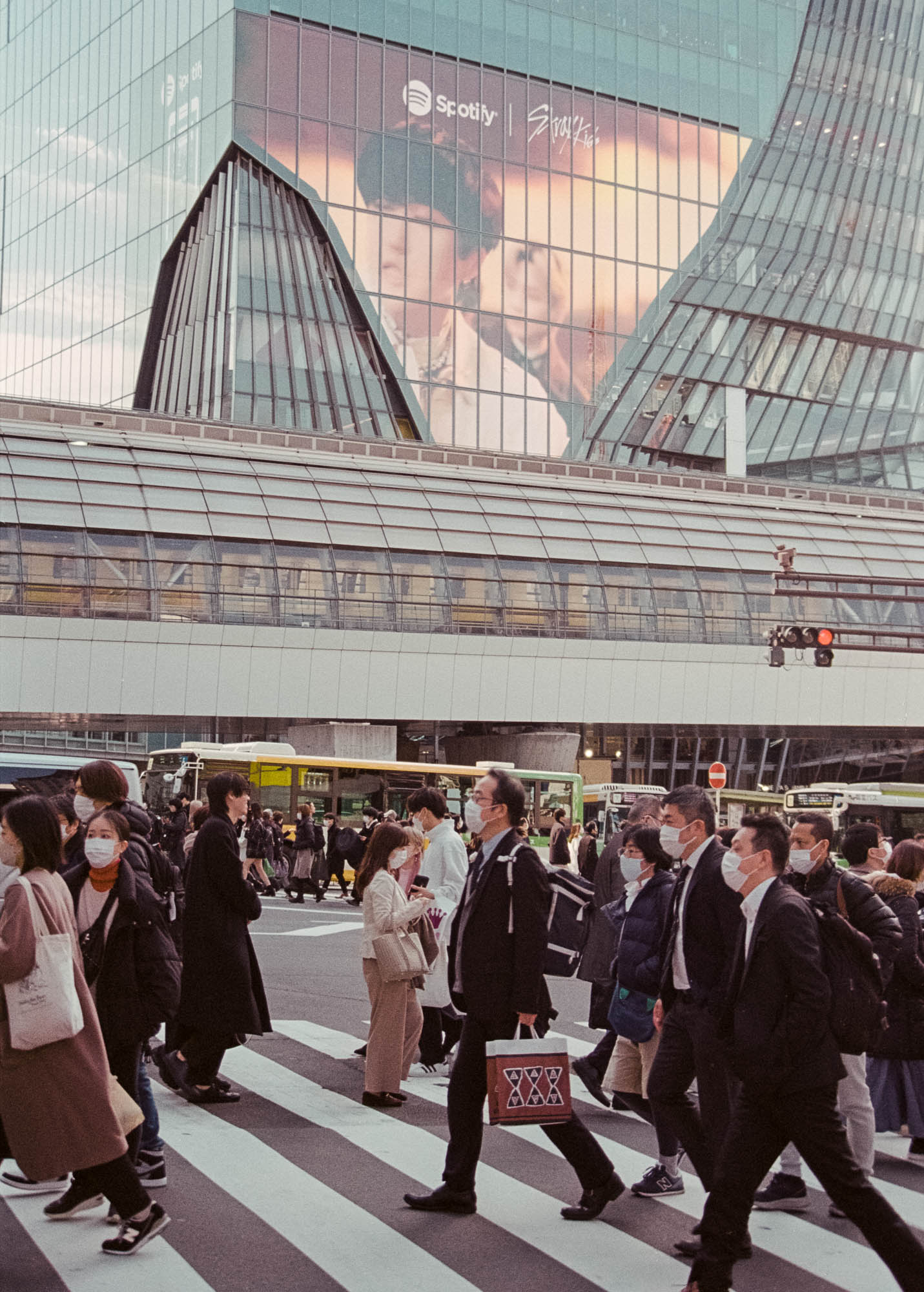
But it is what it is and I guess that’s going to be the theme of this review. But if it is what it is, then what is it? With all these compromises, is it good enough? To find out, I took the camera on a walk from Harajuku to Shibuya on a cold February day in Tokyo
From Harajuku…
It Is What It Is
Is this the swiss army knife of lenses or am I expecting too much? You can’t open a bottle of wine with it OR get the stones out of horses’ hooves. But can you take good pictures?
Earlier, I called this an optical marvel. There is a lot of lens crammed in here. Realistically, the marvel is that they managed to create it and it not be totally horrible. With 17 elements in 13 groups all working together to minimise aberration and field curvature at the various zoom lengths, it should have the light transmission qualities of a lump of coal.
But somehow light manages to reach the film plane and while this isn’t a 50mm f/1.2 Z lens, that lens can’t shoot 35 mm or 85mm or 135mm or 200mm. You get the idea.
It does distort but that’s very fixable and I have and no problems bending those lines back to right angles in post. F/3.5 is slow but you could see, on a winter’s day, it was still quite usable with 200 ISO Kodak Colorplus. The corners are soft wide open and diffraction creeps in by f/11 but at it’s rare that I’m going to want to shoot f/22 anyway.
I call it a Marvel and if there’s a downside to that, using it is the creative equivalent of watching a Marvel movie. You get a bit of comedy, romance, fantasy and action, and that’s even before I’ve taken the photo, just with trying to compose, zoom and focus with it is a drama. It’s not a shoot from the hip Arthouse experience though you could probably push a roll of HP5 in there if you want that black and white Zac Snyder aesthetic.
Perhaps my biggest complaint is that it is a bit like Captain Marvel. Overpowered but leaden and dull as a result, and I guess it ends up being a bit unsatisfying because it never quite lives up to its own ambition.
… to Shibuya
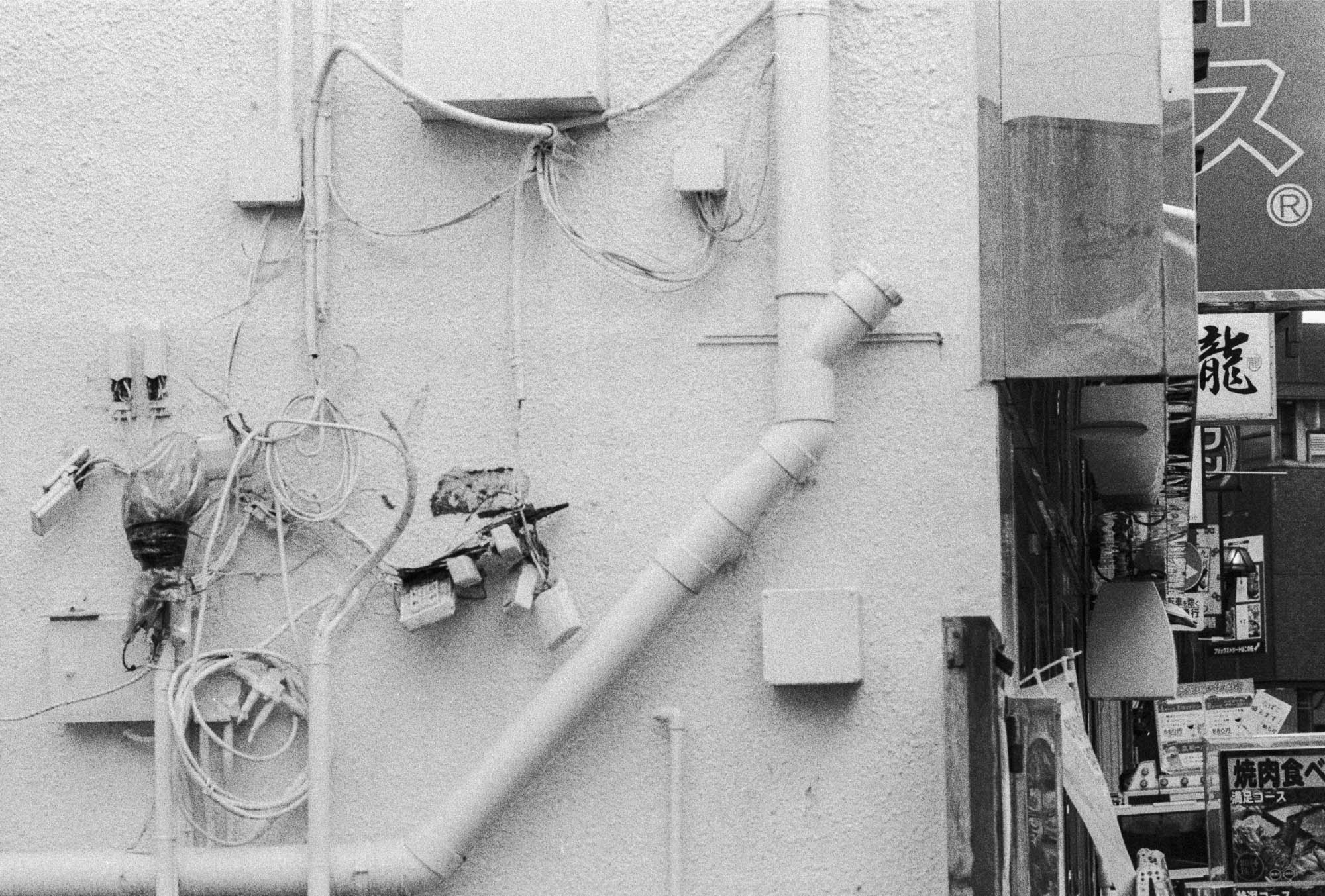
You can see that the best photos are the ones where I’ve had time to think through a composition to take in a street scene, capture close-up detail, or narrow the frame to point out details or find angles in the architecture. The strength of this lens is it’s versatility not it’s sharpness.
Great for the Price
In doing some research on this lens from people who actually know what they’re talking about, I found Nikon’s own review in which the words ‘relatively’ and ‘satisfactory’ both appear 6 times. That probably tells you something; and that’s coming from Nikon’s own PR machine.
It was never Nikon’s most successful lens but that might be because this hefty lens came with a hefty price-tag. As of 1996 this was still selling for US$1,290 and while it’s long discontinued now, that’s a testament to the engineering that went into it and the fact that there weren’t any great alternatives. As early as 1983 Tamron did have a 35-210mm lens available but from everything I’ve read, if that one’s a Marvel, it’s much more Carol Danvers than Nick Fury. For 15% of the original asking price you can now pick up an excellent quality copy and leave it on your camera. So why even bother to slum it in the 3rd party ghetto.
Ultimately, I’ve never heard anyone complain about the image quality. People don’t look at my photos and say, ‘oh, did you use a Nikon AI Zoom Nikkor 35-200mm f/3.5-4.5S’. They might say, ‘did you really take a photo of that.’ But that one’s on me, not the lens.
To me it’s sharp enough and when I look through my Lightroom catalogue it’s probably my most used lens. The reason for that may well be because I lack any sense of aesthetic intent as a photographer. I’m not getting up before sunrise to capture that perfect 20mm landscape, or using it exclusively for shallow depth of field portraits or sports photography.
This is the lens that I put on when I’m indecisive or feeling lazy. It’s a great travel lens and it’s also the one that I’ll stick on my camera when I’m just out walking the dog or don’t have any sense of what photographic opportunities might be out there. For me, that’s most of the time.
But let me know your thoughts. What’s your most versatile lens? Would you use a bloated beast like this or do you prefer to just take a wide prime locked to f/8 and zone focusing to capture the decisive moment?
























































 Mark McMahon