Testing the Nikon Ai Zoom Nikkor 35-200mm f/3.5-4.5S on the Streets of Tokyo

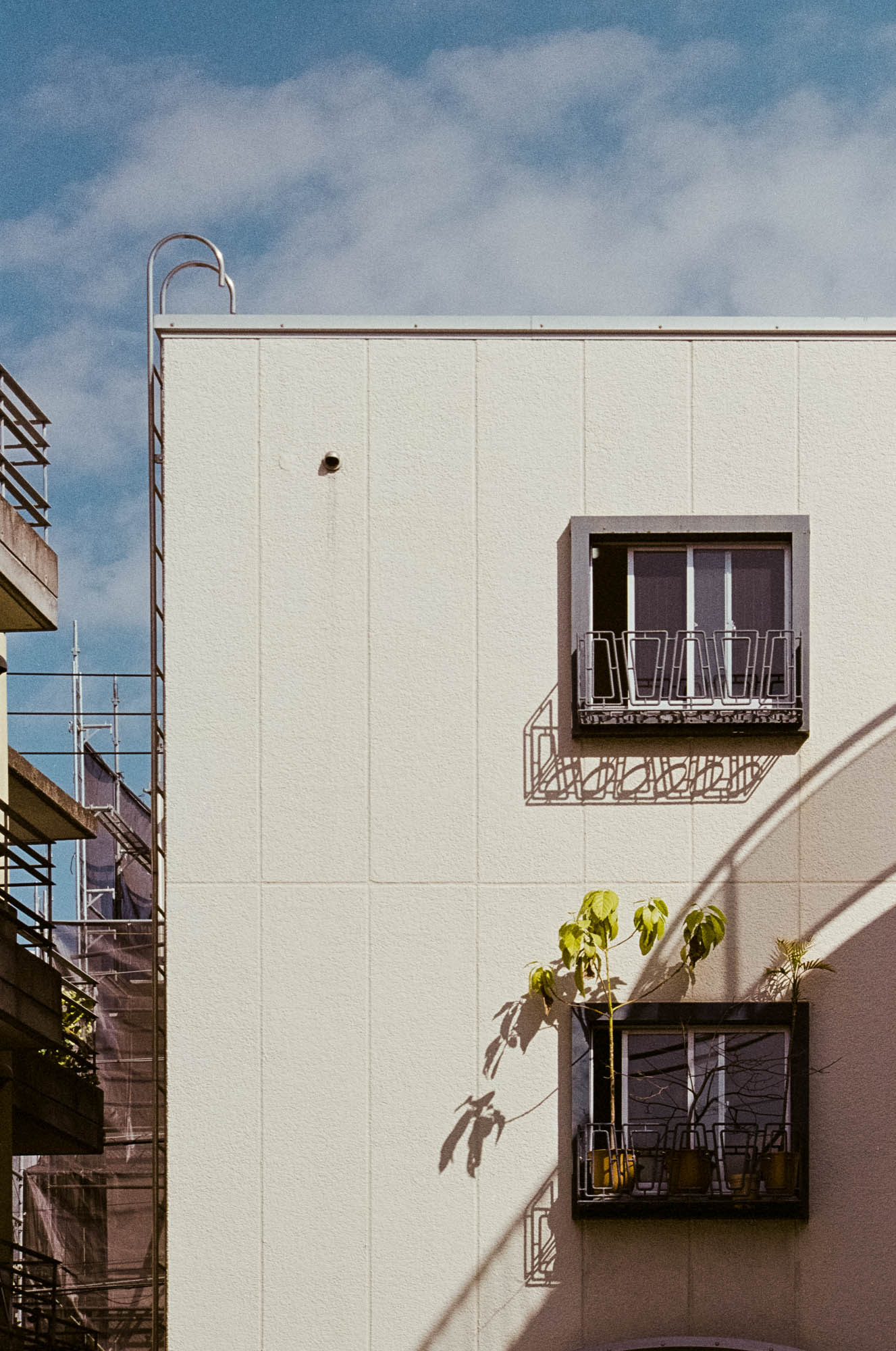
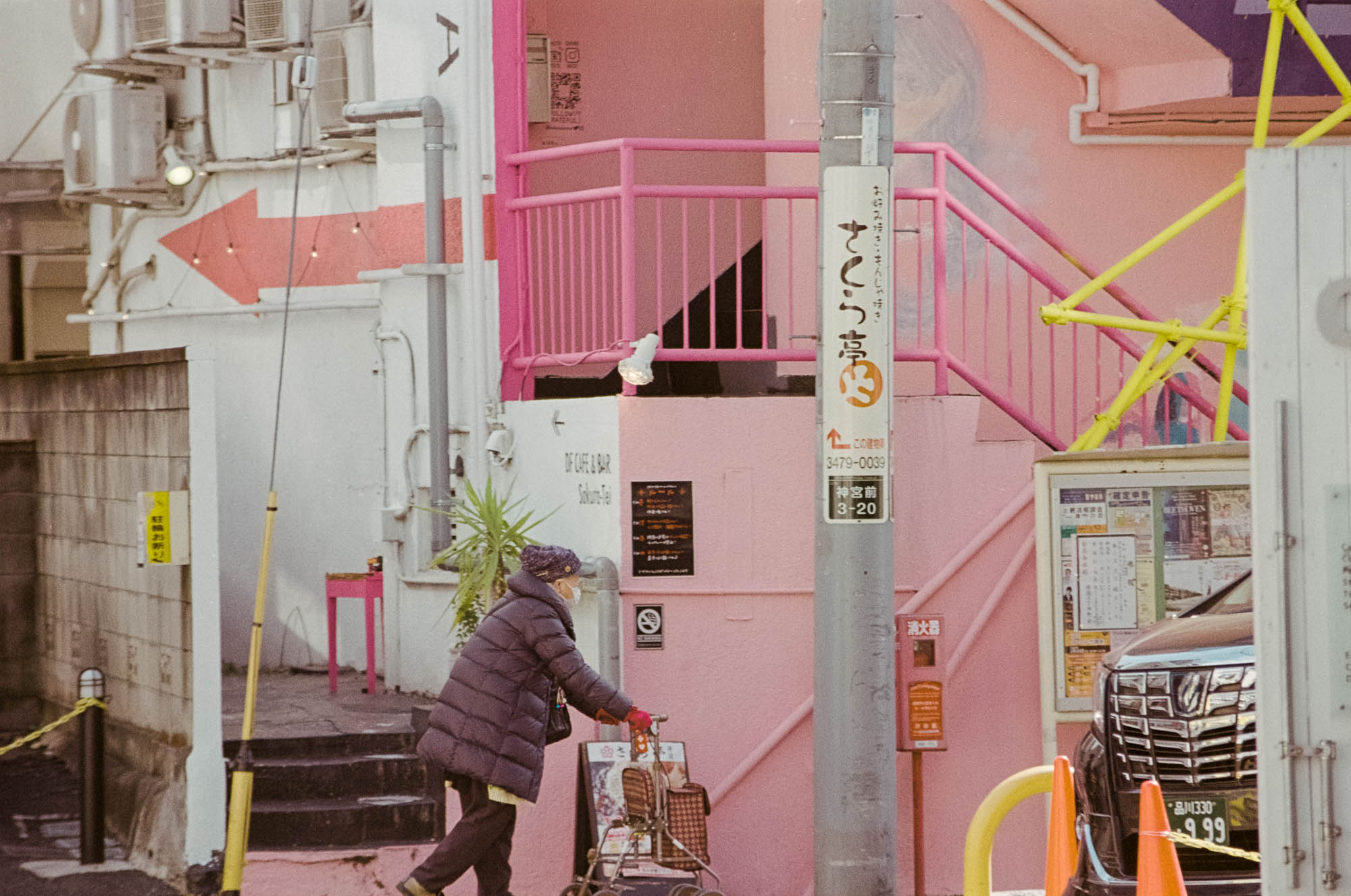
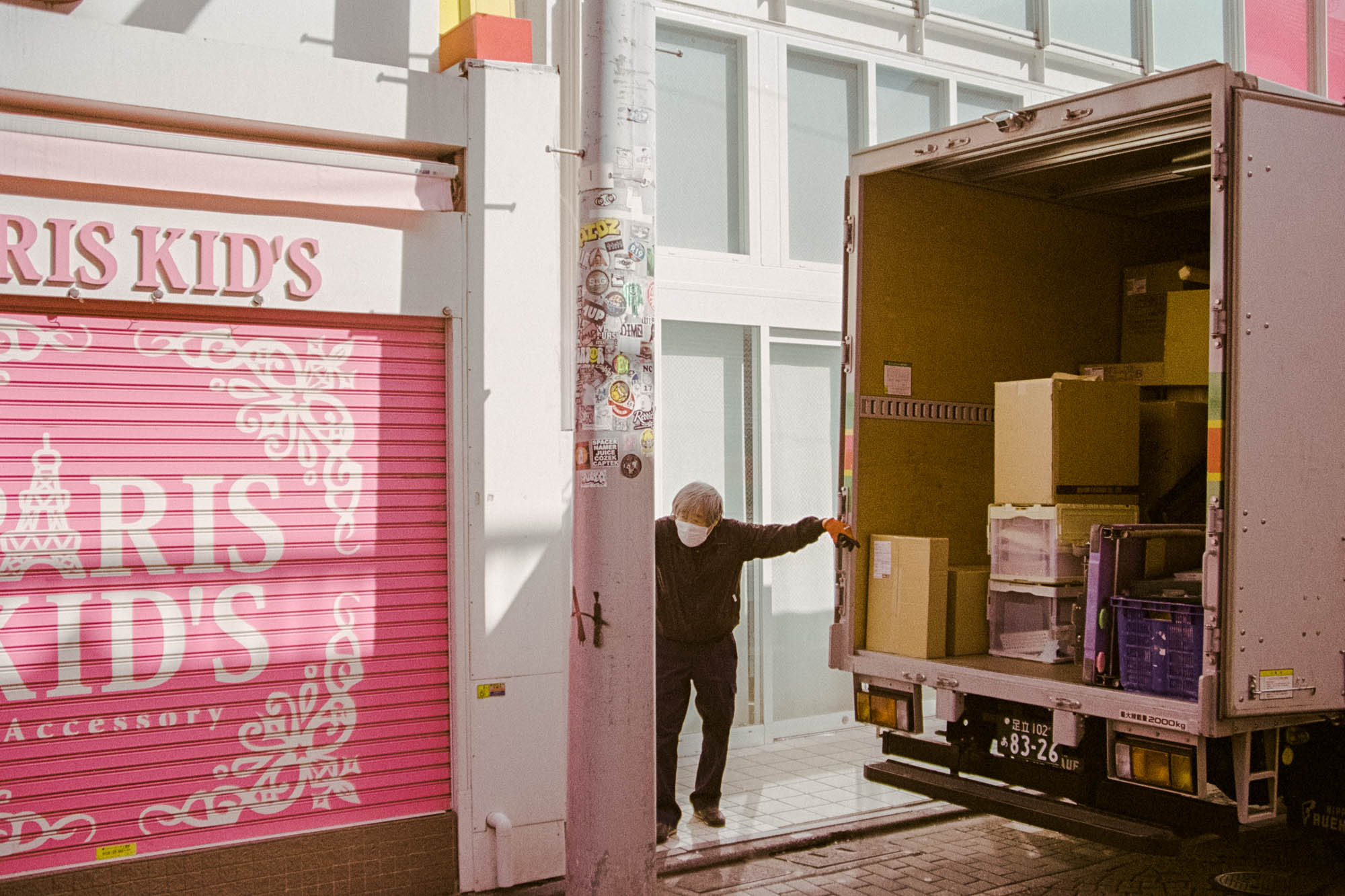
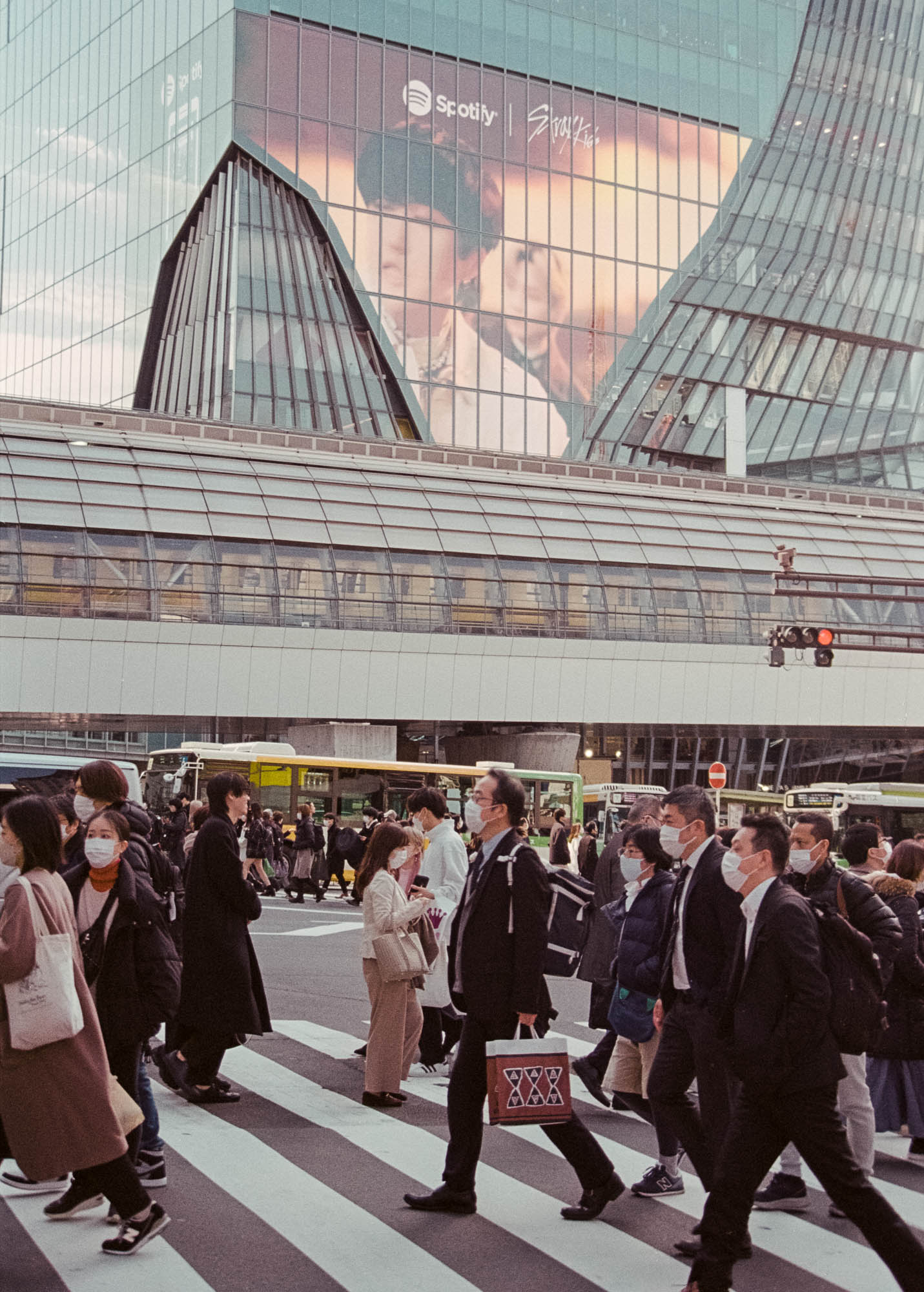
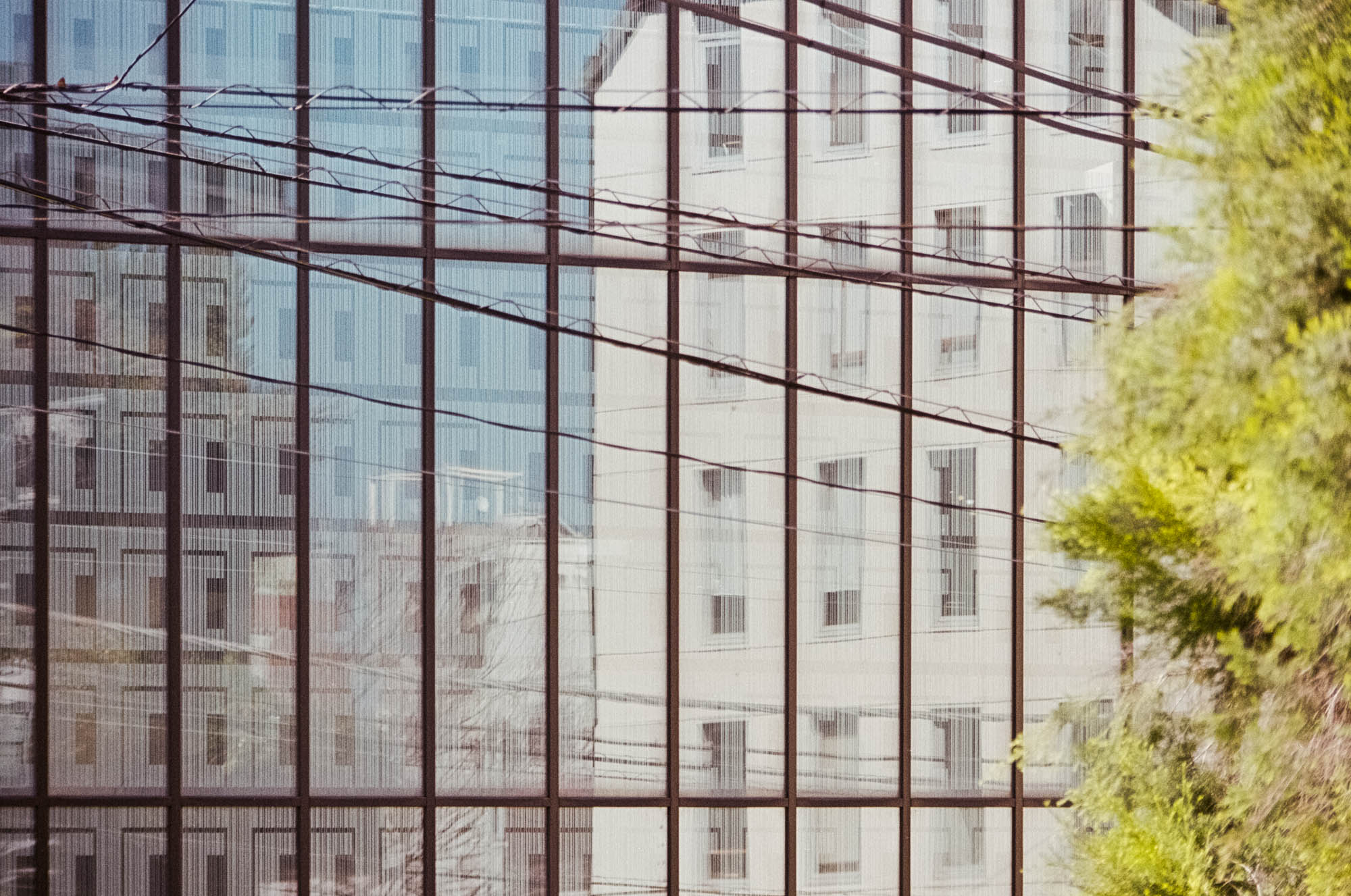
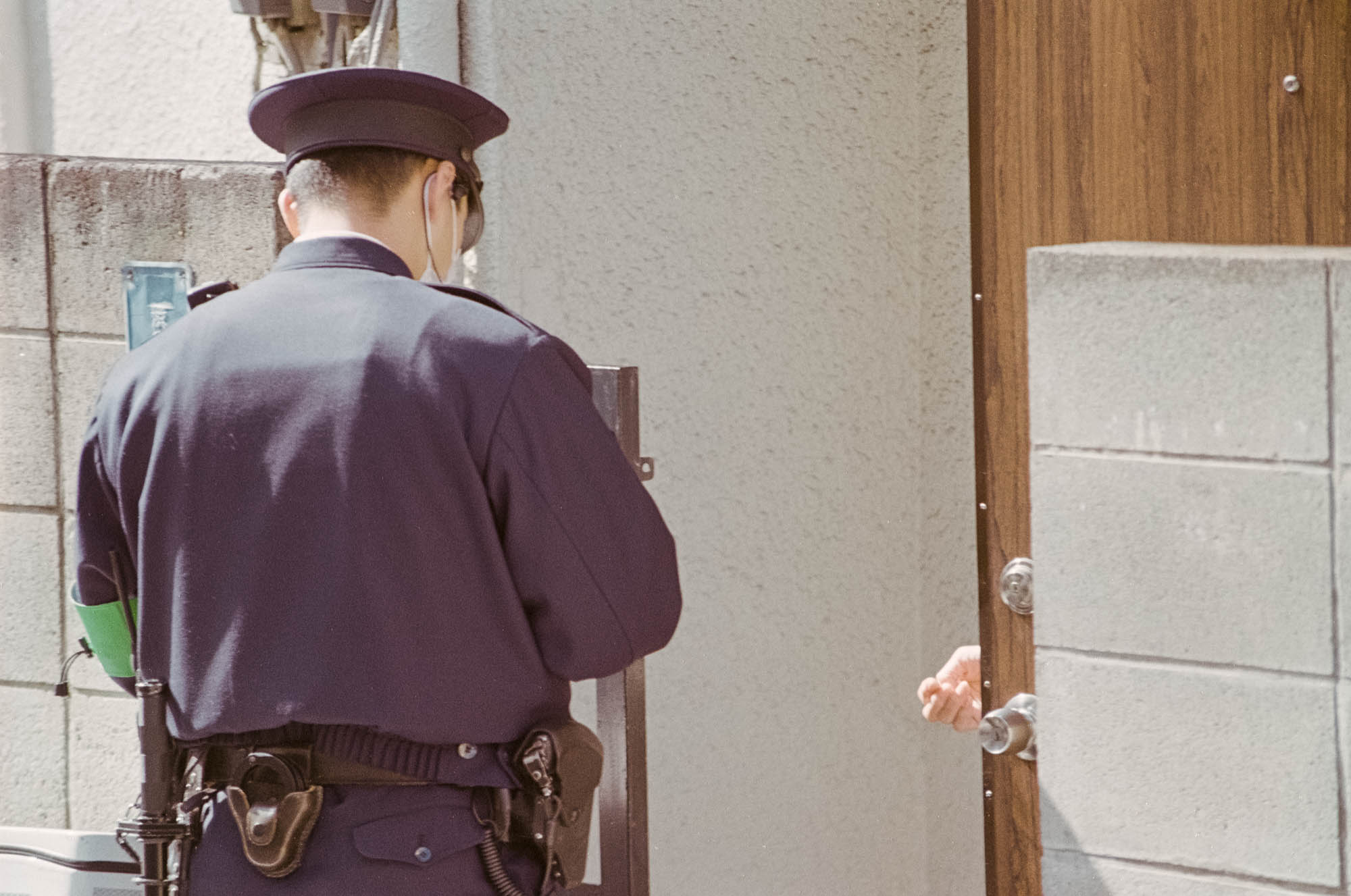
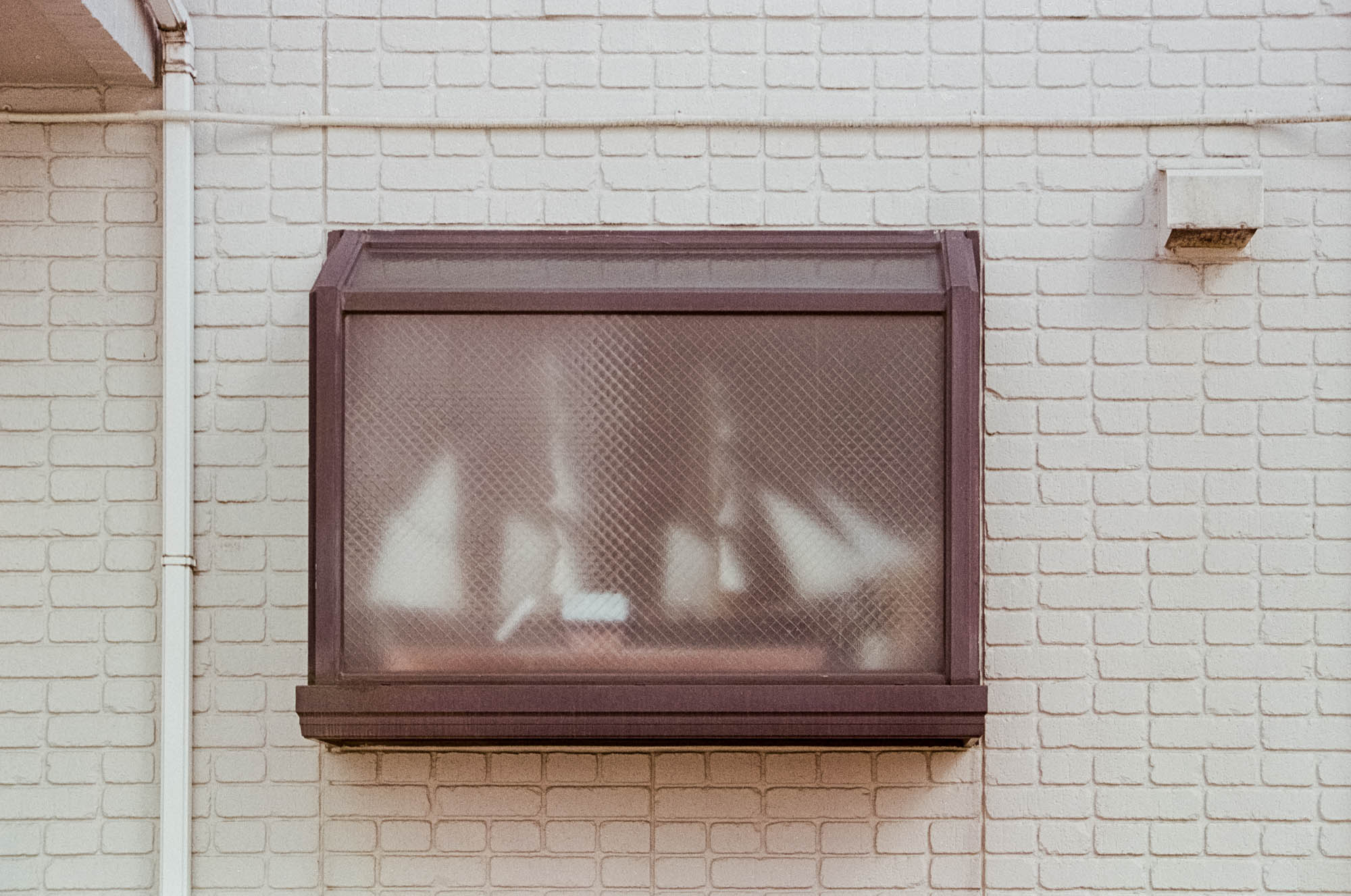
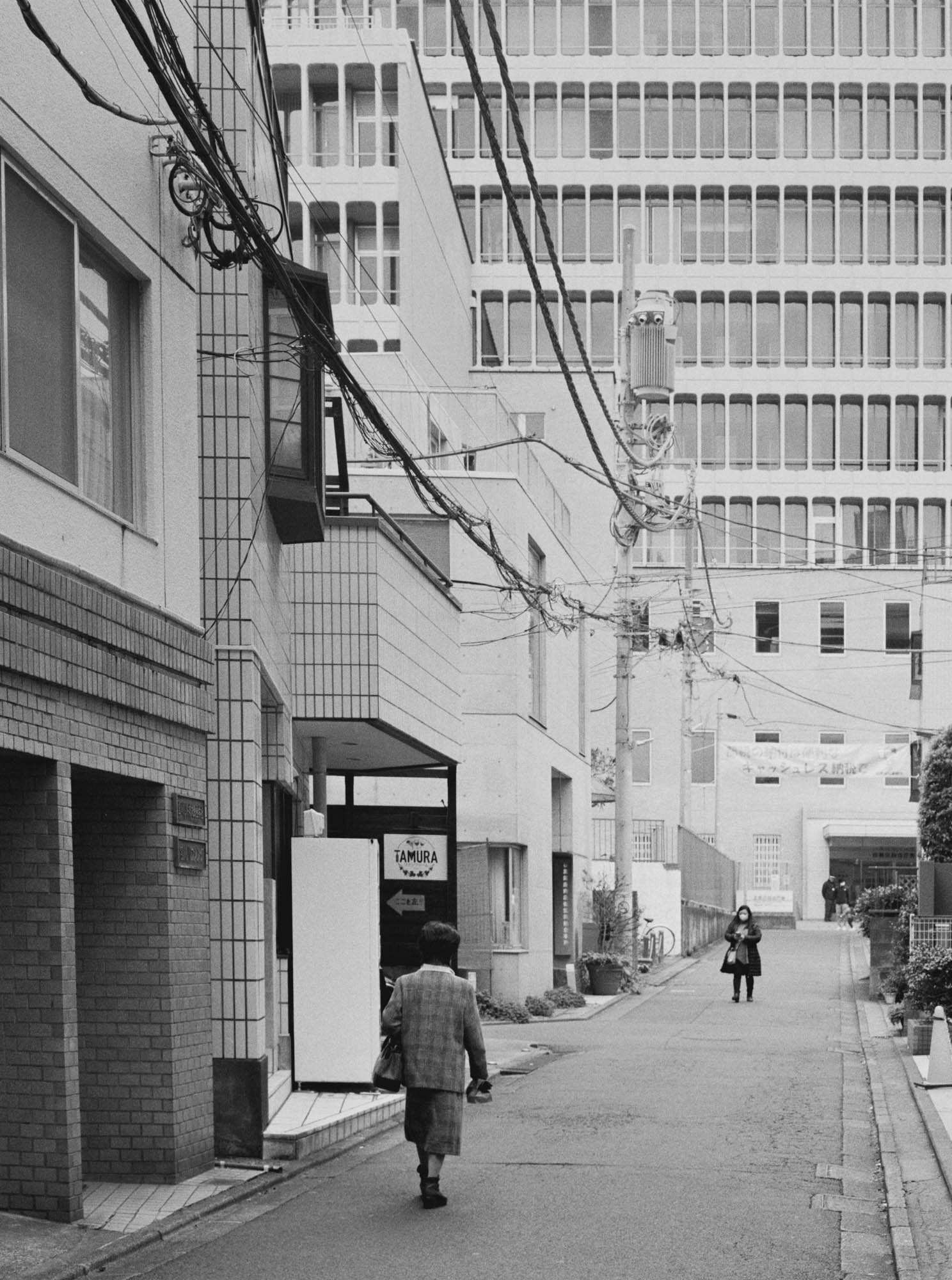
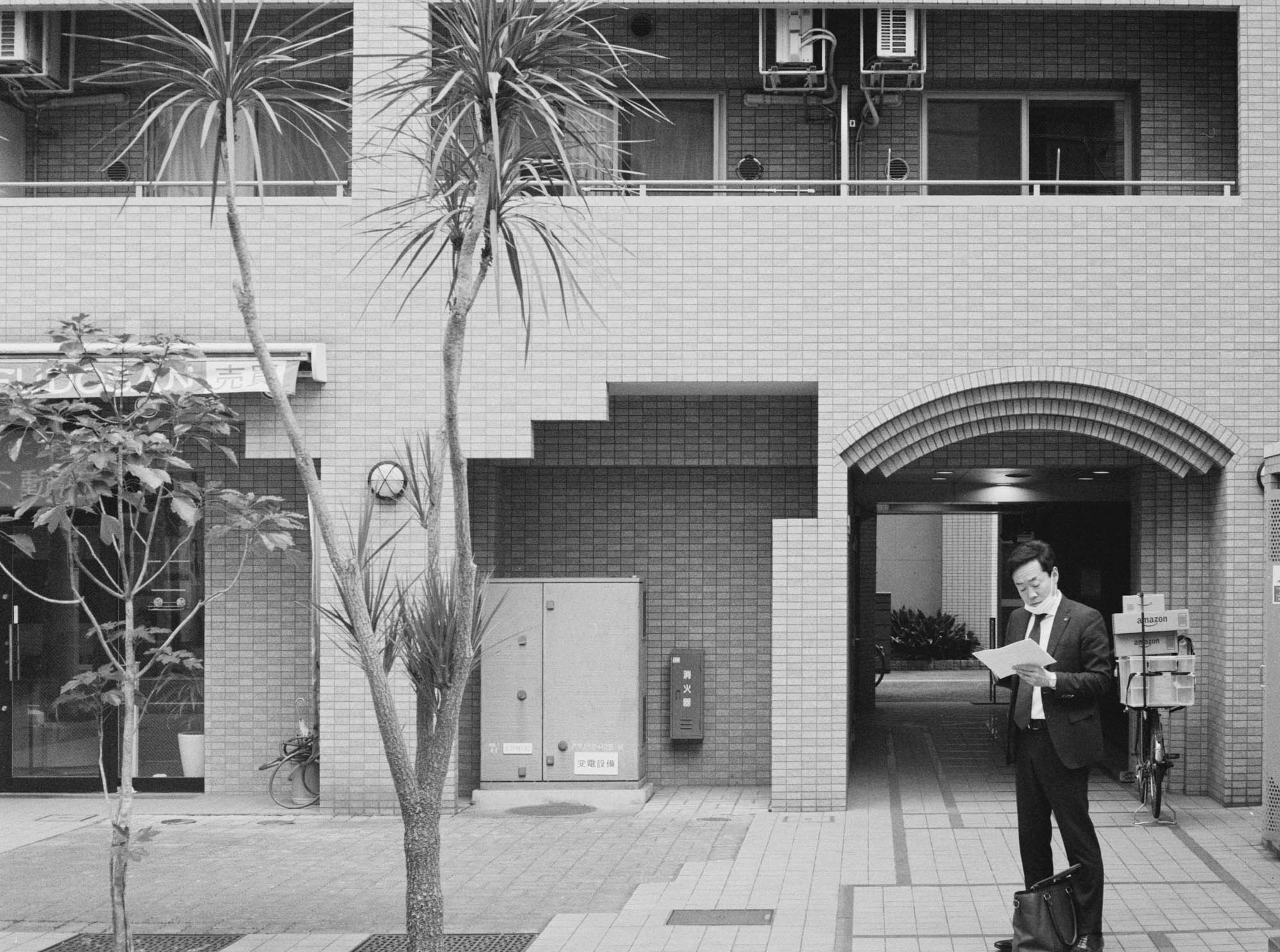
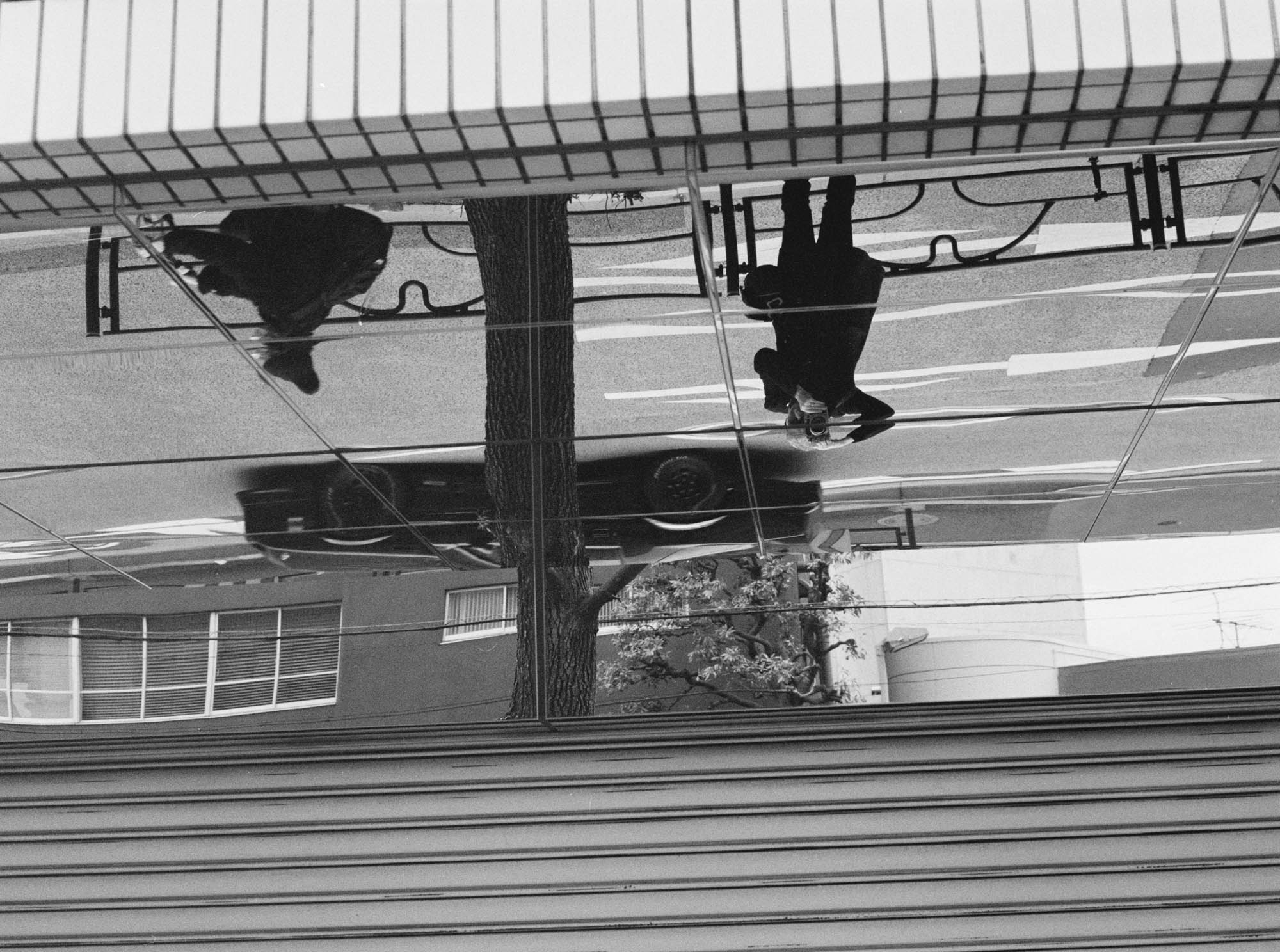
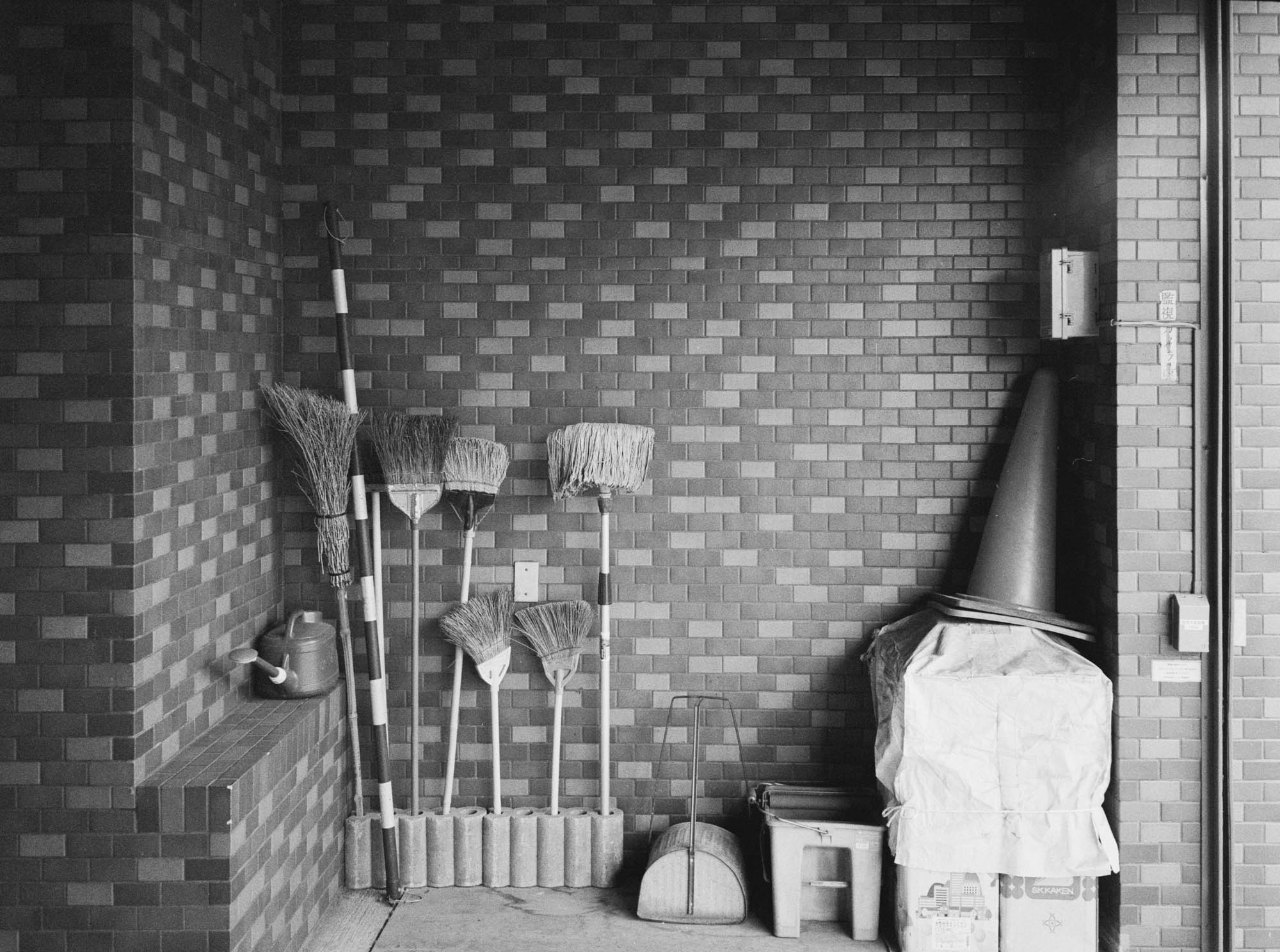
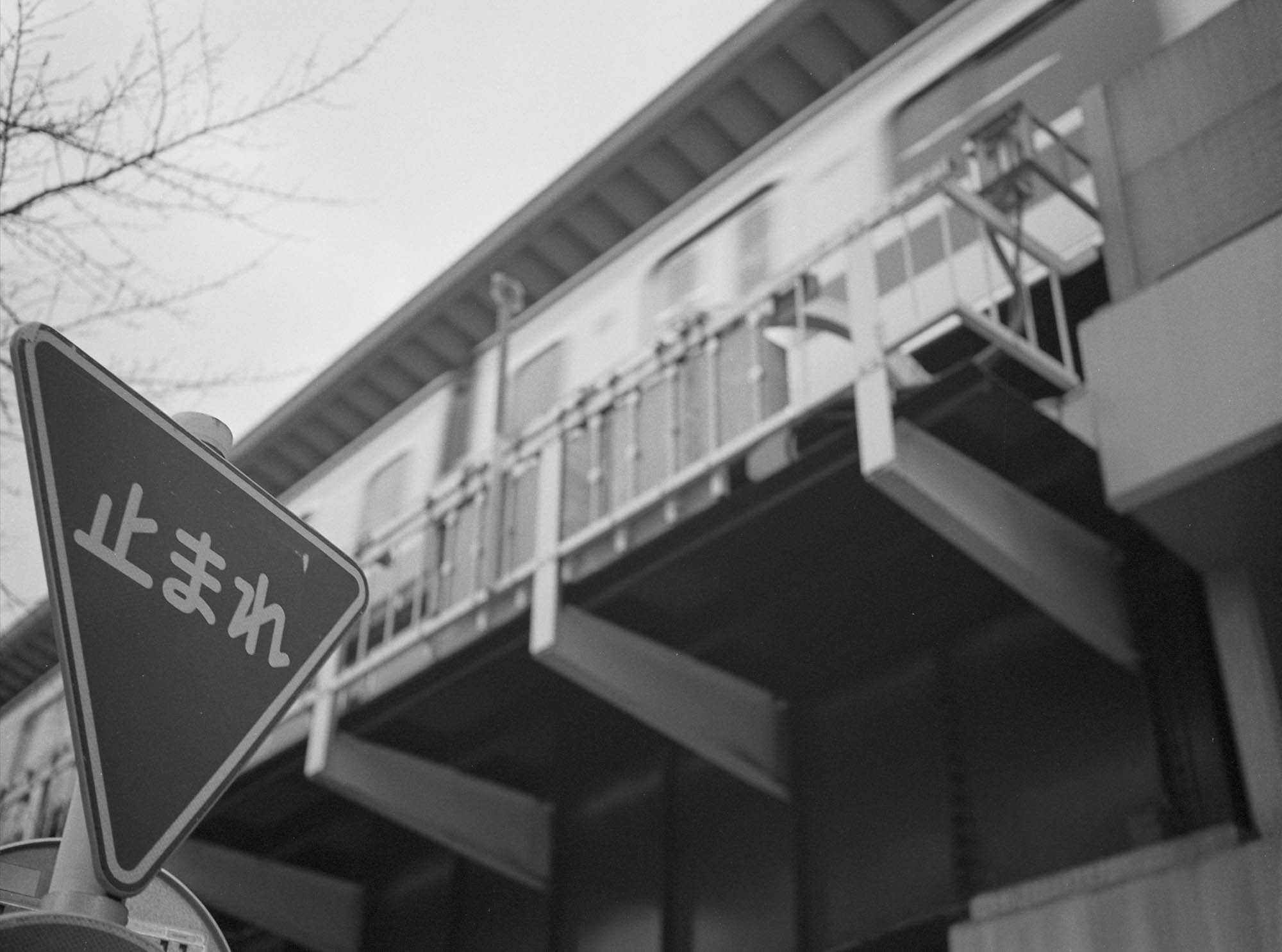
It was late February (not the 30th) and I was in Tokyo and wanted to go out and take some street photos on film. The classic choice of lens for this kind of photography would be something small and moderately wide. Maybe jump on the Diane Ar Bus with a 35mm or the get my Cartier Bress on with a slightly narrower 50mm.

But I didn’t do that. Instead I picked a monstrous old manual metal and glass 35-200mm zoom lens. Today we’re going to explore why.

A Marvelous Lens…

Was it the logical choice for the street? Probably not. But why do I find myself using this more than just about any other manual focus lens I own? It’s an optical marvel.

Before you spit vehemently on the floor at the description of a manual superzoom lens as a marvel, you have to cast your mind back to those bleak days of the early 80s when the optical imaging world was disrupted by the introduction of zoom lenses. It was a tumultuous time for lens manufacturing. Autofocus was starting to get its clumsy foot in the door and zooms were becoming more commonplace. After all, who doesn’t want a lens that gives you great versatility and ease of use?

In 1982 the longest zoom that Nikon could offer was a 50-135mm f/3.5. In the subsequent years, this range extended to 35-105 and 35-135mm. So you could see how they were incrementally improving things over time.

This particular  lens was released in 1985 after what was by all accounts a long and tortuous process to design and refine it to achieve its 5.7x zoom range. That was the same year that Nikon released its first retail autofocus SLR the Nikon F-501. While the Nikon L35AF in 1983 had shown the potential of autofocus in compact cameras, it wasn’t  mainstream at that point and the 501 was released at the same time as the manual focus F-301 which was probably more popular.

No autofocus but a very large zoom range. And In that context, when this lens was released, it was probably already a little out of date, while still being overly ambitious at the same time.

… But a Compromise

The result is a compromise but isn’t everything in life a compromise? You’re always going to struggle fitting your baby bassinet in your Bugatti Veron and if you’ve ever actually owned a pocketknife you’ll understand the limits of your corkscrew and scissors. Of course, that tool for getting the stones out of horse’s hooves is 100% fit for purpose even if that’s a purpose you’ll never need.

While the zoom range is great, it doesn’t go wider than 35mm.

The maximum aperture is 3.5 at the wide end and it’s variable to 4.5 at the long end. So not the worst but it’s not very fast.

It CAN focus as close as 0.27m or 0.86ft, giving a decent if not quite macro 1:4 life size reproduction. Annoyingly, that’s only at the 35mm end, accessible by a ring that increases the distance from the focal plane. Effectively a built in extension tube. It would be nice to have had it at the longer end to give you more working distance.

It does have amazing build quality. Really amazing. You could bludgeon your baby with it and given you might need to, to actually squeeze him into your Bugatti, that’s a selling point in itself. In any case, if you dropped it on your toes you’d be much more worried about your toes than the lens.

It weighs 740g or 1.63lbs for you imperials and that’s heavy but it is surprisingly compact. It has a 62mm filter thread which is actually quite small and probably smaller than most modern superzooms.

Compare it to Nikon’s modern 24-200mm Z lens and it still holds its own when you think that it’s nearly 40 years later. Well ok, it might teeter a bit.

While it is reasonably balances on my Nikon FE it’s not exactly discreet. The push-pull zoom itself is a compromise. I do have a couple of these style lenses and once you’ve had practice, it’s actually possible to zoom and focus in one action but this lens is bigger and much stiffer and more clumsy.

But it is what it is and I guess that’s going to be the theme of this review. But if it is what it is, then what is it? With all these compromises, is it good enough? To find out, I took the camera on a walk from Harajuku to Shibuya on a cold February day in Tokyo

From Harajuku…

It Is What It Is

Is this the swiss army knife of lenses or am I expecting too much? You can’t open a bottle of wine with it OR get the stones out of horses’ hooves. But can you take good pictures?

Earlier, I called this an optical marvel. There is a lot of lens crammed in here. Realistically, the marvel is that they managed to create it and it not be totally horrible. With 17 elements in 13 groups all working together to minimise aberration and field curvature at the various zoom lengths, it should have the light transmission qualities of a lump of coal.

But somehow light manages to reach the film plane and while this isn’t a 50mm f/1.2 Z lens, that lens can’t shoot 35 mm or 85mm or 135mm or 200mm. You get the idea.

It does distort but that’s very fixable and I have and no problems bending those lines back to right angles in post. F/3.5 is slow but you could see, on a winter’s day, it was still quite usable with 200 ISO Kodak Colorplus. The corners are soft wide open and diffraction creeps in by f/11 but at it’s rare that I’m going to want to shoot f/22 anyway.

I call it a Marvel and if there’s a downside to that, using it is the creative equivalent of watching a Marvel movie. You get a bit of comedy, romance, fantasy and action, and that’s even before I’ve taken the photo, just with trying to compose, zoom and focus with it is a drama. It’s not a shoot from the hip Arthouse experience though you could probably push a roll of HP5 in there if you want that black and white Zac Snyder aesthetic.

Perhaps my biggest complaint is that it is a bit like Captain Marvel. Overpowered but leaden and dull as a result, and I guess it ends up being a bit unsatisfying because it never quite lives up to its own ambition.

… to Shibuya

You can see that the best photos are the ones where I’ve had time to think through a composition to take in a street scene, capture close-up detail, or narrow the frame to point out details or find angles in the architecture. The strength of this lens is it’s versatility not it’s sharpness.

Great for the Price

In doing some research on this lens from people who actually know what they’re talking about, I found Nikon’s own review in which the words ‘relatively’ and ‘satisfactory’ both appear 6 times. That probably tells you something; and that’s coming from Nikon’s own PR machine.

It was never Nikon’s most successful lens but that might be because this hefty lens came with a hefty price-tag. As of 1996 this was still selling for US$1,290 and while it’s long discontinued now, that’s a testament to the engineering that went into it and the fact that there weren’t any great alternatives. As early as 1983 Tamron did have a 35-210mm lens available but from everything I’ve read, if that one’s a Marvel, it’s much more Carol Danvers than Nick Fury. For 15% of the original asking price you can now pick up an excellent quality copy and leave it on your camera. So why even bother to slum it in the 3rd party ghetto.

Ultimately, I’ve never heard anyone complain about the image quality. People don’t look at my photos and say, ‘oh, did you use a Nikon AI Zoom Nikkor 35-200mm f/3.5-4.5S’. They might say, ‘did you really take a photo of that.’ But that one’s on me, not the lens.

To me it’s sharp enough and when I look through my Lightroom catalogue it’s probably my most used lens. The reason for that may well be because I lack any sense of aesthetic intent as a photographer. I’m not getting up before sunrise to capture that perfect 20mm landscape, or using it exclusively for shallow depth of field portraits or sports photography.

This is the lens that I put on when I’m indecisive or feeling lazy. It’s a great travel lens and it’s also the one that I’ll stick on my camera when I’m just out walking the dog or don’t have any sense of what photographic opportunities might be out there. For me, that’s most of the time.

But let me know your thoughts. What’s your most versatile lens? Would you use a bloated beast like this or do you prefer to just take a wide prime locked to f/8 and zone focusing to capture the decisive moment?
Three Rolls of Film with the Fuji GA645Zi in Tokyo Japan

The Fuji GA645Zi is my favourite and least liked camera. I call him Harvey after Harvey Weinstein. Big, ugly and powerful, promising you the world but more likely to leave you traumatised with your creative ambitions in tatters. This article will explain why.

You have to hand it to Fujifilm for bucking trends. Throughout the last decades of the film era, while Canon and Nikon were squeezing the last juice out of the 35mm SLR industry, companies like Fuji and Mamiya knew that the value of film lay in the quality and dynamic range of the medium and continued to innovate with larger format offerings that gave great quality while minimising the size. These days everyone lusts after the Mamiya 7 series of medium format rangefinders and this little device is a little neglected but in the 90s Fujifilm had a complete range of medium format cameras.

It’s 90s pedigree is unmistakable. Think boy bands, roller blading and the Rachel haircut. The same design sensibility carries through with its ‘champagne’ coloured plastic. You saw it on your Dad’s Honda Accord and you see it here… sleek and spangly, promising opulance like a knock off burberry handbag.

In the end, this is never going to win a camera beauty contest in the same way that a sumo wrestler isn’t going to be crowned Miss Universe. Its size alone makes this look gauche and clumsy. But as I keep protesting, looks aren’t everything. How does it perform?

Roll One

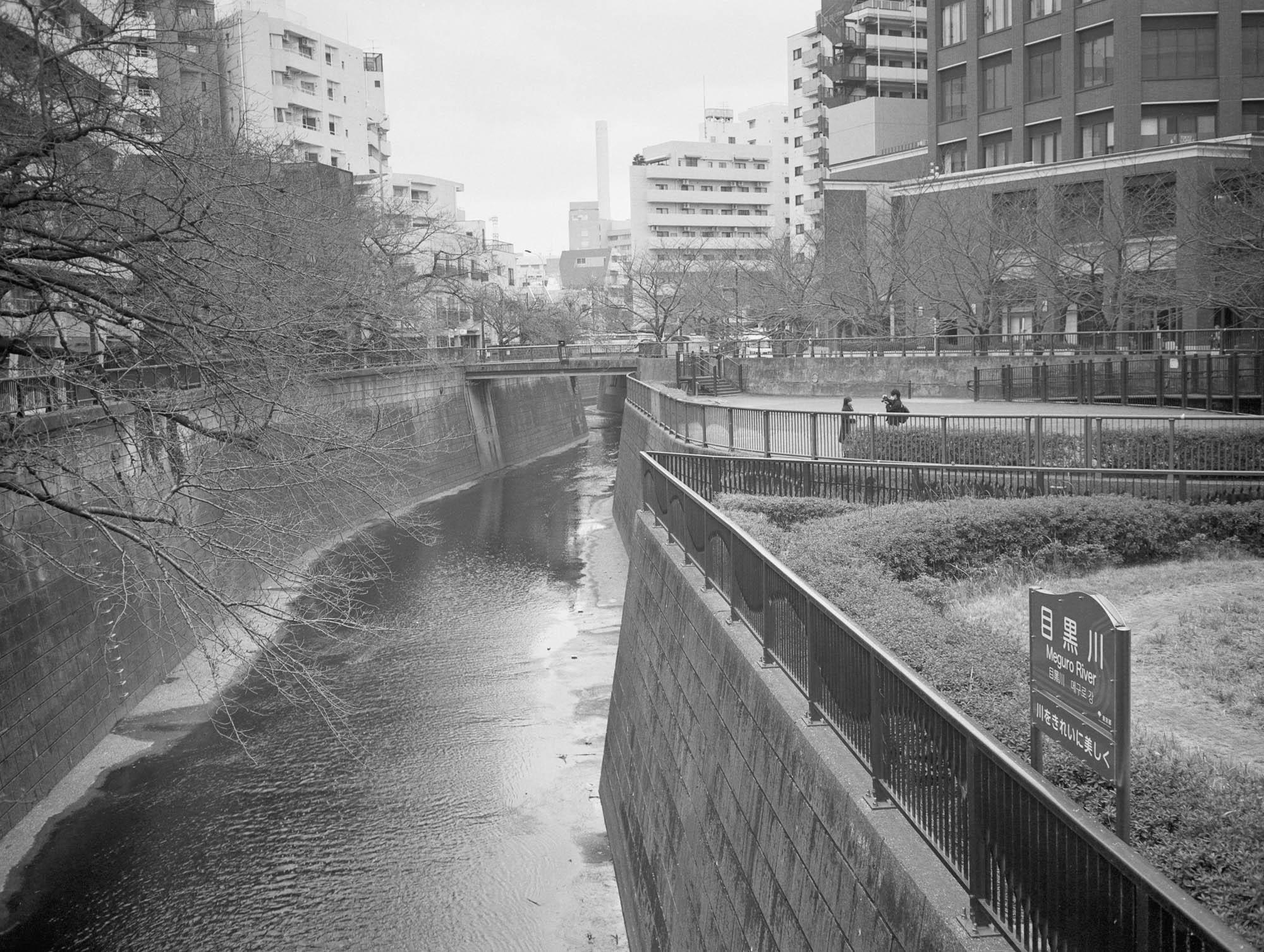
For the first roll, I shot Ilford Pan F Plus 50, which is a wonderful sharp film but in the dark wintry streets of Nakameguro perhaps was not the best idea.

You can probably tell that it has a sharp lens. With ten elements in ten groups, it has quite a complex design but with two limitations. Firstly, it’s has a measly 1.6x zoom range of 55-90mm. That makes it equivalent to 34-56mm in 35mm terms or ‘not very wide to not very long’ in human vernacular, and it moves in four steps rather than allowing you to zoom seamlessly.

Secondly, it struggles with a slow maximum aperture of F/4.5-6.9 through the zoom range. So Ilford Pan F 50 is probably not the best choice. Ultimately, it’s a point and shoot with all of the trade-offs that come with it.

It takes a while to start up and is not particularly responsive. It certainly gives you more control than a regular point and shoot, though, having two aperture priority modes, with the AS maintaining normal metered exposure so you can use flash for fill light rather than as a replacement for light. You can also shoot manual with it, though that’s an awkward process and I tend not to. Most of the time I leave it on Program mode, which is basically automatic but with the advantage of still requiring you to manually pop-up the flash. That works for me because of my biggest frustrations of most 35mm point-and-shoots is their tendency to default to autoflash when you turn them on.

It has autofocus too, obviously, and for the most part it works well. Again, it’s just like a regular point-and-shoot, where you focus on the centre of the frame with a half press and then recompose before releasing the shutter. It’s not fool proof, at least not for a fool like me. It misses focus occasionally. It does have one great feature, though, in that it let’s you know the general distance in the viewfinder before you take the shot. That gives you the chance to check beforehand and the fact that I find myself looking at it most of the time is probably a good indication that you need to be careful. It is still a step up from a regular point and shoot where you never know how it’s going to come out. It can also manually focus, which is kind of pointless here, since there’s no feedback to tell you whether you’re subject is sharp or not. You have to guess the distance and it’s so slow as not be not worth it most of the time. The only time I really see myself using this is if I want to shoot a set distance and I can’t move the camera because it’s on a tripod, or if I have to focus on infinity through glass and am worried about reflections tricking the focus.

So it is an awkward creature in many respects. Both frustratingly automatic and irritatingly quirky. Being a viewfinder camera, I have shot more than a few frames with the lens cap on. It actually does have a lens cap sensor that you can turn on that I didn’t even know that until I started to digging through the manual for the camera specs  for this video. You have to push up the zoom lever and turn the camera mode dial to the ISO setting. Not very intuitive. You can also turn the beep on by using the ISO setting with self timer but I just leave it off . And I promise you, I’ll completely forget how to change these settings after having published this.

Another quirky feature of this camera is the vertical viewfinder. Being 6×4.5, it’s pretty much a half frame camera, fitting two portrait images in a 6×9 frame. The best thing about this design, honestly, is the grip and the shutter button. The camera feels good in your hand, despite its size and I found my finger naturally fell on the button, even if I had to rotate it to do a normal landscape photo.

And you can use this camera quite well one-handed but it is fiddly. I did drop this in the centre of Shibuya several years ago but that was more because I was relying on a generic wrist strap purchased on ebay that broke on me than a problem with the grip. It survived well but learn from my mistakes here, kids, do not attach a flimsy Aliexpress wrist strap to your Leica M11.

So Harvey is something of a clumsy leviathan of a point and shoot and that’s not something you typically want with you when you’re out on the street. In dim light with slow film you’re battling with the exposure triangle, particularly  at the modest 55mm equivalent long end with its f/6.9 maximum aperture.

But what if we change film and actually give it a fighting chance? Can I do proper street photography with it?
Roll Two

The second roll was more successful and no prizes for guessing that HP5 at 1600 is my preferred combination for this kind of photography. Being medium format, even when pushed two stops, the grain is small and refined and black and white streets lend themselves to a bit of grit anyway.

There are those that would argue that 6×4.5 isn’t true medium format. But a 6×4.5 is still 2.6 times the frame size of 35mm so that’s more than two and a half times the megapixels in today’s currency.

You still have room to crop but I find I’m less likely to do that than with my square frame medium format cameras. Here you have a 4×3 ratio that is exactly the same as my micro four thirds camera, and much more flexible than a square format. If you crop a 6×6 frame for horizontal or portrait orientation you lose the benefits of the larger real estate anyway. You could certainly go bigger but if you were 6×9 you’d need a bigger camera with a bigger lens and you would only get 8 frames. I do have a 6×9 camera but don’t use it as often just because of cost of consumables. Film has gone up in price and while we all have to make sacrifices to fund our hobbies my wife told me that apparently my kids still need at least one functioning kidney each to survive.

So this can be more economical on film but you do miss out on a little bit on that medium format ‘look’, where even with a moderate aperture and focal length you can throw out the background to get that soft blur and 3d pop. The out-of-focus areas are actually quite dreamy with this lens but with all of the compromises of the smaller frame and slow lens, combined with the focusing distance of 1m, you are limited to shooting people no closer than waist high, which doesn’t often make for a dramatic portrait, even though it could be a great tool for corporate head shots.

But if you want a studio camera, get a Hasselblad or Mamiya RZ. This a point and shoot. A point and shoot with one huge difference. It’s sharp. The lens resolves detail with surgical precision that can beat any 35mm camera and lens combination. With this in your hand, you’re really carrying with an analogue powerhouse.

Roll Three

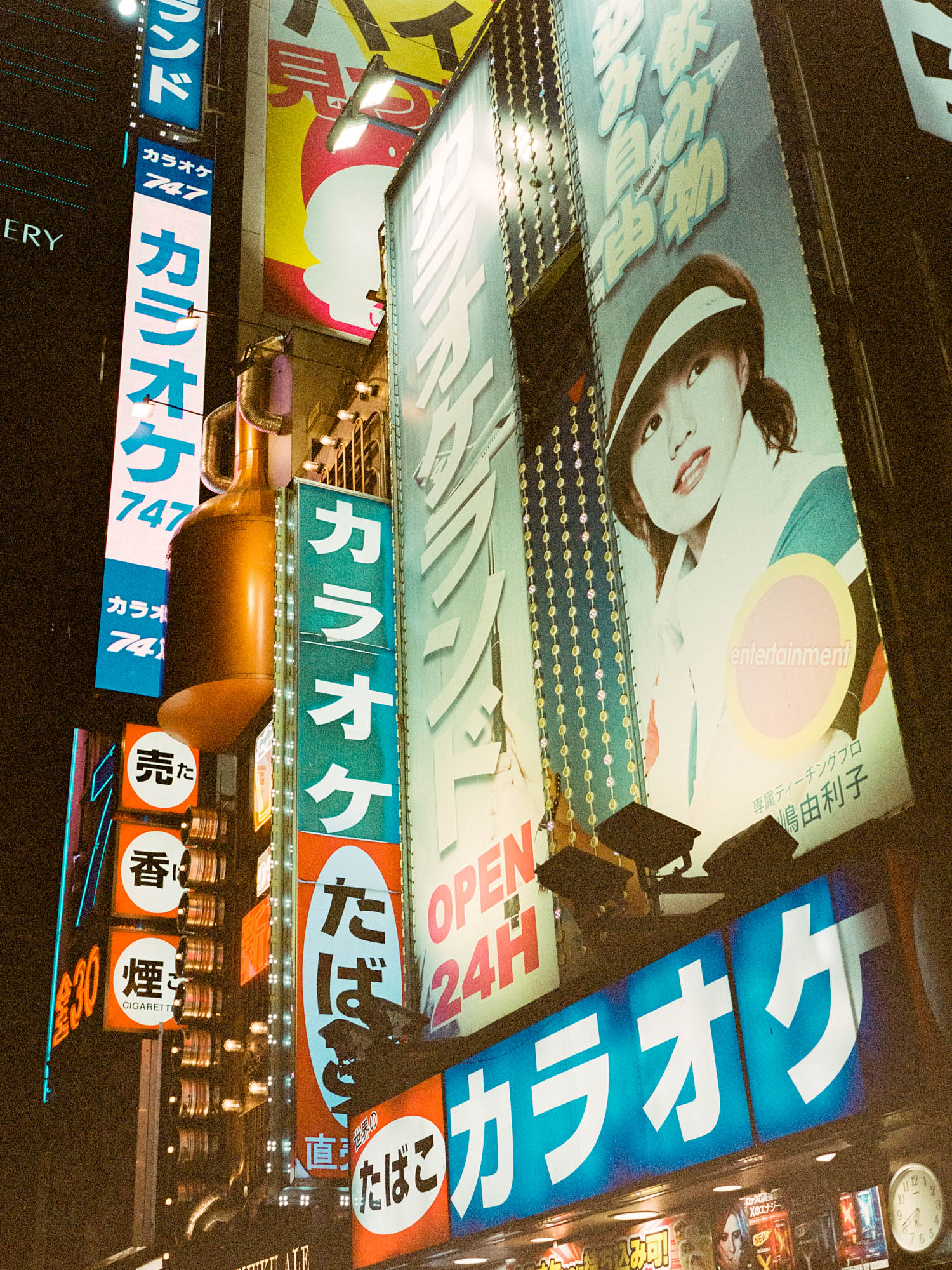
I was not done yet. I had one final roll of film to go. Now for some Tokyo night photography, this time using Kodak Portra 800 Colour Negative film.

I was surprised how well I was able to shoot at night. I love 800 speed colour film, though most of the time, its cost puts me off using it. Perhaps it would not have fared so well in the darker corners of Tokyo but in the bright lights of Shinjuku, I was still able to do hand-held street photography quite comfortably.

Recommendations

As I said, at the beginning, I am ambivalent about this camera. I find the shooting experience to be the same as shooting with a regular point-and-shoot. The small viewfinder, slow response, lack of feedback and overall plasticky feel of the camera body gives me a sense of remoteness from the experience and to use a well worn cliché using it doesn’t ‘spark joy’ the way some of my other old cameras do.

And yet, I find myself using it more than any other medium format camera I own. While not exactly pocketable, it is compact, convenient, and once you get to know its quirks, using it as an auto-everything photo maker can be quite liberating. This has been with me around the world since I first got it in 2015 and I’ve taken some great shots with it.  The good thing about it being so ugly is I never feel that I’m going to get mugged while I carry it through some of the sketchier parts of town. Straight after the safe streets of Tokyo, I took it through the chaos of the Pettah region of Colombo and it drew only the occasional glance of confusion or mild disdain. And I’m used to that.

That doesn’t mean I’m relaxed about Harvey, though. Everything’s electronic and I suspect I’m living on borrowed time. Like a lot of automatic zoom cameras of the era, many of the parts are fragile and there are lots of stories about ribbon circuits in particular flexing and breaking after long-term use. That will kill the zoom mechanism eventually and one of the known problems with this is the cable that connects through the back of the camera to the LCD makes it difficult to read the frame counter when it wears out.

The fact that there you can buy new generic replacement ribbon cable parts for this camera is probably the best indication that it’s a ticking time bomb. Even if you can source the parts, though you will have a hard time getting it fixed. I bought this camera for AU$650 eight years ago but now the price has jumped up so much that I’d hesitate to replace it if it broke.

Would I recommend it to others? In some situations, yes, and in others no. As I wrote, I’m ambivalent. And you know the old joke about ambivalence. What’s the difference between ignorance, apathy, and ambivalence? I don’t know and I don’t care one way or the other.

That’s not true about this camera. Whether I’d suggest this camera to others, is not a straight yes or no. This is a camera that has some limitations and requires you to get to know it to use it properly. But once you do you can be stunned by the results and it inspires anything other than apathy. Just carrying it labels you as a 90s icon, it’s champagne accents perfectly complementing the frosted tips of your bleached blond hair as you cut a swathe through the crowd at that Fresh Prince concert to capture those classic hip hop poses on celluloid.

I know that I for one can’t help but get a little bit jiggy with it when I try to squeeze it into the pockets of my cargo pants while I’m out on the streets of Tokyo.

Photographing Nothing

What is nothing? Is there even such a thing as ‘nothing’? And if there is such a thing then it’s something, right?

Now I could get spiritual on you and talk about emptiness as the doorway between the material and ethereal worlds, that only through emptiness can we experience fullness but even I have trouble keeping a straight face with all of that stuff.

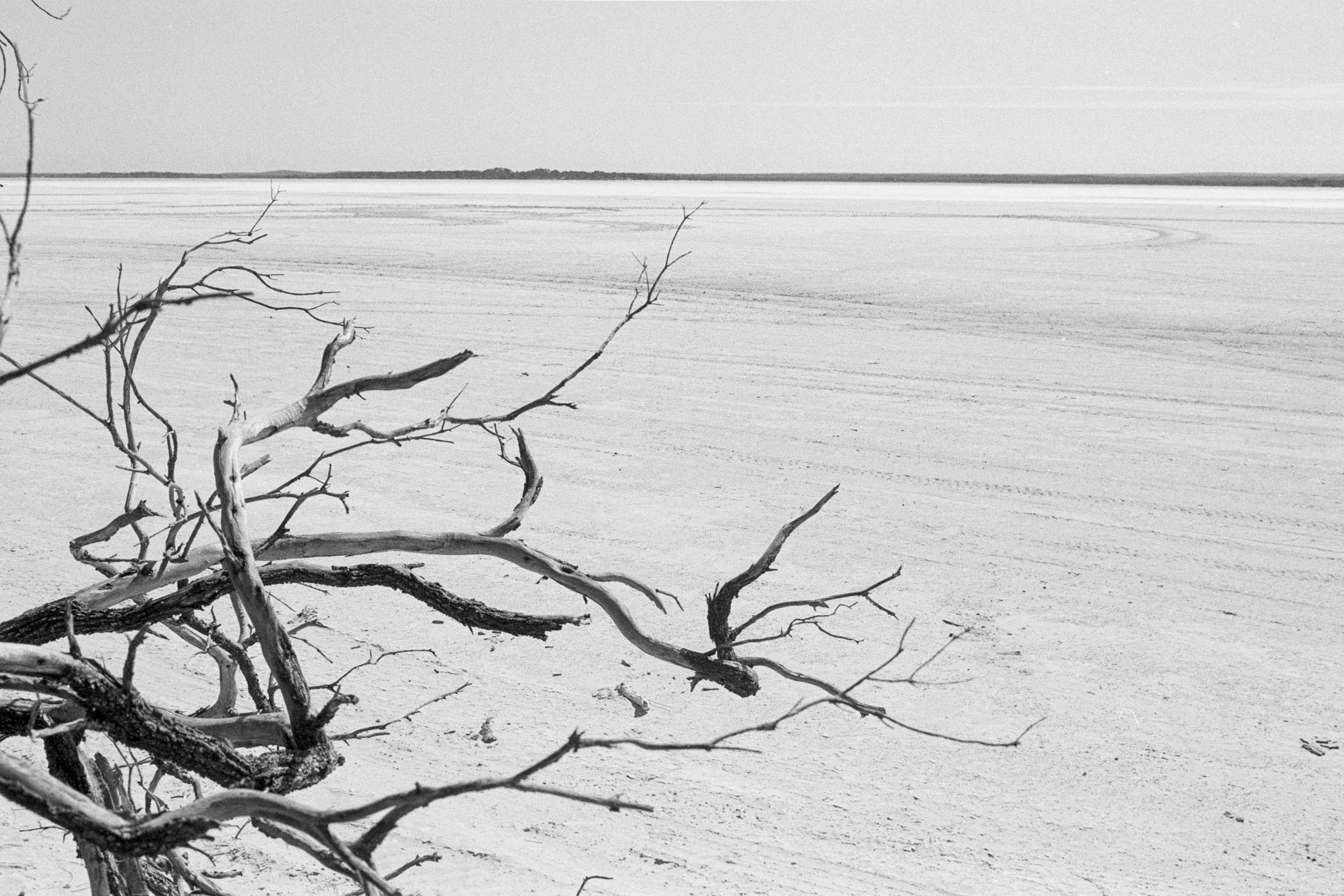
One thing’s for sure though… Australia has a whole lot of emptiness. It’s everywhere. The hard part is making it interesting.

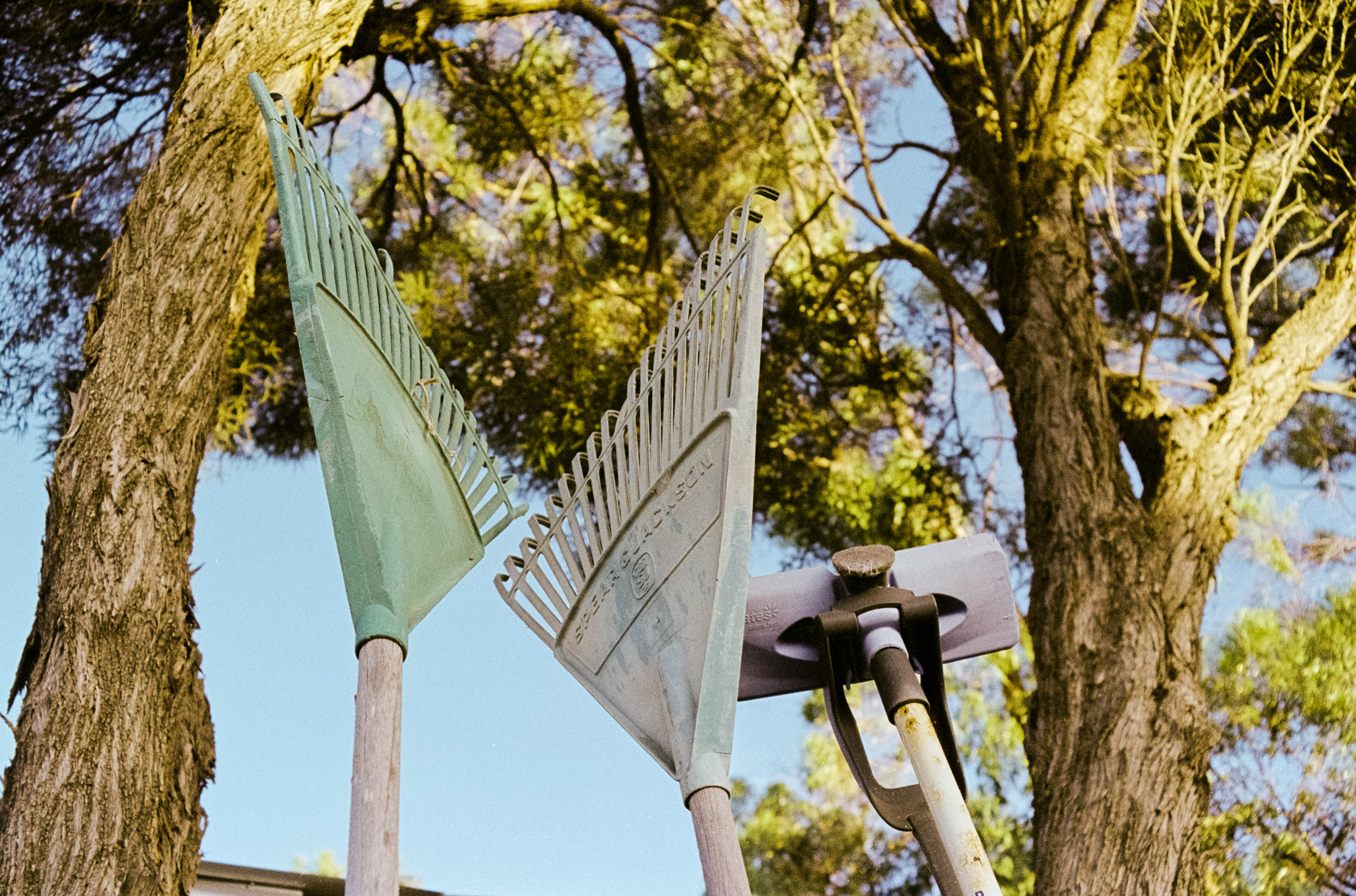
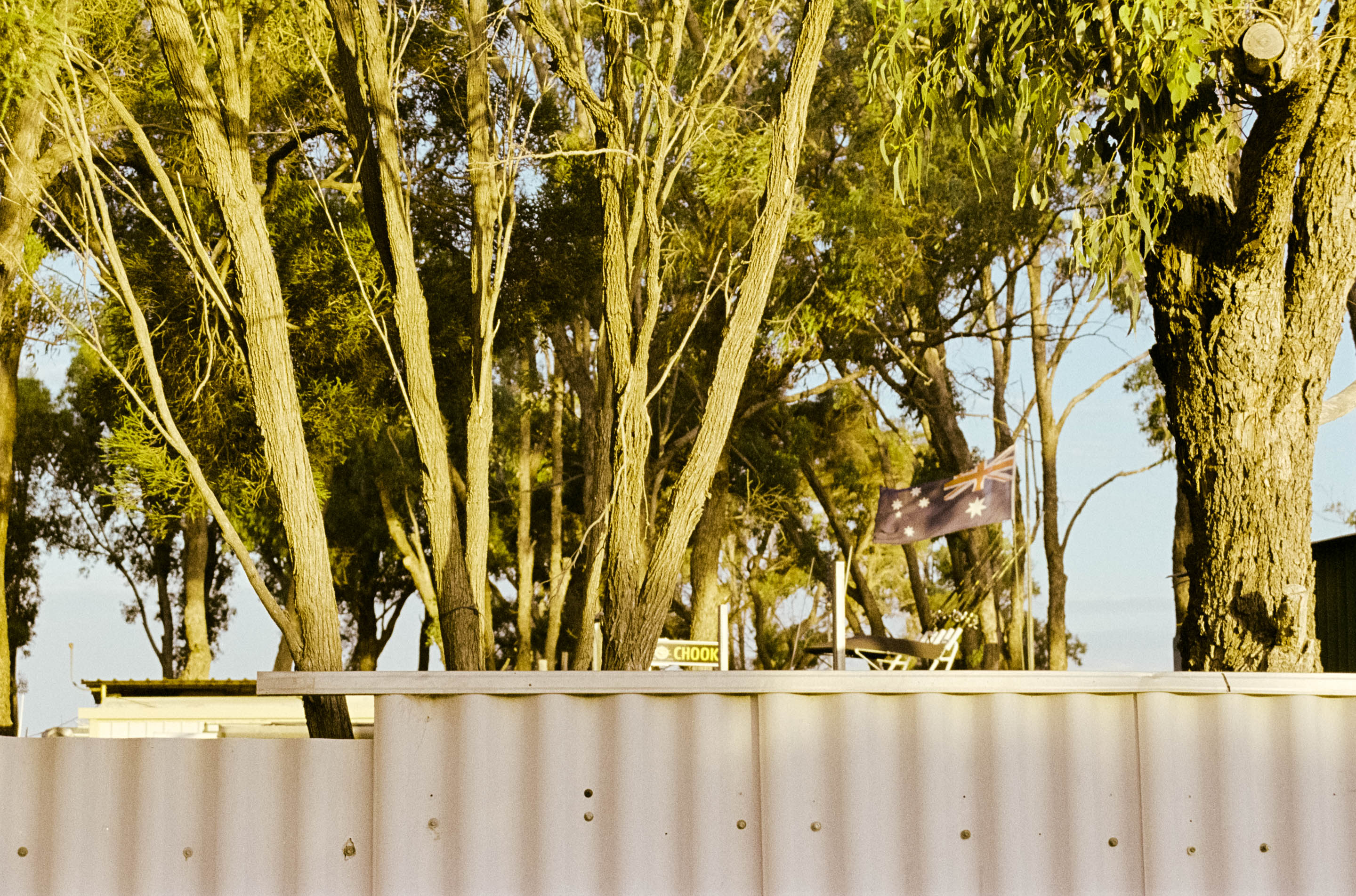
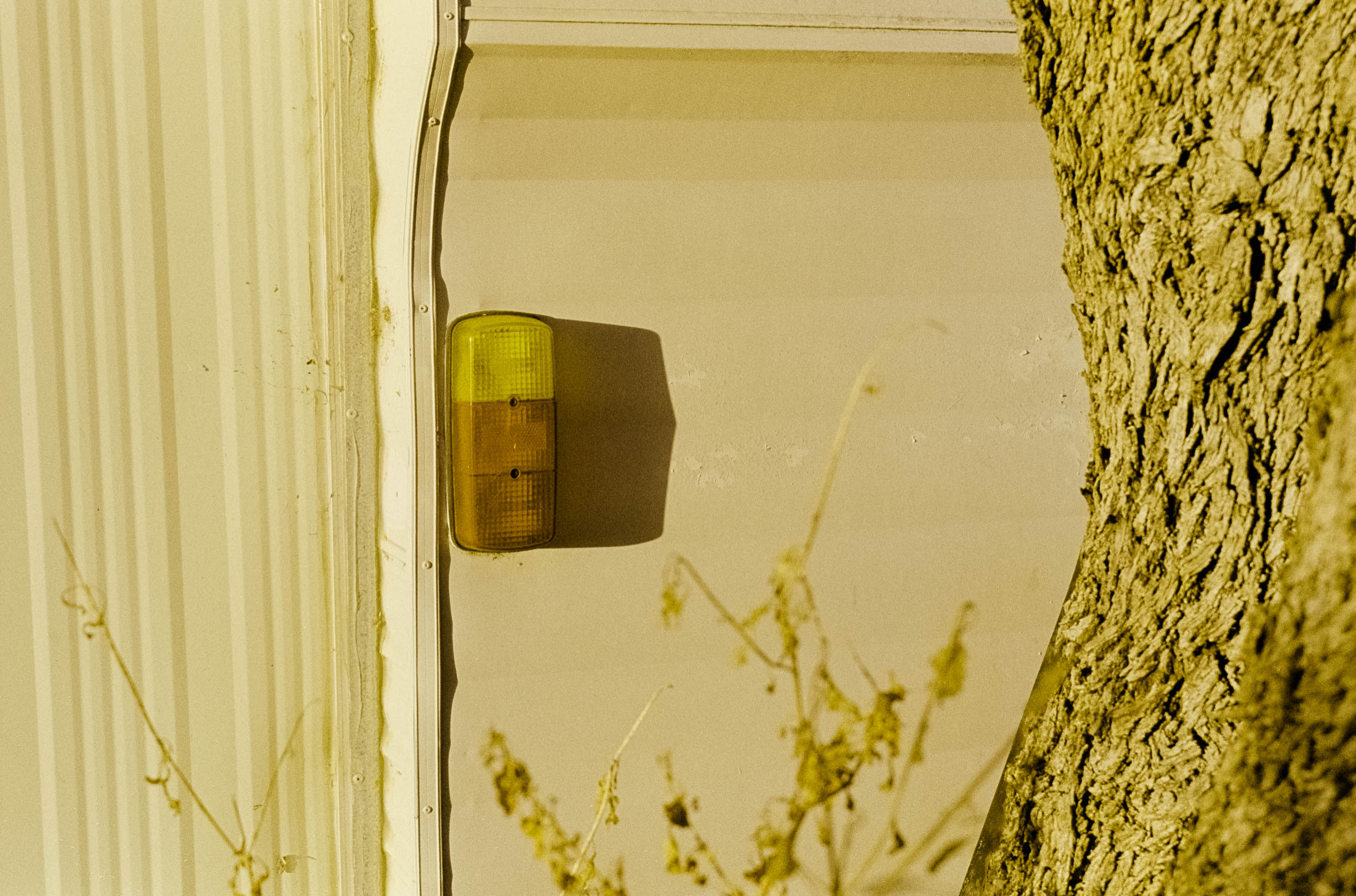
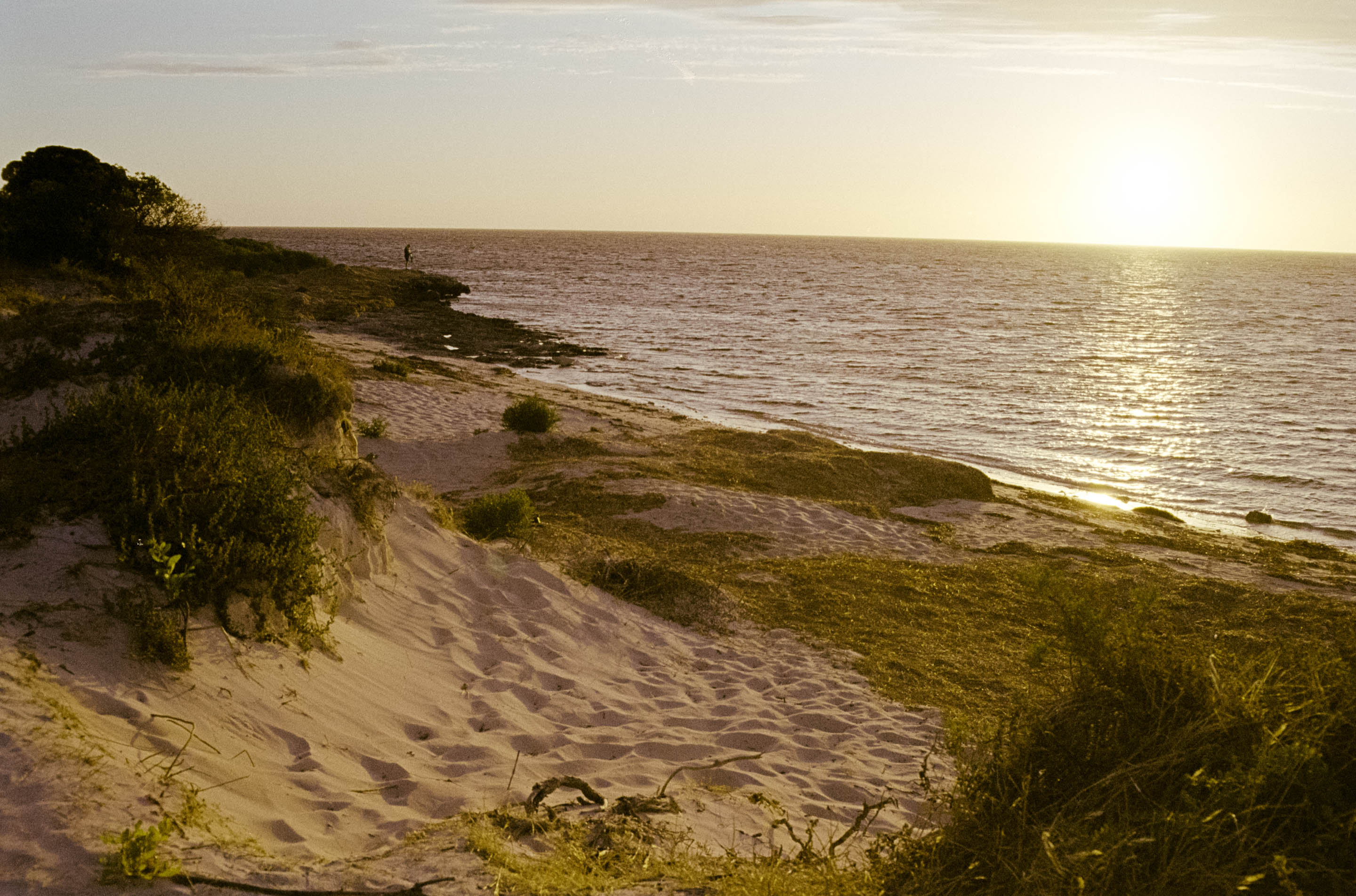
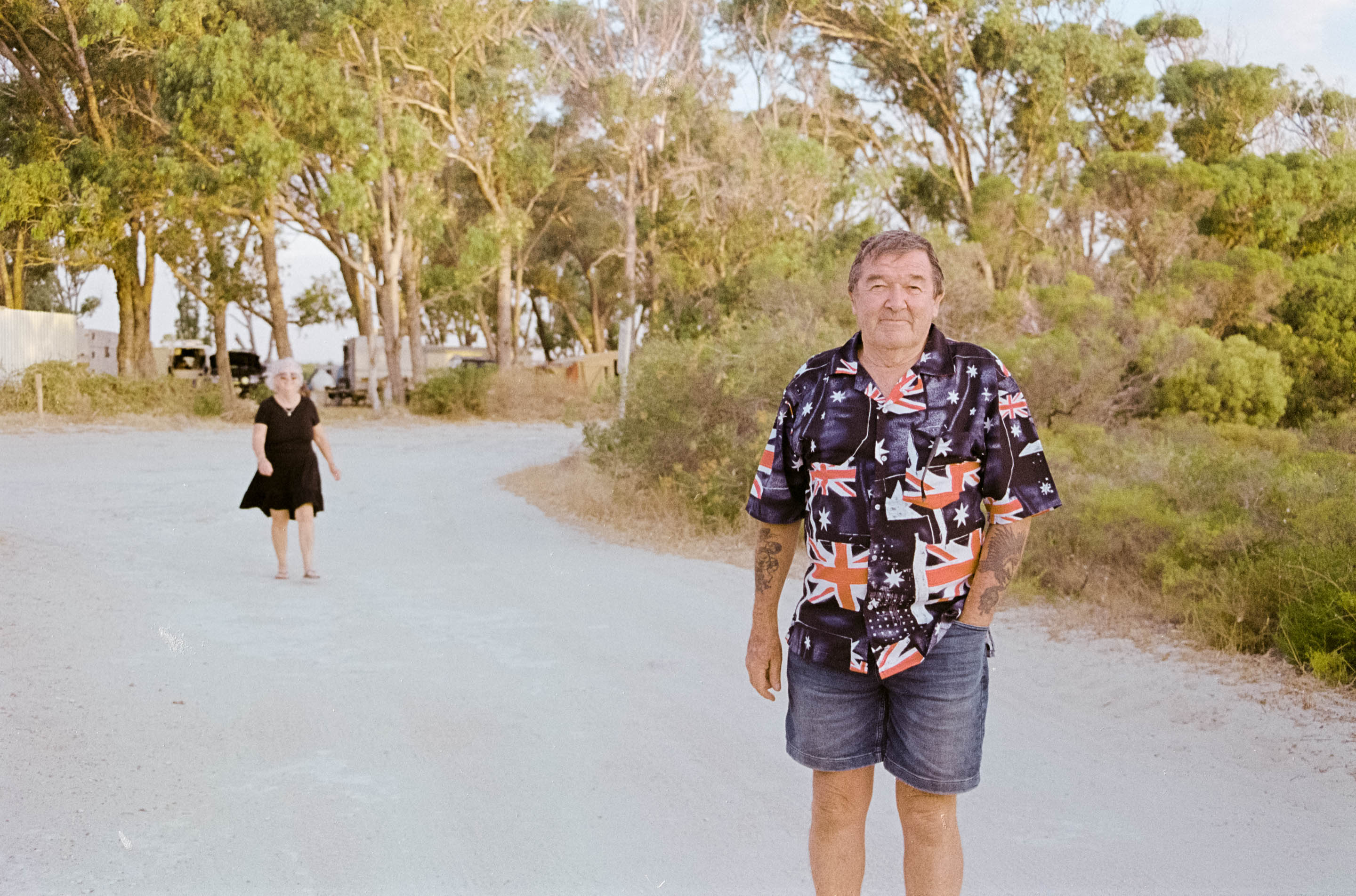
It was Australia Day 2023 and I’m walking the tracks around the back of the caravan park at Leeman, a small town two and half hours north of Perth experiencing the richness of emptiness.

The Emptiness of Australia

Now before you tell me that it’s not empty, I know that. I’ve seen the David Attenborough series where he shows you termites thriving in the Alaskan tundra. And I’m also the first to acknowledge that I have a tendency to see the world through European eyes. I’m looking for quaint Welsh cottages dwarfed by the majesty of Snowdonia and there really isn’t much of that here.

It’s not empty. The traditional custodians of this land know that. This is a culture that has names six Australian seasons while I struggle with ‘hot’ and ‘bloody hot’.

But since it’s Australia Day I’m going to try and capitalise on the fact that I live in this amazing country. After all, Australia has 60 different wine regions, so it’s not like we lack diversity, at least when it comes to getting drunk.

And one of the things that I do love is minimalism, and the good thing about nothing is that it provides a great backdrop for something.

Before you get your hopes up for austere and tasteful photographs of a lonely cloud floating over vale or hill, or even a solitary tree breaking the serene landscape, you might just want to notice that the vegetation is pretty scrubby and messy, the light was casting shadows and I picked Australia Day to shoot this video which is perhaps the busiest this place gets. It’s amazing how hard it is to find nothing when you’re looking for it.

Perhaps the problem is that I’m very familiar with Leeman and have become blind to what’s around me. All the variegations and corrugations of a small town nestled on the coast can be lost in the expanse of sand, scrub and sky until you actually place a camera in front of your eye and start to look closely.

The Humble Nikon N55

For an empty landscape, I had a nothing camera. The Nikon N55 is not a workhorse tool. In fact, this is my third one, having picked up several over the years that have been selling literally for the price of a cup of coffee and lasted just about as long. Two of them ended up suffering from electronic issues relating to autofocus, though this one has lasted a few years now. As of 2023, you can still pick up one of these for less than $100 and if you’re patient, you might even be able to get one with a lens.

So why do I have a soft spot for this camera? Well, it’s super light with the lens I used, even lighter with the 28-80mm kit lens it came with. And it’s not like I have to worry about someone mugging me or really even noticing me, it’s so unobtrusive.

The Even Humbler Nikon 35-70m f/3.3-4.5

This particular lens has a fairly ignominious reputation. The optical formula is based on the previous manual version, manufactured at a time when zoom lenses just weren’t that good. You get a limited range, moderate aperture and mediocre optics. Look, it’s not that sharp but it’s sharp enough. The bokeh isn’t beautiful but you can still separate the background. It distorts throughout the zoom range but particularly at the wide end and suffers chromatic aberration at wide apertures. But you can fix that later. And It flairs more than a JJ Abrams star trek movie but just don’t point it into the sun.

It’s probably about the cheapest Nikon lens you can buy. The fact is, the build quality of the autofocus version is pretty good and it pairs really well with this camera. One of the biggest limitations of the Nikon N or F 55 is that it won’t meter with manual lenses at all and it won’t focus with AFS lenses that have the focus motor built in. But for these older screw drive lenses this works great. In fact, in good light, the short focus throw makes this particular lens quite fast to lock on to your subject.

And it’s loud. Certainly not discreet at all but be honest, you’re not a professional wedding photographer taking photos at the ceremony nor are you worried about scaring away that curious but skittish aardvark approaching your hide in the African savannah.  Remember, this video is about photographing nothing and.. just maybe… a nothing camera is the best tool for that!?

Telephoto Film Photography on a Budget

I will begin this article with a quick disclaimer. I am NOT a wildlife photographer.

Wildlife photography requires lightning sharp reflexes and a good knowledge of your subject matter. My reflexes are like molasses and while I know my camera pretty well, I’m not used to wielding a long lens. And my understanding of wildlife reflects both my ignorance and complete lack of interest in anything remotely resembling ‘nature’.

I’ve spent my whole life avoiding birds and plants. There’s something about birds in particular. The way they fix you with those beadie little eyes. That quiet prehistoric malevolence, you know they’re just waiting for a chance to attack. I’ve seen the Hitchcock movie.

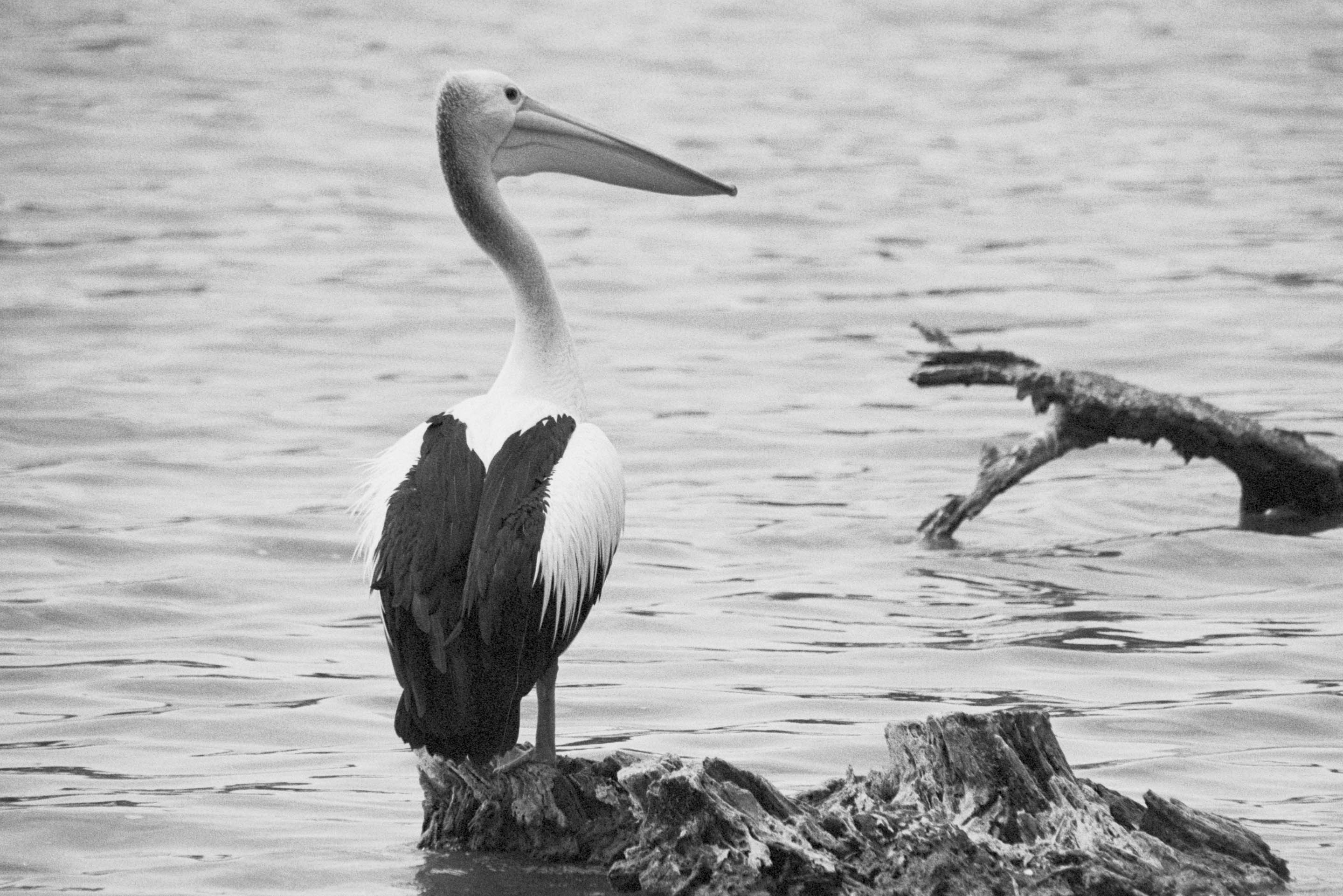
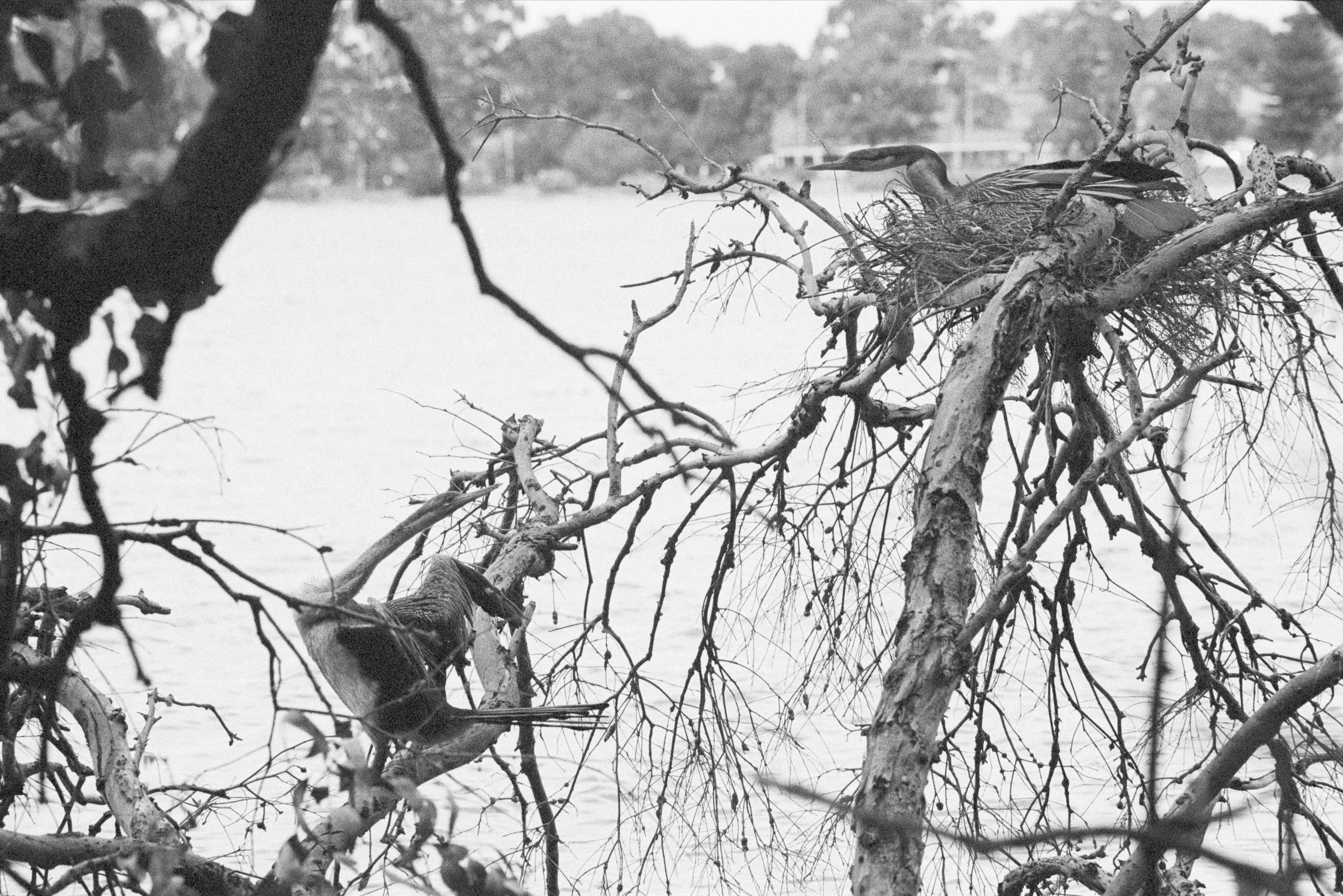
So moderate your expectations before you settle in. It’s not that I’m dismissive of the genre. There is definitely something special about wildlife photographers and I love experiencing their forays through nature, vicariously at least, on YouTUBE. There’s something calming about the way they can just sit there in a hide waiting for something to happen while munching on their apples and egg and cress sandwiches. Sure I can slash through the undergrowth with my sigma like it’s a machete and I am the right age and gender – and actually my wife can make a pretty mean salad roll but I have neither knowledge, nor patience, so I’ll leave the flora and fauna philosophy to those far more experienced than I am. Instead, I will just describe my own personal experience using a Sigma 170-500mm f/5-6.3 DG APO lens, trying to capture the wildlife of Lake Monger in Perth, Western Australia.

About the Sigma 170-500mm f/5-6.3 DG APO

So what can we say about the Sigma 170-500mm f/5-6.3? Firstly… yes, it’s slow. It has an aperture smaller than the eye of a needle and it focuses glacially, loping backwards and forwards like me trying to learn to samba.

But it’s sharp enough when it finally finds its subject. The lens is apochromatic, which is what scientists say to sound cool and basically means that the glass elements focus in such a way that the individual colours don’t smear to create that horrible colour fringing you see in some high contrast scenarios, like shooting leaves with the sun behind them. All made possible by an aspherical lens and three special low dispersion or SLD lenses. But let’s forget the spec sheet, what’s it like in the hand?

Well yes, it’s big. Robust and manly in appearance with hard plastic ridges and a sense of purpose, that purpose being ‘I’m going to be as indiscreet as possible as I try to take photos through the motel window to blackmail you with later’. It’s not one to take to your daughter’s netball game.

It also trombones badly when you want reach and with no focus lock, it suffers badly from zoom creep when hanging down. Insert gratuitous penis joke here.

Anyway, it’s not a discreet lens, which is a shame because it’s surprisingly light.  About 1.3 kilos, I was able to sling it over my shoulder happily for a couple of hours and handhold all of my shots.

Pros and Cons

One negative is obviously the size and it has an 86mm filter thread so if I were to buy a polariser for this thing it would probably cost as much as the lens itself.

The small aperture combines with another negative – It doesn’t have Vibration Reduction. That means if you’re zoomed in to 500mm you’re probably going to want to shoot at a shutter speed of 1/1000th of a second. The way I dealt with that was I shot Ilford HP5 pushed to ISO 1600 on a sunny day so it wasn’t an issue. It also brought a bit of contrast and crunch to the images that probably added to the perceptual sharpness.

That said, I’d say the sharpness of this lens is already a pro. While it’s not going to even approach the sharpness of a Nikon 70-200 f/2.8, that doesn’t have the focal range that this does. Same with a 300-500mm focal length. You get the reach but you’re stuck if you want to rack back to something closer. And you can forget carrying both of those out into the field with you. That’s not even considering the cost of two high end zooms.

This lens gets mixed reviews. If you look online you’ll find people saying not sharp beyond 300mm. Others say, use a sturdy tripod and find critical focus of a slow moving subject and it’s a razor. I tend to side with the latter. But it highlights the fact that you need good technique to be able to get the most out of this or any other vintage long telephoto zoom for that matter.

One thing’s for sure, It’s a dream on the Nikon N65. It’s like the camera this lens was made for each other, particularly with include an MB-17 battery grip accessory. I didn’t have it with me on the day and I probably should have – the grip makes you look a bit pro, whereas this just looks kinda daft. I didn’t really feel I needed it, though, and it made for a lighter and leas threatening set up.

Recommendation

Should you get this lens? Sure, if you can find it at a good price. I worry a bit that this blog is turning into a forum for me to brag about how cheap I am but it probably pays to be patient if you’re looking. It’s a solid lens but the bulk, build quality, screw focusing and lack of VR mean it doesn’t always get the love it deserves and you might find it cheap. For me in 2022 that was around AU$200, though it tends to go for more on eBay.

As for wildlife photography… I’d like to get better at it. I DO need to develop a bit more patience, though. Give me 30 years and I mightget there.

When I do, God help me, I’ll be one of ‘those’ photographers. I’ve actually been eying of a beige tactical vest on Ali Express that I’m sure is designed for people who want to shoot up high schools but I can really see myself slipping a lens cap, spare battery and muesli bar into the pockets and hunting down that perfect sea egret. I just plan to keep challenging myself. I do think trying other genres, even if you’re not good at them is how you grow as a photographer.

If you do want to witness my growth (and I’m not talking about lens size here) then keep reading this blog and subscribe to me here and on YouTube.

Can You Make ‘Art’ with an Old Olympus C-4000Z Digicam from 2002?

This is something of a tongue-in-cheek post. Don’t expect an in depth discussion about whether photography is art. I think that debate is settled now. I’m also not going to claim that all photography is art – my snapshot of a brick wall is not the same as Jeff Wall and my Martin is definitely sub Parr.

But if I learnt anything through years of getting my PhD it’s that stringing together a few well chosen quotes can be a adequate substitute for a coherent thesis.

What is Art?

It was Aristotle who  said ‘Art completes what nature cannot bring to a finish. The artist gives us knowledge of nature’s unrealised ends.’  And that’s always resonated with me. Firstly because it makes us sound almost Godlike in that we’re somehow improving on what’s actually there. But secondly, it acknowledges that nature is messy and complex and there’s something about photography that is consciously selective, reductive even and that rationalisation can make you see things in new ways.

I know in my own photography I find myself constantly trying to remove things from the scene, to impose my own need for order on it. It’s probably why I photograph the built environment more than nature. Nature is pretty chaotic and meaningless really.

So Art can transcend nature but but what does it tell us? Is it a harbinger of truth? Picasso said, ‘Art is a lie that makes us realise truth’. But then Theodore Adorno argued, ‘Art is magic delivered from the lie of being truth.’ Then again, Marcel Duchamp characterised Art as, ‘the missing link. Not the links which exist. It’s not what you see that is Art; art is the gap.’

So Art is everything and nothing, a truth that lies and a lie that is true. You’ve got to wonder if artists are taking the piss, probably literally in Duchamp’s case given that his most famous work is a urinal.

But like Duchamp’s fountain, there is something about art that lasts beyond the moment in which it was created.

According to Hypocrates, Art is long, life is short. ‘Ars Longa, Vita Brevis’. The work stands beyond the person that makes it. They are the creative spawn, the legacy that we leave for others.

Speaking of spawn, over the years, I’ve I mated with lots of cameras – I’m kind of a photographic floozy, a streetwalker, literally, making picture babies, all with various DNA combinations and an inherent lack of consistency and style.

And it makes sense that the camera you use is going to influence the end product. Oils and a spatula are going to make a different picture than a brush and watercolours. Similarly, the work you produce is a reflection of where you are, when you are and who you are. It’s the interplay of light, subject, and your own life and vision.

Edvard Munch is quoted as saying, ‘What is art? Art grows out of grief and joy, but mainly grief.

Yes, I have suffered for my art. And now it’s your turn.

But first, let me introduce you to the camera. Bertholdt Brecht supposedly said, ‘Art is not a mirror held up to reality but a hammer with which to shape it.’ Today’s hammer of choice is the Olympus C-4000Z.

About the Olympus C-4000 Zoom

This arrived 2002 and is not the first in its class. It followed the very successful C-2000, C-2020, and the C-3020Z, that came a year before this one. It also has a slightly higher end stable mate the C-4040 Zoom that has an f/1.8 lens.

The Olympus C-4000 Zoom isn’t the first camera of it’s kind but follows a trusted design formula

The C-4000 was US$499 on release, I picked this one up 2nd hand for AU$20. That makes me smile, though I’m still looking for that leica in my local charity store.

Back to the lens, though. No f/1.8 here. This one goes from f/2.8 to f/11 and has a 32-96mm equivalent 3x zoom, 3.3x digital

It has a four megapixel CCD sensor. That sounds primitive but it was 25% more pixels than the previous model that came out just the year before and 4mpx can easily produce 14×11 inch prints. Let’s face it, how many pixels do you really need for Instagram? The intriguing thing about this sensor is that it’s a legacy CCD sensor rather than the more recent and common CMOS technology.

Some people will tell you there’s a magic to CCD sensors. And theoretically they could be right. Any common-all-garden photonic physicist will be able to tell you that Charge Coupled Devices are known to produce high quality, low noise images. The photosites are packed closer together because they don’t have individual transistors, which supposedly improves light gathering.

CMOS sensors or Complementary Metal-Oxide Semiconductors as they’re known in the sensor engineering department of ACME Industries are a lot cheaper to produce and use a fraction of the power.

The fact is, the CMOS sensor in your phone is likely to blitz the one in here but there are those that still talk about CCDs as being more ‘filmic’ in the same way I guess as vinyl records are warmer and more soulful. We’ll see.

In terms of exposure, this has a program mode and 6 scene settings, allowing various combinations, such as portrait, sports and so on. You can change the metering between centre weighted, spot and multimetering, which as far as I can tell has the camera do multiple readings in spot mode and then averages out to get the best exposure for the scene.

But it’s really quite advanced in that it also has Aperture and Shutter priority modes as well as full manual exposure including manual focus. You can also save your settings to four custom modes.

I do think there’s a use case for setting up custom mode where you set your aperture and lock focus zone for street photography. I’m not sure you’d want to be making lots of changes, though, unless you’re keen to dive into the treacly slow menu system. Still it’s it’s nice to have the flexibility.

In manual mode you can go from 1/1000s all the way to 16 seconds, 1 second in Program mode

This can shoot close up, with a Macro Mode of 0.2m-0.8m and Super Macro Mode 0.8″ to 8″ 2.0cm to 0.2m

As you could tell from the intro of this video, it can also shoot video, albeit at postage stamp sized  and without audio. That was me doing some very clever editing there.

One nice feature is it has an optical viewfinder with diopter control. This wasn’t just a throwback but actually necessary given the low quality of the LCD screen.

The screen also vampirically sucks the life out of the battery, which is a shame because of the quirks of this camera is that it’s a bit faster in focusing and taking shots when the LCD screen is on than using the optical finder.

This is NOT a speed demon though. It takes seven seconds to start up and then a throws a fit because you left the lens cap on – that’s going to cause you to miss shots. You could be framing that decisive moment of your baby’s first smile and by the time the picture’s taken, he’s 6ft tall and giving you the finger while telling you he impregnated the babysitter.

Let’s call this a contemplative camera; one that causes you to pause and reflect a little, maybe make a cup of tea, have a shower, watch Gone with the Wind before it’s good and ready to let you make Art with it.

It has a range of built-in flash has modes for Auto flash, Auto flash with red-eye Reduction, Fill- flash, Fill-Flash with red-eye reduction, Flash Cancel and Slow Shutter Synchronization Flash (1st curtain effect).

Connectivity

Let’s broach the Pachiderm in the pantry. This thing takes Smart Media Cards. These were brought to the market by Toshiba in 1995 and it’s actually quite a cool format. Wafer thin, it makes Compact Flash looks prehistoric in comparison. It was really designed as the successor to floppy disks rather than specifically for cameras, and originally they called it SSFDC or Solid State Floppy Disk Card. They obviously listened to the marketing department. Smart Media is a bit more catchy.

By 2001 nearly half current digital cameras used Smart Media but it was quickly replaced with the equally obsolete XD, before SD cards came along and just wiped the floor with them all.

Sure, you can find Smart Media readers but at 4 times the cost of the camera I wasn’t going that way.

But this has a nifty trick up its sleeve. USB!! Ok, Type B mini USB but USB nonetheless. Type B USB Mini is the sad divorced uncle of USB Connectors, once dominant but now relegated to drunkenly dancing at the nephew’s wedding and hitting on the bride’s Auntie.

Like drunk uncles, though, you can still find USB cables everywhere. Grab one, plug the camera in, turn it on, and instantly your camera become a mass storage device and you can happily drag down the files at turtle neck speed.

Which brings us to the next issue. It’s just as well this is only a 4mpx camera because you don’t get much storage on a Smart Media card. No raw, just a range of JPG settings including a ‘super high quality’ setting that artificially scales up the image. I guess we’ll see how good that is.

The only other alternative to JPG is uncompressed TIF. On the original 16mb card this came with you could fit ONE tif image. So not exactly practical and they never made Smart Media bigger than 128mb.

One of the biggest issues for obsolete cameras of course is keeping them powered. Fortunately this has another trick up its sleeve, taking standard AA batteries or two CR-V3 battery packs. I stuck with AA. They don’t pack as much power but seemed to last long enough for me when I wasn’t shooting from the screen and again, I’m not going to shell out $40 on batteries for a $20 camera.

But how does it fare as an Art-making device? To test it out, I took it on a dog walk and shot a few pictures around the house and the garden. My garden is itself a shrine to the Greek God of Art, Hephaestus. According to Wikipedia he was born congenitally impaired and grew up to be lame. I can certainly relate to that last part. Just as Zeus once banished Hephaestus from Olympus to live among human for being too ugly to be a God, I wandered the mortal plane of the garden tiptoeing through the dog turds and detritus to find pearls of artistic beauty to share with you.

Verdict

Well, I feel that even the act of sharing this with you has been Art. My process laid bare before you, inviting you to see the world through my eyes, the pain and beauty of life rendered powerfully through my Olympus C-4000z

But what of this camera? All pretentiousness aside, it’s actually pretty good!

Around 2001 was when things really started to take off for digital photography and by the turn of the century I was already shooting less film. My kids were born in 1999 and 2000 and I remember using a borrowed Apple QuickTake camera to snap some photos of my eldest when she was newborn. I’ve lost the photos now but I don’t remember them being very good.

But this is actually usable; not just for 20 years ago but even today. It is not perfect of course. One thing this doesn’t give you is much room for editing. The resolution and dynamic range just aren’t there.

The Superhigh Res Mode gives a modest bump but like digital zoom it’s interpolated. Taking a standard file and increasing the resolution to about 3200×2400 in photoshop just using automatic sampling, you get as good if not better results.

The same goes with shooting TIF too. It’s definitely not a raw file. The sharpness and contrast of the image are baked in. Here you do see a bit less artefacting in the TIF file but I’m not sure it’s worth the extra file size  Applying my own Velvia-like preset on the files produces equally ugly results with either.

You’re really best of just living within its limitations and getting what you can in camera rather than trying to do anything in post.

Strengths

Colours. They have that Olympus punch – nature amped up – which of course is one of our definitions of Art. Whether it’s the CCD sensor or not, I don’t know. I have always loved the colours out of my Olympus cameras.

Lens. Sharp enough and with a decent zoom range, it makes for a versatile camera. It does get a bit soft in the corners, there is some chromatic aberration, and a hint of barrel distortion (easily fixed) but the pictures have a presence about them that I think isn’t just the sensor.

Ergonomics. It feels good in the hand. Everything is kind of in the right place. This ended up being a popular form factor for lots of cameras of this generation.

Usable in 2022 – as long as you have a smart media card. You won’t have to worry about obsolete batteries and connectivity. You can actually put in some AA batteries, go out and shoot and then easily transfer the photos over to your computer.

Weaknesses

Smart media, obviously. In reality, it will be one TIF file or a handful of JPGs you’ll be copying over since that’s all you can fit on the 16mb card this camera came with.

Speed. Not exactly a sports/action camera or suitable for wildlife. Unless that wildlife is roadkill.

And the optical viewfinder, while nice is not very accurate. At least, that’s my excuse for the crappy framing.

Dynamic range. I didn’t bracket here but I would certainly do that if I was shooting any high contrast landscape scene.

4mpx. This is obviously a recognised issue but the ‘super high quality’ interpolation doesn’t really do anything that enlarging in Photoshop wouldn’t produce.

Summary

As long as you subscribe to Oscar Wilde’s comment that ‘all art is quite useless’ then today I have resoundingly made Art. He was, of course, referring to the emotional impact of art rather than its utility, but it’s still a phrase I relate to. I am after all, a living picture of Dorian Gray. Somewhere in a photo album there’s a trapped young handsome version of myself squeaking to be let out.

Let me know your own thoughts. What is Art to you? Do you have an old camera that you still use and have you taken any photos with it that you would call art?

I will leave you with one quote.

Ed Ruscha in 2003 said, ‘Art has to be something that makes you scratch your head.’ Whether that means lice or dandruff can be art, I’m not sure but if you have made it this far and are scratching your head then at least I can relax, happy that I have once again climbed the photographic aesthetic pinnacle and am looking down on you with the benign but patronising gaze of true artist – knowing that perhaps I have added just a little bit of beauty into your lives and given you some kind of appreciation of what true Art is.