
It was late February (not the 30th) and I was in Tokyo and wanted to go out and take some street photos on film. The classic choice of lens for this kind of photography would be something small and moderately wide. Maybe jump on the Diane Ar Bus with a 35mm or the get my Cartier Bress on with a slightly narrower 50mm.
But I didn’t do that. Instead I picked a monstrous old manual metal and glass 35-200mm zoom lens. Today we’re going to explore why.
A Marvelous Lens…
Was it the logical choice for the street? Probably not. But why do I find myself using this more than just about any other manual focus lens I own? It’s an optical marvel.
Before you spit vehemently on the floor at the description of a manual superzoom lens as a marvel, you have to cast your mind back to those bleak days of the early 80s when the optical imaging world was disrupted by the introduction of zoom lenses. It was a tumultuous time for lens manufacturing. Autofocus was starting to get its clumsy foot in the door and zooms were becoming more commonplace. After all, who doesn’t want a lens that gives you great versatility and ease of use?
In 1982 the longest zoom that Nikon could offer was a 50-135mm f/3.5. In the subsequent years, this range extended to 35-105 and 35-135mm. So you could see how they were incrementally improving things over time.
This particular lens was released in 1985 after what was by all accounts a long and tortuous process to design and refine it to achieve its 5.7x zoom range. That was the same year that Nikon released its first retail autofocus SLR the Nikon F-501. While the Nikon L35AF in 1983 had shown the potential of autofocus in compact cameras, it wasn’t mainstream at that point and the 501 was released at the same time as the manual focus F-301 which was probably more popular.
No autofocus but a very large zoom range. And In that context, when this lens was released, it was probably already a little out of date, while still being overly ambitious at the same time.
… But a Compromise
The result is a compromise but isn’t everything in life a compromise? You’re always going to struggle fitting your baby bassinet in your Bugatti Veron and if you’ve ever actually owned a pocketknife you’ll understand the limits of your corkscrew and scissors. Of course, that tool for getting the stones out of horse’s hooves is 100% fit for purpose even if that’s a purpose you’ll never need.
While the zoom range is great, it doesn’t go wider than 35mm.
The maximum aperture is 3.5 at the wide end and it’s variable to 4.5 at the long end. So not the worst but it’s not very fast.
It CAN focus as close as 0.27m or 0.86ft, giving a decent if not quite macro 1:4 life size reproduction. Annoyingly, that’s only at the 35mm end, accessible by a ring that increases the distance from the focal plane. Effectively a built in extension tube. It would be nice to have had it at the longer end to give you more working distance.
It does have amazing build quality. Really amazing. You could bludgeon your baby with it and given you might need to, to actually squeeze him into your Bugatti, that’s a selling point in itself. In any case, if you dropped it on your toes you’d be much more worried about your toes than the lens.
It weighs 740g or 1.63lbs for you imperials and that’s heavy but it is surprisingly compact. It has a 62mm filter thread which is actually quite small and probably smaller than most modern superzooms.
Compare it to Nikon’s modern 24-200mm Z lens and it still holds its own when you think that it’s nearly 40 years later. Well ok, it might teeter a bit.
While it is reasonably balances on my Nikon FE it’s not exactly discreet. The push-pull zoom itself is a compromise. I do have a couple of these style lenses and once you’ve had practice, it’s actually possible to zoom and focus in one action but this lens is bigger and much stiffer and more clumsy.
But it is what it is and I guess that’s going to be the theme of this review. But if it is what it is, then what is it? With all these compromises, is it good enough? To find out, I took the camera on a walk from Harajuku to Shibuya on a cold February day in Tokyo


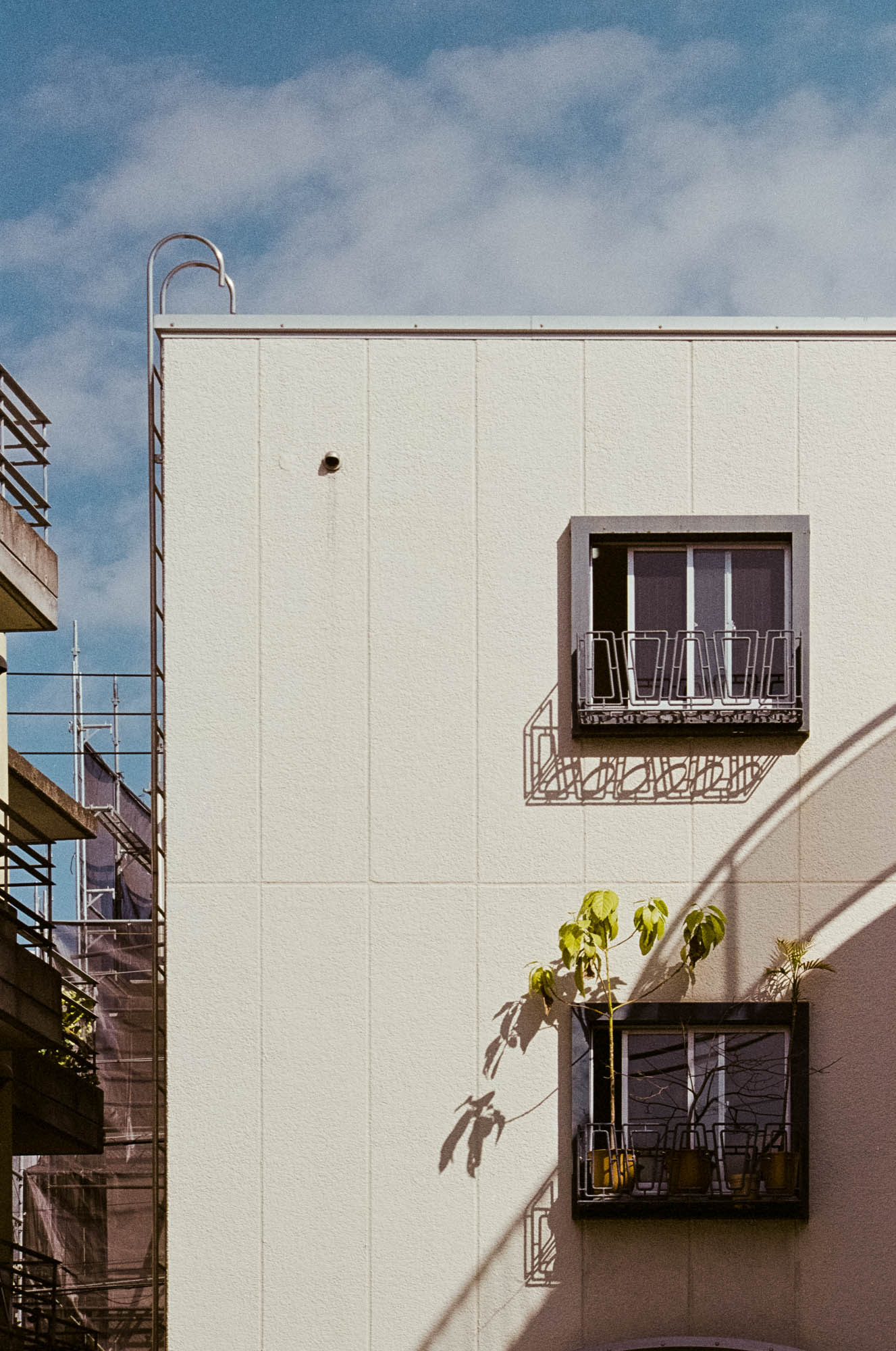
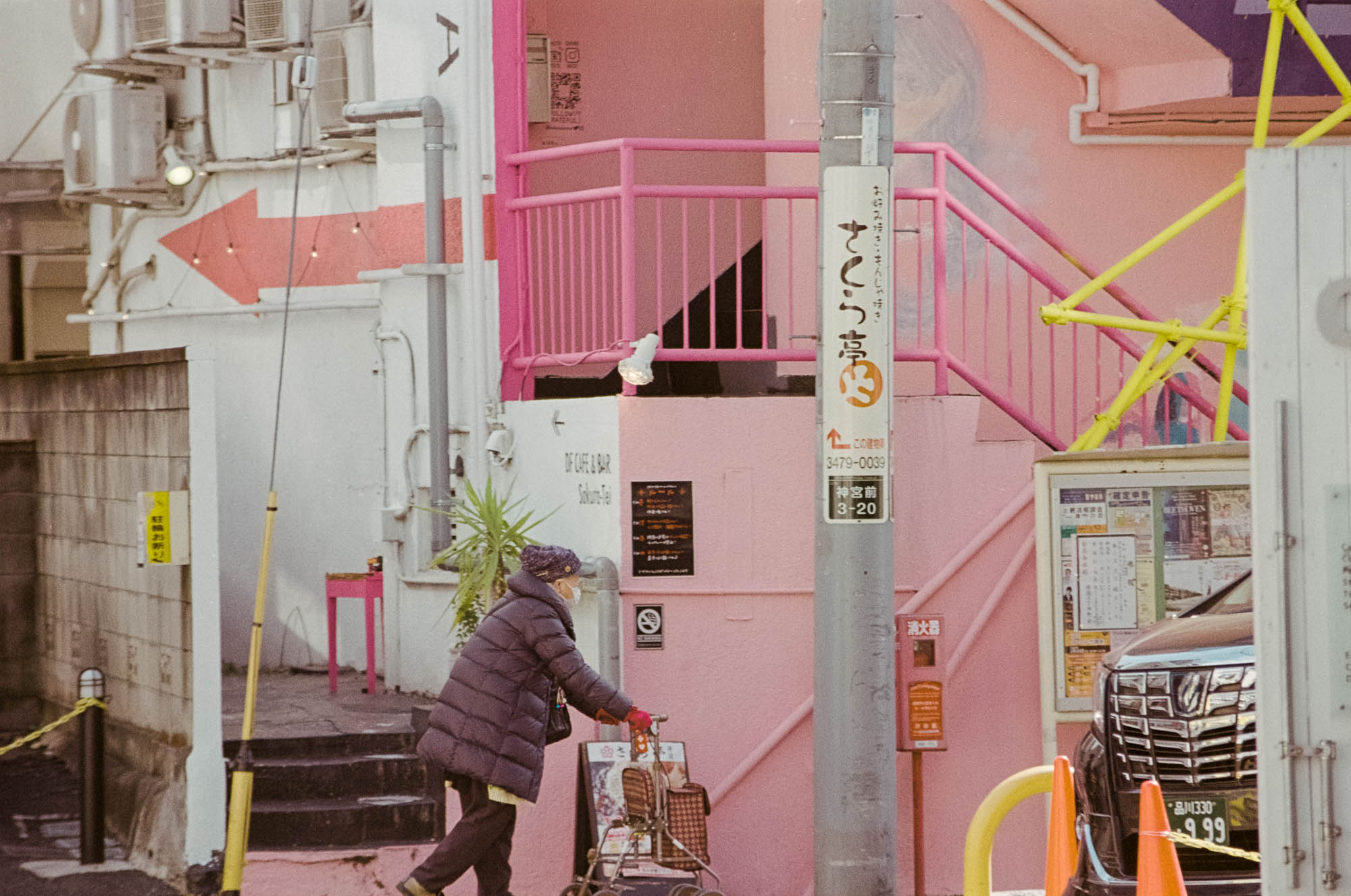


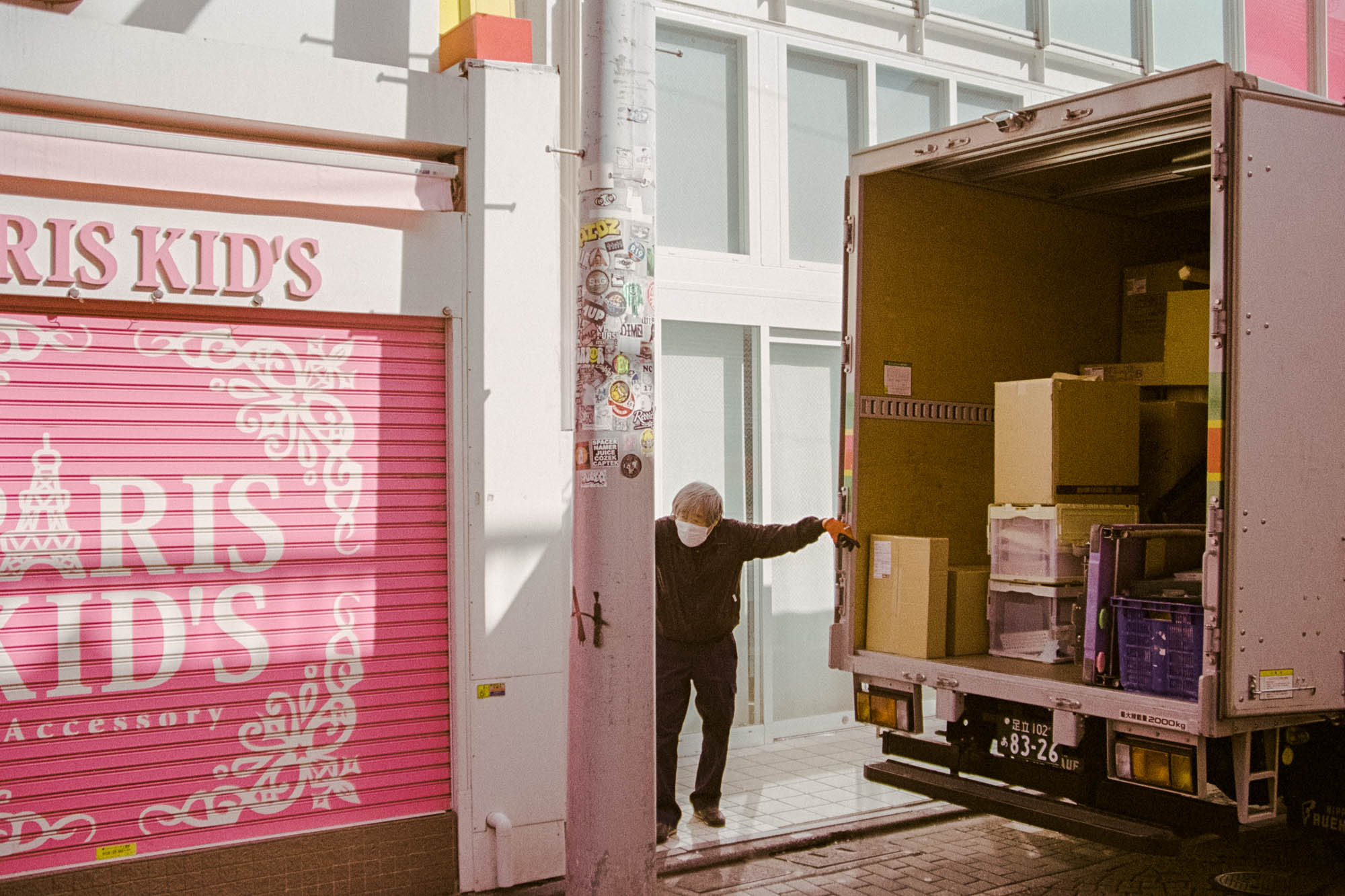

From Harajuku…
It Is What It Is
Is this the swiss army knife of lenses or am I expecting too much? You can’t open a bottle of wine with it OR get the stones out of horses’ hooves. But can you take good pictures?
Earlier, I called this an optical marvel. There is a lot of lens crammed in here. Realistically, the marvel is that they managed to create it and it not be totally horrible. With 17 elements in 13 groups all working together to minimise aberration and field curvature at the various zoom lengths, it should have the light transmission qualities of a lump of coal.
But somehow light manages to reach the film plane and while this isn’t a 50mm f/1.2 Z lens, that lens can’t shoot 35 mm or 85mm or 135mm or 200mm. You get the idea.
It does distort but that’s very fixable and I have and no problems bending those lines back to right angles in post. F/3.5 is slow but you could see, on a winter’s day, it was still quite usable with 200 ISO Kodak Colorplus. The corners are soft wide open and diffraction creeps in by f/11 but at it’s rare that I’m going to want to shoot f/22 anyway.
I call it a Marvel and if there’s a downside to that, using it is the creative equivalent of watching a Marvel movie. You get a bit of comedy, romance, fantasy and action, and that’s even before I’ve taken the photo, just with trying to compose, zoom and focus with it is a drama. It’s not a shoot from the hip Arthouse experience though you could probably push a roll of HP5 in there if you want that black and white Zac Snyder aesthetic.
Perhaps my biggest complaint is that it is a bit like Captain Marvel. Overpowered but leaden and dull as a result, and I guess it ends up being a bit unsatisfying because it never quite lives up to its own ambition.


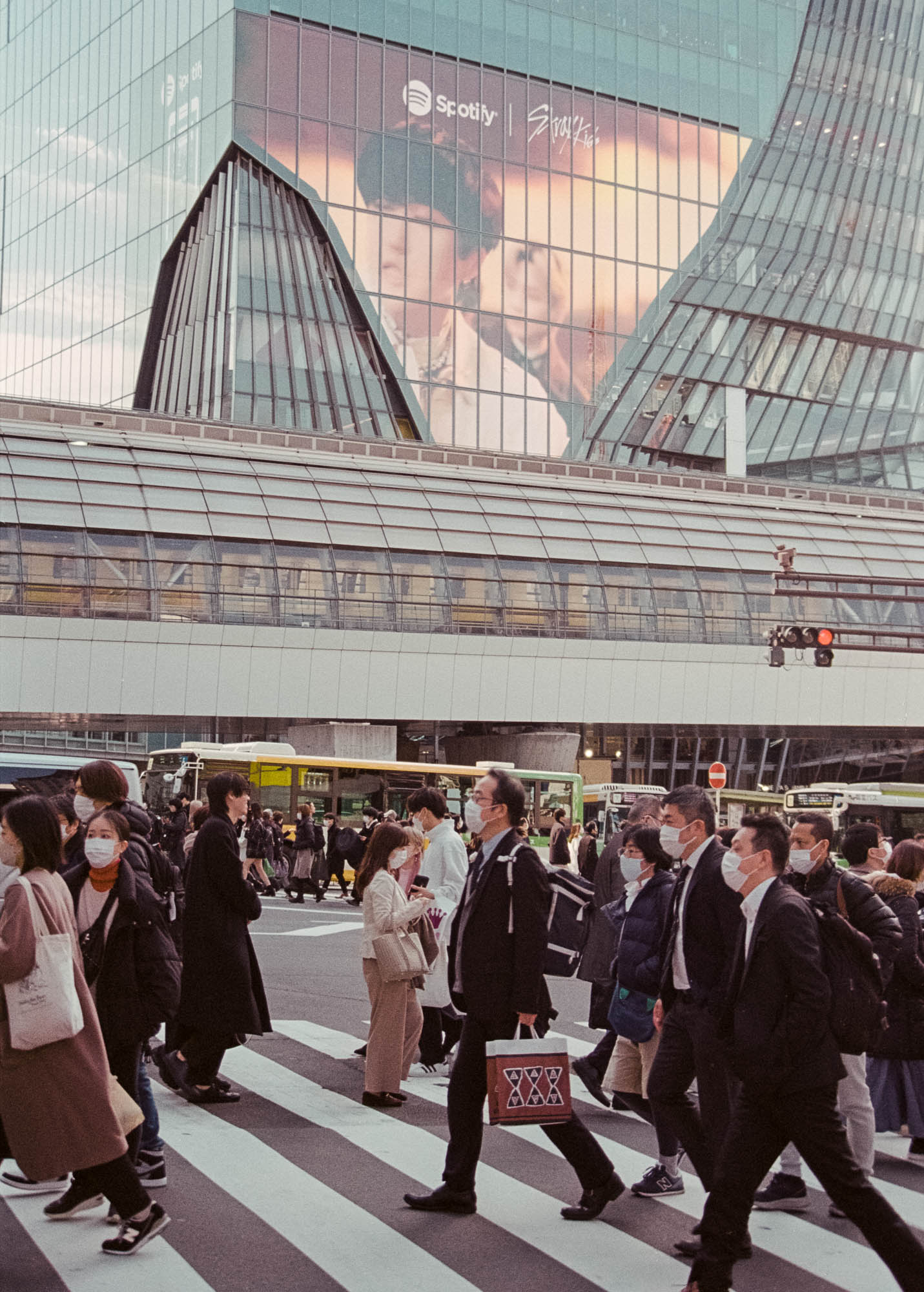


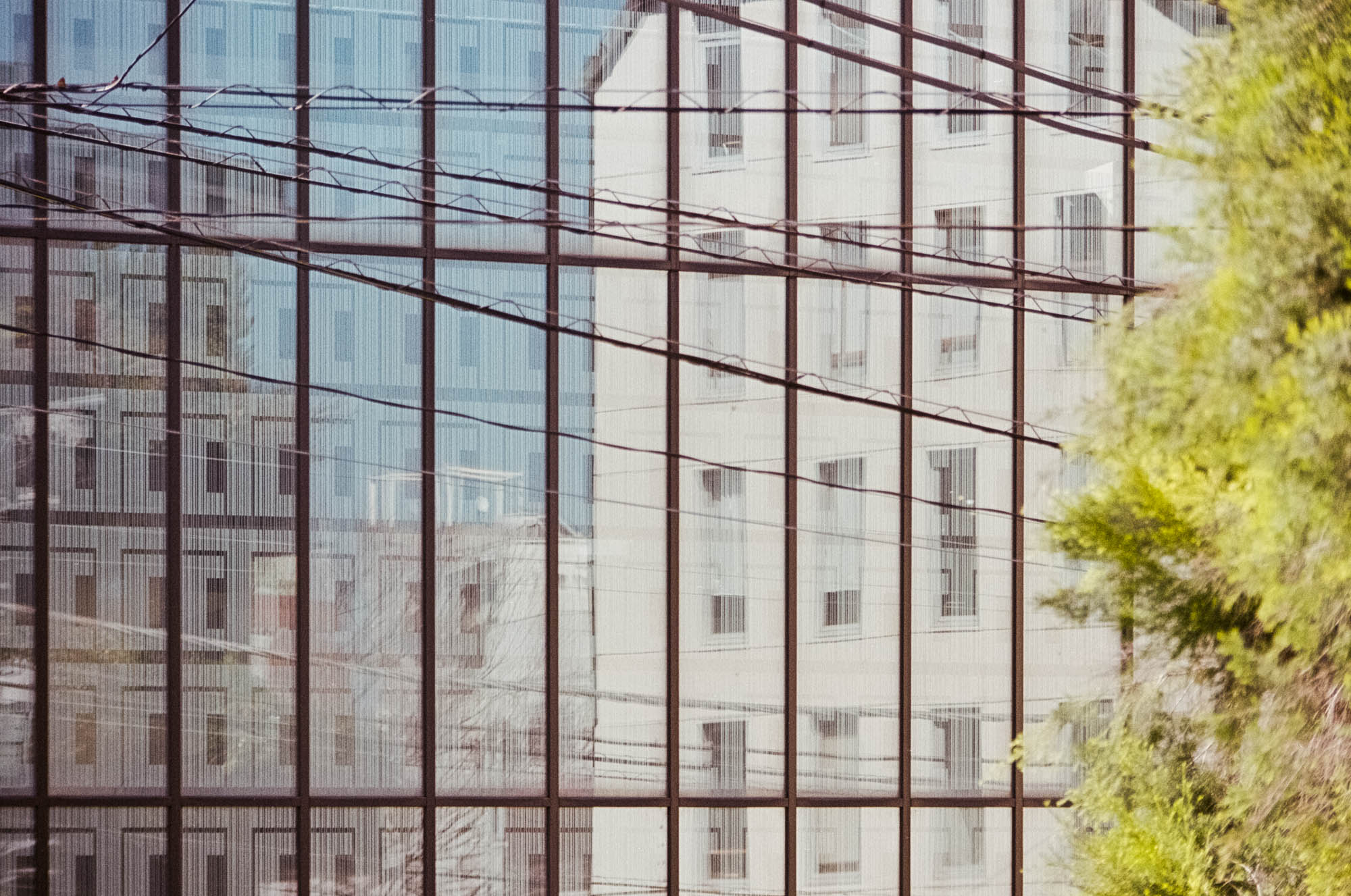
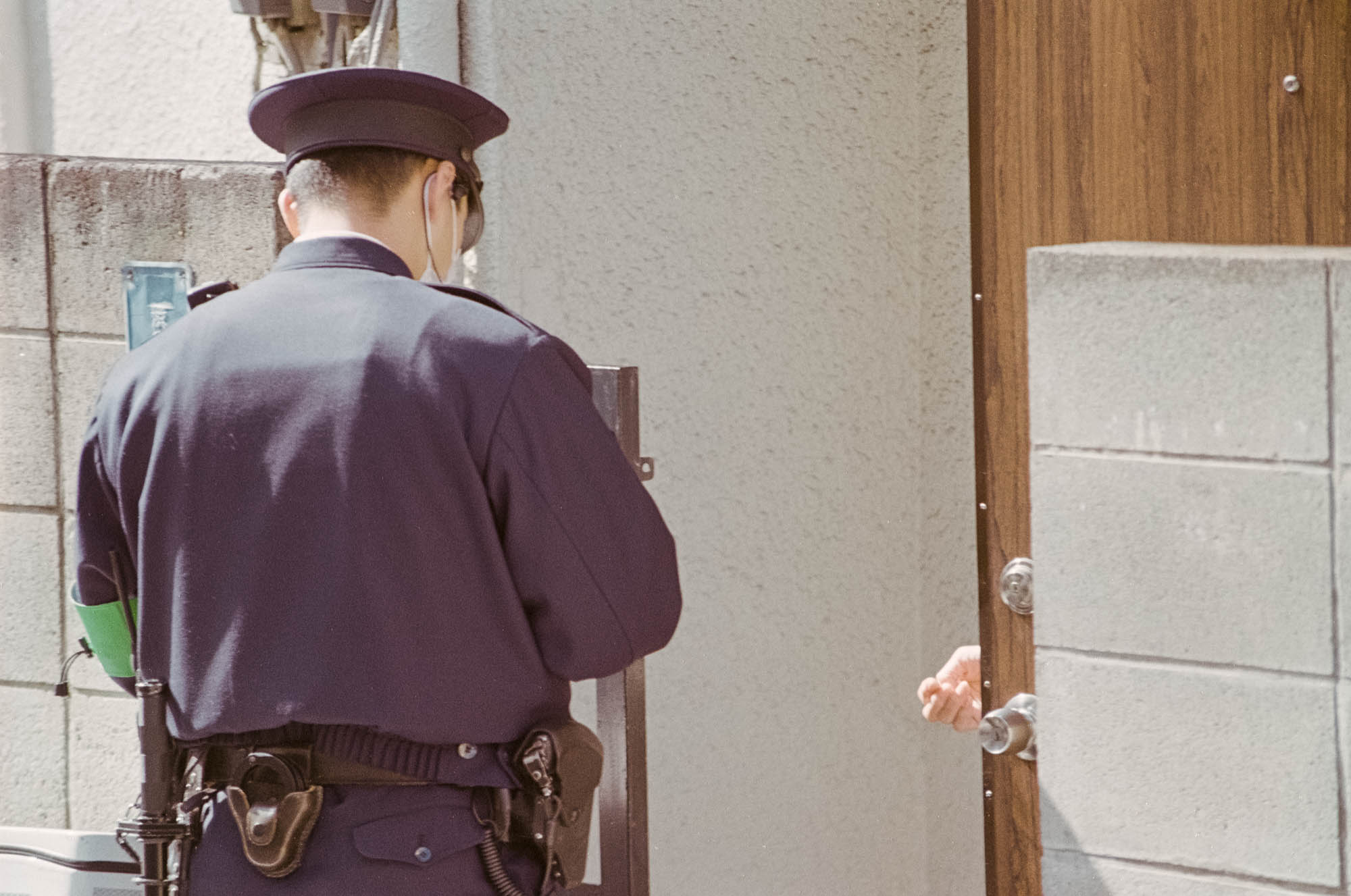

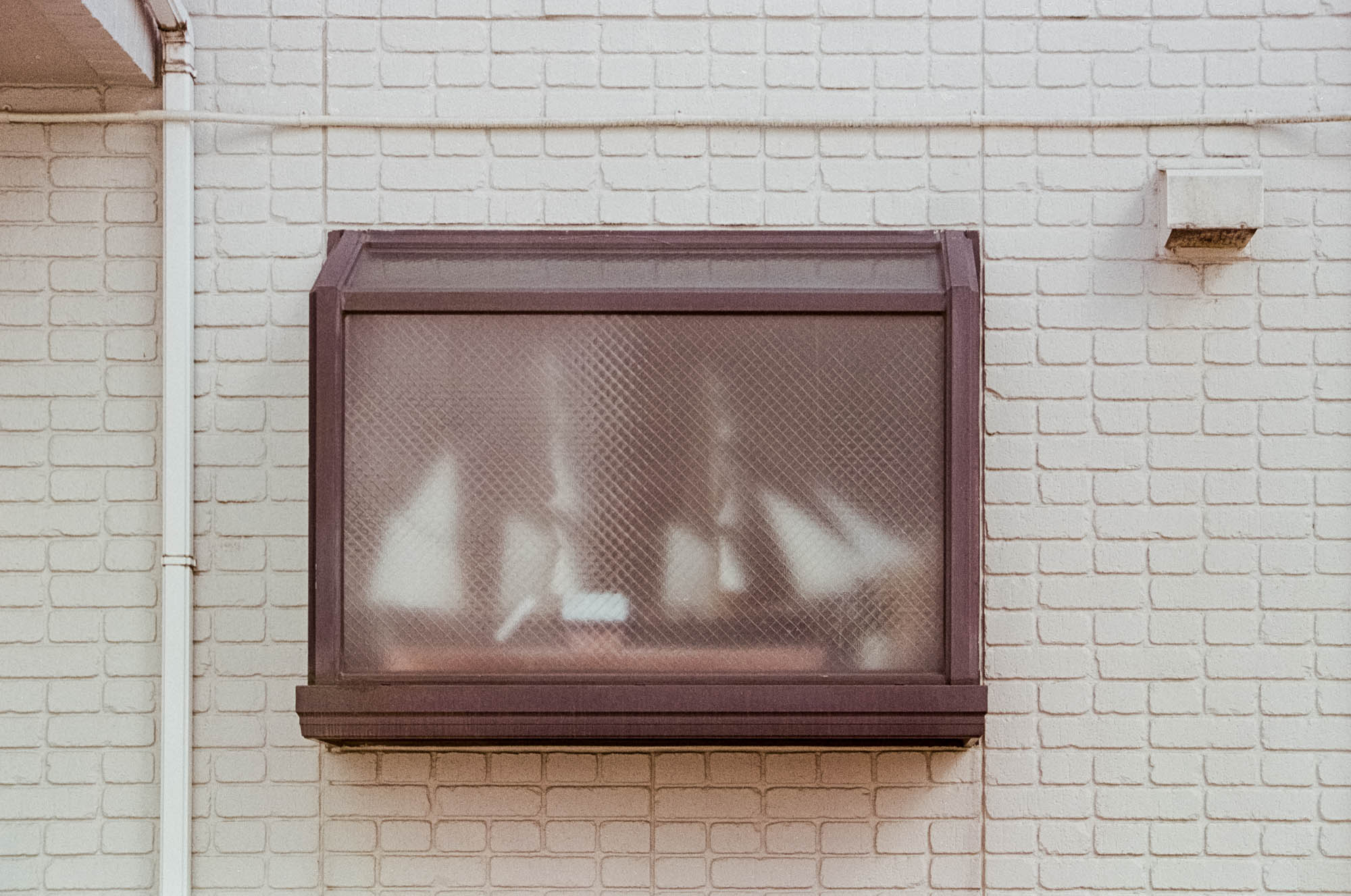


… to Shibuya
You can see that the best photos are the ones where I’ve had time to think through a composition to take in a street scene, capture close-up detail, or narrow the frame to point out details or find angles in the architecture. The strength of this lens is it’s versatility not it’s sharpness.
Great for the Price
In doing some research on this lens from people who actually know what they’re talking about, I found Nikon’s own review in which the words ‘relatively’ and ‘satisfactory’ both appear 6 times. That probably tells you something; and that’s coming from Nikon’s own PR machine.
It was never Nikon’s most successful lens but that might be because this hefty lens came with a hefty price-tag. As of 1996 this was still selling for US$1,290 and while it’s long discontinued now, that’s a testament to the engineering that went into it and the fact that there weren’t any great alternatives. As early as 1983 Tamron did have a 35-210mm lens available but from everything I’ve read, if that one’s a Marvel, it’s much more Carol Danvers than Nick Fury. For 15% of the original asking price you can now pick up an excellent quality copy and leave it on your camera. So why even bother to slum it in the 3rd party ghetto.
Ultimately, I’ve never heard anyone complain about the image quality. People don’t look at my photos and say, ‘oh, did you use a Nikon AI Zoom Nikkor 35-200mm f/3.5-4.5S’. They might say, ‘did you really take a photo of that.’ But that one’s on me, not the lens.
To me it’s sharp enough and when I look through my Lightroom catalogue it’s probably my most used lens. The reason for that may well be because I lack any sense of aesthetic intent as a photographer. I’m not getting up before sunrise to capture that perfect 20mm landscape, or using it exclusively for shallow depth of field portraits or sports photography.
This is the lens that I put on when I’m indecisive or feeling lazy. It’s a great travel lens and it’s also the one that I’ll stick on my camera when I’m just out walking the dog or don’t have any sense of what photographic opportunities might be out there. For me, that’s most of the time.
But let me know your thoughts. What’s your most versatile lens? Would you use a bloated beast like this or do you prefer to just take a wide prime locked to f/8 and zone focusing to capture the decisive moment?
 Mark McMahon