
If you think about it, arms are pretty useful things. I have two, which by most medical definitions is considered normal, but perhaps not quite enough. Wouldn’t an extra arm make life a little easier, particularly when you’re trying to manage cameras, accessories and all the other paraphernalia that comes with photography?
Fortunately, K&F Concept has come up with something that might help, even if it doesn’t quite involve biological augmentation. The 9.8-inch Magic Arm clamp kit is essentially an additional limb for your camera equipment, allowing you to attach and position accessories without having to hold everything yourself. Thanks to K&F Concept for sending it over. I wasn’t paid for the review, but I do get to keep the kit.
One of the first things I tried was using it to attach my phone to my Nikon Z6 as an external monitor. The camera doesn’t have a flip-out screen, so being able to see myself while recording seemed like a useful option. With the magic arm, phone and adapter assembled, I could finally look at myself while talking to the camera. It’s certainly convenient, although I found the experience a little disconcerting. I don’t normally monitor myself when recording, but perhaps that’s something I should get used to.
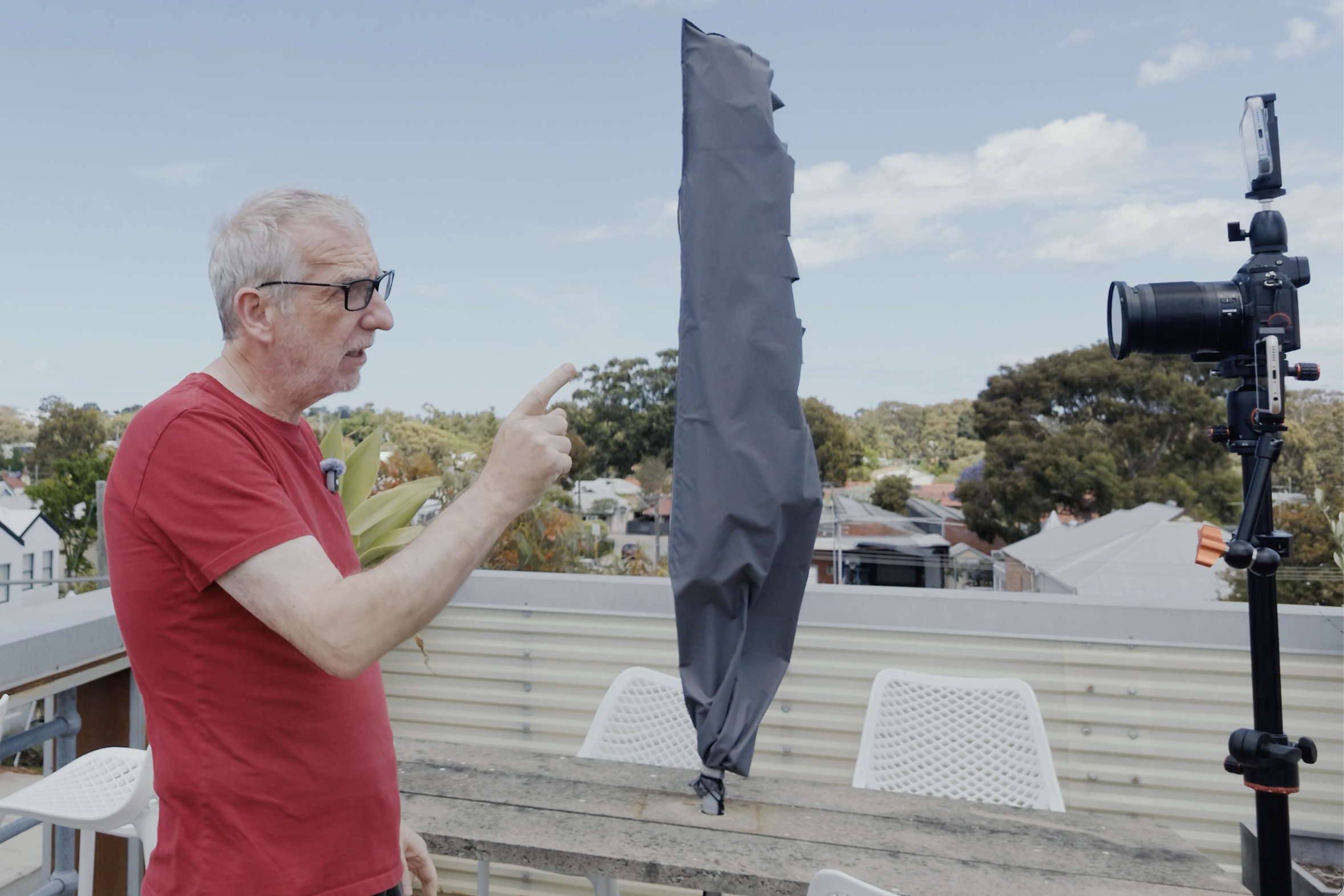
The real advantage, though, is that the arm leaves the camera’s hot shoe free for another accessory. I could have my phone showing me what the camera sees while also attaching a second device to display my script. Yes, these videos are actually scripted, and the ability to see what I’m supposed to say might explain why they’re not quite as long as they could be. Having another arm means having more options, and that’s really the point of this device.
How the Magic Arm Works
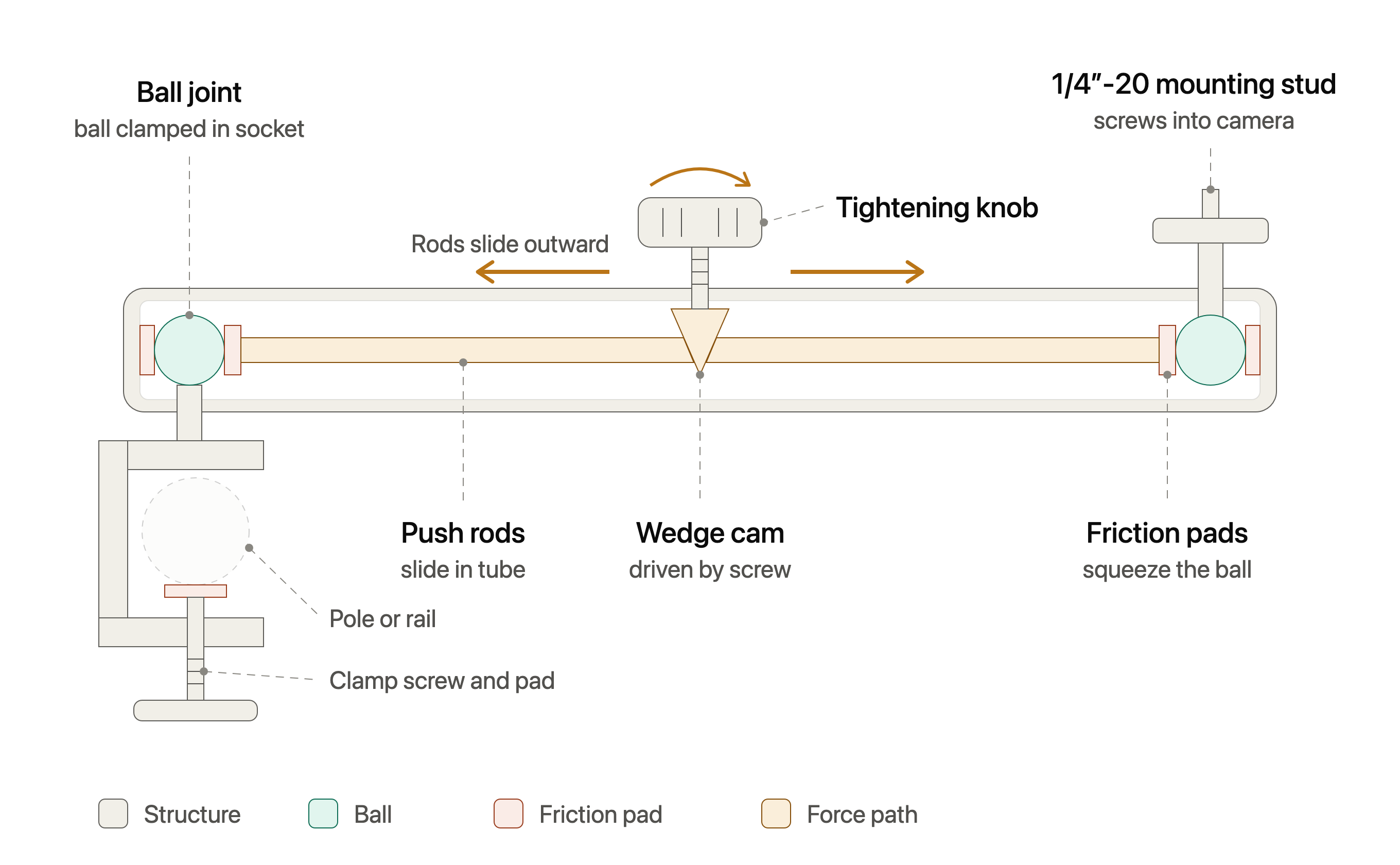
The K&F Concept Magic Arm is 9.8 inches long, or almost 25 centimetres in real measurement. Its cleverness lies in the way it articulates. When loosened, the joints move freely, allowing you to position the arm at almost any angle. Tighten the central handle and everything locks securely into place.
Inside the mechanism, rods press against the ball joints to hold them in position. Turning the handle drives a tapered screw into the mechanism, pushing the rods outwards and tightening the joints. It’s a relatively simple engineering solution, but an effective one. The important thing is that you can quickly adjust the arm, find the position you want and secure it without having to fiddle with multiple individual locks.
There is, of course, a limit to what it can carry. The maximum payload is two kilograms, which is reasonable for a lightweight camera or accessory setup, but not an invitation to attach something particularly heavy. You should also be mindful of what you’re putting on the end of it, because the consequences of a failure could be expensive.
Where the magic arm really becomes useful is in situations where several accessories need to be positioned close together. A conventional light stand can hold equipment, but it’s relatively large and cumbersome. When setting up lighting for product photography or an unboxing, the ability to position a light, camera or monitor in a confined space is a real advantage.
The flexibility also means it can potentially replace a collection of cages, brackets and extension accessories. For off-camera flash, for example, it allows you to position a light exactly where you want it, giving you greater control over the lighting and the ability to create more dramatic effects.
More Ways to Put an Extra Arm to Work
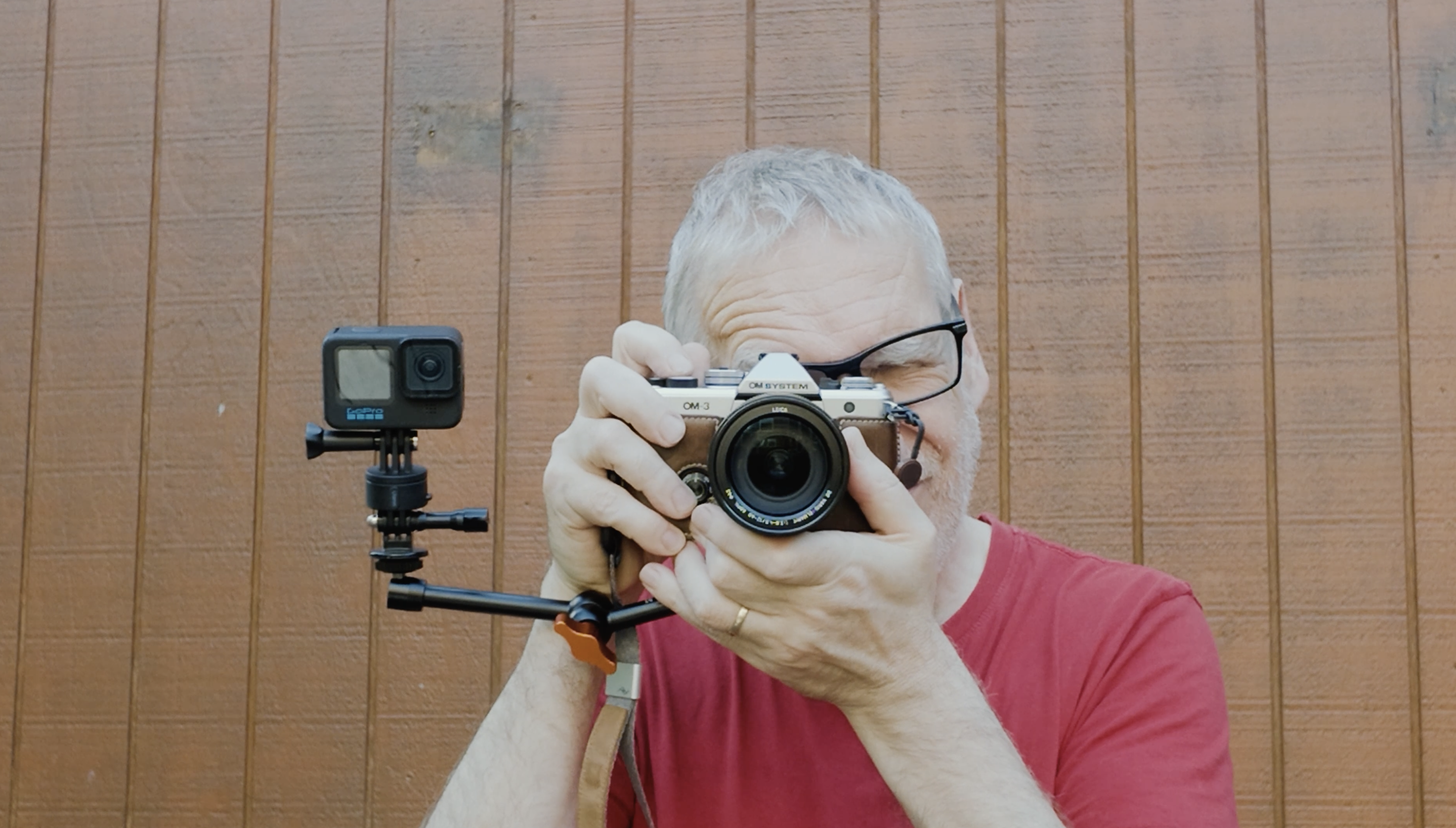
There are plenty of other applications beyond simply holding a phone or light. One that I use quite often is attaching an action camera to my main camera to capture point-of-view footage. This lets viewers see what I’m seeing as I compose a photograph, bringing them a little closer to the process.
Normally, I’d use the hot shoe for this, but that can become awkward, particularly when I’m shooting with a manual camera and want to keep the hot shoe free for my Sekonic light meter. The magic arm gives me another mounting option, although the resulting camera setup isn’t exactly discreet when I’m walking around the streets.
It can also be useful for product photography, where you might want to attach a camera or accessory to an object and move around it while keeping the equipment fixed in position. You can even reverse the arrangement and point a camera back towards your own camera, creating a different perspective for behind-the-scenes footage. It’s not something I’d use all the time, but it could be useful for a bit of B-roll.
And if you need even more reach, there’s nothing stopping you attaching a selfie stick to the arm. You can also use it for mounting cameras around the house or attaching equipment to a car or bicycle, where its adjustable positioning can be more convenient than dealing with awkward suction cups and clamps.
Ultimately, the K&F Concept Magic Arm is one of the more versatile accessories I’ve come across. Its usefulness comes from the ability to position equipment quickly and securely, rather than from any particularly complicated feature. Whether you’re managing lighting, adding a monitor, recording point-of-view footage or experimenting with different camera angles, having another mounting point can make a surprising difference.
I already have another one, so clearly two arms weren’t enough. I’m not sure whether that makes me an insect or means I should start painting myself blue and calling myself Vishnu, but I can certainly see the attraction of having a few more arms available when I’m working with cameras.

